- What we know about the Silver Strand collision in Coronado
- Local roadway context on SR 75 and why this corridor is challenging
- What investigators typically examine in bicycle and car collisions
- California rules for drivers and cyclists that matter in collisions
- Civil liability and insurance layers after a fatal roadway crash
- Where to obtain key records in San Diego County and how to request them
- Evidence to preserve quickly and how to do it
- Steps to consider before speaking with any insurance company
- Safety takeaways for the Coronado and South Bay cycling community
- Why acting promptly matters and what to do next
- Commentary from Gosuits Coronado, California Personal Injury Attorney
- References
What we know about the Silver Strand collision in Coronado
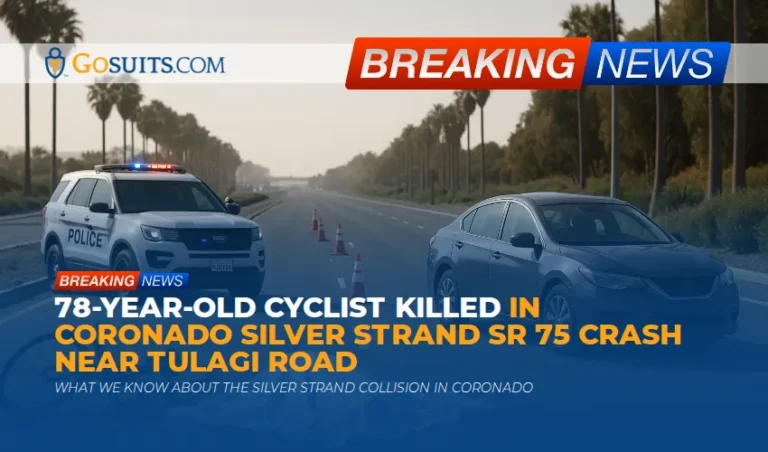
On a clear weekday afternoon in Coronado, 911 dispatchers received a call about a bicyclist struck by a car on the southbound Silver Strand section of state Route 75. The crash was reported just after 1:30 p.m. at the intersection with Tulagi Road, near the entrance to Naval Amphibious Base Coronado. Officers responded, and both police and the involved driver attempted life-saving measures. Tragically, the 78-year-old bicyclist died at the scene, according to Coronado police. Investigators stated they did not suspect alcohol or drugs played a role. Southbound SR 75 traffic was redirected back through the island during the on-scene investigation.
This stretch of SR 75 is a lifeline between Coronado and Imperial Beach, bordered by the Pacific Ocean and San Diego Bay, with the Bayshore Bikeway nearby. Locals know the winds can pick up across the isthmus and sight lines can change fast near base entries and bike path crossings. While the final investigative findings have not yet been released, the known facts frame common legal and safety questions for our community.
Local roadway context on SR 75 and why this corridor is challenging
The Silver Strand corridor of SR 75 carries commuter, military, recreational, and tourist traffic, often at higher speeds than surface streets. Caltrans District 11 has studied SR 75 and SR 282 for congestion and safety challenges, noting the constrained right of way, limited intersections, and multimodal demands along the strand [1]. For riders and drivers, that mix can create quick decision points, especially at intersections near facility driveways and trail crossings.
Add typical afternoon sun angles over the ocean, the possibility of crosswinds, and occasional sand on shoulders, and you have a corridor where even momentary inattention can have serious consequences. Although the Bayshore Bikeway provides a separated path for much of the route, riders often must cross or interact with roadway traffic at connection points and intersections, including Tulagi Road.
Statewide and national data remind us that people on bikes remain vulnerable in mixed traffic. NHTSA’s recent summaries show hundreds of bicyclist fatalities nationwide each year, with older adults overrepresented in severe outcomes due to frailty and exposure patterns [2]. In California, the Office of Traffic Safety tracks city-level safety metrics, including bicyclist injuries and fatalities, to help communities like Coronado and San Diego target improvements [3].
What investigators typically examine in bicycle and car collisions
When a crash involves a fatality, investigators generally take detailed measurements, document final rest positions, note roadway evidence like skid marks or debris fields, and canvass for video and witnesses. On a corridor like SR 75, they may also look for:
- Signal timing or traffic control if applicable at the intersection, including signage visibility and compliance.
- Sight lines and approach speeds for both the rider and the driver, including lane position and shoulder condition.
- Lighting and environmental factors, such as glare, wind, or surface hazards.
- Compliance with California Vehicle Code provisions that govern passing distance, yielding, and turn movements where relevant [4] [5].
- Any potential mechanical issues with the bicycle or vehicle that could have contributed.
- Potential electronic data such as Event Data Recorder downloads from the vehicle, if available.
- Nearby cameras that may have captured the incident, including traffic cameras, business systems, or military gate cameras, subject to access rules.
Seasoned fatal accident lawyers study these same elements when reconstructing the moments leading up to a crash. Thorough documentation allows later review by collision reconstruction professionals if needed.
California rules for drivers and cyclists that matter in collisions
California law gives bicyclists the same rights and duties as drivers of vehicles, subject to some bicycle-specific rules. That baseline, found in California Vehicle Code section 21200, means riders have lawful access to the roadway and are entitled to expect reasonable care from others using it [5].
Another core rule many locals know as the Three Feet for Safety Act requires a motor vehicle overtaking a bicycle to provide at least three feet of clearance when passing. If three feet is not possible due to traffic or road conditions, the driver must slow to a reasonable speed and pass only when it is safe to do so, using due care to avoid hitting the bicyclist. That is codified in California Vehicle Code section 21760 [4]. For an accessible plain-language overview of how this protection works in everyday riding, consider our in-depth guide on the California three foot law cyclists.
Depending on the exact movement pattern at Tulagi Road, other code sections could be relevant, such as yielding while turning across a lane of travel. While only a full investigation can determine the contributing factors in this Coronado crash, the statutes above are the common legal reference points used to evaluate driver and cyclist conduct.

Civil liability and insurance layers after a fatal roadway crash
Civil liability in a bicycle and car collision typically turns on negligence principles: who owed what duty, who breached that duty, and whether that breach caused the harm. In California, when a collision results in a death, two distinct but related civil claims are often considered: a wrongful death claim by eligible heirs and a survival action by the decedent’s estate for certain losses the person suffered before death. These are authorized by California Code of Civil Procedure sections 377.60 and 377.30 [6] [7].
Insurance coverage plays a central role in how these claims are addressed. California’s minimum auto liability limits were increased effective 2025, which changes the baseline available coverage for bodily injury caused by at-fault drivers. Vehicle Code section 16056 outlines the financial responsibility requirements [8]. Additional coverage, such as umbrella policies, employer policies for work-related driving, or rideshare-specific coverage, can also be in play depending on the driver’s use of the vehicle.
When evidence is still developing, families often want to preserve their options without making early statements that could be misinterpreted. Having a clear strategy for records, medical examiner documentation, and insurance notices can help prevent avoidable complications. Consultation with trusted advisors, including legal counsel, is often the best first step before any engagement with insurers.
In practice, many community members ask who investigates and who pays. Investigators may include local law enforcement and sometimes multidisciplinary traffic investigation teams. Responsibility for losses, however, is determined through civil processes. To navigate those processes, some turn to fatal accident lawyers for detailed case evaluation and guidance on insurance layers and potentially responsible parties.
Where to obtain key records in San Diego County and how to request them
Coronado Police Department collision report
Traffic collision reports for incidents within Coronado are generally maintained by the Coronado Police Department Records Unit. These reports often include scene diagrams, statements, and preliminary findings. A request typically requires the incident date, location, and the names of involved parties if known. In some cases, reports involving fatalities may have redacted sections or delayed release until investigative steps are complete. The City of Coronado provides public records through its official channels for eligible requesters under California law.
San Diego County Medical Examiner records
For a fatal crash, the San Diego County Medical Examiner (ME) conducts postmortem examinations when required by law. Next of kin can request information about the examination, manner and cause of death determination when available, and related documentation. The ME’s website explains how to obtain reports and who is legally authorized to receive them [9].
Death certificates
Death certificates are generally issued by the county where the death occurred. In California, they can be obtained through county vital records offices or the California Department of Public Health. CDPH provides statewide guidance on eligibility and ordering requirements [10].

911 audio and dispatch records
911 audio and Computer Aided Dispatch (CAD) logs may exist for this incident due to the emergency call and police response. Availability varies and may be limited or delayed due to investigative considerations and privacy laws. Such requests are commonly made to the relevant public safety agency under the California Public Records Act.
Caltrans records for SR 75
Since SR 75 is a state highway, Caltrans District 11 may hold records relevant to the corridor, such as traffic counts, speed studies, roadway maintenance, and certain camera logs where applicable. Caltrans accepts California Public Records Act requests through its legal portal [11].
DMV report requirement for involved drivers
California requires drivers to report a traffic collision to the DMV within 10 days using Form SR 1 if anyone was injured or killed, or if property damage is above the statutory threshold. This requirement is independent of fault and of any police report [12].
Government claim deadlines if a public entity is implicated
In some roadway incidents, a claim against a public entity may be contemplated, for example, regarding roadway conditions or traffic control. California’s Government Claims Act requires most claims for money damages against public entities to be presented within six months for claims relating to personal injury or death, with specific statutory requirements and exceptions. Failing to meet the deadline can bar later court action. See Government Code section 911.2 for the timeline framework [13].
Evidence to preserve quickly and how to do it
For serious roadway collisions, early evidence preservation can make a decisive difference later on. Community members who become involved in or witness a crash often do not realize how fast video overwrites and how quickly conditions change. Consider the following practical steps to help ensure critical information is not lost:
- Identify and request nearby video from businesses, residences, transit stops, and public cameras. Many systems overwrite in days, sometimes hours. Written preservation requests sent promptly can help.
- Document the scene promptly with wide and close-up photos, including approach views, lane markings, surface conditions, debris patterns, and any fresh scrape or scuff marks.
- Capture lighting and weather conditions at the same time of day as the crash within 24 to 48 hours, if safe to do so.
- Secure the bicycle and vehicle without repair or alteration until they can be inspected and photographed. Retain any broken gear, helmet, or lighting equipment.
- Gather witness information and record exact statements while memories are fresh. Even small details can illuminate key seconds in a reconstruction.
- Track medical and ME records and keep a simple timeline of key events. Organized records streamline later reviews.
California’s Transportation Injury Mapping System by UC Berkeley SafeTREC can also provide publicly available crash data and mapping context for a given corridor, which can aid understanding of local patterns even though it does not substitute for case-specific evidence [14].
Steps to consider before speaking with any insurance company
Insurance adjusters may reach out quickly after a crash. That early contact can feel helpful, but recorded statements and casual comments are often parsed closely later on. A few prudent principles tend to protect people’s options:
- Consult an attorney first, before giving any recorded or detailed statement to any insurer, including your own. What is said can be used to limit or contest a later claim.
- Keep communications limited and factual until you understand your rights. Avoid speculation about speed, distance, or fault.
- Do not sign releases early for medical or other records without understanding the scope and reason for the request.
- Confirm coverage information in writing to avoid miscommunication, and preserve all letters and emails.
Early legal guidance can clarify which insurer is primary, how med-pay or UM/UIM might apply, and what documentation will likely be needed. Speaking with fatal accident lawyers in Coronado at the outset can help community members avoid avoidable missteps while decisions are still being made.
Safety takeaways for the Coronado and South Bay cycling community
Locals ride the Silver Strand for the freedom of a coastal straightaway and the connection to the Bayshore Bikeway, but many also drive it daily. A few reminders that may help reduce risk on SR 75 and nearby corridors:
- Drivers: expect cyclists, especially near Tulagi Road, Palm Avenue, and any trail connectors. Look for cyclists before turning or merging. Give at least three feet when passing as required by law [4].
- Riders: maximize conspicuity with daytime lights and reflective elements, even in bright sun. Approach driveways and intersections assuming you are not yet seen.
- All road users: manage speed to conditions. SR 75 can feel like a through corridor, but merging traffic, base accesses, and recreational users change the picture quickly.
- Mind the winds and surface along the strand, which can shift handling for both bikes and cars.
Tragedies like this one weigh heavily on Coronado, the naval community, and riders across San Diego County. While not every crash is preventable, consistent attention to proven safety practices and legal duties can save lives.
Why acting promptly matters and what to do next
When a serious crash occurs, timing affects everything. Evidence disappears, memories fade, and statutory deadlines begin to run. The specific steps that should be taken quickly include:
- Prioritize evidence preservation, including scene photos, video requests, and securing the bicycle and vehicle.
- Request key records early, such as the police collision report and Medical Examiner findings when available. Some records take weeks to issue and are prerequisites for later steps.
- Coordinate benefits and insurance thoughtfully, including health coverage, life insurance, and any available med-pay or UM/UIM. Proper sequencing avoids coverage conflicts.
- Assess potential public entity issues right away. If roadway design or maintenance might be implicated, note that public entity claim deadlines are short in California [13].
- Seek a confidential legal consultation first before speaking with any insurance company, to understand who might be responsible, which policies apply, and how statements can affect later claims.
Acting now helps preserve the truth of what happened and keeps all civil options available. It is far easier to decide not to use preserved evidence than to recreate what has been lost.

Commentary from Gosuits Coronado, California Personal Injury Attorney
Our hearts are with everyone affected by this loss on the Silver Strand. The purpose of this article is educational and intended to provide general information for our local community. Crashes that take place at familiar landmarks like Tulagi Road and the Amphibious Base resonate deeply because so many of us have driven or ridden these same lanes.
From a civil-injury perspective, the focus will be on movement patterns, visibility, and compliance with California’s cyclist-protection and yielding rules. SR 75 combines speed with intermittent crossings and driveways, and that mix can compress the time people have to react. Thorough collision reconstruction, early video preservation, and measured communication with insurers are crucial when facts are still coming into focus.
In our experience, insurance companies move quickly to shape the narrative. Representatives may ask for recorded statements and broad medical authorizations before families have any records in hand. Corporations know most people do not work with crash evidence every day, and they use that knowledge gap to frame questions and timelines. It is common to see early offers that come before the full scope of loss is even known.
A confidential, no-cost consultation can help people understand time-sensitive steps, what not to say on recorded calls, and how to request essential documents like collision and Medical Examiner reports. The goal is to level the playing field, protect legal rights, and ensure no critical evidence is lost while decisions are made. Community members often find that a brief conversation upfront prevents months of confusion later.
Ultimately, civil accountability depends on facts. Careful, calm steps taken in the first days and weeks give families the best chance to make informed choices when they are ready.
References
- Caltrans District 11 Planning and Corridor Information – California Department of Transportation
- Bicyclists – National Highway Traffic Safety Administration
- City Safety Rankings and Crash Data – California Office of Traffic Safety
- Vehicle Code § 21760 Three Feet for Safety Act – California Legislative Information
- Vehicle Code § 21200 Operation of Bicycles – California Legislative Information
- Code of Civil Procedure § 377.60 Wrongful Death – California Legislative Information
- Code of Civil Procedure § 377.30 Survival Action – California Legislative Information
- Vehicle Code § 16056 Financial Responsibility Requirements – California Legislative Information
- San Diego County Medical Examiner – County of San Diego
- Vital Records, Death Certificates – California Department of Public Health
- Public Records Act Requests – California Department of Transportation
- SR 1 Traffic Accident Report – California DMV
- Government Code § 911.2 Claim Presentation Deadline – California Legislative Information
- Transportation Injury Mapping System – UC Berkeley SafeTREC
In remembrance of the person lost and with respect for loved ones, the community can honor their memory by pushing for safer behavior on SR 75 and bringing careful attention to evidence and process. While no article can repair the loss, clarity about what comes next can ease at least one burden in a difficult time. In these moments, community knowledge and steady steps matter.
Note: This post is informational and not a substitute for individual legal guidance.