- What is a T‑bone accident and why do uncontrolled intersections matter?
- How do authorities and courts determine fault in a T‑bone collision?
- What role do right‑of‑way laws play at uncontrolled intersections in Texas, California, and Illinois?
- What evidence is most important to proving fault in a side‑impact (T‑bone) crash?
- How do crash‑reconstruction techniques and technology (dashcam, cellphone data) help establish liability?
- How do insurance companies evaluate and handle T‑bone claims and what should you watch for?
- How do comparative negligence rules affect recovery in Texas, California, and Illinois?
- What steps should you take right after a T‑bone crash to protect your claim?
- What damages can a plaintiff recover in a civil T‑bone case and how are they measured?
- When should you get legal help for a T‑bone collision?
- How can GoSuits help if you were injured in a T‑bone crash at an uncontrolled intersection?
- Resources and authoritative references
What is a T‑bone accident and why do uncontrolled intersections matter?
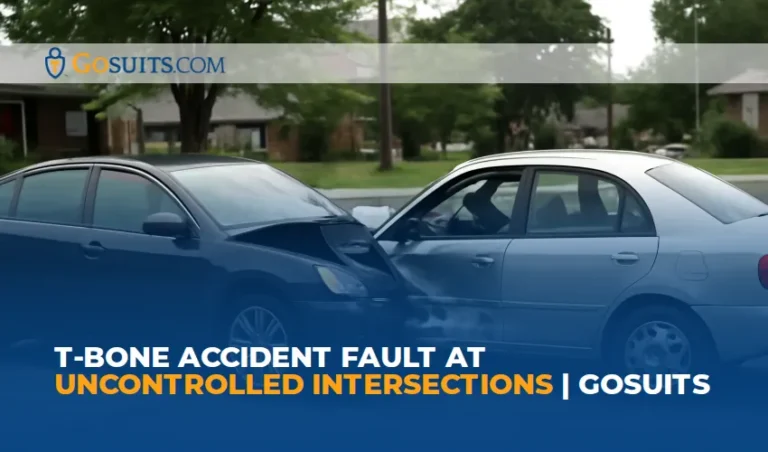
A T‑bone accident, often called a side‑impact collision, occurs when the front of one vehicle strikes the side of another, forming a “T” shape at the moment of impact. These collisions frequently occur at intersections, especially where there are no traffic signals, stop signs, or yield signs. In other words, uncontrolled intersections. Intersections are high‑risk locations because vehicles are changing direction, accelerating from a stop, or entering a road without clear traffic control, increasing the chance of conflicting paths.
National and traffic‑safety organizations highlight intersections as a persistent source of severe crashes. The Insurance Institute for Highway Safety explains that intersection crashes often involve right‑angle impacts and can cause serious injuries because occupants on the struck side have less structural protection. See the Insurance Institute for Highway Safety’s overview of intersection crashes for context and trends.
Source: Insurance Institute for Highway Safety — Intersection Crashes
How do authorities and courts determine fault in a T‑bone collision?
Fault in civil cases is determined by comparing the conduct of drivers against the standards set by traffic laws and by what a reasonable driver would have done under the circumstances. The key steps typically include:
- Identifying traffic law violations: Did a driver fail to yield, run a stop sign, or make an unsafe turn? Traffic statutes and driver manuals for the relevant state are central to this analysis.
- Establishing causation: Did that violation cause the crash and the injuries? A direct causal link between the act (e.g., failing to yield) and the collision is required in civil cases.
- Assessing negligence and comparative fault: Was either driver also negligent, and if so, how should fault be apportioned under the state’s comparative negligence rules?
Courts, juries, and insurance adjusters rely on police reports, witness statements, physical evidence, and expert analysis (such as crash reconstruction) to reach findings about fault and causation. For a plain‑language overview of negligence principles, see Cornell Law School’s Legal Information Institute on negligence and comparative negligence.
Source: Legal Information Institute — Negligence
What role do right‑of‑way laws play at uncontrolled intersections in Texas, California, and Illinois?
Right‑of‑way statutes and state driver handbooks set specific rules drivers must follow at intersections without traffic control devices. Below are the core rules for each jurisdiction frequently used in fault determinations. These rules affect who is prima facie at fault, though investigators will always examine the facts and evidence.
What does Texas law say about right-of-way at uncontrolled intersections?
Texas law allocates right of way in several sections of the Texas Transportation Code and the Texas Driver Handbook. When drivers approach an intersection at approximately the same time, Texas rules generally direct the driver on the left to yield to the driver on the right. Other sections govern yielding when entering a roadway and turning. These statutory rules are used by police and civil litigants to assess whether a driver violated traffic law at an uncontrolled intersection.
Source: Texas Statutes — Texas Legislature Online
What does California law require at uncontrolled intersections?
California law (Vehicle Code) contains explicit right‑of‑way rules for intersections without traffic devices, including provisions that require drivers entering an intersection at the same time to yield to the vehicle on the right. The California Driver Handbook and Vehicle Code sections on right of way are commonly cited by investigators and in civil claims to show a statutory duty of care.
Source: California Vehicle Code §21800 — Right‑of‑Way Rules

What is Illinois’ rule for uncontrolled intersections?
Illinois law and the Illinois Rules of the Road describe yield requirements at intersections. Like other jurisdictions, Illinois directs drivers entering at approximately the same time to yield to the vehicle on the right. The Illinois Secretary of State driver manual summarizes these duties and is used by law enforcement and insurers to evaluate claims.
Source: Illinois Rules of the Road — Secretary of State
What evidence is most important to proving fault in a side‑impact (T‑bone) crash?
Proving fault depends on collecting timely, reliable evidence. The most important evidence categories include:
- Police reports: The crash report records statements, diagram of the scene, diagram of vehicle positions, and officer observations. Reports are persuasive but not dispositive.
- Physical evidence and scene measurements: Tire marks, vehicle final rest positions, damage patterns, and debris can show pre‑impact paths and speeds. Photographs taken right after the collision preserve this evidence.
- Video evidence: Dashcam, traffic camera, or nearby surveillance video can capture the sequence of events and timing of entry into the intersection.
- Witness statements: Eyewitness accounts can corroborate the timing and maneuvers of the vehicles, though human memory can be imperfect. Multiple independent accounts strengthen proof.
- Vehicle data and event data recorders (EDRs): Many modern vehicles record pre‑crash information such as speed, brake application, and steering inputs. EDR downloads can be valuable in establishing speed and braking.
- Injury and medical evidence: Medical records prove that injuries arose from the collision, which matters for damages. Medical causation is tied to the underlying liability claim, but be careful to separate medical causation from questions reserved for medical specialists.
Authorities such as the National Highway Traffic Safety Administration provide guidance on vehicle event data and investigative techniques; crash investigators often combine these evidence types to reconstruct the sequence that led to a T‑bone impact.
Source: National Highway Traffic Safety Administration
How do crash‑reconstruction techniques and technology (dashcam, cellphone data) help establish liability?
Crash reconstruction brings physical evidence and recorded data together to recreate the probable sequence and forces involved in a collision. Common components of reconstruction include:
- Scene measurement and photogrammetry: Using measurements and photos to scale skid marks, impact points, and final positions.
- EDR downloads: Extracting speed, brake use, and other sensor data from onboard systems.
- Video frame analysis: Timing vehicle positions, lighting conditions, and driver reactions using frame‑by‑frame reviews of video footage.
- Biomechanical analysis: Relating delta‑V (change in velocity) and intrusion to likely injury mechanisms to connect impact energy to medical outcomes.
Video and EDR data are especially powerful because they often provide objective, contemporaneous records of what happened. When dashcam or surveillance video exists, it can decisively show which vehicle entered the intersection first or whether a vehicle ran a stop or came through slowly. Investigators and courts use reconstruction to estimate speeds, directions, and who had the right of way when the crash occurred.
Source: NHTSA crash investigation and research materials
How do insurance companies evaluate and handle T‑bone claims and what should you watch for?
Insurers evaluate both liability and damages. They gather evidence, interview drivers and witnesses, and may order reconstruction or medical reviews. Tactics to watch for include:
- Early low settlement offers: Insurers may make quick offers before the full extent of injuries and evidence are known. These offers sometimes aim to obtain a release that closes the claim.
- Disputes about pre‑existing conditions or prior injuries: Carriers often argue that injuries were caused by earlier conditions rather than the crash.
- Arguments about comparative fault: Insurers often try to shift part of the blame, which can reduce payouts under state comparative negligence laws.
Document everything, obtain timely medical care, preserve evidence (photos, videos, witness contact info), and report the crash to your insurer promptly while protecting your right to seek legal advice before signing releases or detailed recorded statements.
How do comparative negligence rules affect recovery in Texas, California, and Illinois?
Comparative‑fault rules determine how plaintiff recovery is reduced when the injured party is partly at fault. Each state has a distinct rule that can drastically affect recoveries in T‑bone cases.
What is Texas’ comparative‑fault rule and how does it apply?
Texas follows a modified comparative‑fault system. Under state law, a plaintiff may recover only if their percentage of responsibility is less than 51 percent; the recovery is then reduced by the plaintiff’s percentage of fault. This means if you are found 50 percent or less at fault, you can recover damages, but your recovery is reduced proportionally. If you are 51 percent or more at fault, you cannot recover for damages in civil court.
Source: Texas Statutes — Civil Practice and Remedies Code
What is California’s rule for comparative negligence?
California follows a pure comparative negligence rule. Under this rule, a plaintiff may recover damages even if they are mostly at fault; the recovery is reduced by the plaintiff’s percentage of responsibility. For example, if a plaintiff is 70 percent at fault, they can still recover 30 percent of the total damages.
Source: Legal Information Institute — Comparative Negligence
How does Illinois’ comparative negligence system work?
Illinois applies a modified comparative negligence rule with a 50 percent threshold. A plaintiff may recover so long as their share of fault is not greater than the defendant’s (i.e., the plaintiff’s percentage is less than or equal to 50 percent); recovery is reduced by the plaintiff’s percentage of fault. If the plaintiff is found more than 50 percent at fault, recovery is barred.
Source: Illinois Compiled Statutes — Civil Procedure provisions
What steps should you take right after a T‑bone crash to protect your claim?
Immediate steps can preserve evidence and protect your ability to recover compensation:
- Get medical care right away: Seek emergency care if needed and follow up with your treating provider. Prompt records help connect injuries to the crash.
- Call the police and get a copy of the crash report: The official report can be a key piece of evidence.
- Photograph the scene and vehicles: Capture vehicle positions, damage, skid marks, traffic controls (or lack of them), and road conditions.
- Collect witness information: Names, phone numbers, and short written notes about what each witness observed.
- Preserve video and EDR data: Download dashcam clips, preserve surveillance footage if available, and avoid returning vehicles to their initial storage location until the footage is preserved.
- Notify your insurer (but be cautious): Provide basic facts, but consider asking for time to consult an attorney before giving detailed statements or signing releases.
- Do not post detailed accounts or admit fault on social media: Insurers and defense counsel may use public statements against you.
What damages can a plaintiff recover in a civil T‑bone case and how are they measured?
In civil personal injury claims, plaintiffs typically seek:
- Economic damages: Past and future medical expenses, lost wages, and loss of earning capacity. These are documented with bills, wage records, and vocational evidence.
- Non‑economic damages: Pain and suffering, emotional distress, loss of enjoyment of life. These are less tangible and are quantified through testimony and evaluation of injury severity and recovery prospects.
- Property damage: Vehicle repair or replacement costs and loss of use.
- In wrongful‑death situations: Survivors may seek funeral expenses, loss of financial support, and certain non‑economic damages under state law.
Damages are established through medical records, billing, employment records, expert testimony about future care or lost earning capacity, and demonstrative evidence showing the impact of injuries on daily life.
When should you get legal help for a T‑bone collision?
You should consider contacting a personal injury attorney as soon as practicable after a T‑bone collision if:
- Your injuries require ongoing medical care or hospitalization;
- Your case involves disputed liability or complex evidence (e.g., video conflicts, serious vehicle damage);
- The insurance company denies liability or offers an early low‑value settlement;
- You face potential comparative fault arguments that could reduce recovery;
- The crash involves catastrophic injury, long‑term care needs, or potential wrongful death claims.
Legal help is especially important when the facts are contested or the stakes are high. An experienced civil practitioner can coordinate evidence preservation, arrange reconstruction or data collection, and explain how comparative‑fault rules in your state will affect your recovery.
How can GoSuits help if you were injured in a T‑bone crash at an uncontrolled intersection?
If you were injured in a T‑bone crash at an uncontrolled intersection, a free consultation with a personal injury attorney can help you understand your options, preserve critical evidence, and outline steps to protect your legal rights and future recovery. An early consultation helps you:
- Understand how the law applies to your specific facts, including right‑of‑way rules in your state, how comparative negligence may affect recovery, and what evidence will be needed to establish liability and damages.
- Preserve time‑sensitive evidence such as dashcam footage, EDR data, or surveillance video before it is overwritten or lost.
- Coordinate medical documentation and claims strategy to link injuries to the crash and document future care needs.
- Communicate with insurers and opposing parties so you are not pressured into an early settlement that doesn’t cover your full losses.
What does GoSuits do and how can we add value to your case?
GoSuits focuses on personal injury litigation in Texas, California, and Illinois. We provide case management and litigation services with a focus on serious and complex injury claims rather than handling large volumes of small cases. Our services and strengths include:
- Immediate availability and communication: We are available 24/7 and provide immediate free consultations at any time. GoSuits maintains staff at multiple locations and offers multilingual customer service, including 24/7 Spanish and Farsi speakers, to help you communicate clearly about your situation.
- Transparent fee policies: Our fee structure follows a No Win, No Attorney Fees approach. Additional details are available on our firm page explaining our contingency fee model and how there are no hidden administrative fees. No Win, No Attorney Fees
- Proprietary case workflow tools: We use a firm‑designed personal injury software platform to manage investigations, evidence, demands, negotiations, litigation filings, and discovery. This in‑house workflow helps the firm move faster and to organize complex documentation more effectively than firms that rely solely on generic case management tools.
- Experience and litigation track record: The lawyers at GoSuits bring a combined 30 years of experience and have litigated over 1,000 cases with published settlement and verdict results. For examples of past results and complex matters we have handled, see our published prior cases. Prior Cases
- Handling of complex, high-stakes claims: For severe injury matters such as traumatic brain injury, spinal cord injuries, commercial vehicle collisions (including 18‑wheelers), and other catastrophic claims, we retain appropriate state‑qualified professionals to establish liability and quantify damages.
- Local presence and responsive advocacy: We maintain offices and staff across our practice areas in key cities, including Houston, Dallas, Austin, San Antonio, Los Angeles, San Francisco, San Diego, and Chicago. An attorney and support staff are ready to help at every location 24/7.
- Community involvement and professional recognition: GoSuits’ attorneys serve on boards and are active in local legal and community organizations. The firm and its attorneys have received recognition for results, including TopVerdict listings for settlements and verdicts, Top 100 settlement recognition in Texas, individual honors such as Top 40 Under 40 distinctions and recognition by Best Lawyers and Super Lawyers.
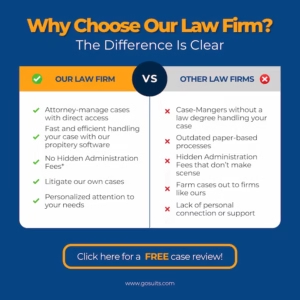
How we handle communication, fees, and case management in detail
- Availability and communication: You can reach an attorney 24/7 for urgent needs, and we assign a dedicated attorney and support team to your file so you have consistent points of contact. We provide case updates and coordinate medical records, evidence collection, and insurer communications so you are informed at every major step.
- Fee transparency and costs: Our contingency model means that you pay attorney fees only if we recover for you. We do not charge hidden administrative fees and fully explain anticipated expenses and how they are handled during litigation or settlement negotiations.
- Tools and workflow: Our proprietary personal injury software helps us track deadlines, preserve evidence, prepare settlement demands and litigation documents, and manage discovery. That platform is integrated with our intake, medical‑billing review, and expert engagement processes to keep your case moving efficiently.
- Experience and strategic approach: We combine courtroom readiness with negotiated resolution strategies. When appropriate, we retain biomechanical, medical, and accident‑reconstruction consultants to build persuasive causal and damage evidence for settlement or trial.
Where we can help immediately
GoSuits has offices and teams across key metropolitan areas, including Houston, Dallas, Austin, San Antonio, Los Angeles, San Francisco, San Diego, and Chicago. If you need immediate assistance after a T‑bone collision, contact our 24/7 intake line and we will schedule a free consultation and begin steps to preserve evidence, notify insurers, and coordinate medical documentation.
Resources and authoritative references
- Insurance Institute for Highway Safety — Intersection Crashes
- National Highway Traffic Safety Administration — Research and Data
- Legal Information Institute — Negligence
- Legal Information Institute — Comparative Negligence
- California Vehicle Code §21800 — Right of Way at Intersections
- Texas Statutes — Texas Legislature Online
- Illinois Rules of the Road — Secretary of State
- GoSuits — No Win, No Attorney Fees
- GoSuits — Prior Cases and Results