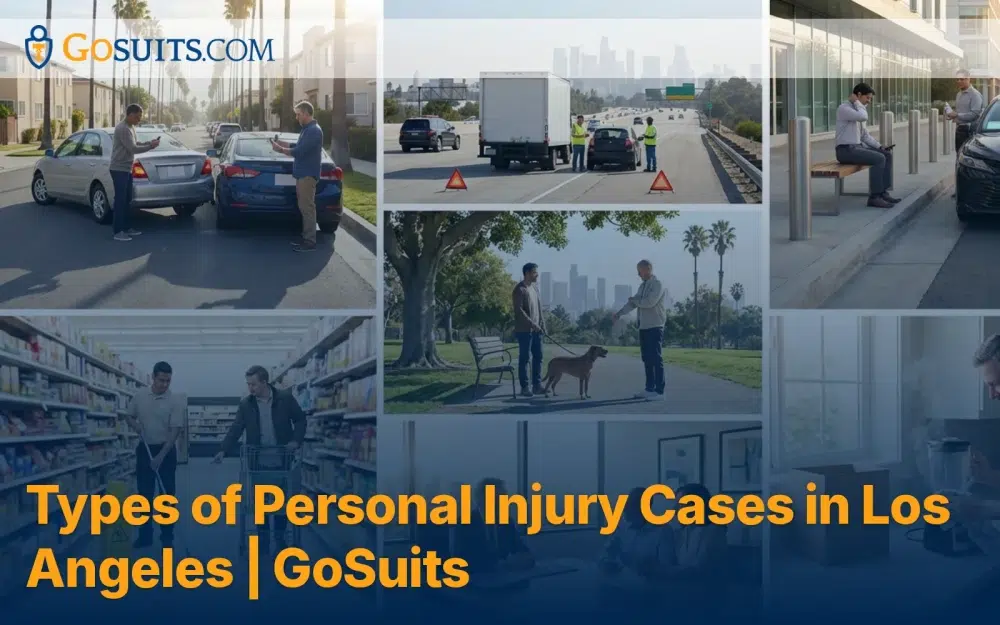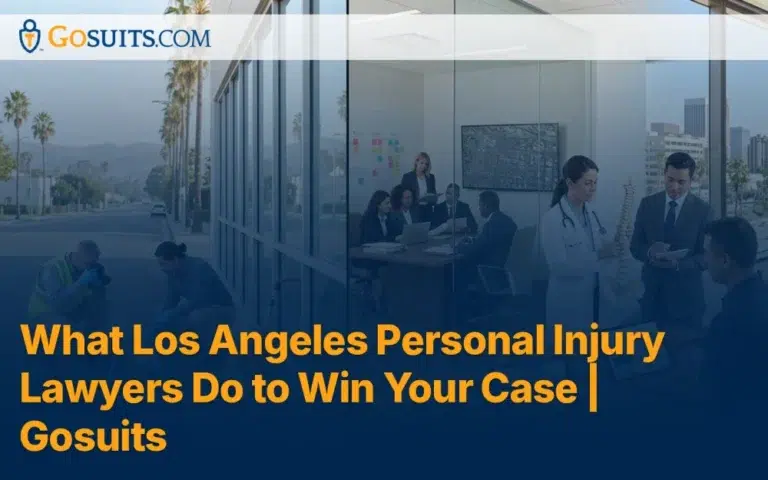
- What do Los Angeles personal injury lawyers do first?
- How is evidence preserved and gathered in Los Angeles cases?
- What laws and deadlines control California personal injury cases?
- How do comparative negligence and liability work in California?
- How do demand letters and insurance negotiations work in Los Angeles?
- What happens if settlement fails and your case goes to trial in Los Angeles?
- What damages can you recover in California injury cases?
- How do lawyers prove damages and value your claim?
- What should you do after a crash or fall in Los Angeles?
- Why does having a lawyer matter in civil injury cases?
- How do fees and costs work in California personal injury cases?
- How do Los Angeles courts handle personal injury cases?
- How long do cases take and what affects timelines?
- How do wrongful death claims work in California?
- How does GoSuits support your case in Los Angeles?
- References and Resources
What do Los Angeles personal injury lawyers do first?
When you reach out after a serious crash or fall, a Los Angeles personal injury lawyer starts by listening to your story, clarifying your immediate needs, and identifying urgent next steps. Early steps commonly include an initial consultation, a conflict check, and a written agreement that explains roles, fees, and your rights. From there, counsel notifies insurers and responsible parties that you have representation, protects you from direct adjuster calls, and starts preserving evidence that might disappear quickly.
In the first days, your legal team typically does the following:
- Secure the scene and evidence by capturing photos or video, locating witnesses, and requesting police reports and incident records.
- Send preservation letters to at-fault drivers, businesses, and property owners so that surveillance video, vehicle data, and maintenance logs are not lost.
- Document your injuries and treatment by gathering hospital records, imaging results, and physician notes that connect the incident to your diagnosis.
- Identify all insurance coverage including the at-fault party’s liability coverage, possible employer or commercial policies, and your own uninsured or underinsured motorist coverage.
- Map the legal path by checking deadlines and identifying whether the claim is against a private party or a public entity, which can change the timetable and process [1] [2].
If you are weighing different options, remember that injury law involves strict deadlines and complex proof rules, so having help early can make a difference in what evidence is available and how effectively your claim is presented.
How is evidence preserved and gathered in Los Angeles cases?
Strong cases are built on reliable facts. Your lawyer’s job is to capture and preserve the most persuasive proof before it is altered or lost. In Los Angeles, that often includes a mix of physical, digital, and testimonial evidence.
What are the first sources of evidence your lawyer collects?
- Official reports such as California Traffic Collision Reports and incident reports from property owners.
- Photographs and video from bystanders, dash cameras, ride share logs, and nearby businesses with security cameras.
- Vehicle and product data like event data recorder information from vehicles, telematics, and maintenance records.
- Medical documentation including emergency department records, follow up notes, and itemized bills.
- Witness statements gathered while memories are fresh, which can be decisive if liability is disputed.
Why do preservation letters and spoliation instructions matter?
California courts allow juries to consider whether a party willfully suppressed or failed to preserve evidence, and jurors may be instructed they can infer that missing evidence would have been unfavorable to that party [6]. Early notices help create a clear record that you requested preservation, and they support later requests for sanctions or adverse inferences if key items go missing [6].
How do police reports and statutory reporting help?
Prompt reporting helps document what happened and when. California law requires drivers to report certain crashes to law enforcement within a short time period, which can generate a formal record that your lawyer can use to track witnesses, insurance information, and roadway conditions [15].
What laws and deadlines control California personal injury cases?
Deadlines are among the most critical facts in any civil case. Missing a filing date can bar your claim regardless of merit.
What is the standard statute of limitations for personal injury in California?
In most California personal injury cases, you have two years from the date of injury to file a lawsuit in court [1]. If the injury was not discovered right away, special rules can sometimes extend the deadline, but do not count on an extension without legal review.
What if a public entity is involved?
Claims against a city, county, or other public entity are subject to the Government Claims Act. Most personal injury claims must be presented to the public entity within six months of the incident before you can file a court case [2]. This short administrative deadline is easy to miss without prompt action.
Are there other rules that affect California cases?
- Comparative fault and damages sharing are addressed by jury instructions and statutes that influence how responsibility and compensation are divided [6] [7].
- Settlement communications often receive protection from use as evidence of liability, which shapes how demand letters are written and exchanged [3] [4].
- Local court procedures in Los Angeles, including electronic filing and case management protocols, affect the timetable and logistics of your case [11].
How do comparative negligence and liability work in California?
California follows a system that allows an injured person to recover compensation even if they share some responsibility, with the total recovery reduced by their percentage of fault. Juries receive pattern instructions on how to allocate responsibility among the parties [6].
How does comparative fault affect noneconomic damages?
Under California law, each defendant is responsible for their proportionate share of noneconomic damages such as pain, suffering, and emotional distress. This allocation is based on the percentage of fault assigned to each defendant [7]. For economic losses like medical bills and wage loss, different rules on joint responsibility can apply depending on the defendants and claims at issue.

How do lawyers frame comparative fault in settlement talks?
Adjusters and defense counsel often raise partial fault to minimize payouts. Your lawyer counters with roadway designs, time distance analysis, human factors, and witness testimony to explain why the other party’s choices primarily caused the harm. Documentation, well organized exhibits, and precise timelines make those arguments more persuasive [6].
How do demand letters and insurance negotiations work in Los Angeles?
After evidence is organized and your medical picture stabilizes, your lawyer usually sends a detailed demand to the insurer. A carefully drafted demand tells the story clearly, sets out liability, describes your injuries, quantifies economic losses, and explains human losses in a way that is consistent with the proof rules.
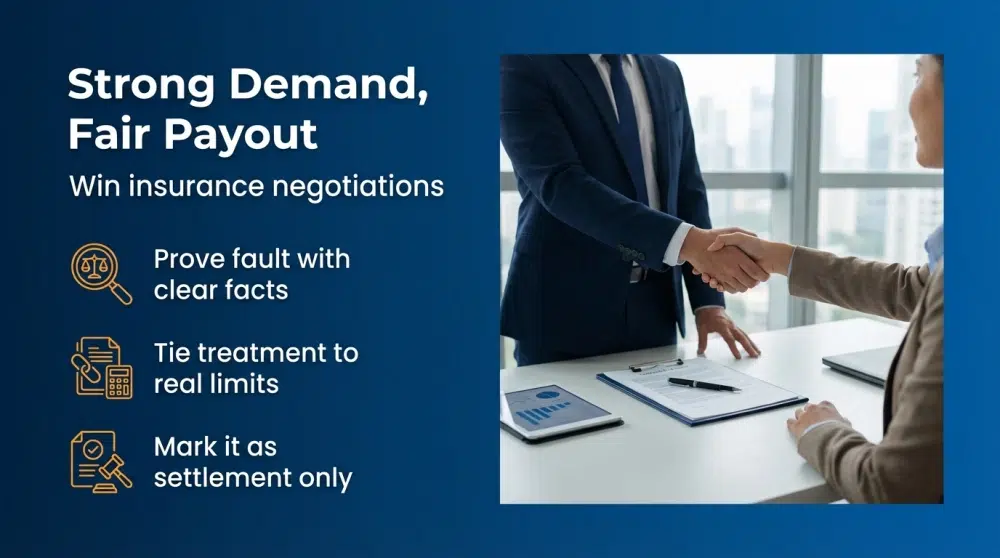
What should be included in a demand letter?
- Clear liability theory that ties facts to duties and breaches supported by photos, diagrams, and sworn or recorded statements.
- Medical summary translating clinical findings into day to day limitations with links to records and bills.
- Damages analysis covering both economic losses and human harms, with citations to jury instructions where helpful [6].
- Settlement posture marked as a compromise communication to reflect rules limiting admissibility of such statements [3] [4].
How are California insurance companies obligated to respond?
California’s Fair Claims Settlement Practices Regulations require insurers to communicate promptly, conduct reasonable investigations, and make timely decisions on claims [8]. While the precise timelines and duties depend on the circumstances, these regulations shape how claims are adjusted and provide leverage if an insurer delays or undervalues a case [8].
How do negotiations typically progress?
Negotiations usually involve a series of offers and counteroffers. Your lawyer monitors changes in your medical status and updates the insurer when new bills or diagnoses come in. If the gap remains significant, counsel may use a time limited policy limits demand where justified, request mediation, or file a lawsuit to apply court oversight. In many Los Angeles cases, a mandatory settlement conference is held as the trial date approaches to facilitate resolution [5].
What happens if settlement fails and your case goes to trial in Los Angeles?
Most cases settle, but some require litigation. Filing a complaint triggers discovery, expert disclosures, motion practice, and eventually a jury trial if the dispute does not resolve.
What are the main phases of litigation?
- Pleadings where the complaint and answers define the claims and defenses.
- Discovery through depositions, interrogatories, document requests, and independent medical examinations, all directed at testing credibility and narrowing issues.
- Motions to address disputed legal issues, compel discovery, or limit what the jury will hear.
- Alternative dispute resolution including mediation or judicial settlement conferences that can occur at several points in the case lifecycle [5].
- Trial with jury instructions that explain burdens of proof, comparative fault, and damages [6].
How do local Los Angeles practices affect your case?
Los Angeles Superior Court uses electronic filing, detailed civil case management procedures, and designated courtrooms for high volume personal injury calendars. These local practices influence timelines for hearings, discovery, and trial setting [11].
What damages can you recover in California injury cases?
Compensation in California is intended to make you whole for losses caused by another’s wrongful conduct. The categories below appear in jury instructions and statutes and guide both settlement and trial presentation.
- Medical expenses for past and reasonably certain future treatment, therapy, medication, and medical devices.
- Lost income and diminished earning capacity including missed work, reduced hours, or limits on future career paths.
- Property damage such as vehicle repairs or replacement and loss of use.
- Non economic losses such as pain, suffering, inconvenience, disfigurement, and loss of enjoyment of life, which are allocated among defendants based on fault percentage [7].
Your lawyer ties each category of loss to specific evidence. For example, therapy notes and job performance reviews can help connect physical limitations to lost earning power, while photos and journals can make day to day impacts real to an adjuster or juror.
How do lawyers prove damages and value your claim?
Valuation is not a one size process. It blends legal analysis with proof of how the injury changed your life. A careful presentation includes both numbers and human context.
How are economic damages documented and modeled?
- Medical bills and coding audits identify billed amounts, paid amounts, and reasonable value tied to prevailing rates.
- Wage and earnings evidence draws on W 2 forms, 1099s, employer letters, and, for self employed individuals, profit and loss statements and tax records.
- Future costs may be projected using life care planning methodologies and actuarial tools when long term care is reasonably certain [6].

How are human losses conveyed without exaggeration?
California pattern jury instructions guide how jurors consider pain, suffering, and loss of enjoyment. Effective presentations often use day in the life visuals, calendars that map treatment and setbacks, and short first person statements. Your legal team aligns these presentations with the legal standards that jurors will apply [6].
Do population and traffic data affect valuation?
Context matters. California experiences large numbers of serious crashes each year, and the United States saw more than 42,000 traffic fatalities in 2022, a sobering statistic that reflects the stakes when safety rules are broken [10]. The California Office of Traffic Safety publishes statewide data that helps frame risk and the need for accountability [9].
What should you do after a crash or fall in Los Angeles?
Your health and safety come first. If you are able, take steps that protect both your wellbeing and your legal rights.
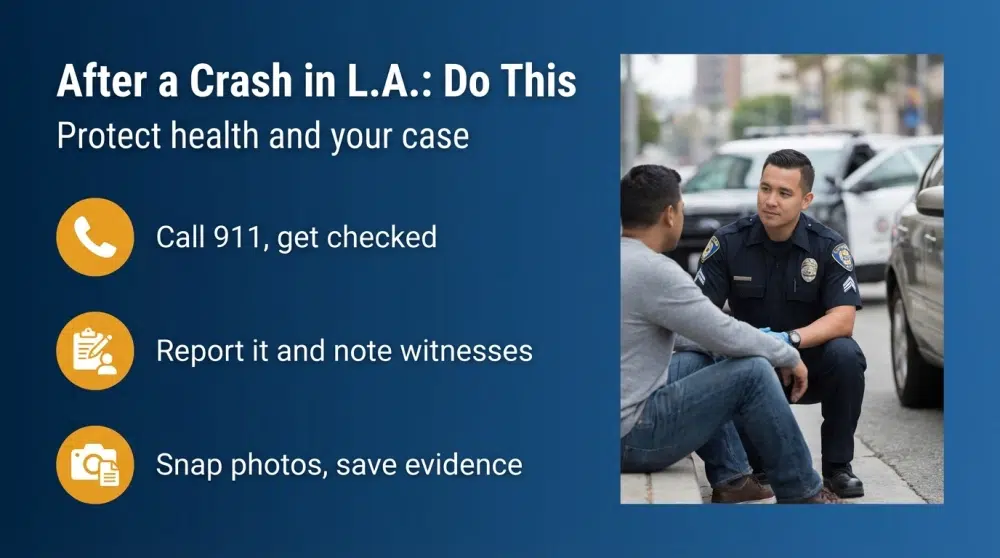
- Call emergency services and get medical care. Prompt evaluation both protects you and creates reliable documentation.
- Report the incident to law enforcement or the property owner as applicable so that an official record is created [15].
- Document the scene with photos, video, and names of any witnesses.
- Preserve key items such as damaged personal property and clothing in a safe place.
- Avoid social media posts that could be misconstrued later by an insurer or defense team.
- Contact counsel promptly so that deadlines are tracked and preservation letters go out while evidence is still available [1] [2].
Why does having a lawyer matter in civil injury cases?
Injury claims often involve disputed fault, complex medical questions, multiple insurers, and strict procedures. An advocate coordinates investigation, protects you from common pitfalls, and frames your story within the legal standards a judge and jury will apply.
- Strategic case building organizes facts and law for early leverage with insurers and clarity at trial.
- Procedural control keeps discovery focused and compels timely cooperation where the other side resists.
- Negotiation power uses rules governing claims handling, admissibility, and comparative fault to justify fair outcomes [8] [3] [4] [6].
If your case involves a motor vehicle collision, Los Angeles car accident lawyers are adept at reconstructing events using roadway design, vehicle data, and eyewitness testimony to demonstrate how the crash happened and why a defendant should be held responsible.
How do fees and costs work in California personal injury cases?
Most personal injury attorney Los Angeles arrangements use contingency fees, where the legal fee is a percentage of the recovery. California law requires that contingency fee agreements be in writing and include specific disclosures about how the fee is calculated and what costs are deducted [12]. The State Bar also provides consumer guidance about attorney fees and costs, including what to expect and questions to ask before you sign [13].
What costs are common and how are they handled?
- Filing and service fees for opening the case and serving defendants.
- Medical records and billing charges which providers assess for copies of records.
- Deposition and transcript costs when testimony is recorded.
- Investigative expenses to obtain photos, video, and scene measurements.
- Mediation or arbitration fees when alternative dispute resolution is used.
Most agreements specify whether costs are advanced by the firm and how they are repaid from any recovery. Ask for a plain language explanation and an itemized statement at regular intervals [12] [13].
How do Los Angeles courts handle personal injury cases?
Los Angeles Superior Court manages one of the largest civil dockets in the United States. Civil cases are electronically filed and assigned to departments that handle motions, settlement conferences, and trials. Personal injury cases may be assigned to high volume calendars for efficient pretrial management and then sent to trial departments as they approach a firm date [11].
What court events should you expect?
- Case management conferences where the court sets deadlines and addresses scheduling conflicts.
- Motion hearings on discovery disputes, evidentiary issues, or summary judgment.
- Mandatory settlement conferences close to trial to promote resolution [5].
- Trial readiness reviews to confirm witness availability and exhibit exchanges.
Understanding local practices helps your legal team time discovery, experts, and mediation to maximize settlement opportunities while preparing for trial.
How long do cases take and what affects timelines?
Timeframes vary. Some claims resolve within months after treatment ends, while litigated cases in a large county like Los Angeles can take a year or more depending on court congestion, discovery disputes, and whether expert testimony is needed.
What can speed up or slow down a case?
- Clear liability and complete records can lead to faster settlements.
- Disputed fault or causation often requires more discovery and motion practice.
- Complex injuries that need long term evaluation may justify waiting until you reach maximum medical improvement to avoid undervaluation.
- Court calendars and the availability of witnesses and counsel also influence timelines [11].
How do wrongful death claims work in California?
When a family loses a loved one because of another’s wrongful act or neglect, California law authorizes certain relatives to bring a wrongful death action. The statute identifies who may sue and the types of damages available, including financial support the decedent would have provided and the value of companionship and guidance [14]. The two year statute of limitations generally applies, though unique timing issues can arise and should be evaluated promptly [1].
How does GoSuits support your case in Los Angeles?
When you are injured in Los Angeles, CA, you deserve a clear plan, steady communication, and a legal team that brings process discipline to every stage. GoSuits is a technology driven injury law firm Los Angeles clients turn to for organization, speed, and trial ready case building. We combine hands on advocacy with proprietary software that helps us collect records faster, track deadlines precisely, and present evidence in a way that decision makers find easy to navigate.
What sets GoSuits apart in service and process clarity?
- Designated attorney for every client so you always speak directly with your lawyer, not a case manager. You have unfettered access to your attorney for updates and strategy.
- Exclusive proprietary software that centralizes records, bills, and exhibits, and flags tasks and milestones to reduce delays and missed opportunities.
- Leadership in innovation with secure client portals, structured medical chronologies, and visual timelines that make negotiations and trials more persuasive.
- Trial experience that informs early strategy, from preservation letters to cross examination plans, which often improves settlement outcomes.
- Results driven approach reflected in past case outcomes that show sustained commitment to accountability and fair compensation.
Where does GoSuits practice and what cases do we handle?
We represent clients in Los Angeles and throughout California in civil personal injury cases, including vehicle collisions, premises incidents, product related injuries, and wrongful death. Our team brings more than 30 years of combined experience to investigations, negotiations, and courtroom advocacy. You can review a selection of outcomes and the advocates who lead our cases here:
prior cases,
our attorneys,
about us,
and
practice areas.
How do GoSuits lawyers build strong cases?
- Early evidence control through scene work, preservation requests, and systematic record collection that aligns with California proof standards [6].
- Focused liability theory with timelines and diagrams that address comparative fault arguments head on [6] [7].
- Negotiation discipline that leverages California claims regulations and settlement communication rules to push for timely and fair outcomes [8] [3] [4].
- Trial readiness through exhibit design, witness preparation, and adherence to local court expectations in Los Angeles Superior Court [11] [5].
We are comfortable guiding you through each step, from the first notice to insurers through mediation and, when needed, verdict. If you want to talk about your options, we offer a free consultation so you can understand timelines, evidence needs, and strategy without pressure. In that meeting, we explain fees and costs in plain language and provide a roadmap tailored to your case [12] [13].
What are the key takeaways for your Los Angeles injury claim?
- Act quickly to protect deadlines and preserve evidence, especially if a public entity may be involved [1] [2].
- Build from the facts with records, witnesses, and well organized exhibits that match jury instructions [6].
- Negotiate with structure by using settlement communications appropriately and holding insurers to fair claims practices [3] [8].
- Prepare for trial even as you pursue settlement, because trial readiness often leads to better offers [5] [11].
For broad overview pages like this one, we cannot cover every unique wrinkle. Your situation may involve special rules, such as government claim procedures, unique damages questions, or complex liability allocations. Talking with counsel early helps align your evidence and deadlines with California law.
How does this apply to common Los Angeles scenarios?
Traffic congestion and dense commercial corridors in Los Angeles, CA increase the chance that crucial video and data will cycle or be overwritten within days. Prompt notices to preserve surveillance video, ride share logs, and event data recorders can be decisive. California records thousands of serious crashes annually, which underscores why roadway safety rules and careful documentation matter so much [9] [10].
If your case involves a roadway collision, car accident lawyers use collision reports, signal timing data, and scene measurements to show how a chain of events led to injury. When a collision involves an uninsured or underinsured driver, counsel also investigates your household policies for uninsured motorist coverage and medical payments coverage that can help close the gap while liability is resolved.
For broader injury claims beyond vehicle collisions, personal injury lawyers can help coordinate medical documentation, evaluate liens from health plans, and present a concise damages picture that fully reflects day to day limitations. For many clients, that includes documenting sleep disruption, limitations in caring for children or elders, and changes in mobility or recreation, in addition to economic losses.
You might prefer working with personal injury lawyers in Los Angeles who are familiar with local procedures and calendars and who can coordinate on site investigations quickly when needed. Los Angeles procedures, including electronic filing and mandatory settlement conferences, can influence when mediation is most effective and when a case should be prepared for a jury [11] [5].
If your case involves a motor vehicle crash, Los Angeles car accident lawyers often collaborate with treating providers to translate medical charts into plain language for adjusters and juries. That collaboration helps decision makers understand why a seemingly modest imaging finding may still cause real limitations or pain that disrupts work and home life.
What process questions do clients in Los Angeles ask most?

How long should I treat before sending a demand?
There is no single answer. If you have a clear diagnosis and a stable treatment plan, your lawyer may proceed with a demand that includes future care projections. If your condition is still evolving, it may be prudent to continue treatment to avoid undervaluing future needs [6].
Will my demand letter be used against me?
Settlement offers and compromise communications are generally not admissible to prove liability or the value of a claim, though there are exceptions. Proper labeling and careful drafting help fit within the rules that limit admissibility [3] [4].
What if the insurer will not respond or lowballs?
California regulations require prompt, fair claim handling. Your lawyer can escalate by setting reasonable deadlines, requesting supervision review, invoking regulatory duties, or filing suit to move the case into court oversight [8].
Do I have to attend mediation or a settlement conference?
Courts often encourage or require participation in settlement events before trial. In Los Angeles cases, mandatory settlement conferences are a regular part of the pretrial process, and preparation for those events can significantly affect results [5] [11].
References and Resources
- California Code of Civil Procedure section 335.1 Two year limitation for personal injury – California Legislature
- California Government Code section 911.2 Government Claims Act deadline – California Legislature
- California Evidence Code section 1152 Offers to compromise – California Legislature
- Federal Rule of Evidence 408 Compromise offers and negotiations – Cornell Law School LII
- California Rules of Court rule 3.1380 Mandatory settlement conferences – Judicial Council of California
- California Civil Jury Instructions CACI 2024 Edition including Nos. 204 and 405 – Judicial Council of California
- California Civil Code section 1431.2 Several liability for noneconomic damages – California Legislature
- Fair Claims Settlement Practices Regulations overview – California Department of Insurance
- Traffic Safety Quick Stats – California Office of Traffic Safety
- 2022 Traffic Crash Data Annual Report – National Highway Traffic Safety Administration
- Civil Division information and electronic filing – Los Angeles Superior Court
- Business and Professions Code section 6147 Contingency fee agreements – California Legislature
- Attorney Fees and Costs Consumer Guide – State Bar of California
- California Code of Civil Procedure section 377.60 Wrongful death actions – California Legislature
- California Vehicle Code section 20008 Accident reporting – California Legislature