
- What should you bring to your first medical visit after a Los Angeles accident?
- How do you document injuries and symptoms so they are usable in a California claim?
- Which questions should you ask your doctor after an injury in Los Angeles?
- What timelines and legal deadlines can affect your medical visits and records in California?
- How do California and federal privacy rules affect access to your medical records?
- What follow up care and symptom monitoring should you plan after a crash?
- How are police and crash reports obtained in Los Angeles and why do they matter to your visit?
- What should you know about insurance, billing, and medical liens?
- About GoSuits
- References and resources
What should you bring to your first medical visit after a Los Angeles accident?
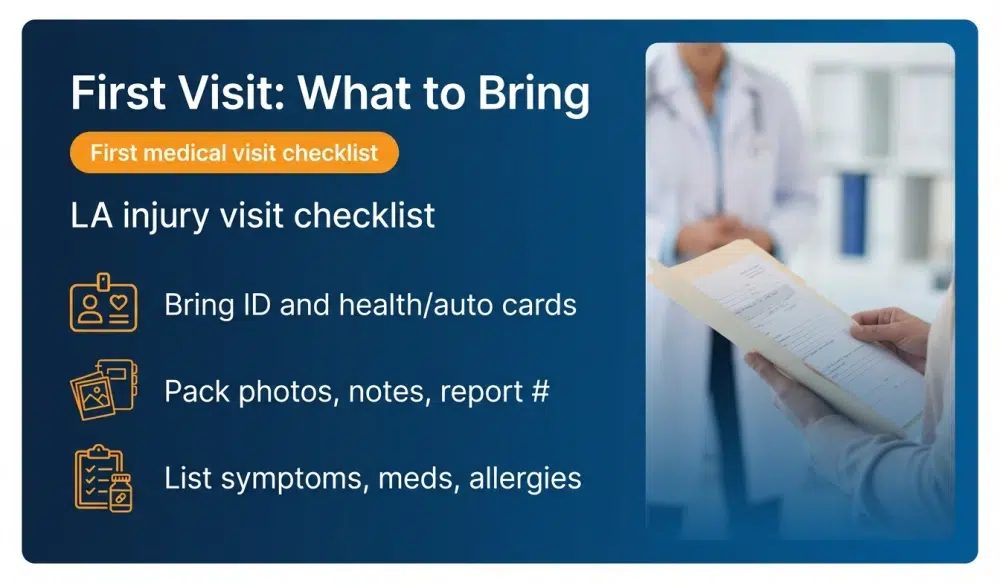
If you were hurt in Los Angeles, the first medical visit after a crash or fall sets the tone for your recovery and for any California personal injury claim steps you may take. A clear, organized packet helps your provider assess your injuries and creates a dependable record. Use this Los Angeles medical visit checklist after an injury to prepare.
Which identification and insurance details should you carry?
- Government-issued ID: Bring a driver’s license or other photo ID.
- Health insurance cards: Include primary and secondary plans, Medicare, or Medi-Cal if applicable.
- Auto policy card: If the injury involves a vehicle, carry your policy and claim number if opened. California insurers must investigate claims promptly and in good faith, and having accurate policy details can speed communication [15].
What documentation about the incident should you include?
- Accident notes and timeline: Write a brief, factual account of what happened, the location, and the time of day. NHTSA guidance emphasizes gathering accurate information after a crash to support safety and follow-up steps [1].
- Photos and videos: Print or save images of the scene, vehicles, visible injuries, and property damage. These help your provider document the mechanism of injury.
- Witness and other party details: Names, phone numbers, insurance information, and vehicle plate numbers if applicable [1].
- Police report or incident number: If you have a report number, bring it. We explain how to request reports in Los Angeles below.
What medical and symptom information is most helpful?
- Current symptoms checklist: Note pain levels, location, and what makes symptoms better or worse. Include headache, dizziness, confusion, nausea, light sensitivity, neck or back pain, numbness, weakness, ringing in ears, and sleep changes, which can be consistent with concussion or soft tissue injury [3].
- Medication list: Include prescriptions, over-the-counter drugs, supplements, and allergies.
- Past medical history: Prior injuries, surgeries, or chronic conditions to help differentiate new trauma from preexisting issues.
Which forms and contacts can speed up records and billing?
- HIPAA authorization: A signed authorization allows your care team to release records to you or your attorney as allowed by federal privacy rules [4] and California access laws [6].
- Primary care and specialist contacts: Names and phone numbers for referrals and coordination.
- Claim contact details: Adjuster name and claim number, if already assigned. Keep communication accurate and limited to essentials while you focus on treatment [15].
What can you do before the visit to avoid common mistakes?
- Prepare a one-page summary: List injuries, medications, allergies, and top three concerns so the provider can triage quickly.
- Bring supportive items: Glasses, hearing aids, braces, or mobility aids if needed, plus comfortable clothing to allow an exam of injured areas.
- Plan transportation: Arrange a safe ride if you feel dizzy, are on new medications, or expect imaging that could affect driving.
How should you describe pain and functional limits?
- Use a 0–10 pain scale: Provide ranges at rest and with activity, and name activities that trigger pain.
- Be concrete: Instead of “my back hurts,” try “I cannot lift a grocery bag without sharp pain in the lower back.”
- Note duration and frequency: Include how long episodes last and how often they occur.
How do you document injuries and symptoms so they are usable in a California claim?
Documentation is the backbone of a personal injury case. Both plaintiffs and defendants rely on contemporaneous records to understand what happened, the extent of harm, and causation. Careful documentation reduces disputes later.
What symptom journal should you keep from day one?
- Daily notes: Record pain ratings, new or worsening symptoms, missed activities, and sleep quality. Even minor crashes can cause symptoms that evolve over several days, especially with head and neck injuries [3]. Bring the journal to each medical visit for accurate updates in your chart.
- Work and activity impact: Note missed work, reduced duties, or inability to perform household tasks. This supports both medical care planning and damage calculations later.
Why are objective tests and provider observations important?
Objective evidence such as imaging, range-of-motion measurements, neurologic exams, and diagnosis codes help establish the nature and severity of injuries. Under the business records rule, properly kept medical records can be admissible as evidence in civil cases when the requirements are met [14]. Ask your provider to document specific findings, not just generalized statements.
How can photos and timelines strengthen your record?
- Progress photos: Photograph bruising, swelling, and wounds on a set schedule, such as daily for the first week. Date-stamp the images and share key photos with your provider to include in the record.
- Clear chronology: Create a simple timeline from incident to first treatment. Courts and insurers look for prompt evaluation after an injury. If there was a delay for a valid reason, make sure your provider notes it so the record explains the gap.

What digital tools can help you document consistently?
- Calendar reminders: Set reminders for medication, exercises, and photo updates.
- Secure storage: Keep copies of records, images, and bills in a single, backed-up folder to minimize loss or duplication.
- Shared access: If you have legal representation, ask how they prefer to receive updates so your documentation is usable.
Which questions should you ask your doctor after an injury in Los Angeles?
Quality questions help your visit produce actionable care and a complete record that supports healing and clarity for any claim.
What diagnosis and tests do I need right now?
Ask your clinician to explain differential diagnoses, what conditions they are ruling in or out, and whether imaging is warranted. If you have head injury symptoms, discuss concussion protocols and warning signs that require urgent reevaluation [3].
What activity restrictions and work notes are appropriate?
Get written restrictions that reflect your condition, such as no lifting over a certain weight, limited sitting or standing, or time off work. Bring work-duty forms if your employer requires specific language.
What is the recommended follow-up schedule and referrals?
Confirm the timeline for follow-up visits, physical therapy, pain management, or specialty care. NHTSA recommends prompt follow-up after a crash to address latent injuries and avoid gaps in care [1].
What symptoms should trigger urgent care or emergency evaluation?
Ask for red flag guidance in writing. For example, worsening headache, repeated vomiting, weakness, slurred speech, new numbness, or confusion after a head injury should prompt immediate care [3].
What should you ask about medications and side effects?
- Purpose and timing: Clarify why each medication is prescribed, when to take it, and how long to continue.
- Interactions: Ask about interactions with over-the-counter drugs and supplements.
- Monitoring plan: Know what side effects require a call or an urgent visit.
What timelines and legal deadlines can affect your medical visits and records in California?
California law sets several timelines that touch your medical visit, reporting, and the life of a claim. Tracking these dates keeps your case on track and protects your rights.
How quickly should you seek care and report the crash?
- Medical evaluation: Seek care as soon as possible. Immediate documentation reduces dispute about causation, especially for soft tissue and head injuries [1][3].
- Police notification: In California, when a collision results in injury or death, the driver must report the incident to the appropriate law enforcement agency within 24 hours if an officer does not investigate at the scene [10].
- DMV SR 1: You must file an SR 1 report with the DMV within 10 days when anyone is injured or killed, or when property damage meets the reporting threshold, even if the other driver was at fault [11].
What are the core civil deadlines in California?
- General personal injury statute: In most California personal injury cases, you have two years from the date of injury to file suit [8].
- Claims against public entities: If a government agency may be responsible, California’s Government Claims Act generally requires a written claim within six months of the incident, before any lawsuit can be filed [9]. The California Courts Self-Help pages provide practical guidance for these claims as well [9].
How fast can you get copies of your medical records?
- Federal right of access: Under HIPAA, patients generally have a right to access their medical records within a set timeframe, with limited exceptions [4][5].
- California timelines: California law sets specific deadlines for providers to make records available to patients upon written request, generally within 15 days [6]. For attorney-authorized requests in injury matters, California Evidence Code may require quicker production to counsel in certain circumstances [7].
What if you miss an appointment or deadline?
- Reschedule quickly: Contact the provider the same day to reschedule and ask that the chart note reflect the reason for any missed visit.
- Track legal timelines: Keep a calendar for reporting duties and limitation periods; if a public entity is involved, the six-month claim window is short [9].
How do California and federal privacy rules affect access to your medical records?
Your ability to obtain medical records and share them with your legal team is governed by both federal and California law. Understanding these rules helps you get what you need quickly while protecting sensitive information.
What does HIPAA allow you to request?
Federal privacy rules give you a right to access your health information in a designated record set, including clinical notes, lab results, imaging, and billing records, subject to narrow exceptions. Covered entities must respond within the regulatory timeframe and may charge only reasonable, cost-based fees for copies [4][5].
What extra rights do California patients have?
California law supplements federal rights. For example, patients can inspect records during business hours and request copies, with providers required to produce records within 15 days in most cases [6]. In personal injury matters, attorney requests with proper authorization can trigger expedited and structured production of hospital records under California Evidence Code [7].
How can you protect sensitive information while advancing your claim?
- Targeted requests: Ask for relevant date ranges and document types to avoid over-disclosure.
- Use written authorizations: Provide HIPAA-compliant forms that specify recipients and permitted disclosures [4].
- Document custody: Keep a log of what was requested and received to support accuracy and discovery later.
Can providers charge you for copies, and how should you pay?
- Cost-based fees: Under HIPAA, fees must be reasonable and related to the cost of copying or producing electronic records [5].
- Ask for e-delivery: Request records via secure portal or encrypted email to reduce copying costs.
What follow up care and symptom monitoring should you plan after a crash?
Follow-up visits are as important as the first appointment. Consistent care improves recovery and makes your record complete and credible for both plaintiffs and defendants.
What symptoms should you monitor closely after head, neck, or back injury?
- Head injury signs: Monitor headache, confusion, dizziness, nausea, vision changes, sleep disturbance, and mood changes. Seek urgent care for red flag symptoms such as worsening headache, repeated vomiting, slurred speech, or new weakness [3].
- Spine and soft tissue symptoms: Watch for radiating pain, numbness, tingling, reduced range of motion, and muscle spasms. Report changes promptly to your provider.
How can you structure a post-accident medical checklist?
- Visits: Keep every scheduled appointment, and reschedule promptly if you must miss one. Missed visits can be used to challenge causation or severity later.
- Therapies: Follow physical therapy home exercises as prescribed, and log the dates and durations performed.
- Medications: Maintain an updated list, dose, and timing. Note side effects and share with your provider.
- Reevaluation: If symptoms persist beyond the expected window, request reevaluation or referral to a specialist.
Why are emergency department vs. urgent care vs. primary care choices important?
Choosing where to go affects both health and documentation. Emergency rooms are appropriate for severe or red flag symptoms. Urgent care or primary care may be appropriate for stable injuries with no red flags. Early evaluation reduces the risk of missed injuries and helps your medical records for personal injury claim review.
What if you cannot travel to a clinic safely?
- Consider telehealth: Ask if a telehealth triage is appropriate for initial guidance, followed by in-person evaluation when safe.
- Use assistance: Arrange a ride or mobile urgent care if mobility is limited.
How are police and crash reports obtained in Los Angeles and why do they matter to your visit?
Police and traffic collision reports are not medical records, but they often guide your provider’s understanding of the mechanism of injury and are important to insurers and courts.
When and how should a crash be reported?
- Immediate reporting: If an officer did not respond, California law requires the driver to report a crash involving injury or death to local police or the CHP within 24 hours [10].
- State collision report: File the DMV SR 1 within 10 days whenever there is injury or qualifying property damage, regardless of fault [11].
How do you request a collision report?
The California Highway Patrol provides a process for requesting collision reports for qualifying parties, such as drivers, passengers, or their representatives [12]. In Los Angeles, you may also encounter reports from the Los Angeles Police Department or the Los Angeles County Sheriff depending on jurisdiction. Bring the incident number and officer name to your first visit if available so your provider can reference mechanism details.
Why do Los Angeles court procedures matter later?
If your claim proceeds to litigation, Los Angeles Superior Court has a dedicated civil personal injury division with specific case management procedures that affect discovery and trial readiness [13]. Early, organized medical records make discovery more efficient and reduce disputes about missing information.
What if a crash report contains errors?
- Request an amendment: Contact the agency to ask about its process for supplemental statements or corrections.
- Document discrepancies: Provide your provider with a note about any inaccuracies so your medical chart explains your account.
What should you know about insurance, billing, and medical liens?
Billing choices can influence both your finances and the presentation of your claim. Understanding your options before and during the first visit helps you avoid surprises.
How do health insurance and auto medical payments interact?
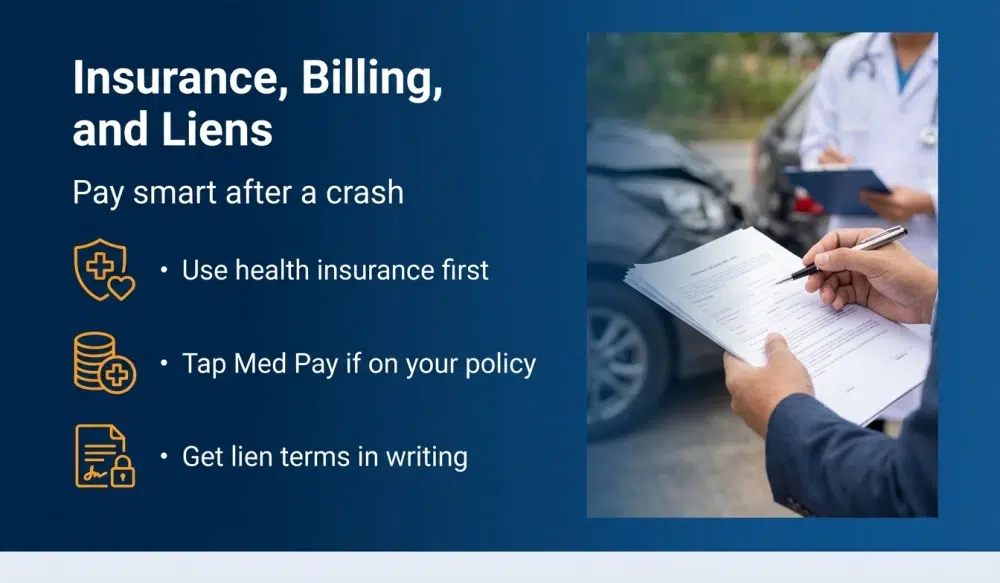
- Health insurance first: In many cases, providers bill your health insurance. You remain responsible for copays and deductibles. Some plans may assert subrogation or reimbursement rights if you later recover from a third party.
- Med Pay coverage: Some auto policies include medical payments coverage that can pay medical bills up to the purchased limit, regardless of fault. Coordinate benefits to avoid duplicate payments.
What is a medical lien and when is it used?
Some providers agree to treat on a lien, which defers payment until your case resolves. If you use a lien, ask for the lien terms in writing and keep copies. Good documentation of necessity and cost of care is essential for negotiations with insurers who must evaluate claims fairly under California regulations [15].
What billing records should you gather for damages?
- Itemized bills and ledgers: Obtain itemized statements that list CPT codes, dates of service, and payments. These help quantify medical specials and respond to insurer audits.
- Explanation of benefits: Keep EOBs from your health insurer to show amounts billed, allowed, paid, and patient responsibility.
How should you track reimbursements and balances?
- Create a billing spreadsheet: Track provider, date, amount billed, insurance payment, and remaining balance.
- Save all correspondence: Keep letters, emails, and portal messages regarding denials or approvals.
About GoSuits
If you were injured in Los Angeles, CA, your first medical visit after an accident is critical to both your health and any potential civil claim. GoSuits helps people organize a post-accident medical checklist, gather medical records for personal injury claim review, and coordinate provider communication so you can focus on recovery. We offer free consultations for injury matters, and we can explain how timely documentation, consistent care, and clear record requests support your case from day one.
We practice across California, including Los Angeles County and surrounding communities, and handle a wide range of injury cases such as vehicle collisions, pedestrian incidents, bicycle crashes, rideshare collisions, premises injuries, product defects, construction site injuries, and wrongful death. Our firm uses an exclusive proprietary software platform that streamlines intake, document requests, and case tracking to deliver faster and more organized results while preserving accuracy and transparency.
GoSuits is recognized for leadership in innovation. Even with a technology-driven approach, every client has a designated attorney who stays directly responsible for the case. We do not use case managers to wall off communication. You have unfettered access to your attorney for questions about care, records, and case milestones.
Our team brings more than 30 years of combined experience in negotiation and trial, and we prepare every file with trial in mind. That preparation supports better discovery, clearer presentation of medical evidence, and stronger positioning at mediation or in court. You can review a sample of results on our page of prior cases, learn about our attorneys, and see a full list of practice areas. You can also read more about us.
If your injuries arise from a vehicle collision, you may also wish to talk with attorneys who regularly coordinate with medical providers and insurers. A conversation early in the process can help you plan what to bring to the doctor after an accident and how to keep treatment on track. When you are ready, we are here to talk through your goals and next steps.
References and resources
- After a Crash guidance – National Highway Traffic Safety Administration
- Leading Causes of Death and Injury – CDC Injury Center
- Traumatic Brain Injury Signs and Symptoms – Centers for Disease Control and Prevention
- Individuals’ Right under HIPAA to Access Health Information – U.S. Department of Health and Human Services
- 45 CFR 164.524 Access of individuals to protected health information – eCFR
- California Health and Safety Code section 123110 Patient access to records – California Legislative Information
- California Evidence Code section 1158 Production of hospital records – California Legislative Information
- California Code of Civil Procedure section 335.1 Statute of limitations for injury – California Legislative Information
- California Government Code section 911.2 Claims against public entities – California Legislative Information
- California Vehicle Code section 20008 Duty to report collision – California Legislative Information
- SR 1 Report of Traffic Accident – California DMV
- Request a Collision Report – California Highway Patrol
- Civil Personal Injury procedures – Los Angeles Superior Court
- Federal Rules of Evidence 803 Hearsay exceptions including business records – Legal Information Institute
- Fair Claims Settlement Practices Regulations – California Department of Insurance