- What injury symptoms matter most in the first 48 hours after a Los Angeles crash?
- Which symptoms are red flags that require emergency care?
- What are common head, neck, back, and soft tissue symptoms after a collision?
- Can symptoms be delayed for hours or days after a crash?
- How can PTSD and emotional symptoms appear after a car accident?
- What should you do in the first 48 hours to protect your health and your civil claim?
- How does medical documentation help or hurt a California personal injury claim?
- Should you go to the ER or urgent care after an accident?
- What insurance steps should you take in California after a crash?
- What are the key California deadlines including the statute of limitations and public entity claims?
- How does California comparative fault affect your recovery?
- What should Los Angeles drivers know about local context and crash trends?
- Who is GoSuits and how can our approach support you?
- Where can you find authoritative references and resources?
What injury symptoms matter most in the first 48 hours after a Los Angeles crash?
The first two days after a collision are critical for both your health and your legal options. Some injuries are obvious immediately; others develop gradually as swelling, inflammation, and biochemical responses progress. You may feel shaken and think you are fine, but symptoms often evolve. Head injuries, internal bleeding, cervical sprains, and lower back injuries commonly intensify within 24 to 48 hours. Early evaluation gives you a safer medical course and creates a clear record of your injuries for any civil claim you may pursue.
National safety data show that motor vehicle crashes remain a leading cause of serious injury. Recent federal estimates indicate tens of thousands of traffic deaths each year, along with many more nonfatal injuries that burden emergency and urgent care systems [11]. Concussions and other traumatic brain injuries are common after vehicle collisions, and symptoms can be subtle at first [3]. The sooner you see a clinician, the better your chances of catching hidden injuries and documenting your timeline.
Which body systems are most often affected within 48 hours?
In the immediate aftermath, the following systems frequently present symptoms:
- Neurologic: headaches, dizziness, confusion, memory gaps, sensitivity to light or sound, and sleep changes consistent with concussion or mild traumatic brain injury [1][3].
- Cervical and lumbar spine: neck and back pain, stiffness, limited range of motion, and muscle spasm related to soft tissue strain or disc irritation [8].
- Internal organs: abdominal pain, swelling, or deep bruising that may signal internal bleeding and requires urgent evaluation [2].
Which symptoms are red flags that require emergency care?
If you notice any of the following, seek emergency care immediately: these may signal life threatening conditions such as traumatic brain injury, internal bleeding, spinal cord compromise, or significant organ damage.
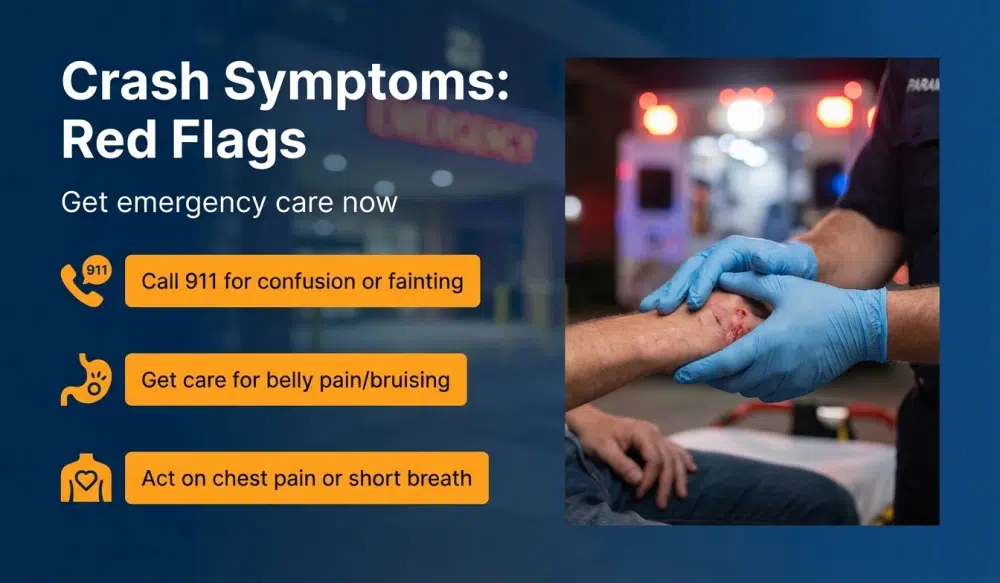
- Loss of consciousness or worsening confusion, even briefly; memory gaps, inability to recognize people or places, or repeated vomiting can indicate brain injury [1].
- One pupil larger than the other, new slurred speech, seizures, severe headache that gets worse, or unusual behavior are danger signs for head injury [1].
- Severe abdominal pain, swelling, or deep bruising, especially with lightheadedness, fainting, or shortness of breath, may indicate internal bleeding [2].
- Weakness, numbness, or tingling in arms or legs, new bowel or bladder issues, or significant neck pain with limited movement can signal neurological involvement [10].
- Chest pain or shortness of breath, which may be related to rib fractures, lung contusion, or cardiac stress after trauma. Call 911 without delay.
When in doubt about severity, emergency evaluation is the safest choice. Clinicians can triage you with scans, neurological checks, and labs that quickly flag injuries that are not visible from the outside.
What are common head, neck, back, and soft tissue symptoms after a collision?
Head injuries range from mild concussions to more serious traumatic brain injuries. Early symptoms can include headache, sensitivity to light or noise, dizziness, fatigue, nausea, confusion, slowed thinking, and difficulty concentrating. Some symptoms show up right away; others may be delayed and subtle, especially if you felt an adrenaline rush right after the crash [1][3].
- Concussion indicators include fogginess, balance problems, irritability, and sleep changes. Do not rely on how you look or feel to decide whether you have a concussion; get checked [1].
- Warning signs of more serious brain injury include worsening headache, repeated vomiting, or unusual behavior. These require emergency care [1].
What neck symptoms are typical, and when should you be concerned?
Neck pain and stiffness can begin immediately or develop hours after a crash. A rapid forward and backward movement of the head can strain soft tissues in the cervical spine. Localized pain, reduced range of motion, and muscle spasms are common in the first two days. If you also notice numbness or tingling radiating into the shoulders or arms, or weakness, you should be evaluated for possible nerve root involvement [8][10].
What back symptoms often appear early?
Lower back pain, mid back soreness, and muscle tightness may develop as inflammation builds. You might feel fine immediately after the accident but wake up the next day with significant stiffness. Watch for pain radiating down the legs, loss of strength, or new changes in bowel or bladder control, which can signal a more serious condition requiring urgent assessment [10].

What soft tissue injuries should you monitor?
Sprains and strains are injuries to ligaments and muscles. They can cause swelling, bruising, and restricted movement that peaks within 24 to 72 hours. Ice, compression, elevation, and gentle mobility are often recommended early, but you should follow clinician guidance and get imaging if pain is significant or worsening [8].
Can symptoms be delayed for hours or days after a crash?
Yes. It is common for symptoms to appear or intensify after the immediate shock wears off. Concussion signs can take time to emerge, and internal bleeding may not become obvious until blood loss triggers dizziness, faintness, or abdominal tenderness. Soft tissue swelling also tends to increase over the first day or two [1][2][8].
Because delayed symptoms are frequent, it is helpful to keep a simple timeline of how you feel at key intervals such as immediately after the crash, later that evening, the next morning, and at 48 hours. This both guides care and helps establish a factual record of onset and progression for any civil claim you might bring.
What delayed signs deserve special attention?
- Headaches that worsen after 24 hours: consider reassessment for evolving brain injury, especially with new confusion or visual changes [1].
- Abdominal pain with bruising or dizziness: these can develop late as internal bleeding progresses and must be evaluated urgently [2].
- Numbness or tingling that appears the next day: nerve irritation can present after swelling increases, particularly in the neck and lower back [10].
- Stiffness and reduced range of motion after sleep: whiplash type soft tissue injuries often feel worse the morning after a crash [8].
How can PTSD and emotional symptoms appear after a car accident?
Emotional and psychological reactions are common after a crash. You might experience intrusive thoughts, nightmares, trouble sleeping, irritability, heightened startle response, or avoidance of driving. These reactions can be signs of post traumatic stress. Many people improve with time and support, while others benefit from clinical care. Early screening and evidence based therapy can help reduce long term impact [9].
- Watch for persistent intrusive memories or avoidance of reminders like driving near the crash site. If these symptoms persist or worsen, seek evaluation from a clinician trained in trauma care [9].
- Note mood and sleep changes: anxiety, panic, or sleep disruption can make physical recovery harder, so mention them at your medical visits [9].
What can you do to support emotional recovery?
- Share symptoms early: tell your clinician about nightmares, hypervigilance, or avoidance so they can screen for PTSD and refer appropriately [9].
- Track sleep and mood: brief daily notes help your care team measure change and adjust treatment plans.
- Limit overwhelming inputs: reduce high intensity media, allow restful breaks, and follow return to activity guidance after concussion [1].
What should you do in the first 48 hours to protect your health and your civil claim?
- Call 911 and request medical evaluation for yourself and any passengers, even if you feel okay, because injuries can be hidden.
- Accept an ambulance if recommended, especially if you had head impact, severe pain, or any red flag symptoms noted above.
- Photograph vehicles, roadway, and visible injuries without putting yourself at risk. If you cannot, ask a bystander to help and collect your contact information.
- Exchange information and note witnesses: get names, phone numbers, and insurance details from all drivers and any witnesses.
What should you do within the first 24 hours?
- Get a medical exam, at an emergency department, urgent care, or your primary care practice depending on symptoms. Mention any loss of consciousness, dizziness, head strike, neck pain, abdominal pain, or numbness [1][2].
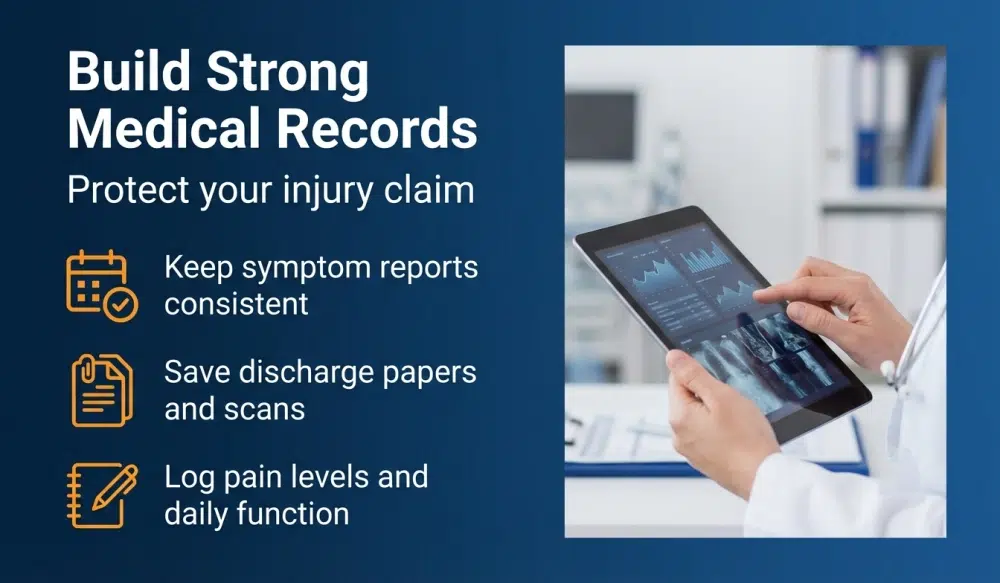
- Start a symptom journal: record pain levels, dizziness, headaches, sleep, mood, and functional limits at set times. Be specific about timing and intensity.
- Preserve damaged items: keep torn clothing, damaged child seats, cracked eyewear, and store them safely; they can be useful as evidence.
- Notify your insurer: provide basic facts, but avoid recorded statements before you understand your injuries and rights.
What should you do within 48 hours?
- Follow medical advice and return precautions: take medications as prescribed, avoid activities that aggravate symptoms, and return if red flags appear [1][2].
- Collect and organize records: save discharge instructions, imaging reports, prescriptions, and referrals in a single folder or secure app. You have a legal right to access your medical records [12].
- Document missed work and expenses: gather pay stubs, time off approvals, ride share receipts, equipment or medication costs. These can support damages later.
- Consider confidential legal guidance: a consultation can help you understand liability, damages, and deadlines without making promises or decisions you might regret later.
What should you avoid doing in the first 48 hours?
- Do not ignore worsening symptoms: delayed dizziness, new tingling, or spreading pain should trigger reassessment [1][10].
- Avoid strenuous activity: heavy lifting or intense exercise may aggravate soft tissue and neurologic injuries [1][8].
- Do not rush to settle insurance claims: early releases can bar recovery for later diagnosed injuries.
If you are searching for a Los Angeles personal injury lawyer, it is helpful to understand how injury symptoms in the first 48 hours can affect both health decisions and claim strategy. The goal is to prioritize care, build accurate records, and avoid missteps that complicate your recovery.
How does medical documentation help or hurt a California personal injury claim?
In civil cases, documentation connects the dots between the crash, your diagnosed injuries, and your losses such as medical bills or lost wages. A clean record shows when symptoms began, how they changed, and what clinicians observed and recommended. This record can help prove causation and damages under California negligence law [7].
- Contemporaneous records carry weight: emergency department notes and first clinic visits often carry significant weight because they are made close in time to the event and focus on medical facts.
- Consistency boosts credibility: describing symptoms consistently across visits makes it easier to link injuries to the crash rather than another cause.
- Right of access supports accuracy: you can request your records and correct inaccuracies. Federal privacy rules give you a right to access your health information in a timely manner [12].
- Imaging and specialist referrals: MRI, CT, or neuro evaluations can support clinical findings and explain persistent symptoms like headaches, dizziness, or radicular pain [1][10].
How should you track pain, function, and recovery?
- Use a daily scale: rate pain and dizziness at the same times each day; note triggers such as screen time, driving, or stairs.
- Record functional limits: lifting difficulty, reduced sitting tolerance, or inability to work a full shift provides concrete data.
- Capture work and school impact: missed shifts, modified duties, or academic accommodations help quantify damages.
Well organized documentation helps insurers and, if needed, a court understand the extent of your injuries and the care that was medically necessary. It also helps calculate economic and non economic harms consistent with California law.
Should you go to the ER or urgent care after an accident?
Choose the setting that fits your symptoms, location, and available resources:
- Go to the emergency department if you have any red flag symptoms described earlier, such as head injury danger signs, severe abdominal pain, severe neck or back pain with neurological changes, chest pain, or trouble breathing [1][2].
- Urgent care may be appropriate for mild to moderate pain without red flags, minor lacerations, or questions about whether you need imaging. Urgent care can triage and direct you to hospital evaluation if necessary [13].
- Follow up with primary care for ongoing symptoms, medication adjustment, and referrals to physical therapy, neurology, or behavioral health as needed.
Trust your instincts and err on the side of safety. If symptoms worsen or you are unsure, choose the emergency department, call 911, or contact a nurse advice line for immediate guidance [13].
What insurance steps should you take in California after a crash?
Insurance rules and policy terms vary, but several steps are typical for California drivers:
- File required reports when applicable: if someone is injured or if there is property damage above a threshold, you may need to report the crash to the Department of Motor Vehicles using Form SR 1 within ten days. Check the requirements carefully [14].
- Notify your insurer promptly: provide basic facts and contact information for witnesses and involved drivers. Avoid speculation about fault while facts are still being collected.
- Be cautious with recorded statements: you can provide necessary information without volunteering opinions, and you can request to postpone a recorded statement until after you have received medical evaluation and understand your condition.
- Track all claim numbers and adjuster contacts: keep a single log for each claim, including liability, collision, and medical payments if applicable.
- Do not rush to settle: early settlements signed before injuries are fully understood can close your claim and limit recovery for later diagnosed conditions.
What if the other driver is uninsured or underinsured?
- Check your policy for UM and UIM coverage: uninsured and underinsured motorist coverage can help bridge gaps when the at fault driver lacks adequate insurance.
- Coordinate medical payments benefits: MedPay can offset immediate medical costs regardless of fault, subject to policy terms.
- Use one point of record keeping: maintain a single folder for liability, UM, UIM, collision, and MedPay claim numbers and correspondence.
Consulting with car accident lawyers can help you understand coverage sources such as liability insurance, uninsured motorist, underinsured motorist, and medical payments, and how they interact with your medical care and bills. Los Angeles car accident lawyers can also assist with preserving evidence and guiding communications while you focus on recovery.
What are the key California deadlines including the statute of limitations and public entity claims?
California has strict time limits, and missing them can bar your civil claim:
- Statute of limitations for personal injury: generally two years from the date of injury to file a lawsuit for negligence causing bodily harm. There are exceptions that can shorten or extend the period in specific circumstances [6][4].
- Claims against government entities: if a public agency or employee may be responsible, written presentment is typically required within six months for personal injury claims, followed by strict deadlines if denied. These rules are technical and must be followed precisely [5][4].
- Insurance notice provisions: your own policy may require prompt notice, cooperation, and medical authorizations within reasonable bounds. Review your policy language and seek guidance if unclear.
Because deadlines and exceptions are fact specific, early attention to timing helps safeguard your rights. If you believe a city, county, or state agency is involved, do not wait to evaluate the claim procedures.
How does California comparative fault affect your recovery?
California follows comparative fault principles. Under California Civil Code section 1714, every person is responsible for injuries caused by lack of ordinary care, subject to comparative allocation of fault by a trier of fact. This means your recovery can be reduced by your percentage of responsibility, but you can still recover the remaining share attributable to other at fault parties [7].
- Evidence of symptom timing and treatment supports causation and reduces disputes about whether another event caused your condition.
- Consistent medical care shows you took reasonable steps to mitigate harm, which can reduce arguments about failure to seek timely treatment.
- Objective testing, like imaging, neurological exams, and specialist assessments, can clarify the nature and severity of injuries when liability is contested [1][3].
How do your actions after the crash influence fault arguments?
- Following medical advice: adhering to return precautions and treatment plans demonstrates reasonable care to limit harm.
- Accurate statements: keeping to facts and avoiding speculation in insurance communications reduces room for dispute.
- Evidence preservation: photos, repair estimates, and early medical records help establish mechanism of injury and damages.

What should Los Angeles drivers know about local context and crash trends?
Los Angeles streets carry high traffic volumes and complex multimodal activity, which heightens the risk of collision injuries. National sources report significant numbers of crash fatalities and injuries each year, a reminder that even lower speed city impacts can cause head and neck injuries that are not obvious at the scene [11]. Concussions and other brain injuries account for a substantial number of emergency visits in the United States, and careful monitoring of symptoms is advised [3].
Common symptom patterns among Los Angeles crash survivors include next day headache, neck stiffness, reduced concentration, and lower back pain. Dizziness, photophobia, or sound sensitivity can make normal tasks difficult. In the days after the collision, some people notice numbness or tingling in the arms or legs, which should be evaluated for potential nerve involvement [10]. The key is not to minimize your symptoms, but to get them assessed and documented.
For those weighing legal options, the practical realities of big city collisions also matter. There may be surveillance cameras, transit data, or third party witnesses, and emergency medical systems often generate detailed records quickly. These create a strong factual foundation for civil claims when promptly gathered and preserved. Los Angeles car accident lawyers can help coordinate preservation of evidence such as dash camera footage, body camera clips, and 911 recordings, in addition to medical documentation.
If your symptoms include head pain, neck stiffness, back pain, numbness or tingling, dizziness, or headaches, do not wait to get evaluated. A Los Angeles car accident attorney can assist with gathering records, clarifying coverage, and timing claims while you follow medical advice.
Who is GoSuits and how can our approach support you?
We focus on civil injury cases across California, including Los Angeles, and we understand how those first 48 hours after a crash shape medical outcomes and case value. A free consultation can help you understand options, timelines, and documentation without pressure. We are a technology driven firm with exclusive proprietary software designed to move cases faster, keep clients informed, and surface the right evidence at the right time. Even with advanced tools, every client has a designated attorney, not a case manager, and you have direct access to your lawyer for questions and updates.
Our team brings 30 years of combined experience and courtroom trial work, which can be vital when liability is disputed or injuries are challenged. Past results for clients reflect careful case building and determination, and you can explore representative matters here: prior cases. Learn more about who we are and how we work here: about us and meet our attorneys. For a full overview of what we handle, see our practice areas.
If your injuries stem from a vehicle collision, we handle claims involving cars, rideshares, motorcycles, pedestrians, and commercial vehicles. We evaluate medical documentation, coordinate with treating clinicians, and prepare for trial when needed. We also advise on steps to avoid common pitfalls with insurance communications and early settlements. If you want to discuss your situation, reach out for a confidential conversation about your goals and next steps. Our approach blends careful case strategy with modern tools so your attorney has more time to focus on your results.
Where can you find authoritative references and resources?
- Concussion Signs and Symptoms – CDC
- Internal Bleeding – MedlinePlus
- TBI Data and Statistics – CDC
- Statutes of Limitations – California Courts Self Help
- Gov. Code section 911.2 – California Legislative Information
- Code Civ. Proc. section 335.1 – California Legislative Information
- Civ. Code section 1714 – California Legislative Information
- Sprains and Strains – MedlinePlus
- Motor Vehicle Accident Trauma – National Center for PTSD
- Numbness and Tingling – MedlinePlus
- Early Estimate of Motor Vehicle Traffic Fatalities in 2023 – NHTSA
- Individuals Right of Access under HIPAA – HHS
- Emergency or Urgent Care – MedlinePlus
- Report of Traffic Accident SR 1 – California DMV