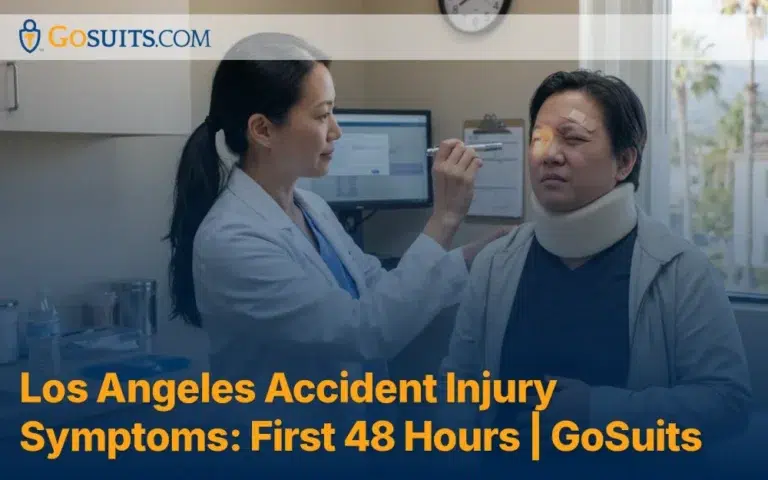
- What symptoms should you watch for in the first 48 hours after a Los Angeles crash?
- Why do some injuries have delayed symptoms after a car accident?
- When should you see a doctor after an accident in Los Angeles?
- What are common head and brain injury signs in the first two days?
- How do neck, back, and soft tissue symptoms evolve after a collision?
- What internal bleeding or organ damage symptoms require urgent care?
- What does numbness, tingling, or weakness after an accident suggest?
- How should you document injuries for insurance and a California personal injury claim?
- How do California rules treat medical records and causation in civil cases?
- What if you felt fine at the scene but pain started later?
- How do Los Angeles traffic and emergency resources help in the first 48 hours?
- What steps protect your claim timeline in California?
- How can you talk to insurers without hurting your claim?
- What should you do if symptoms worsen after you return to work?
- Do motorcycle or truck collisions change what to watch for early on?
- How can GoSuits help after an accident in Los Angeles?
- References and resources
What symptoms should you watch for in the first 48 hours after a Los Angeles crash?
The first 48 hours after a collision in Los Angeles, CA are often the most important window for spotting injuries. Adrenaline and shock can mask pain at the scene. As your body settles, symptoms may surface that signal injuries needing prompt care. Watch for the following and seek medical evaluation if you notice any of these signs:
- Headache, confusion, memory gaps, or dizziness which can indicate concussion or other brain injury [1][11].
- Neck pain, stiffness, limited range of motion, or shoulder pain consistent with whiplash and other cervical injuries [2].
- Back pain, muscle spasms, or shooting pain down a leg possibly linked to soft tissue injury, disc irritation, or nerve issues [2].
- Abdominal pain, swelling, deep bruising, or lightheadedness which can be warning signs of internal bleeding [14].
- Numbness, tingling, or weakness in arms or legs suggesting nerve involvement or spinal injury [1].
- Chest pain, shortness of breath, or persistent cough which may point to chest wall injury, rib fracture, or lung involvement and needs urgent assessment [10].
- Visual changes, sensitivity to light or noise, or sleep disturbances commonly seen after concussion [1][11].
- Increased anxiety, irritability, or mood changes which can also follow head injury and significant stress [1][11].
Los Angeles roadways see significant crash activity, and injuries can be serious even after low speed impacts. National data shows large numbers of injury and fatal crashes occur each year, underscoring why early symptom awareness matters [3][10].
Why do some injuries have delayed symptoms after a car accident?
It is common for pain and other symptoms to appear hours or days after a wreck. The reasons include:
- Stress response Your body releases adrenaline and cortisol, which can dull pain signals immediately after a crash.
- Soft tissue swelling over time Muscles, ligaments, and tendons inflame and tighten as hours pass, so stiffness and pain may rise on day one or two [2].
- Brain injury symptom lag Concussion signs such as headache, fogginess, and sleep issues often unfold over 24 to 48 hours [1][11].
- Internal injuries Slow internal bleeding or organ injury can produce subtle symptoms at first that grow more noticeable later [14].
This delayed onset does not make your symptoms less real or less related to the collision. Careful evaluation and documentation connect your symptoms to the event and help guide appropriate treatment [1][2].
When should you see a doctor after an accident in Los Angeles?
As a general rule, get evaluated as soon as possible, ideally on the same day. If you experience red flag symptoms such as loss of consciousness, worsening headache, repeated vomiting, chest pain, breathing difficulty, severe abdominal pain, or new weakness or numbness, go to an emergency department or call 911 right away [1][11][14].
Even if you feel okay, a prompt visit to urgent care or your primary doctor within 24 to 48 hours helps uncover hidden injuries and creates a contemporaneous record. That record can be important for insurance and any California personal injury claim you may later bring [13].
California requires drivers to report certain collisions. If anyone is injured, you must submit a DMV SR 1 report within 10 days, and there are additional reporting requirements if law enforcement does not investigate at the scene [4][5]. These reports are separate from medical care, but getting prompt medical attention also helps you complete those forms accurately.
What are common head and brain injury signs in the first two days?
Concussion and other forms of traumatic brain injury can occur even without a direct head strike. The brain can move inside the skull as your body decelerates. Symptoms you may notice include headache, confusion, memory problems, slowed thinking, irritability, sleep changes, balance issues, and sensitivity to light or noise [1][11].
Some people develop symptoms right away while others worsen over the first two days. Because brain injury can affect judgment and memory, write down what you experience and ask a family member to observe you for changes. Return to the emergency department if symptoms escalate, especially if you develop severe headache, repeated vomiting, unequal pupils, seizures, increasing confusion, or new weakness [1][11].
Head injuries can significantly affect daily function and work. Early evaluation and follow up help protect your health and provide a clear medical timeline that may be relevant later if you need to pursue compensation for crash related harms [1][11].

How do neck, back, and soft tissue symptoms evolve after a collision?
Whiplash is a common mechanism where rapid acceleration and deceleration strain the neck. Symptoms include neck pain and stiffness, decreased range of motion, headaches that start at the base of the skull, and pain in the shoulders or arms. These signs often become more noticeable 24 to 48 hours after the crash as inflammation increases [2].
Back strains and sprains may feel like aching, tightness, or spasms. Shooting pain into a leg or arm can signal nerve involvement. Document when the pain starts, what activities worsen it, and any limits on work or household tasks. Providers may recommend imaging depending on your exam, age, and mechanism of injury [2].
For many musculoskeletal injuries, early gentle movement guided by a clinician, heat or ice as directed, and careful progression can support recovery. Always follow your clinician’s plan and return if you experience worsening weakness, numbness, severe pain, or bowel or bladder changes [2].
What internal bleeding or organ damage symptoms require urgent care?
Internal injuries may not be visible but can be life threatening. Signs and symptoms that warrant immediate evaluation include:
- New or worsening abdominal pain especially with tenderness to touch or guarding.
- Swelling or a firm feeling of the abdomen or deep purple bruising.
- Lightheadedness, fainting, or rapid heartbeat which can indicate significant blood loss.
- Left shoulder pain which can be referred pain from the spleen after abdominal trauma.
If any of these are present, go to the emergency department without delay. Internal bleeding and organ injury may require imaging and close monitoring that cannot be provided at home [14].
What does numbness, tingling, or weakness after an accident suggest?
Numbness or tingling may point to nerve irritation or compression. For example, a herniated disc in the neck can cause tingling or weakness in the arm and hand. In the lower back, radiating pain or altered sensation down the leg may signal sciatica. Any new weakness, coordination problems, or changes in bowel or bladder function are red flags and should be evaluated urgently [1].
Document the location, onset, and pattern of symptoms. Detail whether the sensations are constant or intermittent and whether certain movements make them worse. This helps your provider determine whether further imaging or specialist referral is appropriate [2].
How should you document injuries for insurance and a California personal injury claim?
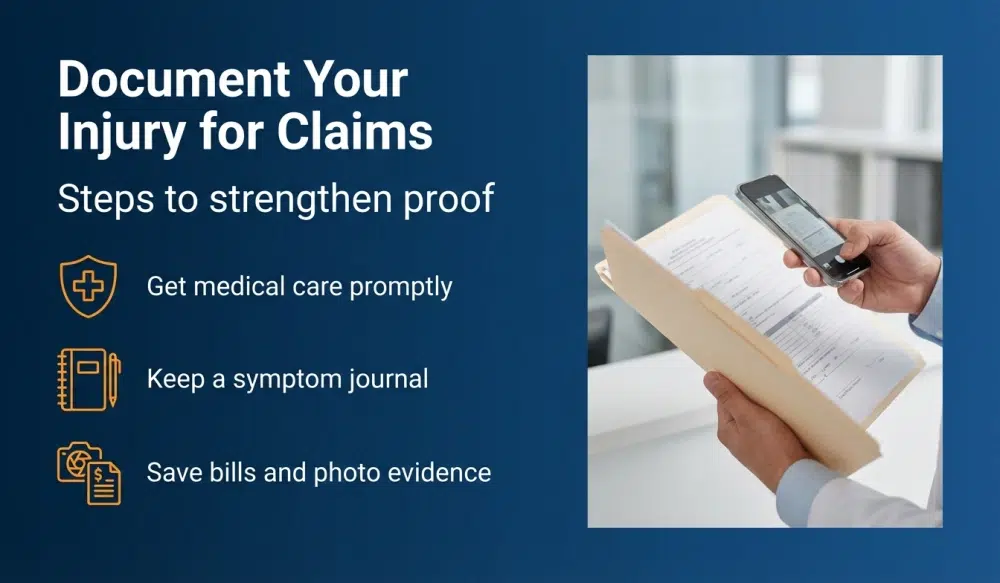
Good documentation in the first 48 hours can reduce disputes later. Consider these steps:
- Get timely medical care ER, urgent care, or clinic visits create records that show near term symptom development and clinical findings [1][2].
- Keep a daily symptom journal Note pain levels, dizziness, nausea, sleep changes, and functional impacts at work and home.
- Photograph visible injuries Bruises and swelling can change quickly. Take dated photos over several days.
- Save receipts and records Medications, medical bills, ride share or transportation costs to appointments, and over the counter items can be relevant to damages.
- Submit required reports California’s DMV SR 1 form is required for collisions involving injury or death, or sufficient property damage, usually within 10 days [4].
When speaking with insurers, stick to facts and avoid speculation. You can describe that you sought care promptly and are following medical advice. If asked for a recorded statement early, it is reasonable to wait until initial medical evaluations are complete so your account is accurate and complete.
How do California rules treat medical records and causation in civil cases?
California allows properly authenticated medical records to be admitted under the business records exception to the hearsay rule if specific criteria are met [7]. These records often show timing and progression of symptoms and treatments.
On causation, California jury instructions explain that a defendant’s conduct is a substantial factor in causing harm if it contributes to the harm in more than a remote or trivial way. Multiple causes can operate together, and a collision does not need to be the only cause to be a legal cause [8].
California law also recognizes negligence per se in appropriate cases where a defendant violated a statute or regulation, the violation proximately caused injury, and the harm is of the type the rule was designed to prevent [16]. These concepts often interact with medical timelines when evaluating whether crash forces caused your symptoms.

What if you felt fine at the scene but pain started later?
Delayed pain is common and does not disqualify a claim. The critical point is to act promptly once symptoms appear. Seek care, follow treatment plans, and keep records. If a police report mentions no injuries at the scene, your later medical records and symptom journal can show how and when problems emerged [1][2].
Insurers sometimes argue that delayed symptoms are unrelated or preexisting. Timeline evidence helps address these arguments by tying symptoms to the crash event and documenting that you reported problems as soon as they became apparent.
How do Los Angeles traffic and emergency resources help in the first 48 hours?
Los Angeles County’s trauma system includes designated trauma centers equipped to manage serious injuries. If you or a loved one has concerning symptoms after a crash, use emergency services and request transport to an appropriate facility if advised by first responders [12].
City and state data resources also help you understand broader safety trends. California traffic safety reports show persistent risks on busy corridors, underlining why even minor collisions deserve careful follow up and documentation [10].
What steps protect your claim timeline in California?
California generally provides two years to file a personal injury lawsuit from the date of injury in most cases [6]. Additional shorter deadlines can apply for claims against public entities, so acting early is important.
California requires a DMV SR 1 report within 10 days when an injury occurs, and separate reporting may be required to law enforcement under certain circumstances [4][5]. If you were uninsured at the time of the crash, California Civil Code limits certain non economic damages in cases arising from vehicle operation, which can affect claim strategy [9].
Filing deadlines and reporting rules are legal topics that can be complex. If you are searching for a Los Angeles personal injury lawyer, understanding injury symptoms in the first 48 hours is vital for both your health and your case timeline.
How can you talk to insurers without hurting your claim?

It is common to notify insurers soon after a crash and provide basic information. Keep these practical tips in mind:
- Stick to facts Share the date, time, location, and vehicles involved. Avoid guessing about speed or fault.
- Explain care status State that you are being evaluated and will provide updates with medical documentation when available.
- Be cautious with recorded statements Early statements can omit symptoms that develop on day two or three. You can wait until you have seen a clinician and have initial findings documented.
- Review forms carefully Make sure any medical authorizations are limited to relevant time periods and conditions.
If a settlement is proposed while you are still within the first weeks of recovery, be careful. Early offers sometimes arrive before the full scope of injuries and future care needs are known. It is reasonable to request time to complete initial treatment and obtain records.
What should you do if symptoms worsen after you return to work?
If symptoms escalate after you resume work or daily activities, return to your clinician for reassessment. Changes in pain, concentration, or stamina can be important clinically and legally. Updated records that document the change help guide care and link the symptom progression to the collision timeline [1][2].
It can also be helpful to provide your employer with simple notes about medically recommended restrictions. Keep copies for your records and track any missed time or modified duties, as wage loss evidence is commonly part of damages in a California personal injury case [8].
Do motorcycle or truck collisions change what to watch for early on?
Different crash types can influence injury patterns. Motorcycle riders and pedestrians face higher risks of direct impact injuries to the head and torso, while occupants in passenger vehicles more often experience whiplash and seat belt or airbag related bruising. Large truck collisions can involve greater forces and multi impact events. Regardless of mode, the core rules remain the same in the first 48 hours. Seek prompt medical evaluation, watch for red flag symptoms, and document your experience thoroughly [10].
You can find helpful community level traffic safety data for California that highlights trends and risk factors. These resources are useful for understanding why even seemingly minor crashes deserve careful follow up [10].
How can attorney selection and timing affect your next steps in Los Angeles?
Choosing support early can help you coordinate care and documentation. car accident lawyers can help you understand how medical timelines, records, and statutory rules fit together in a California personal injury claim.
Los Angeles car accident lawyers are familiar with local courts, Los Angeles County trauma resources, and California reporting rules. Balanced guidance during the first 48 hours often focuses on health first, then complete and accurate documentation that reflects how symptoms developed in real time [4][5][6].

How can GoSuits help after an accident in Los Angeles?
If you were injured in a Los Angeles crash, a free consultation can help you understand options and next steps. We focus on personal injury matters across California, including collisions that produce delayed symptoms in the first 48 hours. You can review our prior cases, meet our attorneys, and learn more about us.
- Technology driven approach GoSuits uses exclusive proprietary software to organize medical timelines, provider records, and damages evidence in real time for faster and more reliable case development.
- Designated attorney model Every client works directly with a designated attorney. We do not route cases through case managers, and clients have direct access to their lawyer for updates and strategy.
- Leadership in innovation Our platform integrates secure document intake, automated record requests, and analytics that help identify gaps in proof and reduce delays.
- Trial readiness We prepare cases from day one with trial in mind, which can strengthen negotiation and provide a clear path if a case proceeds in court.
- Results and experience Our team has over 30 years of combined experience in personal injury litigation. You can explore outcomes in our prior cases and the breadth of our practice areas.
- Practice coverage We handle vehicle collisions, brain injury cases, and other serious injury matters throughout California, including Los Angeles, Orange, Riverside, San Bernardino, San Diego, and the Bay Area.
In a free consultation, we can listen to your story, discuss early symptom documentation in the first 48 hours, and outline a plan for records, providers, and claim timing. To learn more about our team and approach, visit our attorneys and about us.
References and resources
- Traumatic Brain Injury Signs and Symptoms – CDC
- Whiplash Overview – MedlinePlus
- Early Estimates of 2023 Traffic Fatalities – NHTSA
- Vehicle Accident Reporting Requirements SR 1 – California DMV
- California Vehicle Code section 20008 – California Legislature
- California Code of Civil Procedure section 335.1 – California Legislature
- California Evidence Code section 1271 Business Records – California Legislature
- Judicial Council of California Civil Jury Instructions CACI – California Courts
- California Civil Code section 3333.4 – California Legislature
- Traffic Safety Facts and Statistics – California OTS
- Concussion Information – National Institute of Neurological Disorders and Stroke
- Los Angeles County Trauma Centers – LA County DHS EMS
- Overview of Civil Cases – United States Courts
- Internal Bleeding Overview – MedlinePlus
- California Evidence Code section 669 Negligence Per Se – California Legislature