- What symptoms should you watch for in the first 48 hours after an Irvine crash?
- How common are crash injuries in Orange County and Irvine?
- When should you see a doctor or go to urgent care or the ER in Irvine?
- What tests can find hidden injuries after a crash?
- What should you document in the first two days for an insurance claim?
- Which California laws and deadlines affect your case?
- Why do some injury symptoms appear late?
- What if it was a hit and run or the other driver is uninsured in Irvine?
- How can legal help support you in the first 48 hours?
- About GoSuits
- References and Resources
What symptoms should you watch for in the first 48 hours after an Irvine crash?
The first two days after a collision are often the most revealing period for injury symptoms. Adrenaline and stress can mask pain. Some conditions develop slowly as swelling increases and tissues react. If you were in an Irvine, California, crash, monitor yourself and loved ones closely. Many of the signs below may point to conditions that benefit from early diagnosis and treatment. When in doubt, seek urgent care or an emergency department right away.
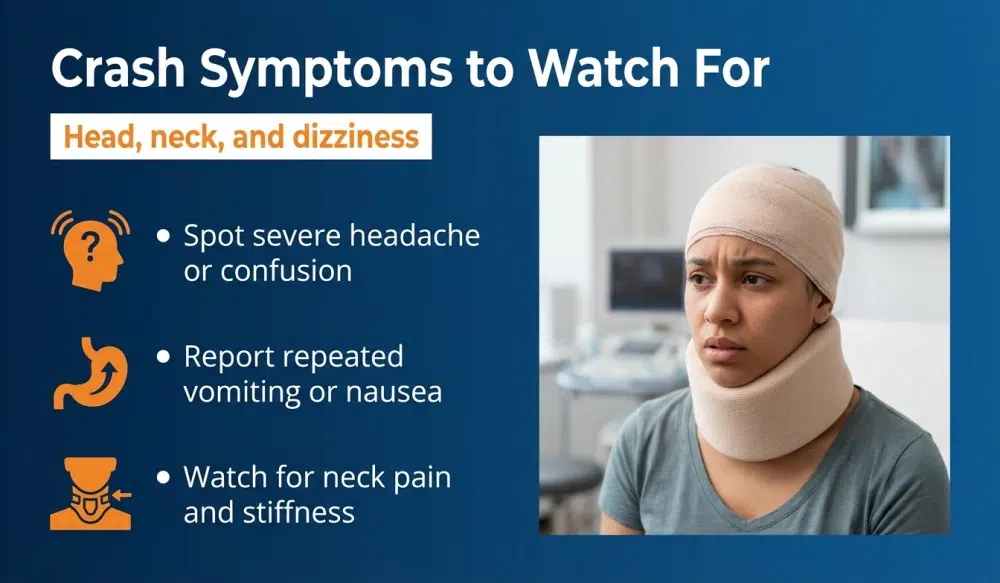
- Headache, confusion, or memory gaps can indicate a concussion or other traumatic brain injury. Watch for worsening headaches, fogginess, trouble concentrating, sensitivity to light or noise, and sleep changes [1] [2].
- Dizziness, nausea, or vomiting often occurs with head and neck injuries. Persistent vomiting or worsening dizziness is a danger sign that needs prompt medical evaluation [1].
- Neck pain and stiffness with reduced range of motion may reflect whiplash. Symptoms sometimes peak 24 to 48 hours after impact. Neck tenderness, shoulder pain, and headaches starting at the base of the skull are common [3].
- Back pain can point to sprains, herniated discs, or muscle strains. Pay attention to midline spine tenderness or pain radiating into the arms or legs, which can suggest nerve involvement.
- Abdominal pain, swelling, or deep bruising can signal internal bleeding or organ injury. Severe tenderness, lightheadedness, fainting, or a rigid abdomen require emergency care [4].
- Numbness, tingling, or weakness in the arms, hands, legs, or feet can indicate nerve compression or spinal injury. Progressive or one sided symptoms should be evaluated quickly [5].
- Severe or escalating bruising and swelling may signal deeper soft tissue damage or bleeding under the skin. Track the size and color changes with photos and notes.
- Shortness of breath or chest pain may arise from rib fractures, lung contusion, or cardiac stress. Sudden or severe symptoms are emergencies.
- Loss of consciousness even briefly or any amnesia about the crash points to a head injury that warrants medical assessment [1] [2].
- Vision changes, slurred speech, or one sided weakness require emergency care. These can indicate brain bleeding or stroke like events after trauma [1].
- Intrusive thoughts, nightmares, or intense anxiety can begin within days. Early mental health support can help after a frightening crash [6].
Even if you feel okay after an Orange County collision, it is common for symptoms to emerge overnight and into the next day. Early evaluation and documentation help your health and provide a clear record for any insurance claim.
How common are crash injuries in Orange County and Irvine?
Traffic crashes remain a significant source of injuries across California. While every community is different year to year, statewide and national data show the risks on the road.
- National picture National data from the federal Fatality Analysis Reporting System track crash outcomes across the country, with more than 42,000 traffic fatalities recorded in recent years. Injury totals are much higher because most crashes do not result in death [15].
- California city and county trends The California Office of Traffic Safety publishes annual collision rankings and city reports, including for Irvine and other Orange County jurisdictions. These reports summarize crashes that cause injuries and fatalities, along with common factors such as speed and impaired driving [14].
For your personal recovery and any civil claim, the most important statistics are the ones in your own medical records. The earlier you seek care and document symptoms, the stronger your record will be.
When should you see a doctor or go to urgent care or the ER in Irvine?
It is wise to obtain a medical evaluation as soon as possible after a collision. Certain warning signs call for immediate emergency care. In Irvine, you can consider emergency departments or urgent care centers depending on the severity of your symptoms. Use the guidance below as a starting framework.
- Go to the ER immediately for a severe headache, repeated vomiting, a seizure, weakness, numbness, loss of consciousness, confusion that gets worse, or unusual behavior after a head impact [1].
- Seek emergency care if you have significant chest pain, shortness of breath, severe abdominal pain, a rigid or distended abdomen, fainting, or signs of shock such as cold clammy skin and rapid pulse [4].
- Use urgent care or primary care for moderate neck or back pain, whiplash symptoms, mild headaches, dizziness, bruising, or muscle strains. Many of these injuries still need early documentation and follow up imaging if symptoms persist [3] [16].
- Follow head injury recommendations A clinician may use validated tools to decide if you need a CT scan for a suspected brain injury. Some mild brain injuries do not show on CT or MRI initially, yet still need observation and care instructions [1] [7].
In California, every driver involved in a crash that causes injury or property damage of at least 1000 dollars must submit the SR 1 report to the DMV within 10 days, even if local police took a report. File this form and keep a copy for your records [8].

What should you tell the clinician in the first visit?
- Describe the crash dynamics speed estimate, impact direction, whether airbags deployed and if you were wearing a seat belt.
- List all symptoms no matter how small, including headache, neck pain, dizziness, nausea, visual changes, ringing in the ears, numbness, tingling, weakness, and sleep problems [1] [5].
- Share prior conditions tell your clinician if you had prior neck or back pain, prior concussions, or other relevant history. This allows accurate baseline comparison.
- Ask for specific return precautions know the signs that should send you back to the ER if they appear or worsen at home [1].
What tests can find hidden injuries after a crash?
Health care providers in Irvine use targeted imaging and exams to confirm or rule out injuries. Not every patient needs every test. Doctors tailor testing based on symptoms, physical exam, and validated decision tools.
- CT scan of the head can detect bleeding or skull fractures after significant head trauma or concerning symptoms. Many mild brain injuries will have a normal CT, yet still need rest, observation, and follow up [1] [7].
- MRI of the brain or spine can detect soft tissue injuries and subtle brain changes. An MRI may be used later if symptoms persist despite a normal CT, or if neurological deficits suggest nerve compression [7].
- Neck and spine imaging X rays, CT, or MRI may be indicated if there is significant neck pain, midline tenderness, neurological deficits, or high risk crash mechanics.
- Abdominal ultrasound or CT may be necessary where abdominal pain, deep seat belt bruising, or abnormal vitals suggest internal injury [4].
- Neurological and vestibular exams check for balance problems, eye movement abnormalities, and cognitive changes that are common after concussions and whiplash associated disorders [1] [2].
- Soft tissue evaluation sprains and strains are diagnosed by exam and clinical course. Physical therapy may help restore range of motion and reduce pain [16].
Follow your clinician’s plan for rest, gradual activity, and rechecks. If new symptoms develop in the first two days, call your provider and update your medical record right away.
What should you document in the first two days for an insurance claim?
Accurate documentation in the first 48 hours can make a real difference in how insurers evaluate your claim. It also gives your future self a reliable record of how you felt and what you did right after the crash.
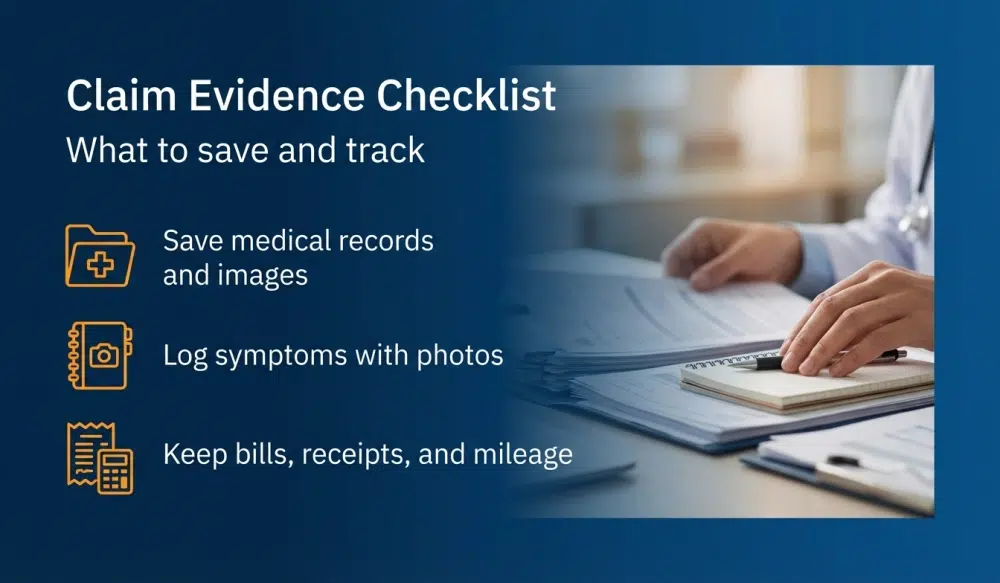
- Medical visit records Save discharge papers, imaging results, and after visit summaries. You have a right under HIPAA to request your records. Ask for patient portal access and download PDFs for your files [13].
- Symptom diary Start a dated log that notes pain levels, headaches, dizziness, sleep problems, or nausea. Mention what makes symptoms worse or better.
- Photo timeline Photograph bruises and swelling each day under similar lighting. Note size changes with a ruler for scale.
- Work and activity impacts Track missed hours, reduced duties, or help you needed at home. This supports wage loss and loss of use claims.
- Receipts and bills Store all medical bills, copays, pharmacy receipts, mileage to appointments, and out of pocket costs.
- Insurance communications Keep copies of all emails and letters, and make notes of phone calls including date, time, and the person you spoke with. California has consumer protections for fair claims handling that you can reference if needed [12].
- SR 1 crash reporting If required, file the DMV SR 1 within 10 days and save proof of submission. Insurers often ask for this document [8].
If an insurer asks for a recorded statement in the first 48 hours, understand that you may be fatigued, in pain, or medicated. Being accurate and complete is important. You can provide written updates after you see a clinician and have a clearer picture of your injuries.
Which California laws and deadlines affect your case?
California law sets important timelines and rules that influence both insurance claims and civil lawsuits after an Irvine crash.
- Statute of limitations for personal injury Most California personal injury claims must be filed in court within two years of the injury [9].
- Claims against government entities If a public entity may be at fault, you usually must file a government claim within six months of the injury, with specific content and delivery requirements [10].
- General negligence standard California Civil Code section 1714 states that everyone is responsible for injuries caused by their lack of ordinary care under the circumstances. That includes drivers who fail to use reasonable care [11].
- Comparative fault California follows comparative fault. Your damages can be reduced by your percentage of responsibility, if any. Early evidence about seat belt use, speed, and distraction can matter when liability is contested [11].
- Insurance claim practices The California Department of Insurance publishes consumer guidance on auto claims, including timelines and what insurers may request. Reviewing these expectations can help you prepare documents in a complete and organized way [12].
The first 48 hours set the foundation for these legal timelines. Prompt care and clear documentation protect your health and your rights.
Why do some injury symptoms appear late?
Delayed symptoms are common and often misunderstood. You are not alone if you felt okay at the scene and worse the next day. Several biological and situational factors explain this pattern.
- Adrenaline masks pain After a crash, your body releases stress hormones that reduce pain perception. As those levels drop hours later, pain surfaces.
- Inflammation takes time Soft tissue injuries like sprains and strains often swell over 24 to 48 hours, increasing stiffness and pain. Gentle movement, rest, and guided therapy can help recovery [16].
- Concussion symptoms evolve Cognitive fatigue, headache, light sensitivity, and sleep disruption may deepen or become obvious the day after a concussion, even if you felt clear right after impact [1] [2].
- Internal injuries may initially be subtle Internal bleeding from abdominal trauma can progress over hours. Deep bruising from a seat belt sign or rising abdominal tenderness should be checked promptly [4].
- Stress reactions can surface later Nightmares, intrusive memories, and hypervigilance often begin in the days after a traumatic event. Early support and coping strategies can help [6].
What if it was a hit and run or the other driver is uninsured in Irvine?
Uninsured and hit and run crashes are upsetting and disruptive. California policies often include uninsured or underinsured motorist coverage. Early documentation is especially important in these situations.
- Report the crash promptly Call Irvine Police if you have not already. Provide as many details as possible.
- Notify your insurer early Uninsured motorist claims have policy based notice requirements. Send written notice and keep a copy.
- Document injuries and property damage Your own medical records, photographs, and repair estimates will be the backbone of your claim.
- Keep medical records organized Use your HIPAA access rights to download records, imaging reports, and visit summaries for the claim file [13].
- Follow DMV reporting rules File the SR 1 if required and include your insurer’s information on the form [8].
How can legal help support you in the first 48 hours?
After an Irvine crash, many people feel overwhelmed. Medical questions, insurance calls, and vehicle repairs arrive all at once. A supportive legal team can help you prioritize your health while protecting your claim.
- Coordinating early documentation Organizing medical records, photos, and receipts into a single, shareable file helps the claim process.
- Communicating with insurers Clear, prompt claim reporting and careful written updates can reduce disputes about what happened and when.
- Tracking deadlines The two year California filing deadline for most injury claims and the six month timeline for government claims are critical [9] [10].
- Framing medical evidence Early symptoms like headaches, dizziness, whiplash indicators, and numbness are connected to recognized injury patterns in crashes [1] [3] [5].
If you are comparing options for legal support, Irvine car accident lawyers often start by building a timeline from the first 48 hours. That timeline pairs symptoms with care steps and key documents such as the DMV SR 1 and any police report [8].
For local context, Irvine car accident lawyers understand how Orange County insurers and providers handle rear end collisions, intersection crashes, and multi vehicle pileups. That local familiarity can help you move from reaction mode to a step by step plan.

About GoSuits
We built GoSuits around the needs of people hurt in collisions across California. If your injuries began or worsened in the first 48 hours after an Irvine crash, a free consultation can help you understand the medical steps to document, how to organize records for a claim, and what timelines apply in California. Our firm handles personal injury and traffic collision cases throughout Irvine, Orange County, and across California.
- Technology driven approach We use exclusive proprietary software that brings together medical records, photos, and claim data in one secure workspace. This speeds up case organization and helps surface what matters to insurers and courts without delay.
- Leadership in innovation Our platform streamlines communication, appointment tracking, and evidence summaries, so you spend less time chasing paperwork and more time focusing on recovery.
- Designated attorneys, not case managers Every client works directly with a designated attorney from start to finish. You have unfettered access to your lawyer for updates and strategy discussions.
- Past results and trial readiness Our team has resolved significant injury claims and has tried cases when negotiation was not enough. See our prior cases and meet our attorneys.
- 30 years of combined experience We handle car, truck, motorcycle, and pedestrian collisions, premises injuries, product defect claims, brain and spine injuries, and wrongful death. Explore our practice areas and learn more about us.
- From day one We help clients gather records, request imaging, document lost wages, and file required forms like the SR 1. Our goal is to support your medical recovery while preparing a strong claim file.
References and Resources
- Signs and Symptoms of Traumatic Brain Injury – CDC
- Concussion Information Page – National Institute of Neurological Disorders and Stroke
- Whiplash – MedlinePlus, U.S. National Library of Medicine
- Abdominal Injury – MedlinePlus, U.S. National Library of Medicine
- Numbness and Tingling – MedlinePlus, U.S. National Library of Medicine
- Post Traumatic Stress Disorder – National Institute of Mental Health
- CDC Guideline on the Diagnosis and Management of Mild Traumatic Brain Injury
- SR 1 Report of Traffic Accident Occurring in California – California DMV
- California Code of Civil Procedure section 335.1 – California Legislature
- California Government Code section 911.2 – California Legislature
- California Civil Code section 1714 – California Legislature
- Auto Insurance Consumer Information – California Department of Insurance
- Individuals Right under HIPAA to Access Their Health Information – HHS
- Statistics and Rankings – California Office of Traffic Safety
- Fatality Analysis Reporting System – NHTSA
- Sprains and Strains – MedlinePlus, U.S. National Library of Medicine