- What should you do at the scene of a Dallas UPS delivery truck accident to protect your claim?
- What evidence matters most for a UPS delivery truck accident evidence checklist in Dallas?
- How do Texas and federal rules affect evidence preservation and access?
- What Texas deadlines and fault rules could affect your UPS accident claim?
- Which UPS and contractor records should be requested after a Dallas delivery crash?
- How do you authenticate photos, videos, and digital files for Texas courts?
- How do you obtain and use Texas police crash reports in a UPS delivery collision?
- What common evidence mistakes should you avoid after a UPS crash?
- What should you do in the days and weeks after a UPS delivery truck crash?
- How can legal help and technology streamline your evidence checklist?
- Why choose GoSuits for Dallas UPS delivery truck collisions?
- References and Resources
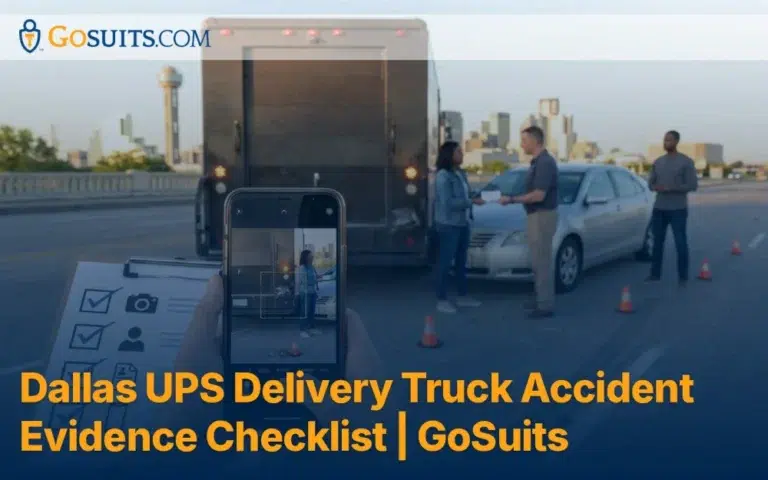
What should you do at the scene of a Dallas UPS delivery truck accident to protect your claim?
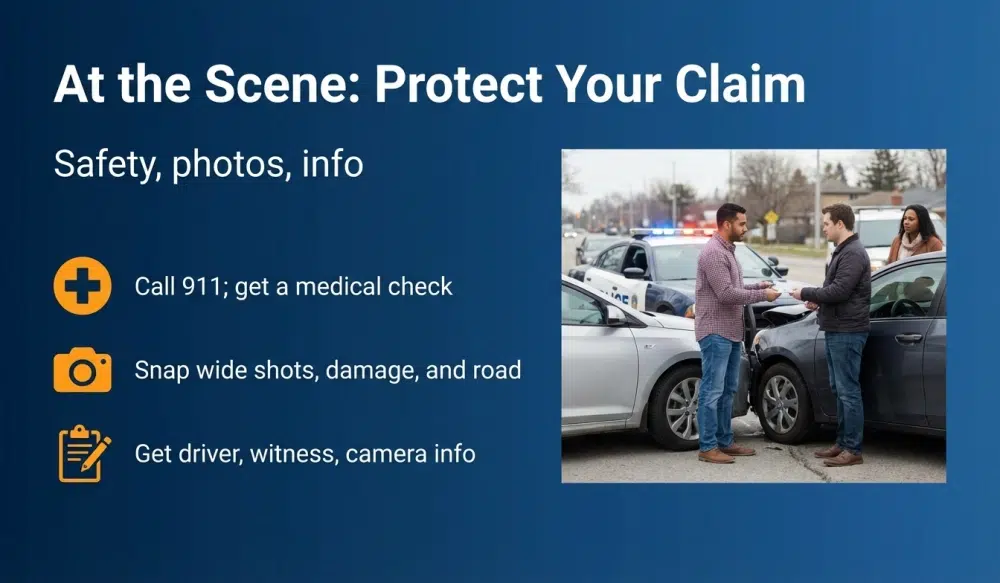
If you are involved in a Dallas UPS delivery accident, your actions in the first minutes can shape the evidence that will later determine liability, causation, and damages. Your safety comes first, then methodical evidence gathering. Below is a practical, compassionate roadmap you can follow if your condition allows, or share with a trusted person at the scene.
What immediate safety and medical steps should you take?
- Call 911 and request medical evaluation: even if injuries seem minor. Adrenaline can mask pain, and medical records created now often become critical proof of injury later.
- Move to a safe location: if your vehicle is drivable and it is safe to do so. Activate hazard lights and use road flares if available.
- Do not discuss fault: at the scene. Keep statements factual. Let investigators and insurers evaluate fault later based on the full evidence record.
What photos and videos should you capture before vehicles move?
- Wide scene shots: showing all vehicles, lanes, intersection geometry, traffic signals, signage, and any skid marks or debris.
- Vehicle positions and angles: before tow trucks arrive, including the UPS truck and all other vehicles.
- Close ups of damage: to each side of every vehicle, and any cargo or package spillage.
- Roadway details: such as potholes, construction zones, obscured signs, pavement markings, oil or gravel, and standing water.
- Lighting and weather: conditions, including sun glare direction and visibility.
- Injury photos: of visible cuts, bruises, or swelling, taken respectfully and with consent.
What contact and vehicle information should you collect from the UPS driver?
- Driver identification: full name, phone number, and driver license number.
- Employer details: confirm whether the driver is UPS, a subcontractor, or a third party carrier. Photograph the truck number and DOT number, if present.
- Insurance information: carrier name, policy number, and claims phone number.
- Vehicle identification: license plate, VIN if accessible, and photos of any company markings.
How do you capture witnesses and nearby cameras quickly?
- Witness statements: ask for names, phone numbers, and short audio or written statements while memories are fresh.
- Nearby cameras: note businesses, residences, or city intersections that may have CCTV or doorbell video. Video can be overwritten within days, so act fast.
- Dashcams: ask other motorists if they recorded the crash and offer to share your contact information for later retrieval.
Why should you request a police crash report?
In Texas, crash reports are created if there is injury, death, or apparent property damage of at least 1,000 dollars. These reports often include diagrams, contributing factors, and driver statements that can support or challenge liability theories. Texas law governs access to these reports and who may obtain them [7].
What evidence matters most for a UPS delivery truck accident evidence checklist in Dallas?
Evidence for a UPS delivery accident checklist in Dallas should follow a structured approach that captures the who, what, when, where, why, and how. The list below reflects both on scene collection and the follow up records that attorneys often seek through requests and subpoenas.
What physical and scene evidence should you secure first?
- Scene media: photos and video described above, plus measurements of skid lengths if safe to do so.
- Debris and cargo: positions and types, including any fallen packages and torn packaging that may show impact direction.
- Road condition evidence: construction cones, lane closures, temporary detours, or malfunctioning signals.
What documents and data should you obtain from police and first responders?
- Texas peace officer crash report (CR 3): and any supplemental narratives [7].
- Emergency medical records: EMS run sheets and emergency room records for early injury documentation.

Which UPS and driver records can shed light on fault?
- Driver qualification file and training records: if a commercial motor vehicle and FMCSA rules apply, these records can include employment application, road test, and ongoing training, typically maintained by motor carriers [1].
- Hours of service logs: duty status, on duty and driving time, rest breaks, and any exemptions. Federal rules limit driving and require specific rest periods for covered drivers [2].
- Electronic logging device data: ELD records, device audit logs, and annotations, which can confirm driving time and sudden changes around the time of the crash [3].
- Telematics and GPS: speed, hard braking, rapid acceleration, cornering severity, and location breadcrumbs before and after impact.
- Onboard cameras: forward facing and driver facing video, if present, along with retention policies.
- Electronic control module data: ECM data points such as speed, throttle, and brake application at impact.
- Delivery route and dispatch records: route plan, package scan timestamps, stops list, attempted deliveries, and any hot route instructions that could create time pressure.
- Vehicle inspection and maintenance: pre trip and post trip inspections, repair invoices, tire and brake service, and any outstanding recalls.
- Drug and alcohol testing records: post crash testing when required by federal rules for qualifying commercial motor vehicle crashes.
Which third party sources often hold crucial video or data?
- Business CCTV: shopping centers, gas stations, schools, and offices near the crash corridor.
- Residential doorbell cameras: doorbells and home security systems that cover the street or driveway.
- Public cameras and traffic systems: city maintained cameras or traffic management centers, subject to local policies.
What statistics underscore the need to act fast?
Nationally, crashes involving large trucks lead to thousands of fatalities and many more injuries each year. NHTSA reports that in 2021, 5,788 people were killed in crashes involving large trucks, an increase from the prior year [10]. FMCSA similarly reports increases in fatal and injury crashes involving large trucks in recent years [1]. In a fast growing metro like Dallas, with heavy delivery volume, prompt collection of digital evidence and camera footage is essential before it is overwritten or lost.
How do Texas and federal rules affect evidence preservation and access?
Texas and federal laws shape what evidence exists, how long it must be kept, and how parties may obtain it in civil litigation. Understanding these rules helps you time your preservation requests and build a thorough UPS accident claim evidence record.
Why do federal hours of service and ELD rules matter in a Dallas UPS case?
- Fatigue analysis: Hours of Service rules limit driving and require off duty periods for covered commercial drivers. Violations or borderline compliance can support a negligence theory if fatigue contributed to the crash [2].
- Electronic timekeeping: ELDs create digital footprints for duty status that may corroborate or contradict driver recollections. ELD data can also reveal edits and annotations that merit follow up [3].
What Texas discovery and evidence rules mean for your checklist?
- Document requests and subpoenas: Texas civil procedure rules govern requests for production, depositions, and subpoenas directed to UPS, contractors, and third parties [8].
- Spoliation and sanctions: Federal Rule of Civil Procedure 37 addresses loss of electronically stored information and the remedies courts may impose, including adverse inferences in certain circumstances [9]. Texas rules also authorize sanctions for discovery abuse, which can apply if a party fails to preserve requested materials in their control [8].
- Authentication and hearsay exceptions: Texas Rules of Evidence provide pathways to authenticate photos, videos, and business records and to admit records under the business records exception if the foundation is laid [8].
How should you use preservation letters and litigation holds?
- Send prompt preservation notices: to UPS, any contractor, and relevant third parties to request retention of onboard video, ELD files, telematics, dispatch data, handheld device scans, and vehicle maintenance records.
- List specific datasets: include formats, time windows, and system names, if known, for example ECM snapshots and telematics event data for the 24 hours before and after the collision.
- Track follow up: confirm in writing that the hold is in place and ask for descriptions of retention periods and automatic overwrite settings.
What Texas deadlines and fault rules could affect your UPS accident claim?
Texas imposes deadlines and fault allocation rules that you should consider as you organize a UPS accident claim evidence file.
What is the general statute of limitations for Texas personal injury after a crash?
In most Texas personal injury cases, you generally have two years from the date of the crash to file suit, subject to exceptions that can shorten or extend the time in limited circumstances [6]. Evidence collection should begin immediately, because digital records like camera footage and ELD data can be overwritten in days or weeks.

How does Texas proportionate responsibility affect recovery?
Texas uses proportionate responsibility. If a jury assigns you more than 50 percent of responsibility for the crash, you are barred from recovering damages. If your share is 50 percent or less, your recovery is reduced by your percentage of fault [5]. Accurate evidence about speeds, lanes, signals, and right of way helps the court and jury allocate responsibility fairly.
Which UPS and contractor records should be requested after a Dallas delivery crash?
Targeted requests help you build a complete UPS accident claim evidence record. Tailor these requests to the facts, the vehicle type, and whether federal commercial motor vehicle rules apply.
What company records should you request early?
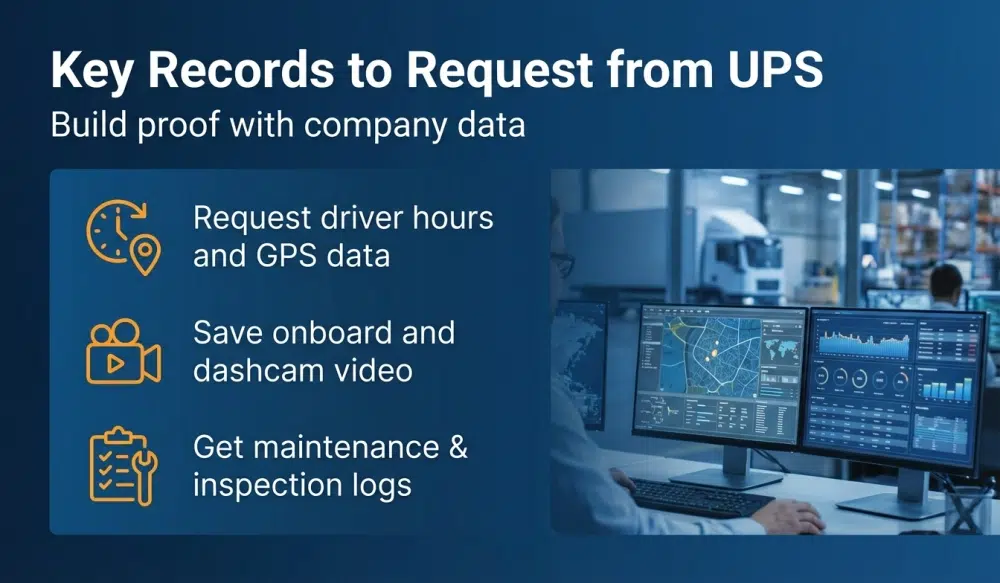
- Accident register and internal investigation: incident report, photos, diagrams, driver statements, and corrective action plan.
- Driver schedule and route plan: dispatch instructions, route optimization output, package volume, and service level commitments on the day of the crash.
- Handheld device scan data: pickup and delivery timestamps, geolocation pings, and delivery exceptions that show driver pace and workload.
- Safety policies: mobile device use, backing procedures, left turn restrictions, and residential delivery protocols.
- Training and supervision: initial training, ride along evaluations, remedial training, and disciplinary history.
What vehicle and maintenance records should be preserved?
- Pre trip and post trip inspection reports: for brake, tire, steering, lighting, and mirror conditions.
- Repair orders and work logs: including tire age and condition, brake pad and rotor replacements, and steering or suspension repairs.
- Recall and service bulletins: and whether corrective actions were performed before the crash.
What electronic data should you specify by system?
- ELD audit trail: duty status changes, edits, carrier edits, unassigned driving time, and certification events [3].
- Telematics event data: speed, acceleration, deceleration, lane departure warnings, and collision alerts for a 48 hour window around the crash.
- Onboard video: with original file metadata and retention logs to support authenticity.
- ECM raw files: with manufacturer specific formats and any conversion reports produced.
How do you authenticate photos, videos, and digital files for Texas courts?
Authentication and hearsay objections can make or break your evidence plan. Texas Rules of Evidence provide pathways for photos, video, and business records.
How do you authenticate photos and videos?
- Sponsoring witness: present a witness with personal knowledge who can testify that the photo or video fairly and accurately depicts the scene at the relevant time.
- Metadata and chain of custody: keep original files, note device make and model, and preserve file properties like timestamps to support reliability.
- System generated video: for CCTV or dashcam recordings, a custodian or qualified witness can describe how the system captures and stores footage [8].
How do you admit business records?
- Business records affidavit: obtain a custodian affidavit laying a proper foundation for records kept in the regular course of business with regularly conducted activity, made at or near the time by someone with knowledge [8].
- Examples: UPS dispatch logs, handheld device scans, ELD records, maintenance logs, and delivery manifests can often fall within this exception if the predicate is met.
How do you obtain and use Texas police crash reports in a UPS delivery collision?
Texas Transportation Code chapter 550 governs crash investigations and reports. Access to these reports is limited to specific persons and entities, such as those involved in the crash and their representatives. Reports may be requested and used in evaluating fault and damages [7].
What should you look for in the report?
- Contributing factors: like failure to yield, unsafe speed, distraction, or disregard of traffic control.
- Crash diagram and narrative: which can be compared to your scene photos and any available video.
- Witnesses and contact data: so you can follow up for statements and sworn testimony.
- Vehicle and carrier information: including company names, DOT numbers, and insurance data.
How do statewide crash trends affect case evaluation?
The Texas Department of Transportation publishes annual crash statistics that help contextualize risk factors and common crash types across the state [4]. While statewide data does not decide individual cases, it can spotlight patterns like intersection collisions, backing incidents during residential deliveries, and speed related crashes that are relevant to case strategy.
What common evidence mistakes should you avoid after a UPS crash?
- Waiting too long to send preservation notices: digital systems may overwrite video and ELD logs within short cycles.
- Relying on summaries without originals: always request native files with metadata for ELD, telematics, and video.
- Not photographing every side of every vehicle: missing angles can weaken a reconstruction.
- Ignoring nearby cameras: even a corner store or doorbell camera down the block can capture decisive angles.
- Posting about the crash on social media: public posts can be discovered and used to challenge claims.
- Skipping medical evaluation: gaps in treatment can create disputes about causation and damages.
What should you do in the days and weeks after a UPS delivery truck crash?
After the scene, organize your UPS accident claim evidence with a methodical checklist and timeline.
What personal records should you keep?
- Medical file: discharge papers, imaging, prescriptions, physical therapy schedules, and mileage to appointments.
- Work and income records: pay stubs, tax forms, employer letters, and time off logs to document wage loss and work restrictions.
- Property damage documents: repair estimates, photographs of repaired areas, and rental car receipts.
- Pain and activity journal: a daily log of symptoms, sleep disruption, activity limits, and missed life events.
What requests should go to UPS or its insurer?
- Vehicle preservation: retain the UPS vehicle for inspection; do not permit repairs or disposal until inspection occurs.
- Data retention: ELD, telematics, onboard camera files, and dispatch records for the full shift and the prior seven days, if relevant.
- Driver records: training, schedule, supervisor communications, and any safety observations related to the route.

How should you handle insurer communications?
- Be cautious with recorded statements: request to schedule statements after you have reviewed the crash report and gathered your documents.
- Confirm agreements in writing: summarize calls by email to avoid misunderstandings and create a clear record.
- Avoid signing broad releases early: review the scope and time period of any requested authorizations.
How can legal help and technology streamline your evidence checklist?
Commercial delivery truck accident evidence can be highly technical, especially when it involves ELD data, ECM downloads, and third party video. Early legal help can streamline preservation, retrieval, and authentication. In complex cases, counsel can coordinate with forensic analysts, reconstructionists, and medical professionals to build a clear narrative supported by admissible records.
If you are comparing options, truck accident lawyers can lead a coordinated evidence plan that targets all data sources while protecting your rights. In addition to national rules governing ELD and hours of service [2][3], local practice in Texas courts on authentication and business records will influence how your materials are presented [8]. This is especially important when requesting crash reports, dispatch data, and security video that may be subject to retention limits [4][7].
For those seeking local support, Dallas truck accident lawyers can help collect and organize evidence using checklists tailored to the Dallas roadway environment, package delivery patterns, and Texas rules of procedure and evidence [8].
When approaching negotiations or litigation, structured evidence makes a difference. Thoughtful organization reduces disputes over authenticity and completeness, which can streamline discovery and avoid sanctions risks under federal and Texas rules [9][8]. If you are evaluating representation, attorneys who routinely handle commercial vehicle cases can coordinate preservation letters and focused requests to UPS, its contractors, and insurers.
Why choose GoSuits for Dallas UPS delivery truck collisions?
UPS delivery crashes raise complex questions about driver conduct, company policies, electronic evidence, and Texas liability rules. GoSuits handles personal injury matters across Texas, including Dallas, with a technology driven approach that helps clients move forward while their case progresses.
- Technology forward case work: Our exclusive proprietary software accelerates evidence collection, organizes medical and economic records, and surfaces key facts for negotiation and trial.
- Direct attorney access: Although we leverage advanced technology to expedite the case, every client works directly with a designated attorney, not a case manager, and has unfettered access to that attorney.
- Trial ready mindset: Our team brings 30 years of combined experience with courtroom skill that can elevate negotiations and position cases for trial when appropriate.
- Past results: We are proud of outcomes we have achieved for injured clients. See our prior cases for examples of past work, keeping in mind that results depend on the facts of each case.
- Full service personal injury practice: From delivery truck and commercial vehicle collisions to serious injury claims, our practice covers investigation through verdict. Explore our practice areas.
- Dedicated team: Learn more about our attorneys and our commitment to client communication.
- Who we are: Read about our story, values, and innovations on our about us page.
If you were injured in a Dallas UPS delivery accident, we can walk through a clear UPS delivery truck accident evidence checklist tailored to your situation and set up a free consultation to discuss next steps and timelines.
When you are ready to talk, our attorneys will organize your photos, witness information, police reports, and critical digital files like ELD, telematics, onboard video, and maintenance records into a comprehensive evidence package for your claim and, if needed, litigation.
References and Resources
- Large Truck and Bus Crash Facts – FMCSA
- Summary of Hours of Service Regulations – FMCSA
- Electronic Logging Device Overview – FMCSA
- Crash Statistics and Reports – Texas Department of Transportation
- Proportionate Responsibility Chapter 33 – Texas Civil Practice and Remedies Code
- Limitations Chapter 16 including Section 16.003 – Texas Civil Practice and Remedies Code
- Accidents and Accident Reports Chapter 550 – Texas Transportation Code
- Texas Rules of Civil Procedure and Texas Rules of Evidence – Texas Courts
- Federal Rule of Civil Procedure 37 ESI and Sanctions – Legal Information Institute
- Large Trucks Safety and Statistics – NHTSA
- Current Rules of Practice and Procedure – United States Courts
- Auto Insurance Claims Help – Texas Department of Insurance