- What should you do in the first minutes after a Dallas delivery van crash?
- How do you get emergency help and document the scene in Dallas?
- Why is medical evaluation in the first day critical even if you feel okay?
- How do you report the crash and obtain the Dallas police report and TxDOT crash report?
- What evidence should you preserve within the first twenty four hours?
- Who should you notify about the crash and when?
- What insurance coverages often apply in a Texas delivery van crash?
- How is fault evaluated under Texas law and federal trucking rules?
- What deadlines and time limits apply after a Dallas delivery van crash?
- What should businesses and drivers do if they may be defendants?
- How can legal counsel help during the first day?
- About GoSuits
- References and resources
What should you do in the first minutes after a Dallas delivery van crash?
If you are involved in a delivery van crash in Dallas, your first steps can protect your health, document what happened, and position your civil claim or defense for a clearer path forward. Texas law requires drivers to stop, exchange information, and in specific situations notify law enforcement. Failing to stop can carry criminal and civil consequences. The Texas Transportation Code sets out these duties, including immediate reporting when there is injury, death, or disabling damage to a vehicle that cannot be safely driven [1].
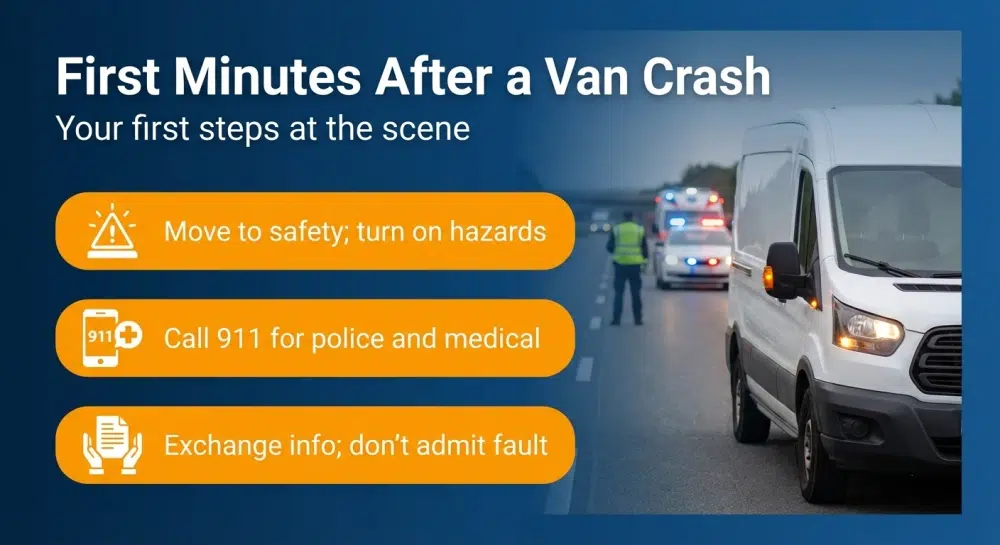
- Check for safety. Move to a safer location if your vehicle is operable and it is safe to do so. Turn on hazard lights, set out reflective triangles if available, and keep a safe distance from traffic.
- Call 911 for injury or unsafe conditions. Request police and medical assistance if anyone is injured or there is a hazard. Texas law addresses immediate reporting of certain crashes to law enforcement, and Dallas first responders can be dispatched through 911 [1].
- Do not leave the scene prematurely. Exchange information with the other driver and wait for officers if they are en route. Obtain the other driver’s name, phone, license number, vehicle plate, and insurance details as required by statute [1].
- Avoid admissions or speculation. Stick to facts. Your observations can be shared with officers and your insurer, but do not assume fault at the scene.
In the stress of a crash, it is natural to feel disoriented. Pausing to breathe, scanning for hazards, and stepping through the checklist above can help you protect yourself and others while you wait for help.
How do you get emergency help and document the scene in Dallas?
After calling 911 when needed, documentation helps preserve an accurate record while the details are fresh. In commercial vehicle collisions, electronic data and company records can later be requested, but immediate, on scene information from you and witnesses is often crucial.
- Photograph or video the scene. Capture the positions of vehicles, road markings, skid marks, traffic signals, debris fields, vehicle damage, company logos on the delivery van, and any visible injuries. Include wide shots and close ups from several angles.
- Record key details. Note the date, time, exact location, weather, road conditions, traffic flow, and any construction or lane closures. These details are frequently relevant under Texas duties to report and under comparative responsibility principles [1][10].
- Identify witnesses. Ask for names, phone numbers, and brief neutral statements about what they saw. If they are willing, record an audio or video statement on your phone.
- Document commercial identifiers. Capture the delivery company name, USDOT or TXDMV numbers displayed on the van, trailer or box, and any subcontractor signage. Federal rules apply to many commercial carriers and later help determine applicable recordkeeping and insurance rules [6][15].
Simple smartphone photos and notes can make a major difference later if memories fade or vehicles are repaired. Save everything in a dedicated folder and back it up to cloud storage when you can.
Why is medical evaluation in the first day critical even if you feel okay?
Some crash related injuries do not show symptoms immediately. Adrenaline can mask pain, and signs of concussion or internal injury may appear hours later. The Centers for Disease Control and Prevention explains that concussion symptoms can be delayed and vary from headaches and dizziness to memory and mood changes [5].
- Get checked promptly. Visit an emergency department, urgent care, or your physician as soon as possible, especially if you struck your head, felt dizzy, lost consciousness, or have neck or back pain. Describe the crash mechanism and any symptoms honestly.
- Follow medical advice. Fill prescriptions, attend follow up appointments, and follow activity restrictions. Keep copies of discharge instructions and referrals.
- Track symptoms and limitations. Maintain a simple daily journal of pain levels, missed work, sleep disruptions, and activities you cannot do. Accurate records help support civil claims on damages and can also help defense evaluations stay grounded in objective detail.
Timely care can prevent complications, provides medical documentation that ties injuries to the crash, and gives both sides a clearer clinical picture of what happened [5].
How do you report the crash and obtain the Dallas police report and TxDOT crash report?
In Texas, officers who investigate a crash that meets statutory criteria must prepare a crash report on the state form often called CR 3. If an officer responds and completes the report, you typically do not file a separate driver report. The Transportation Code addresses officer reporting duties and the release of crash reports to certain parties [1].

How do you get the official Texas crash report?
- Order through TxDOT CRIS. The Texas Department of Transportation sells crash reports online through the Crash Records Information System. You can search by name, date, and location to purchase a copy when it is available [2].
- Confirm your eligibility. State law limits who can access full crash reports. Parties involved in the crash, their insurers, attorneys, and certain others are generally eligible under the access provisions in the Transportation Code [1].
- Keep your receipt and order number. Processing can take several days depending on agency workload. Save confirmation details from the CRIS system so you can check status or reorder if needed [2].
What if no officer responded?
If law enforcement does not respond and no officer investigates, you can still document the crash thoroughly and contact your insurer to discuss next steps. In serious crashes that meet statutory reporting thresholds, calling 911 promptly helps create an official record that is often essential for civil cases [1].
What evidence should you preserve within the first twenty four hours?
Commercial vehicle collisions frequently involve multiple layers of evidence, including company records that may be kept for limited periods under federal regulations. Acting in the first day helps prevent the loss of digital and paper records that could be important for both plaintiffs and defendants.
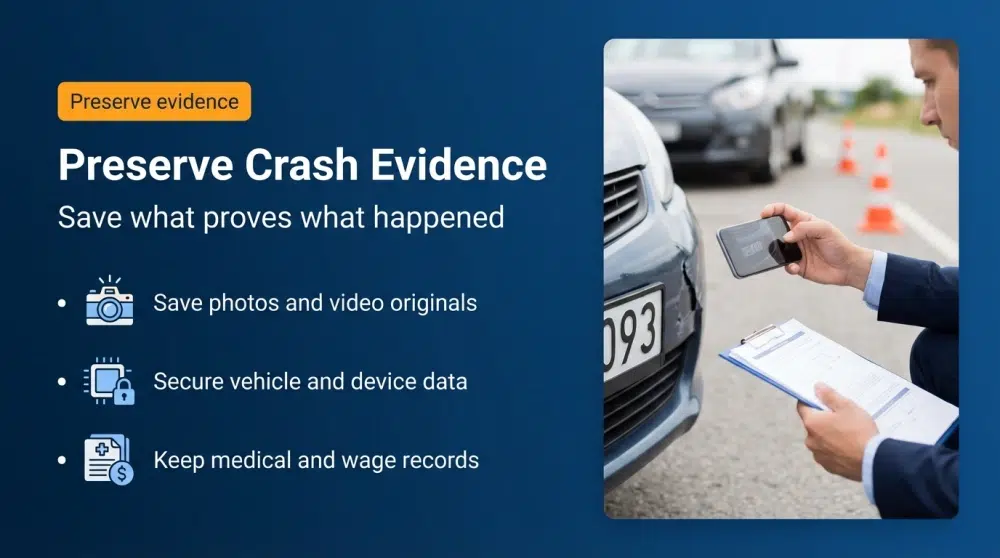
- Photographs and video. Save original, unedited files. Back up to a secure cloud and a physical device.
- Vehicle data and telematics. Delivery vans may have event data recorders, engine control modules, dash cameras, and GPS devices. Motor carriers covered by federal regulations must keep an accident register and related records that include crash date, city and state, driver name, injuries, fatalities, and hazardous material release, along with copies of all crash reports [7].
- Driver logs and hours of service data. Carriers that fall under federal rules must maintain records of duty status such as electronic logging device data and supporting documents. Retention periods generally run six months for records of duty status and supporting documents, so early preservation requests matter [14].
- Company records. Depending on applicability, federal retention schedules cover categories like vehicle maintenance, bills of lading, dispatch, and payroll records. The schedules can be short, so time is important [8].
- Medical records and bills. Request copies from each provider you see. Keep receipts for prescriptions, medical equipment, and travel to appointments.
- Employment and wage documents. If you miss work, collect pay stubs or payroll records to show the time and income impact.
How do you ask a company to preserve evidence?
In Texas civil litigation, discovery rules allow parties to request documents and data, and courts may impose sanctions for discovery abuse. Early preservation letters are a common first day step, followed by formal discovery if a lawsuit is filed. The Texas Rules of Civil Procedure and statewide rules resources outline discovery frameworks that guide these requests [11][12].
Who should you notify about the crash and when?
Within the first day, you typically notify several parties. Be factual and concise. Avoid recorded statements until you have reviewed your rights.
- Your employer if you were working. Many delivery drivers are on the job when a crash occurs. Prompt notice helps coordinate vehicle retrieval, drug and alcohol testing if required by federal rules for certain CDL positions after specific types of crashes, and insurance communications [13].
- Your auto insurer. Most policies require timely notice. Provide the basic facts about the time, location, vehicles, and whether police responded. If you were driving a company vehicle, the employer’s commercial carrier may take the lead on coverage.
- Other insurers as needed. If you carry medical payments, personal injury protection benefits, or uninsured and underinsured motorist coverage, open claims early to avoid delays. The Texas Department of Insurance explains these coverages and how they work with liability claims in Texas [3].
If you are contacted by a commercial carrier’s claims department, you can provide basic contact and insurance details. Consider waiting to provide detailed statements until you have legal guidance, especially if injuries are still being evaluated.
What insurance coverages often apply in a Texas delivery van crash?
Delivery van crashes often involve a mix of personal and commercial policies. Understanding potential coverages helps you open the right claims quickly.
- Texas liability insurance. Texas is an at fault state, and liability insurance pays for covered damages the insured causes up to policy limits. State minimums for private passenger policies are commonly described as thirty sixty twenty five, though commercial policies usually have higher limits [3].
- Commercial auto and motor carrier policies. For carriers engaged in interstate commerce, federal rules set minimum financial responsibility levels depending on vehicle type and cargo. For example, many for hire carriers must carry at least seven hundred fifty thousand dollars in liability coverage, with higher amounts for certain hazardous materials [15].
- Uninsured and underinsured motorist coverage. If the at fault driver lacks adequate insurance, your UM or UIM coverage can help, subject to policy terms and Texas law. Consider opening a claim promptly [3].
- Personal injury protection. PIP can pay medical expenses and some lost wages regardless of fault. Insurers must offer it with Texas auto policies unless rejected in writing. Using PIP does not bar you from seeking fault based damages [3].
As you navigate coverage, keep your claim numbers, adjuster contact information, and all correspondence organized in a single folder.
How is fault evaluated under Texas law and federal trucking rules?
Fault evaluation in a Dallas delivery van collision draws on Texas negligence principles and often on federal commercial motor carrier regulations that may apply to the vehicle and operator.
What Texas negligence rules apply?
- Comparative responsibility. Texas uses proportionate responsibility. In most personal injury cases, you cannot recover if you are more than 50 percent responsible, and any recovery is reduced by your percentage of responsibility if it is 50 percent or less [10].
- Duties at the scene. Statutory duties to stop, render reasonable assistance, exchange information, and in qualifying cases notify law enforcement provide important context for evaluating how parties responded at the scene [1].
Which federal rules can be relevant to commercial vehicles?
- Who is a commercial motor carrier. Federal definitions help determine whether a delivery van and its operator fall under Federal Motor Carrier Safety Regulations. Factors can include weight, passenger capacity, and interstate operations [6].
- Accident register and recordkeeping. Carriers subject to the rules must maintain an accident register and keep copies of crash reports, which can be crucial in civil discovery [7].
- Hours of service and electronic logs. Records of duty status and supporting documents are generally retained for six months, and they can shed light on fatigue and scheduling issues [14].
- Retention schedules for company records. Federal retention schedules cover categories like maintenance files, dispatch, and billing. Knowing these timelines helps plaintiffs and defendants act before records cycle out [8].
Crash statistics underscore why careful investigation matters. National reports show that large trucks are involved in a significant number of injury and fatal crashes each year, and the Federal Motor Carrier Safety Administration publishes detailed breakdowns by crash type, time of day, and contributing factors [4].
What deadlines and time limits apply after a Dallas delivery van crash?
Texas civil deadlines are strict. Missing a deadline can limit or end your claim. Plan ahead during the first day so you do not lose important rights.
- Statute of limitations for injury and property damage. In most Texas cases, you have two years from the date of the crash to file a lawsuit for personal injury or property damage, subject to exceptions that can shorten or extend the period in specific circumstances [9].
- Preservation windows for records. Commercial record retention rules can be as short as a few months for some categories, so early preservation requests are practical and time sensitive [8][14].
- Notice provisions in insurance policies. Many policies require prompt notice of a claim. Delays can complicate coverage or slow the investigation [3].
Calendar key dates right away, including medical follow ups, vehicle inspections, and claim submission timelines. Setting reminders on day one reduces the risk of missed milestones.
What should businesses and drivers do if they may be defendants?
Delivery companies and drivers can take practical steps in the first twenty four hours that both comply with legal duties and support a clear record of what occurred.
- Coordinate post accident testing if required. When federal rules apply, post accident alcohol and drug testing must be performed when specific criteria are met. Confirm whether your operation is subject to these rules and document your compliance steps [13].
- Secure and segregate relevant records. Preserve the vehicle, electronic logging device data, GPS and telematics, dispatch and routing information, delivery schedules, driver qualification files, maintenance records, and communications related to the trip. Follow the federal retention schedules and your internal litigation hold processes [7][8][14].
- Notify your insurer and broker. Provide immediate notice with the crash details, locations, vehicle numbers, and contact information for involved parties and witnesses.
- Avoid social media commentary. Public posts can complicate claims and do not help fact finding.
Clear, contemporaneous documentation protects all parties. It helps courts and insurers evaluate what happened under Texas negligence rules and, where applicable, federal motor carrier standards [10][6].
How can legal counsel help during the first day?
Legal counsel can guide you through communications, help preserve and request evidence, and coordinate with insurers. This is especially important in a Dallas delivery van crash where the parties can include the driver, the van owner or lessee, a motor carrier, a logistics contractor, and sometimes a vehicle maintenance provider or cargo loader.
- Clarify what to say and to whom. Counsel can help you share facts with police and insurers while avoiding statements that go beyond what you know.
- Trigger preservation and investigation. Timely letters to motor carriers, delivery platforms, and maintenance vendors can make sure critical data is not overwritten by routine retention policies [8][14].
- Coordinate inspections. Arranging prompt inspections of vehicles and the scene can capture physical evidence that changes quickly.
- Explain Texas legal standards. Counsel can help you understand proportionate responsibility, potential defenses, and how medical and economic losses are evaluated under state law [10][9].
If you are starting to research representation, many readers look for truck accident lawyers who understand the intersection of Texas negligence law and federal motor carrier rules. Asking questions about investigation timelines, discovery planning, and trial readiness can help you assess fit without delay.
In addition to statewide resources, speaking with Dallas truck accident lawyers can be helpful for local procedures, jury pools, and regional crash patterns. Local perspective can add practical context to the broader legal framework.
About GoSuits
Delivery van crashes in Dallas, TX fall squarely within personal injury law. A free consultation can help you understand the first day steps, how to safeguard evidence, and how coverage and deadlines may affect your options. We handle cases across Texas and evaluate each situation on its facts with a focus on clear communication from day one.
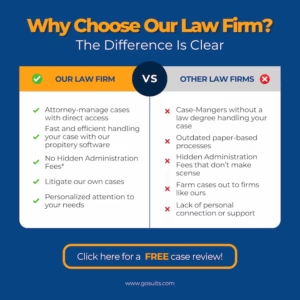
GoSuits uses a technology driven approach anchored by exclusive proprietary software that streamlines intake, evidence capture, and case tracking for faster, better results. While we leverage technology to move your case forward efficiently, every client works directly with a designated attorney. We do not use case managers, and each client has direct access to their lawyer throughout the case.
Our team brings more than 30 years of combined experience to investigations, motion practice, and trial. We prepare cases for trial from the start because trial readiness helps uncover the truth, frames settlement negotiations, and protects your position if negotiations stall. You can review representative outcomes on our page of prior cases and learn about the people who will work with you at our attorneys. For a broader view of who we are and how we operate, visit about us and explore the full range of practice areas.
If you have questions after a Dallas delivery van crash and need practical guidance on documentation, medical care coordination, and communication with insurers, we are here to help.
References and resources
- Texas Transportation Code Chapter 550 Accidents and Accident Reports – Texas Legislature Online
- Order Crash Report CR 3 – Texas Department of Transportation CRIS
- Auto insurance consumer guide including PIP and UM UIM – Texas Department of Insurance
- Large Truck and Bus Crash Facts – Federal Motor Carrier Safety Administration
- Concussion and TBI Signs and Symptoms – Centers for Disease Control and Prevention
- 49 CFR Part 390 General Applicability and Definitions – eCFR
- 49 CFR 390.15 Assistance in Investigations and Accident Register – eCFR
- 49 CFR Part 379 Appendix A Motor Carrier Records Retention – eCFR
- Texas Civil Practice and Remedies Code Section 16.003 Limitations – Texas Legislature Online
- Texas Civil Practice and Remedies Code Chapter 33 Proportionate Responsibility – Texas Legislature Online
- Texas Rules of Civil Procedure and Statewide Rules Resources – Texas Judicial Branch
- Texas Court Rules Research Guide – Texas State Law Library
- 49 CFR 382.303 Post Accident Testing – eCFR
- 49 CFR 395.8 Driver Record of Duty Status and Supporting Documents – eCFR
- 49 CFR 387.9 Financial Responsibility Minimum Levels – eCFR