- What is the Dallas car crash photo checklist and why does it matter?
- What makes photos legally useful in a Texas civil claim?
- What safety steps come before taking photos at a Dallas crash scene?
- What exactly should you photograph at the scene in Dallas?
- How should you take the photos to strengthen authenticity?
- How many photos are enough and when should you stop?
- What if you could not take photos at the scene?
- How do photos affect insurance negotiations in Texas?
- What mistakes should you avoid when photographing a Dallas crash?
- What special tips apply for multi-vehicle or truck crashes in DFW?
- How does this checklist change for motorcycle, bicycle, or pedestrian crashes?
- When should you seek legal help and how can photos help your lawyer in Dallas?
- Who is GoSuits and how can our tech-driven approach help in Dallas?
- References and Resources
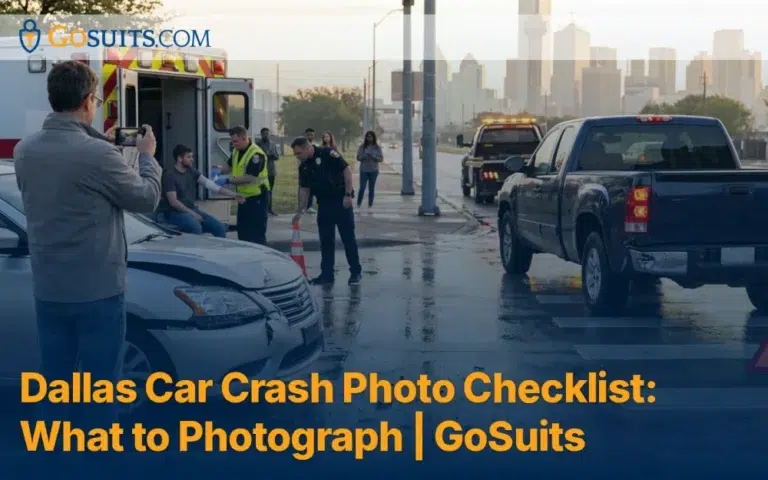
What is the Dallas car crash photo checklist and why does it matter?
In the moments after a crash, you are dealing with stress, safety concerns, and a flood of details. A Dallas car crash photo checklist helps you quickly capture the right images without guessing, so you can support your civil insurance claim or lawsuit later. Photos anchor the story of what happened; they can help reconstruct speed, direction, and visibility, and they can document injuries and property damage in ways words alone cannot.
Courts and insurers rely on reliable, authenticated evidence. Photographs that clearly depict the scene, conditions, vehicles, and injuries can be relevant to proving or disputing fault and damages. Under rules of evidence, relevance means a tendency to make a fact more or less probable, and authentication means showing that the photo is what you claim it is [1] [2]. In Texas cases, as in federal court, judges look for these basic foundations when weighing photos and related testimony [3].
Because Dallas sits in a high-traffic region with complex roadways, documenting the scene thoroughly can be decisive. Nationally, thousands of traffic fatalities occur each year, and careful documentation can significantly affect civil liability discussions [14]. This checklist translates legal standards and safety rules into simple steps you can follow.
What makes photos legally useful in a Texas civil claim?
Photos are valuable when they address the questions the law and insurers ask. That means they should be relevant, authentic, and preserved without alterations that might raise questions.
- Relevance Photos should help prove or disprove who caused the crash, what damage resulted, and how injuries occurred. This aligns with the general definition of relevance used in court [1].
- Authentication A witness with knowledge, often you, can testify that a photo fairly and accurately depicts the scene at a certain time. That is the common pathway to authentication [2] [3].
- Chain of custody and integrity Keep original files. Avoid filters or edits. Maintain a clear path from capture to presentation, a concept courts recognize as chain of custody [13].
- Preservation Do not delete potentially relevant photos. Deleting or failing to preserve digital evidence can lead to sanctions in federal practice and informs best practices in state court as well [10].
- Spoliation in Texas Texas law addresses spoliation, which can result in instructions to the jury or other remedies if evidence is destroyed. Courts analyze the duty to preserve and the prejudice before imposing remedies [11].
What safety steps come before taking photos at a Dallas crash scene?
Your safety comes first. Only take photos once you have addressed immediate hazards and complied with legal duties. Texas law requires drivers to stop and, where applicable, exchange information and render aid. If vehicles are drivable and it is safe to do so, you may be required to move your vehicle from a travel lane to clear the roadway in Dallas and elsewhere in Texas [7] [4].
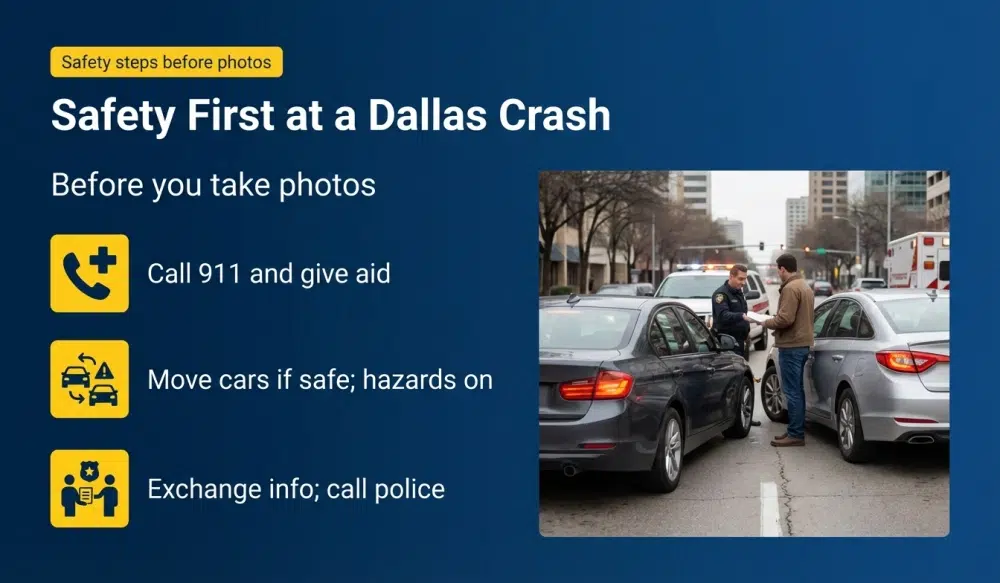
- Check for injuries Call 911 for medical help if anyone is hurt. Rendering aid when the law requires it is a priority before any documentation [4].
- Prevent secondary crashes If safe, move operable vehicles out of travel lanes to a shoulder or nearby parking area as permitted by Texas law, then begin documentation [7].
- Turn on hazard lights Increase visibility for oncoming traffic while you work.
- Call law enforcement Report the crash when required. An officer may generate a Texas CR-3 crash report, which later becomes a key record [6] [5].
- Exchange information Exchange names, addresses, vehicle registration, and insurance information as required by the Transportation Code. Photograph the documents for accuracy after you have obtained them appropriately [4].
What exactly should you photograph at the scene in Dallas?
Use this accident scene photo checklist to capture the essential views and details. Work methodically from wide to close, then from context to details.
What wide shots should you start with?
- Overall scene from multiple corners Capture the intersection or roadway from four corners or compass points, both directions of travel, and any approach curves. Include lane markings, medians, and shoulders.
- Vehicle resting positions Take photos that show where each vehicle stopped relative to landmarks, lane lines, and debris fields. These images help with reconstruction and comparative fault analysis [8].
- Traffic flow and congestion If safe, capture how traffic is behaving at the time, including backups or bottlenecks that may have contributed.
What vehicle photos matter most?
- Full exterior views Photograph each vehicle from all sides, including front, back, left, and right, to show overall condition and points of impact.
- Close-ups of damage Get detailed photos of scrapes, dents, paint transfers, broken lights, airbags, seatbelts, and any deployed safety systems. Include a common object for scale, like a coin or pen.
- Undercarriage and leaks If visible and safe, capture leaking fluids, hanging parts, and wheel or axle alignment issues.
- Interior condition Photograph deployed airbags, seat positions, child seats, shattered glass, and where belongings landed if it helps illustrate forces and injuries.
- License plates and VINs Take clear photos of plates and VIN stickers to avoid typos later and to streamline insurance claims.

Which roadway and environmental features should you include?
- Traffic control devices Photograph traffic lights, stop signs, yield signs, pedestrian signals, lane use signs, and any construction signage. Note obscured or malfunctioning devices.
- Pavement evidence Photograph skid marks, yaw marks, scrub marks, gouges, and fluid trails from multiple angles and distances for context.
- Road surface conditions Document wet pavement, standing water, oil slicks, gravel, potholes, uneven surfaces, and sand or debris that could affect traction.
- Lighting and weather Capture the sun’s position, shadows, street lighting, glare off wet surfaces, fog, or precipitation. Weather and light conditions can be pivotal in assessing visibility and reaction times [1].
- Obstructions and sightlines Photograph parked vehicles, vegetation, structures, or signage that could have blocked views.
What documentation of people and injuries is appropriate?
- Visible injuries With sensitivity and consent where appropriate, photograph bruises, cuts, swelling, seatbelt marks, and any medical treatment at the scene if permitted by responders and safe to do so.
- Protect privacy Avoid sharing injury photos on social media or with anyone besides your medical providers and legal team. Maintain original files for potential use in court [13].
What about witnesses and first responders?
- Witness contact information Photograph the front and back of a business card or write and then photograph names and contact numbers. If a witness offers a verbal statement, make a brief note and a photo of that note to capture the content.
- Responder identifiers Photograph patrol car numbers, officer name tags, or incident numbers when permitted. This can help you obtain the official report later [6].
Are there items people forget to photograph?
- Dash indicator lights Photograph warning lights like ABS, airbag, or check engine, which might corroborate mechanical issues or crash dynamics.
- Child restraints and helmets Document proper use and condition if a child or motorcyclist was involved.
- Personal property damage Photograph broken eyeglasses, phones, strollers, luggage, or work tools damaged in the crash.
- Nearby businesses and cameras Photograph storefronts or building facades that may have security cameras facing the roadway, so your legal team can promptly request footage.
How should you take the photos to strengthen authenticity?
The way you take and preserve photos can help your legal team authenticate them and respond to challenges. Think like an investigator and follow simple digital evidence hygiene.
What camera settings and techniques help your case?
- Use original resolution Shoot at the highest resolution available on your phone. Avoid zooming digitally. Move closer instead to prevent loss of detail.
- Capture context and detail Take a wide shot, a medium shot, and a close-up for each item of interest to show where it is and what it looks like up close.
- Include a reference object Place a coin, key, or pen near damage to provide scale in close-ups.
- Record date and time Keep your device’s date and time accurate. Time information and, when available, location metadata can assist with later verification [9].
- Avoid filters or edits Do not crop, enhance, or add filters to originals. If you must highlight something for your notes, save a copy and keep the original unaltered [13].
- Back up promptly Back up images to a secure location and keep the originals. Redundant copies reduce the risk of loss, which can raise spoliation issues if evidence disappears [10] [11].

How can you preserve integrity and avoid spoliation concerns?
- Keep originals read-only When possible, copy files to a storage device and set them to read-only. Do not rename or alter file metadata unnecessarily [9] [13].
- Document your steps Note the date, time, and general circumstances of photo capture. Maintain a simple log, which can help establish authenticity and chain of custody [13].
- Do not delete Deleting potentially relevant photos could trigger court remedies if a judge finds a duty to preserve and prejudice to the other side, especially with electronically stored information [10] [11].
How many photos are enough and when should you stop?
Take more than you think you need, with a focus on clarity and coverage rather than repetition. As a rule of thumb, many collisions require dozens of photos to cover vehicles, the scene, road conditions, and injuries. Stop when you have captured every angle, all relevant roadway conditions, all visible damage, and the key documents. If first responders direct you to clear the scene or relocate, follow their instructions and complete your checklist afterward in a safe area.
What if you could not take photos at the scene?
Crashes vary, and sometimes it is not safe or possible to take photos immediately. You can still build a strong record afterward.
What should you photograph later?
- Vehicle damage at tow yard or repair shop Photograph all sides, undercarriage, and the interior while damage is fresh, before repairs begin.
- Injury progression Take photos over days and weeks to show bruising, swelling, scars, and medical devices like braces or casts.
- Clothing and gear Photograph torn clothing, damaged helmets, child seats, and other protective gear.
- Return to the scene Safely return to capture traffic control devices, sightlines, and any persistent road defects that may have contributed.
How do you get the official Texas CR-3 crash report and why does it matter?
When a police officer investigates, a Texas CR-3 crash report may be generated. Qualified parties can purchase a copy through the Texas Department of Transportation. The report can include diagrams, contributing factors, and officer observations that help orient your photos and support your claim [6] [5]. Texas law regulates access to crash reports and the confidential information they contain [5].
How do photos affect insurance negotiations in Texas?
Clear, comprehensive photos can speed initial liability decisions and help validate estimates for repair costs and medical treatment. Photos also help address Texas’s proportionate responsibility rules by clarifying how the crash occurred. Under Texas law, if a claimant is more than 50 percent responsible for the crash, they cannot recover damages. When responsibility is 50 percent or less, damages are reduced by the claimant’s percentage of responsibility [8]. Photos of traffic control devices, sightlines, skid marks, and impact points help adjusters and, later, juries apply these rules.
Remember to provide originals or full-resolution copies to your legal team, who can disclose them properly in discovery if a lawsuit is filed. Digital evidence handling and preservation practices matter from day one to avoid later disputes about authenticity and completeness [10] [13].
What mistakes should you avoid when photographing a Dallas crash?
- Standing in unsafe positions Never step into live lanes or unsafe shoulders to take a photo.
- Using filters or cropping originals Keep originals untouched. Make any edits on copies only, keeping clear records [13].
- Forgetting context Avoid only close-ups. Always pair damage close-ups with wider views that show where the damage is located.
- Missing key devices Do not overlook traffic signals, stop signs, and lane markings near the collision point.
- Sharing publicly too soon Avoid public posting that could be taken out of context. Preserve photos and discuss them with your legal team first [13].
- Deleting similar shots Keep multiple angles and exposures. Slight differences can matter later, and deletion can complicate preservation [10] [11].
What special tips apply for multi-vehicle or truck crashes in DFW?
Multi-vehicle collisions and crashes involving commercial trucks require broader coverage and more attention to context. If a commercial vehicle is involved, there may be federal or state regulations at issue, multiple insurance layers, and additional evidence sources such as dash cams and telematics. Your photos are still central, but widen your lens to capture the larger scene.
- Document all involved vehicles Photograph every involved vehicle and any secondary impacts, including vehicles that avoided the crash but were damaged by debris.
- Capture identifiers on trucks Take photos of USDOT numbers, company names on doors, trailer numbers, placards, and cargo spills.
- Show approach paths For pileups, photograph approach directions and lane transitions over long distances to help later reconstruction.
- Photograph cargo and securement Document any shifted loads, loose tie-downs, or spilled cargo where safe.
- Note cameras and sensors Photograph visible dash cameras, exterior cameras, or sensor arrays on trucks or buses, as these may house critical footage your legal team can seek.
How does this checklist change for motorcycle, bicycle, or pedestrian crashes?
Two-wheel and pedestrian cases involve unique dynamics. Your photos should highlight visibility, protective gear, and road surface quality.
- Motorcycles Photograph helmet, jacket, gloves, boots, and any abrasion on gear, plus the bike’s lighting, reflectors, and any aftermarket parts. Capture subtle damage to forks, rims, and pegs.
- Bicycles Document helmet, lights, reflectors, brake condition, and any bike lane markings or sharrows, along with parked cars that could have doored a cyclist.
- Pedestrians Photograph crosswalks, pedestrian signals, curb ramps, obstructions on sidewalks, and lighting that affects visibility at night.
- Rideshare and transit Capture app screens with trip details after you are safe, vehicle identifiers, and any signage indicating service.

When should you seek legal help and how can photos help your lawyer in Dallas?
As soon as you can safely do so, consider speaking with a legal professional who handles civil crash cases in Dallas, TX. Early legal help can coordinate evidence preservation, obtain the CR-3 report, request nearby camera footage, and start the process of documenting medical care. Your photos are the backbone that supports these steps, providing immediate, visual proof while memories are still fresh.
If your claim becomes a lawsuit, your photos will be disclosed in discovery and may be accompanied by testimony to authenticate them. Texas rules and general evidence principles guide how courts consider the relevance and authenticity of your pictures, along with how any disputes about lost or altered digital files are handled [2] [3] [10] [11] [13].
Your images can also help address Texas proportionate responsibility questions, including whether traffic controls were obeyed, what the sightlines were, and how vehicles came to rest [8]. The stronger and clearer your documentation, the more effective your legal team can be in advocating your position.
Many people look for car accident lawyers after a serious crash, and your photo set can powerfully support the timeline and mechanics of what happened. If you are comparing options, detailed photographs can help car accident lawyers quickly understand liability and damages in your case.
If you are local to North Texas, Dallas car accident lawyers can leverage a detailed photo record to request additional roadway data, traffic signal timing records, and local camera footage.
Who is GoSuits and how can our tech-driven approach help in Dallas?
Your photos and videos are often the most important evidence you collect. We focus on converting that raw evidence into a compelling civil case. GoSuits serves clients across Texas and handles injury and crash cases that arise in Dallas, TX and the DFW region. We use a technology-driven approach that includes exclusive proprietary software to organize, analyze, and present evidence faster, helping move cases efficiently while preserving quality and accuracy.
- Designated attorneys for every client You work directly with an attorney throughout your case. We do not route clients through case managers. Every client has direct, unfettered access to their attorney for clarity and continuity.
- Technology with a purpose Our software centralizes photos, medical records, repair estimates, and communications, enabling rapid evidence review and timely follow-ups without sacrificing care or judgment.
- Trial experience We prepare each matter with the courtroom in mind. A trial-ready file strengthens negotiations and positions your case for the best available outcome if a jury is needed.
- 30 years of combined experience Our team brings decades of combined civil litigation experience to claims arising from traffic crashes and other injury events.
- Results that reflect hard work We invite you to review our prior cases for examples of outcomes achieved for clients. Past results do not guarantee future performance, but they show the types of matters we handle.
- Transparent team information Learn more about our attorneys and our values on the firm’s about us page.
- Comprehensive practice coverage Explore our practice areas to see how we handle car, truck, motorcycle, and other injury cases, along with property damage claims in appropriate circumstances.
If you have been involved in a Dallas crash, a free consultation can help you understand next steps, timelines, and how your photo set supports your claim. We use technology to expedite the process and keep you informed, and at the same time you have direct access to your attorney for strategy and updates. We pursue negotiations and, when necessary, verdicts in court so your case proceeds on a strong footing.
References and Resources
- Federal Rule of Evidence 401, Relevance – Legal Information Institute
- Federal Rule of Evidence 901, Authenticating Evidence – Legal Information Institute
- Texas Court Rules, including Texas Rules of Evidence – Texas State Law Library
- Tex. Transp. Code § 550.023, Duty to Give Information and Render Aid – Texas Legislature Online
- Tex. Transp. Code § 550.065, Release of Certain Information Relating to Accidents – Texas Legislature Online
- Crash Reports and Records Purchase – Texas Department of Transportation
- Tex. Transp. Code § 545.3051, Removal of Personal Property from Roadway – Texas Legislature Online
- Tex. Civ. Prac. & Rem. Code § 33.001, Proportionate Responsibility – Texas Legislature Online
- Forensic Examination of Digital Evidence: A Guide for Law Enforcement – National Institute of Justice
- Federal Rule of Civil Procedure 37(e), Electronically Stored Information – Legal Information Institute
- Brookshire Brothers, Ltd. v. Aldridge, 438 S.W.3d 9 (Tex. 2014) – CourtListener
- Texas Rules of Civil Procedure and related resources – Texas State Law Library
- Chain of Custody, Overview – Legal Information Institute
- Early Estimate of 2022 Traffic Fatalities – National Highway Traffic Safety Administration