
- What injury symptoms should you watch for in the first 48 hours after a Dallas crash?
- Why do some accident injuries have delayed symptoms?
- What immediate steps should you take in Dallas within 48 hours to protect your health and claim?
- Which common injuries show up in the first two days and what warning signs matter?
- When should you go to the emergency room or urgent care in Dallas?
- How do early medical records affect a Texas personal injury claim?
- What Texas deadlines and laws matter in the first 48 hours?
- What documentation can help you with your claim and talk to insurers?
- What changes if the crash involved a commercial truck or a motorcycle in Dallas?
- How can pain, concussion, or PTSD emerge days after the crash?
- What compensation may be available in Texas civil cases?
- How can a Dallas personal injury lawyer help you evaluate symptoms and next steps?
- Why consider GoSuits if you were injured in Dallas?
- References and resources
What injury symptoms should you watch for in the first 48 hours after a Dallas crash?
The first two days after a collision are often confusing. Adrenaline can mask pain. Some injuries are subtle, and others can worsen quickly without early care. In Dallas, TX, many people feel “fine” at the scene but develop headaches, neck stiffness, dizziness, nausea, or abdominal discomfort hours later. These can signal concussion or traumatic brain injury, whiplash, internal bleeding, or soft tissue damage [1][2][3].
- Headache, confusion, or sensitivity to light. These can indicate a concussion or other brain injury. Monitor for vomiting, worsening headache, or slurred speech [1].
- Neck and shoulder pain or stiffness. This may point to whiplash or cervical strain. Symptoms often intensify 24 to 48 hours later [3].
- Abdominal pain, swelling, or bruising. These can be red flags for internal bleeding. Watch for dizziness or fainting [2].
- Numbness or tingling in extremities. This can indicate nerve involvement or spine injury and warrants prompt evaluation [1].
- Shortness of breath or chest pain. Seek urgent care, as this can involve rib injuries, lung issues, or cardiac stress.
- New anxiety, sleep disturbance, or intrusive memories. Early mental health symptoms can appear in many crash survivors and are actionable with care [13].
Even if you walked away from the crash, document any new or worsening symptoms and get medical attention. Early evaluation helps your health and creates a clear record for an insurance claim or lawsuit [14].
Why do some accident injuries have delayed symptoms?
Delayed symptoms are common. The body’s stress response can temporarily dull pain and mask injury. Swelling and inflammation also build over time. Concussions can develop evolving symptoms over hours or days, including headaches, dizziness, memory issues, and light or noise sensitivity [1]. Internal bleeding may start slowly, with symptoms such as abdominal pain, fainting, or blood in urine appearing later [2]. Sprains and strains often tighten overnight as inflammation increases [3].
- Adrenaline effect. The surge after a crash can reduce perceived pain short term.
- Inflammation timeline. Tissues swell progressively, so stiffness or pain might peak at 24 to 48 hours.
- Brain vulnerability. Concussive symptoms can be subtle at first, worsening with activity or stimulation [1].
Because of these factors, a timely exam is key even if a person feels normal immediately after the collision. Documentation of delayed onset helps both the diagnosis and the legal timeline in Dallas.
What immediate steps should you take in Dallas within 48 hours to protect your health and claim?
- Report the crash to law enforcement. In Texas, drivers must report crashes involving injury or death to police and remain at the scene. A report helps establish key facts [7].
- Seek medical evaluation. Visit an ER or urgent care if symptoms are significant, or see a physician promptly. Early records help link injuries to the crash [14].
- Document everything. Photograph vehicle damage, skid marks, and visible injuries. Save the dashcam video. Start a symptom journal tracking pain, headaches, dizziness, and sleep issues.
- Notify your insurer. Most Dallas policies require prompt notice. Ask about medical payments coverage or personal injury protection if available [9].
- Avoid speculative statements. Do not say you are uninjured if you are unsure. Provide facts. Decline recorded statements until you understand your medical status.
- Consult legal help early. Dallas personal injury lawyers can coordinate medical documentation, protect deadlines, and communicate with insurers so you can focus on recovery.
These early actions build a reliable record of your injury symptoms first 48 hours, which matters greatly in Texas claims.
Which common injuries show up in the first two days and what warning signs matter?
Crash-related concussions can manifest as headache, dizziness, difficulty concentrating, or irritability. Red flags include worsening headache, repeated vomiting, seizure, or confusion. Children and older adults can present differently. If in doubt, seek care and limit strenuous activity [1]. When the injury is more serious, symptoms may escalate, and early imaging or observation may be recommended by medical providers.
When head trauma is suspected, documenting symptoms and getting a timely evaluation can later support claims that involve cognitive or neurological harm, often assessed by Dallas brain injury lawyers in complex cases.

What are the early signs of internal bleeding after a vehicle collision?
Internal bleeding might produce abdominal tenderness, swelling, fainting, or blood in urine or stool. These symptoms can be delayed and may be life threatening. Call 911 or go to an ER if abdominal pain worsens, you feel lightheaded, or you notice bruising that spreads or becomes firm [2].
How do soft tissue injuries such as whiplash, sprains, and strains present?
Neck stiffness, reduced range of motion, and shoulder or back pain may worsen over 24 to 48 hours. Sprains and strains often show swelling and bruising with increased pain after rest. Using ice, rest, and medical guidance can help, but do not self-diagnose more serious injuries [3].
What mental health symptoms deserve attention right away?
After a Dallas crash, many people report anxiety, sleep disturbance, irritability, or intrusive thoughts. Early recognition matters for recovery and documentation. If symptoms persist or interfere with daily life, prompt support is appropriate [13].
When should you go to the emergency room or urgent care in Dallas?
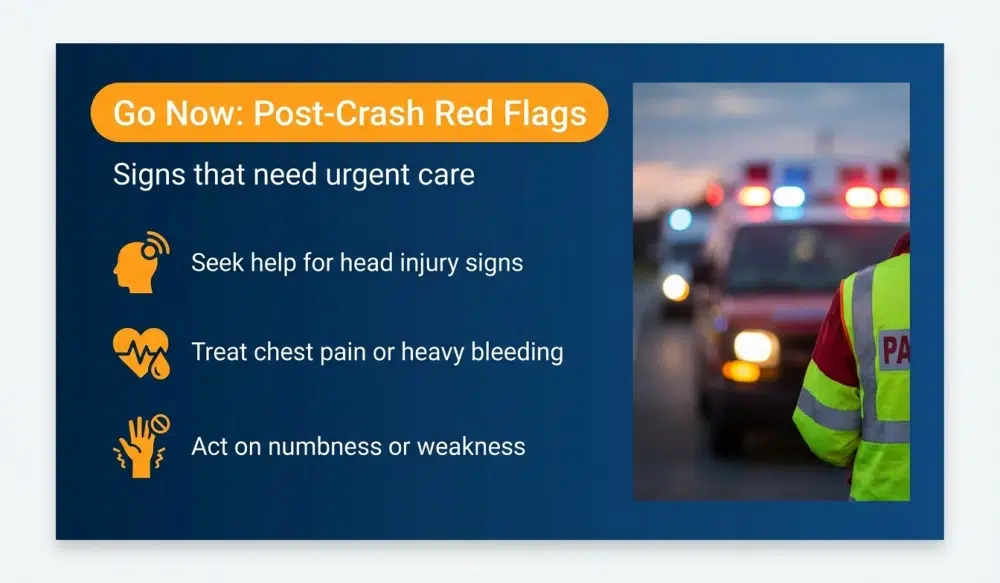
Go to an ER immediately if you experience any of the following after a crash:
- Loss of consciousness or repeated vomiting [1].
- Worsening headache, confusion, or slurred speech [1].
- Severe neck or back pain, numbness, or weakness.
- Abdominal pain, swelling, or fainting [2].
- Chest pain or shortness of breath.
- Significant bleeding or deep lacerations.
If symptoms are milder but new or worsening, urgent care or a primary care appointment can still be appropriate. Early evaluation supports your health and produces objective records that help in Texas insurance negotiations and litigation.
How do early medical records affect a Texas personal injury claim?
Insurance adjusters and defense counsel scrutinize the first 48 hours. If there is no documented complaint of pain or neurological symptoms near the time of the crash, insurers may argue the condition is unrelated. Timely records connect the dots between the collision and your symptoms. They also contain diagnostic codes, imaging results, and physician notes that are often admissible under evidence rules for business records, subject to proper foundation [14].
- Continuity of care matters. Follow-up appointments and referrals show that symptoms persisted and were medically assessed.
- Consistency helps credibility. Symptom journals and employer notes on missed work align with medical findings.
- You can request your records. Federal HIPAA rules give you a right to access copies of your medical records, subject to limited exceptions [12].
Plaintiffs typically benefit from comprehensive records; defendants assess records for alternative explanations or preexisting conditions. Both sides rely on early documentation to evaluate liability and damages.

What Texas deadlines and laws matter in the first 48 hours?
Texas law affects both immediate steps and long-term rights after a Dallas crash.
- Crash reporting. Texas law requires reporting crashes involving injury or death to local law enforcement, facilitating the official crash report that claims handlers review [7].
- Minimum auto liability limits. Texas sets 30 or 60 or 25 minimum liability coverage, which often shapes available insurance recovery [8].
- Comparative responsibility. Texas uses proportionate responsibility. A plaintiff more than 50 percent at fault cannot recover. Damages are reduced by the plaintiff’s percentage of responsibility [6][11].
- Two year limitations period. Most Texas personal injury claims must be filed within two years from the date of injury, with limited exceptions such as minority tolling [5].
- Insurance coverages. Optional coverages like PIP and medical payments can help with early bills in Dallas. Review your policy and ask your insurer about available benefits [9].
These rules make the early hours important. Prompt reporting, medical evaluation, and documentation protect your claim whether you are a plaintiff or defending a claim in civil court.
What documentation can help you with your claim and talk to insurers?

- Photographs and videos. Capture vehicle positions, skid marks, debris, and all visible injuries.
- Witness information. Obtain names, phone numbers, emails, and brief statements if possible.
- Symptom journal. Record daily pain levels, headaches, dizziness, sleep quality, and limitations at work or home.
- Receipts and bills. Save invoices for medical visits, prescriptions, transportation to appointments, and replacement services.
- Vehicle data. Preserve dashcam files and photos of any onboard displays that show alerts or speed.
How should you communicate with insurance adjusters in the first 48 hours?
- Notify promptly but carefully. Share the basic facts of the crash. Avoid guessing about speed, distances, or faults.
- Decline recorded statements until ready. Many people do not yet know the scope of injuries. Wait until you have medical clarity and legal guidance.
- Do not sign broad medical authorizations. Request that insurers limit records to relevant providers and time periods.
- Preserve evidence. Destruction of relevant evidence can raise spoliation concerns that affect litigation [10].
Plaintiffs should consider early consultation with Dallas personal injury lawyers to coordinate medical proof and track damages. Defendants and insurers often prioritize early scene data, recorded statements, and quick vehicle inspections. A careful approach helps both sides evaluate liability and damages accurately.
What changes if the crash involved a commercial truck or a motorcycle in Dallas?
Commercial carriers are subject to federal and state safety rules, including driver qualification and hours-of-service regulations. Early preservation of driver logs, electronic logging device data, and vehicle telematics can be critical in Dallas truck cases [10]. If you or a loved one was injured in a truck crash, the severity of injuries and complex liability issues often lead people to contact Dallas truck accident lawyers or Dallas commercial vehicle accident lawyers for rapid evidence preservation and claims strategy.
- Identify the carrier and insurer. Photograph the DOT number and company name on the trailer and tractor.
- Capture load and scene details. Note hazardous cargo placards, wide turns, and stopping distances.
- Monitor delayed symptoms. High energy impacts often cause concussions and internal injuries that emerge after the adrenaline fades [1][2].
What should injured motorcyclists focus on in the first two days?
Motorcyclists face higher risks of head trauma and orthopedic injuries. Helmet use lowers head injury risk, but even riders who feel fine should monitor for headache, dizziness, or neck pain. Early imaging can matter if there is suspicion of fractures or spinal injury. Injured riders often reach out to Dallas motorcycle accident lawyers to assess medical proof, liability, and insurance coverages.
How can pain, concussion, or PTSD emerge days after the crash?
Many Dallas crash survivors report that day two or three brings increased stiffness, headaches, or emotional distress. This timing is consistent with inflammation cycles and the evolving nature of concussion symptoms [1][3]. Sleep problems, irritability, and intrusive memories can appear quickly or develop over several weeks. Early attention to mental health improves recovery and strengthens the documentation of non-economic harm [13].
- Track symptom patterns. Note triggers such as noise or bright light that worsen headaches or dizziness.
- Follow medical guidance. Limit strenuous activity until cleared. Keep follow-up appointments.
- Communicate with your employer. Document missed time, modified duties, or decreased productivity.
If symptoms escalate, return to a medical provider. In claims involving significant neurological or mental health impacts, cases are often reviewed by Dallas brain injury lawyers for thorough documentation and future care planning.
What compensation may be available in Texas civil cases?
Every case is unique, but Texas law generally allows recovery for both economic and non-economic damages when another party is legally responsible. Comparative responsibility rules can reduce recovery by your percentage of fault and bar recovery if you exceed 50 percent [6]. Accurate early documentation of injury symptoms first 48 hours supports the categories below.
- Medical expenses. ER visits, imaging, surgeries, therapy, prescriptions, and future care costs when supported by medical evidence.
- Lost wages and loss of earning capacity. Payroll records, tax documents, and employer statements help quantify these losses.
- Pain and suffering. Symptom journals, family observations, and provider notes substantiate these impacts.
- Mental anguish. Diagnosed anxiety, depression, or PTSD after a crash can be compensable with proper documentation [13].
- Property damage. Vehicle repair or replacement, diminished value, and personal property losses.
- Wrongful death damages. Families may pursue claims for losses when negligence causes a fatal crash, often evaluated by Dallas wrongful death attorneys, with unique Texas remedies and limitations [6].
Legal teams for plaintiffs and defendants both analyze early medical records, objective testing, and daily-life impact to evaluate damages. This is one reason why prompt care and consistent follow-up help both health and claim clarity.
How can a Dallas personal injury lawyer help you evaluate symptoms and next steps?
When injuries evolve quickly, a Dallas personal injury lawyer can help you coordinate care and protect your rights. While you focus on treatment, counsel can gather scene evidence, obtain the police report, and work with providers to assemble records. They can explain Texas comparative responsibility and how it may affect settlement ranges, set up claims with the right insurers, and track deadlines. If liability is disputed, counsel can pursue additional evidence such as nearby security video and vehicle data.
- Medical timeline. Obtain complete records, imaging, and treatment plans that reflect symptoms from day one.
- Insurance strategy. Determine coverage sources such as the at-fault policy, PIP, MedPay, and uninsured or underinsured motorist coverage [9].
- Liability proof. Use photos, witness statements, and crash reconstruction where needed. In truck cases, federal safety rules and logs may apply [10].
- Negotiation and litigation. Present a well-documented claim and, if necessary, file suit within the two year limitations period [5].

Why consider GoSuits if you were injured in Dallas?
When you are coping with new or delayed symptoms in the first 48 hours, compassionate guidance and a precise plan can make a difference. GoSuits practices across Texas and focuses on civil injury and damage cases. We are a technology driven team that uses exclusive proprietary software to streamline investigation, organize medical proof, and move cases forward faster while maintaining quality. Even though we leverage technology to expedite the case, every client has a designated attorney and unfettered access to that attorney. We do not use case managers.
Our trial background helps us prepare every case as if it will be presented to a jury. That approach can strengthen negotiation strategy and illuminate evidence gaps early. We have secured meaningful results for clients in a range of serious injury matters. You can review representative outcomes on our page of prior cases. Learn about the lawyers who lead our cases at our attorneys, and read more about our mission at about us. Explore our full list of practice areas.
With 30 years of combined experience and a record of trying cases in court, our team blends litigation skills with innovative tools to make your path clearer, from the first hours after a crash through resolution. If you want to understand how your injury symptoms first 48 hours fit into a Texas claim, a free consultation can help you make informed choices and plan your next steps.
References and resources
- Traumatic Brain Injury: Signs and Symptoms – CDC
- Internal Bleeding: Signs and First Aid – MedlinePlus
- Sprains and Strains Overview – MedlinePlus
- Texas Motor Vehicle Traffic Crash Facts – Texas Department of Transportation
- Limitations Periods, Section 16.003 – Texas Civil Practice and Remedies Code
- Proportionate Responsibility, Chapter 33 – Texas Civil Practice and Remedies Code
- Obligations After a Crash, Chapter 550 – Texas Transportation Code
- Financial Responsibility Requirements, Chapter 601 – Texas Transportation Code
- Auto Insurance in Texas: Coverages and Consumer Help – Texas Department of Insurance
- Summary of Hours of Service Regulations – FMCSA
- Comparative Negligence Overview – Cornell Law School Legal Information Institute
- Right to Access Medical Records – U.S. Department of Health and Human Services
- Post-Traumatic Stress Disorder Overview – MedlinePlus
- Texas Rules of Evidence and Procedure – Texas Judicial Branch
- Seat Belts and Injury Risk Reduction – NHTSA