- What symptoms should you watch for in the first 48 hours after a Chicago crash?
- Why do some injury symptoms appear hours or days after a collision?
- What are common whiplash and soft tissue injury signs you might miss?
- How can you recognize a concussion or other brain injury early?
- What are warning signs of internal bleeding or organ injury?
- What does back or neck pain after a car accident mean legally and medically?
- Is numbness or tingling after an accident serious?
- What about headaches, dizziness, sleep changes and PTSD after a crash?
- When should you go to the ER, urgent care or primary care in Chicago?
- How should you document injuries for insurance claims in Illinois?
- How do insurers evaluate causation and fault and how can your records help?
- What is the Illinois statute of limitations and are there shorter deadlines?
- Were you visiting from another state and wondering about other deadlines?
- What step by step checklist should you follow in the first 48 hours?
- How can legal help improve your outcome without delaying your medical care?
- Why choose GoSuits if you need help after a Chicago crash?
- References and resources
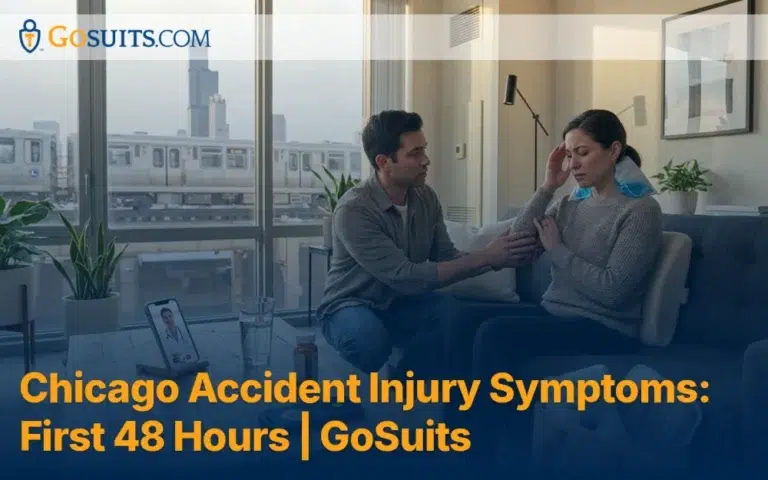
What symptoms should you watch for in the first 48 hours after a Chicago crash?
The first two days are critical for your health and for any future civil claim. Some injuries are obvious right away. Many others are subtle at first and then get worse as adrenaline fades and inflammation rises. If you were in a collision in Chicago, IL, listen to your body, write down what you feel in real time, and seek qualified medical care when you notice red flags. If you are in immediate danger, call 911 through Chicago’s Office of Emergency Management and Communications [8].
Watch closely for the following injury symptoms. These are common after motor vehicle crashes and may signal conditions that benefit from prompt evaluation.
- Severe or worsening headache: May indicate concussion or other brain injury. Sensitivity to light and sound or nausea raises concern [3].
- Neck pain or stiffness: Classic for whiplash and can accompany ligament strain or disc injury. Symptoms can start mild and intensify over 24 to 72 hours [5].
- Back pain: Can reflect muscle strain, disc injury, or facet joint irritation. Pain that radiates to a limb needs careful assessment.
- Numbness or tingling: Pins and needles or loss of sensation in arms, hands, legs, or feet can point to nerve involvement or spinal issues.
- Dizziness or balance problems: Common with concussion. Feeling unsteady or foggy should prompt medical review [3].
- Confusion or memory lapses: Even brief confusion or difficulty concentrating after impact can be a sign of a mild traumatic brain injury [3].
- Abdominal pain, swelling, or deep bruising: Potential internal bleeding or organ injury. This can appear delayed and requires urgent care [4].
- Chest pain or shortness of breath: Could be chest wall injury, rib fracture, or cardiac strain. Seek care immediately if symptoms are severe.
- Persistent nausea or vomiting: Concerning for brain injury. Continuous vomiting warrants emergency evaluation [3].
- Visual disturbance: Blurred or double vision can accompany head or neck trauma.
- Sleep changes: Difficulty sleeping or sleeping far more than usual is common after head trauma and stress [3].
- Heightened anxiety or intrusive memories: Emotional symptoms can be part of the injury picture, including acute stress or PTSD [6].
Illinois crash data consistently show significant numbers of injury crashes each year, and Cook County carries a large share due to population and traffic density. Reviewing the Illinois Department of Transportation crash facts can help you understand common patterns and injury types linked to impact forces and seat position [9].
Why do some injury symptoms appear hours or days after a collision?
It is common to feel relatively okay at the scene and then feel much worse later. Several factors explain delayed symptoms:
- Stress hormones mask pain: Adrenaline and cortisol can mute discomfort immediately after a crash. As levels fall, pain surfaces and stiffening begins.
- Inflammation builds over time: Soft tissue microtears and joint irritation often become more painful after 24 to 72 hours as swelling increases, particularly in the neck and back [5].
- Brain injury can be subtle: Concussion symptoms may be delayed or evolve as cognitive demands return. Headache and fogginess may fluctuate during the first days [3].
- Internal injuries may slowly leak: Internal bleeding can begin small and progress, leading to late abdominal pain, deep bruising, lightheadedness, or fainting [4].
Delayed onset does not mean your injuries are minor. It means you should track symptoms carefully, seek care when new problems appear, and keep thorough records that connect the timing of symptoms to the crash event.
What are common whiplash and soft tissue injury signs you might miss?
Whiplash is a neck acceleration injury caused by rapid back and forth motion. It can stretch ligaments and muscles, irritate facet joints, and aggravate discs. Mild symptoms often intensify on day two or three. Be alert for these signs:
- Neck stiffness with limited rotation: Trouble turning your head or checking blind spots can indicate soft tissue strain.
- Localized neck or shoulder blade tenderness: Soreness to touch over muscle bands or joint lines is common.
- Headache starting at the base of the skull: Cervicogenic headache can begin in the neck and radiate upward [5].
- Pain with prolonged sitting: Desk work or driving can worsen symptoms as muscles fatigue.
- Jaw discomfort: Some people clench during impact, aggravating temporomandibular joints.
Medical documentation that notes mechanism of injury, seat position, headrest height, and immediate onset or delay is useful later when insurers evaluate whether the crash caused your symptoms. Clinicians commonly recommend a combination of initial rest, gradual activity, and targeted exercises once serious injury is ruled out [5].
How can you recognize a concussion or other brain injury early?
Concussion, a mild traumatic brain injury, can occur without loss of consciousness. Even a low speed crash can transmit sufficient rotational force to the brain. Recognizing early signs helps you get the right care and avoid activities that can worsen symptoms.
- Headache and pressure in the head: Often the most reported symptom.
- Feeling slowed down or in a fog: Difficulty thinking clearly or remembering new information is typical [3].
- Balance problems or dizziness: Unsteadiness or vertigo may occur soon after impact [3].
- Nausea or vomiting: Particularly concerning if repeated [3].
- Sensitivity to light or noise: Crowded environments can feel overwhelming.
- Sleep changes: Oversleeping, insomnia, or fragmented sleep are common [3].
- Mood changes: Irritability, sadness, or anxiety may appear or intensify.
CDC guidance emphasizes prompt evaluation, relative rest in the first days, and a structured, gradual return to activity once symptoms begin to improve [3]. Document what triggers symptoms and how long they last. If symptoms worsen or new neurological issues appear, return for care immediately.
What are warning signs of internal bleeding or organ injury?
Internal injuries are not always visible and may be life threatening. If you notice any of the following, seek urgent care right away:
- Severe abdominal pain or swelling: Pain that increases with movement or pressure can indicate internal injury.
- Deep purple bruising on the abdomen or flanks: Also called seat belt sign, this may accompany internal injury [4].
- Lightheadedness or fainting: Dizziness with rapid heartbeat can signal blood loss [4].
- Shortness of breath or chest pain: Seek emergency evaluation.
Chicago’s 911 system can dispatch EMS for assessment and transport when symptoms suggest a medical emergency [8]. If imaging or hospital observation is advised, follow through and keep discharge instructions for your records.

What does back or neck pain after a car accident mean legally and medically?
Back and neck symptoms after a crash range from transient muscle soreness to disc herniations that compress nerve roots. From a medical standpoint, the initial goal is to identify red flags like neurological deficits or spinal instability. From a civil law standpoint, the focus is on linking the collision to the injury and documenting how symptoms affect work and daily life.
Practical steps include a timely evaluation, adherence to the care plan, and consistency in describing what movements or tasks worsen or improve pain. Keep work restriction notes and physical therapy progress updates. These items later help establish causation and damages under Illinois negligence law, which is grounded in duty, breach, causation, and damages [14].
Is numbness or tingling after an accident serious?
Numbness, tingling, or weakness in an arm or leg can be a sign of nerve irritation, disc injury, or swelling around a nerve pathway. Get medical attention if you have loss of strength, drop objects, or notice changes in bladder or bowel function. For insurance and potential litigation, note the exact distribution of symptoms, the time of onset, and any activity that aggravates or improves the issue. Detailed notes help differentiate crash related symptoms from unrelated conditions.
What about headaches, dizziness, sleep changes and PTSD after a crash?
Headaches and dizziness may be musculoskeletal or neurological. Sleep changes and mood changes are common after a collision and can stem from pain, concussion, or stress. Persistent nightmares, hypervigilance, or avoidance may indicate PTSD. The National Center for PTSD explains that vehicle collisions can lead to acute stress and PTSD, especially when there was a perception of serious threat to life [6]. Document sleep patterns, triggers, and any counseling or therapy you pursue so there is a clear picture of your recovery trajectory.
When should you go to the ER, urgent care or primary care in Chicago?
Choose the level of care that matches your symptoms, and do not wait when you feel unsafe.
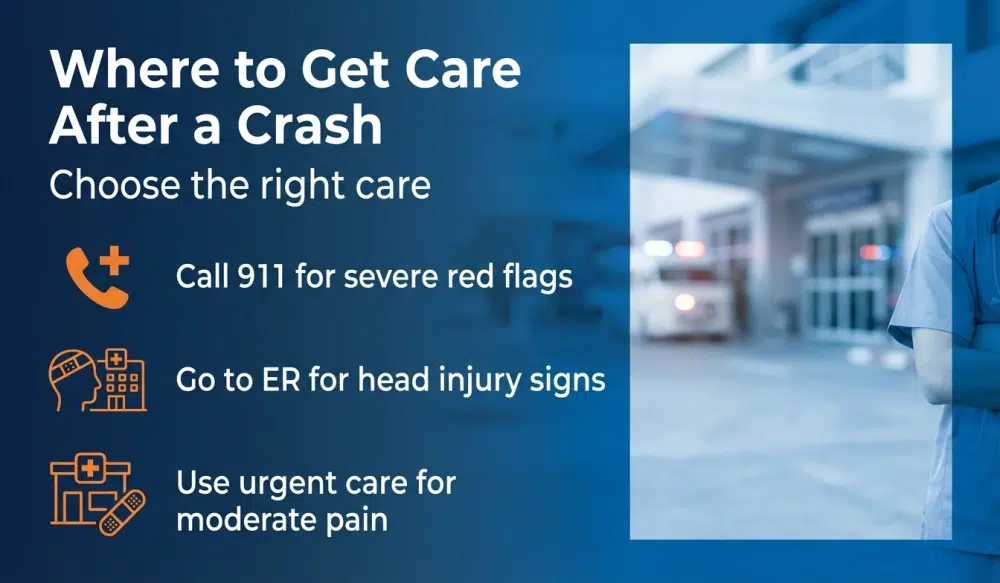
- Call 911 immediately: If you have severe headache, confusion, repeated vomiting, chest pain, shortness of breath, severe abdominal pain, uncontrolled bleeding, or new neurologic deficits. OEMC coordinates 911 response in Chicago [8].
- Visit an emergency department the same day: For head injury symptoms, suspected fractures, worsening neck or back pain with neurological signs, or concerning abdominal pain.
- Use urgent care or primary care promptly: For mild to moderate musculoskeletal pain, whiplash symptoms, or if you need a timely exam, imaging if appropriate, and a written plan for work and activity.
If you are unsure, err on the side of safety and get evaluated. Early care creates a clear medical timeline that is useful for health and for any claim review.
How should you document injuries for insurance claims in Illinois?
Thorough documentation in the first 48 hours makes it easier to prove what happened and why you needed treatment. It also helps protect you from denials based on gaps or vague descriptions.
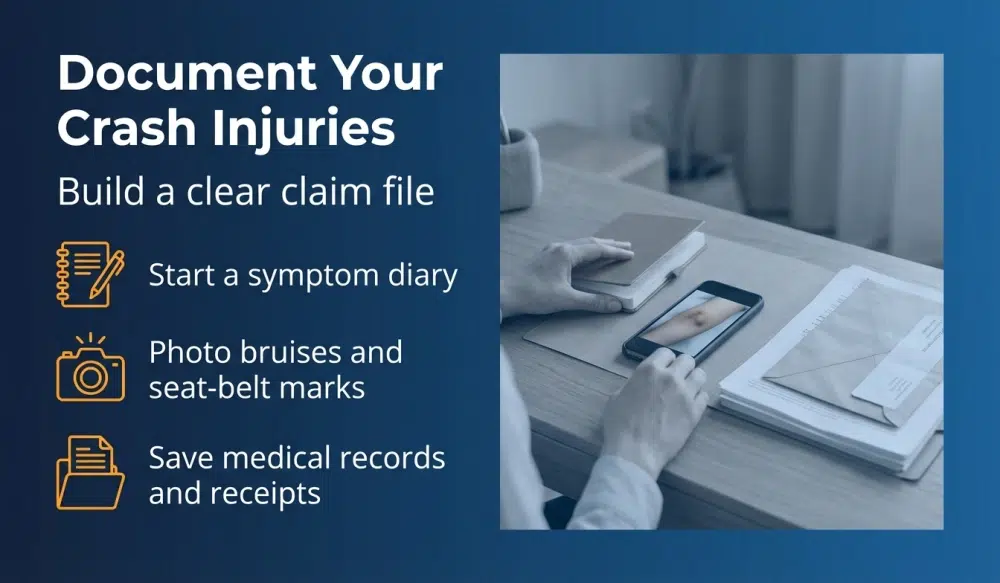
- Start a symptom diary: Record time, location of pain, severity, triggers, and what helps. Include headaches, dizziness, numbness, sleep changes, and functional limits.
- Photograph visible injuries: Bruises, seat belt marks, abrasions, and swelling tend to evolve. Take photos daily in consistent lighting for the first week.
- Save all medical paperwork: ER discharge instructions, imaging reports, prescriptions, and follow up referrals should be kept organized by date.
- Track expenses and lost income: Keep receipts and wage loss documentation. Ask your employer for a letter that confirms missed time and duties you could not perform.
- Note witness information: Names and contact details, plus any statements made at the scene, can be important later.
- File legally required crash reports when applicable: Illinois requires a motorist report within 10 days for qualifying crashes not investigated by police. Keep a copy for your records [7].
- Communicate carefully with insurers: Illinois Department of Insurance publishes consumer guidance on auto claims. Be accurate and complete, and consider professional help before giving recorded statements [10].
How do insurers evaluate causation and fault and how can your records help?
Insurers assess three pillars: what happened, who is legally at fault, and whether the crash caused your injuries. Your early actions strengthen each pillar.
- Pillar one, what happened: Police report, scene photos, and witness statements describe the mechanism of injury. Your diary ties symptom onset to the event timeline.
- Pillar two, fault: Illinois uses modified comparative fault. You can recover damages if you are not more than 50 percent at fault, and your recovery is reduced by your percentage of fault [2]. Clear documentation about speed, traffic control, and right of way helps address fault arguments.
- Pillar three, causation: Prompt medical evaluations, consistent complaints, and imaging when indicated connect your symptoms to the collision rather than to unrelated causes. Careful notes about activity limits, therapy progress, and symptom patterns strengthen this link.
From a plaintiff perspective, detailed records show the progression from impact to first symptoms to diagnosis and treatment. From a defense perspective, gaps in care, inconsistent histories, or late reporting may be raised to challenge causation. Your best answer is timely care and accurate, contemporaneous notes.
What is the Illinois statute of limitations and are there shorter deadlines?
In most Illinois personal injury cases stemming from vehicle collisions, you generally have two years from the date of injury to file a lawsuit [1]. Some claims have shorter limits. Actions against local public entities, such as claims involving certain city vehicles or public employees, often must be filed within one year [11]. Contract based or uninsured motorist claims may have policy deadlines shorter than state law. Read your policy and calendar all applicable dates.
The safest approach is to act promptly. Evidence such as dash cam footage and business surveillance may be overwritten within days or weeks. Early preservation letters and requests for video or data help protect your rights while memories are fresh.
Were you visiting from another state and wondering about other deadlines?
If you live elsewhere or were hurt on a trip, different states may apply depending on where the crash occurred and which law governs your claim. For context only, California generally has a two year limit for personal injury [13]. Texas generally has a two year limit as well [12]. There are exceptions and special rules, especially for government defendants and minors. If your collision occurred in Illinois, local deadlines and rules typically control, so do not delay in getting state specific guidance.
What step by step checklist should you follow in the first 48 hours?
Here is a simple, Chicago focused plan you can adapt to your situation.
What should you do immediately at the scene if safe to do so?
- Call 911: Request police and EMS for injuries. Cooperate with responders and accept transport when advised [8].
- Gather information: Drivers, passengers, license plates, insurance, and witnesses. Take photos from multiple angles if it is safe.
- Seek care the same day: Even if you feel okay, get checked if you hit your head, feel stiff, or have pain that is not minor. Early exams document baseline status.
What should you do within the first 24 hours?
- Start a symptom diary: Record pain levels, location, and triggers three times per day.
- Follow your discharge plan: Use medications as directed and schedule follow up. Ask for work notes if needed.
- Notify your insurer: Provide basic facts without speculating on fault. Save the claim number and every letter you receive [10].
- Preserve evidence: Save damaged items and request a copy of the police report when available.
What should you do within 24 to 48 hours?
- Reassess symptoms: If headaches, neck or back pain, numbness, or abdominal pain are worsening, return for care promptly [3] [4].
- Document functional limits: Note activities you cannot perform, from lifting to childcare to commute challenges.
- Notify your employer: Confirm missed work and modified duties in writing.
- Consider a consultation: A legal consultation helps you understand investigation steps, preservation of evidence, and deadlines while you focus on medical recovery.
How can legal help improve your outcome without delaying your medical care?
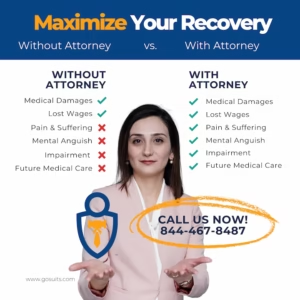
Getting medical care promptly is the top priority. A civil claim will rest on strong medical documentation and clear proof of how the crash affected your daily life. While you concentrate on health, a legal team can coordinate preservation of evidence, obtain traffic camera footage when available, request scene photos, and organize your records in a way that addresses causation and damages under Illinois law [14].
If you prefer to keep the focus on healing while still protecting your rights, car accident lawyers can handle claim communications, help you avoid avoidable misstatements, and structure the claim file so that medical findings are presented in a clear, chronological way for adjusters and, if needed, a jury.
When you want local guidance, Chicago car accident lawyers can also explain how comparative fault is applied in Illinois and how to address any suggestion that delayed symptoms are unrelated to the crash [2]. This support can reduce stress, help you meet deadlines, and free you to follow your care plan.

Why choose GoSuits if you need help after a Chicago crash?
We help people in Chicago, IL and across Illinois navigate the medical and legal steps that follow a collision. A free consultation can clarify immediate next steps, help you prioritize health care, and outline how to preserve evidence while you recover. Our practice covers personal injury cases arising from vehicle collisions and related incidents.
GoSuits uses a technology driven approach centered on exclusive proprietary software designed to accelerate investigation, organize complex medical records, and surface the critical facts that drive negotiation and trial strategy. This workflow is built to move cases faster and with better organization, without sacrificing individual attention to each person’s story and needs.
Every client has a designated attorney from day one. We do not route cases through case managers. You have unfettered access to your attorney for questions and updates at each stage. We are committed to clear communication and timely action.
Our team brings 30 years of combined experience with significant trial experience that benefits clients when insurers dispute fault or causation. When appropriate, we prepare each matter as if it may be tried, which often leads to stronger positioning. You can review a sample of our past results here: prior cases. Learn more about the people who will work with you: our attorneys and about us. Explore how we can help across multiple areas: practice areas.
If your injuries include whiplash, concussion, internal injuries, or symptoms like headaches, neck or back pain, numbness, dizziness, or post crash anxiety, we can coordinate preservation of crucial evidence while you follow your medical plan. We handle car claims and related personal injury matters across Cook County and throughout Illinois.
References and resources
- 735 ILCS 5 13 202 Limitation of actions for personal injury – Illinois General Assembly
- 735 ILCS 5 2 1116 Modified comparative fault – Illinois General Assembly
- Concussion Signs and Symptoms – CDC
- Internal Bleeding Overview – MedlinePlus
- Whiplash Injury Topic Page – MedlinePlus
- PTSD After Motor Vehicle Accidents – National Center for PTSD VA
- Motorist Report of Crash Requirements – Illinois Secretary of State
- Call 911 and Emergency Services Information – City of Chicago OEMC
- Crash Facts and Statistics Annual Reports – Illinois DOT
- Consumer Auto Insurance Information – Illinois Department of Insurance
- 745 ILCS 10 8 101 Actions against local public entities – Illinois General Assembly
- Texas Civil Practice and Remedies Code 16.003 Personal Injury Limitations – Texas Legislature
- California Code of Civil Procedure 335.1 Two Year Limit – California Legislature
- Negligence Overview – Legal Information Institute