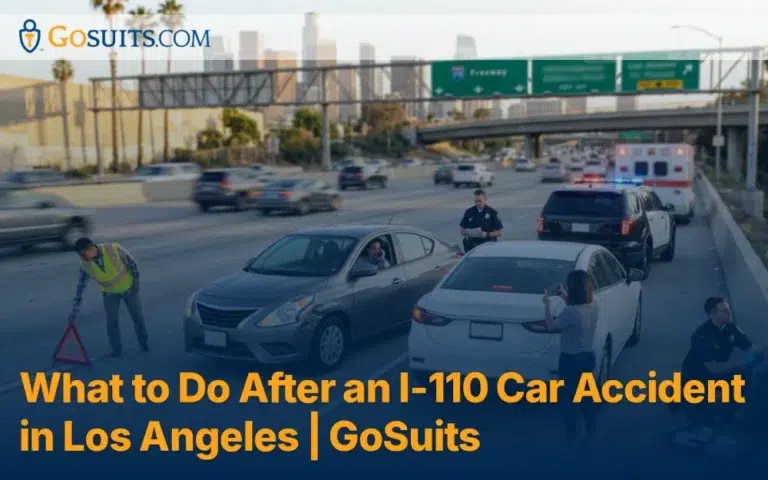
- What makes crashes on the I-110 in Los Angeles different?
- What should you do in the first 10 minutes after a Harbor Freeway accident?
- How do you safely document the scene, exchange insurance information, and protect your rights?
- How do you get the CHP accident report and what is the CHP 555 traffic collision report?
- When must you file the DMV SR-1 form and why does it matter?
- Who pays for your losses and how do liability and insurance work in California?
- How does comparative negligence in California affect your claim after a freeway crash?
- What should you do after a hit-and-run on I-110?
- What unique issues arise in rear-end and sideswipe collisions, lane-splitting motorcycle crashes, and Los Angeles freeway pileups?
- How should you deal with insurance adjusters and recorded statement requests?
- What are the deadlines for California’s statute of limitations and claims against public entities?
- How can you manage medical bills, liens, and property damage after an I-110 crash?
- What evidence should plaintiffs and defendants preserve after a Harbor Freeway accident?
- What compensation categories are available in a Los Angeles injury claim?
- When should you contact a Los Angeles lawyer and what can a lawyer do for you?
- Why choose GoSuits if you were hurt on I-110 in Los Angeles?
- References and Resources
What makes crashes on the I-110 in Los Angeles different?
The I-110 Harbor Freeway connects the Port of Los Angeles to downtown and beyond, carrying commuters, port traffic, buses, and motorcycles through dense interchanges and fast-moving lanes. Traffic density and heavy mixing of vehicle types raise the risk of rear-end and sideswipe collisions, sudden braking near ramps, and multi-vehicle chain reactions. Caltrans traffic census data shows high average daily traffic on major Los Angeles corridors, including I-110 segments, which correlates with increased collision exposure [12]. According to the California Office of Traffic Safety collision ranking results, Los Angeles consistently reports among the highest numbers of traffic injuries and fatalities statewide, reflecting the volume and complexity of urban driving conditions [11].
Because I-110 is a state highway, the California Highway Patrol typically handles freeway responses and prepares the Traffic Collision Report used by insurers and courts. Understanding which agency responded, how to request your report, and how California liability rules will apply can make a meaningful difference to your recovery [2].
What should you do in the first 10 minutes after a Harbor Freeway accident?
Your safety comes first. If your vehicle is drivable and it is safe to do so, move to the shoulder or a safe turnout and turn on hazard lights. Call 911 to report the collision and request medical assistance if anyone is hurt. For collisions resulting in injury or death, California law requires reporting to the CHP or local police without delay and no later than 24 hours [8].
- Call 911 and seek medical attention even if pain feels minor. Some injuries surface hours later. Prompt care creates medical documentation linking injuries to the crash.
- Stay at the scene and wait for law enforcement if it is safe. Leaving after a crash with injuries can lead to serious consequences under California law [15].
- Check for immediate hazards such as leaking fuel or approaching traffic. If flares or triangles are available and safe to deploy, place them a safe distance behind your vehicle.
- Do not admit fault. Limit conversation to safety and the exchange of required information until the scene is secure and you have had a chance to collect facts.
As medical responders and CHP arrive, follow instructions and obtain the incident number. If you are transported, ask a companion or a witness to capture photographs and gather contact information if possible. Early actions can preserve crucial evidence for a Los Angeles injury claim.
How do you safely document the scene, exchange insurance information, and protect your rights?
California Vehicle Code section 16025 requires drivers involved in a traffic collision to exchange names, addresses, vehicle identification, and insurance details [9]. On I-110, fast-moving traffic makes any on-foot activity dangerous. If it is unsafe to step out, remain belted in your vehicle with hazards on and wait for CHP to control the scene.
- Exchange insurance information: names, phone numbers, driver’s license numbers, license plates, insurer names, and policy numbers [9].
- Capture evidence photos and witnesses: damage to all vehicles, roadway debris, skid marks, traffic signs, lane markings, lane positions, and wide shots showing ramp proximity and lane numbers. Note witness names and phone numbers.
- Record details: date and time, weather and lighting, traffic conditions, estimated speeds, and any statements made by other drivers or witnesses.
- Preserve dashcam footage and telematics data if your car or phone recorded the event. Back up videos immediately.
These steps help both plaintiffs and defendants. Plaintiffs strengthen proof of negligence and damages, while defendants preserve defenses such as sudden emergency or comparative fault. Carefully gathered facts reduce later disputes.
How do you get the CHP accident report and what is the CHP 555 traffic collision report?
For freeway collisions, the California Highway Patrol typically prepares the Traffic Collision Report using the CHP 555 standardized form. This report identifies the involved parties, diagrams the crash, lists primary collision factors, and documents witness statements. You may request a copy through the CHP’s collision report process by providing the date, location, and report or incident number [2].
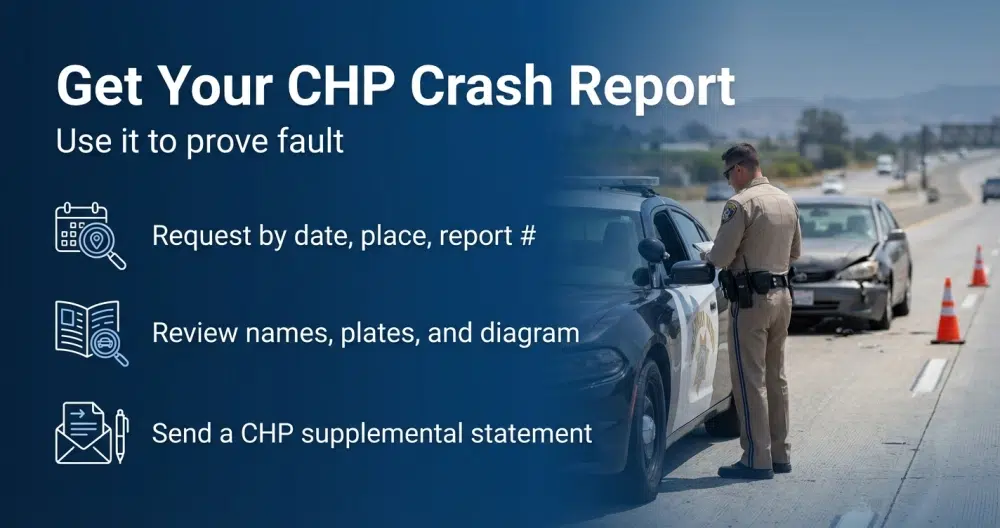
- Why it matters: Insurers rely on the CHP 555 to evaluate liability and damages. Although it is not the final word in civil court, it is a central piece of documentation used in negotiations and litigation.
- What to check: Names, VINs, insurance details, the diagram’s accuracy, the listed primary collision factor, and whether any driver was cited.
- How to correct errors: If the report contains factual mistakes, you can submit a supplemental statement to the CHP office that prepared it. Keep copies of all submissions.

When must you file the DMV SR-1 form and why does it matter?
California requires drivers to file a DMV SR-1 form within 10 days after a traffic crash that results in injury, death, or property damage of at least a threshold amount set by regulation. Filing is required regardless of who is at fault and even if the other driver lacks insurance. Failure to file can result in license suspension [1].
- Where to find it: The DMV provides the SR-1 form and instructions online [1].
- What to include: Your insurance information, collision details, and any known injuries or property damage.
- Why insurers care: The SR-1 triggers verification of financial responsibility and may affect claim processing timelines.
Who pays for your losses and how do liability and insurance work in California?
California follows a fault-based system for motor vehicle collisions. The at-fault driver and their liability insurer are generally responsible for property damage, medical expenses, lost income, and other proven losses. If the at-fault driver is uninsured or underinsured, you may pursue an uninsured motorist claim or an underinsured motorist claim through your own policy if you carry UM or UIM coverage [7].
- Third-party liability claim: Filed against the at-fault driver’s insurer for your injury and property losses.
- UM/UIM claim: Filed under your own policy if the at-fault driver lacks sufficient coverage. California Insurance Code section 11580.2 governs UM coverage and related procedures [7].
- Medical payments coverage: If included in your policy, MedPay can help with immediate medical bills regardless of fault, often without affecting liability determinations.
Because multi-vehicle wrecks are common on the Harbor Freeway, multiple insurers may be involved. Evidence that clarifies sequence of impacts, lane positions, and driver conduct helps allocate responsibility among defendants.
How does comparative negligence in California affect your claim after a freeway crash?
California uses pure comparative negligence, which means a plaintiff’s damages are reduced by their percentage of fault, if any. The California Supreme Court adopted this system in Li v. Yellow Cab Co., and civil juries apportion fault among all responsible parties [4]. In addition, under California Civil Code section 1431.2, defendants are jointly liable for a plaintiff’s economic damages but only severally liable for noneconomic damages based on their percentage of fault [5].
- Example: If a jury finds a plaintiff 20 percent at fault and a single defendant 80 percent at fault, the plaintiff’s total damages are reduced by 20 percent. The defendant pays 80 percent of noneconomic damages and can be responsible for all economic damages, subject to allocation and recoveries [5].
- Practical takeaway: Evidence that clarifies speed, following distance, lane adherence, and reaction time can shift comparative fault percentages and materially change claim value.
What should you do after a hit-and-run on I-110?
Injury or death collisions require drivers to stop, render aid, and exchange information. Fleeing the scene of an injury collision violates California Vehicle Code section 20001, and collisions with only property damage still require exchange and reporting duties under related sections [15][9]. If the other driver flees:
- Call 911 immediately and provide any identifying details about the fleeing vehicle such as color, make, model, license plate digits, damage pattern, or direction of travel [8].
- Preserve video by saving dashcam recordings and requesting nearby businesses to retain footage when possible.
- Pursue a UM claim if the at-fault driver cannot be identified. UM coverage may step in to pay bodily injury damages under California Insurance Code section 11580.2 [7].
What unique issues arise in rear-end and sideswipe collisions, lane-splitting motorcycle crashes, and Los Angeles freeway pileups?
On the Harbor Freeway, traffic often oscillates between high speeds and sudden slowdowns. That dynamic, plus frequent lane changes, elevates certain collision types.
- Rear-end collisions: Often involve disputes over following distance, sudden braking, and whether a driver had a safe opportunity to stop. Photos of crush damage, event data recorder downloads, and skid measurements help reconstruct speed and timing.
- Sideswipe collisions: Common during merging near ramps. Look for lane encroachment markers in the CHP 555 diagram, scrape patterns along vehicle sides, and witness positioning statements to determine who left their lane.
- Lane-splitting motorcycle accident: Lane sharing by motorcycles is legal in California, and CHP provides safety guidance for riders and drivers. Liability depends on speed differential and the reasonableness of conduct for conditions [10].
- Freeway pileup Los Angeles: In chain reactions, fault may be spread among several drivers. Early vehicles might be primarily responsible, but following vehicles can share negligence if they were speeding or following too closely. Comparative fault rules govern allocations [4][5].
How should you deal with insurance adjusters and recorded statement requests?
Within days of an I-110 car accident, insurers often call to request a recorded statement. While cooperation is part of claim handling, be careful with unscripted interviews, especially if you are still in pain or taking medication. California’s Fair Claims Settlement Practices Regulations set standards for reasonable claim investigations and timely decisions by insurers [13].
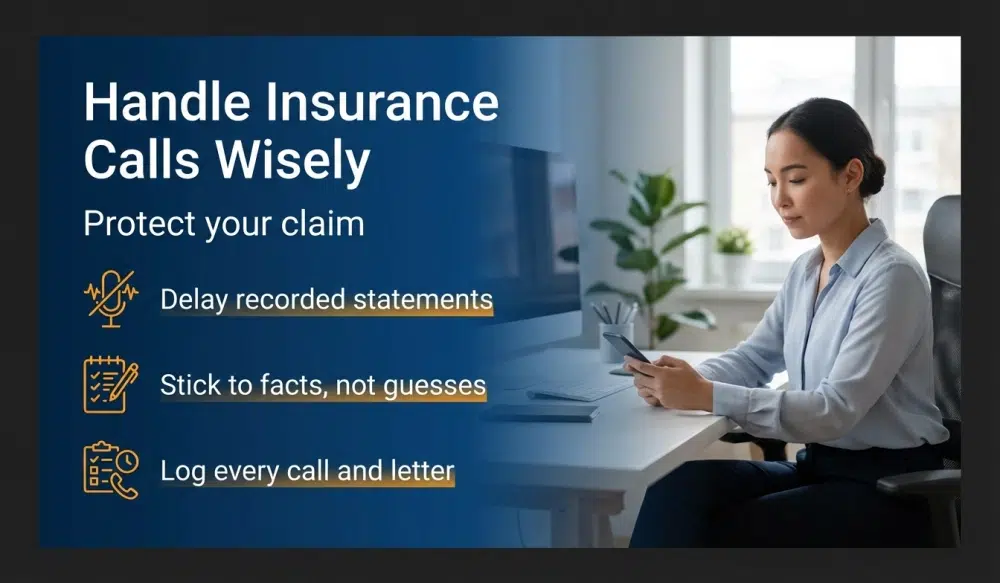
- Recorded statement caution: You can ask to postpone a statement until you have reviewed the collision report and your medical status is clearer. Avoid speculating on speed or distances.
- Document everything: Keep a communication log of dates, names, and summaries of insurer calls, and save all written correspondence.
- Protect health updates: Provide medical information in a focused, accurate way, typically through records rather than casual summaries on the phone.
Remember that your words can be used to dispute liability or injuries. Careful, factual communication supports a fair evaluation.
What are the deadlines for California’s statute of limitations and claims against public entities?
In most California personal injury cases, you have two years from the date of injury to file a lawsuit under Code of Civil Procedure section 335.1 [3]. If a potential defendant is a public entity such as a city, county, or certain transportation agencies, you generally must present a written government claim within six months of the incident under Government Code section 911.2, with specific content and delivery rules [6].
- Two-year civil deadline: Missed statutes can bar your claims entirely [3].
- Six-month government claim deadline: If applicable, it precedes any lawsuit and has stricter timing and notice requirements [6].
- Shorter insurance timelines: Policies may require prompt notice of a loss. Review your declarations page and policy language for notice and proof-of-loss requirements.
How can you manage medical bills, liens, and property damage after an I-110 crash?
After a Harbor Freeway accident, you may face a cascade of bills. Coordinating coverage from health insurance, MedPay, and third-party liability helps prevent collections while the liability claim unfolds.
- Medical liens and bills: California’s Hospital Lien Act allows certain healthcare providers to assert liens against third-party recoveries for reasonable charges. Understanding how liens attach and how they are satisfied is crucial to net recovery planning [14].
- Using health insurance: Health plans may pay initial treatment and later seek subrogation or reimbursement from a settlement or judgment.
- Property damage repairs: You can open a claim with the at-fault insurer or your own collision coverage. If you use your insurer, it may later seek reimbursement from the liable carrier.
Track all out-of-pocket expenses. Request itemized billing statements and explanation of benefits records. Managing paperwork early prevents surprises later.
What evidence should plaintiffs and defendants preserve after a Harbor Freeway accident?
Evidence often decides fault on I-110, where seconds of conduct matter. Plaintiffs and defendants both benefit from preserving the following:
- Vehicle data: Event data recorder downloads, telematics, and infotainment logs may show speeds, braking, and timing of impacts.
- Scene documentation: CHP 555 report, scene photos, debris field measurements, and tow records [2].
- Medical records: Emergency response notes, diagnostics, treatment plans, and follow-up reports.
- Employment records: Pay stubs and employer letters to substantiate lost income.
- Communications: Insurer letters, emails, claim notes, and any written statements made by other drivers or witnesses.
Consider sending early preservation requests to potential defendants for dashcam videos, fleet telematics, or driver apps. For multi-car collisions, try to identify rideshare, delivery, or commercial operators, as their data sets can be particularly informative.
What compensation categories are available in a Los Angeles injury claim?
Recoverable damages in a civil injury claim typically include economic and noneconomic categories. Economic damages cover measurable financial losses such as medical bills, future treatment costs, lost earnings, and property damage. Noneconomic damages address human losses like pain, inconvenience, and loss of enjoyment of life. Under California law, defendants are generally jointly liable for economic damages, and noneconomic damages are allocated based on each defendant’s percentage of fault [5].
- Economic losses: Past and future medical expenses, lost wages, reduced earning capacity, out-of-pocket costs, and repair or total loss valuations.
- Noneconomic losses: Pain, emotional harm, and loss of enjoyment tied to the crash and recovery period.
- Proof and valuation: Medical narratives, vocational assessments, life-care plans, and independent evaluations can help quantify both categories.
When should you contact a Los Angeles lawyer and what can a lawyer do for you?
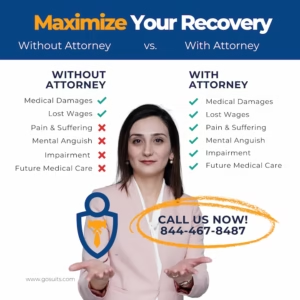
Timely legal help can coordinate medical care, preserve critical evidence, and manage communications with insurers so you can focus on healing. Speaking with Los Angeles car accident lawyers early helps you avoid avoidable missteps with recorded statements, incomplete paperwork, or missed deadlines while you are still recovering [13][3][6].
- Case investigation: Collects scene evidence, evaluates the CHP 555, locates additional witnesses, and obtains traffic and video records [2].
- Claim coordination: Opens liability, UM, UIM, and MedPay claims, submits the DMV SR-1 when required, and tracks benefits utilization [1][7].
- Settlement and litigation: Assembles medical and economic proof, negotiates with insurers under California’s claims regulations, and files suit before the statute runs if needed [13][3].
If you are weighing next steps after a Harbor Freeway accident, connecting with car accident lawyers who routinely handle Los Angeles injury claim disputes can help you understand your options and protect your rights.
Why choose GoSuits if you were hurt on I-110 in Los Angeles?
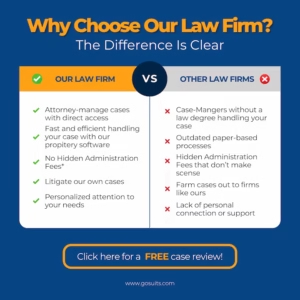
We built GoSuits around the needs of people facing sudden injuries after traffic collisions in Los Angeles, CA. A free consultation gives you space to ask questions, review your timeline, and map a plan for medical care, bills, and claims without pressure or guesswork. Our firm handles personal injury cases, including car crashes, while delivering a technology-driven experience that keeps you informed and moving forward.
- Technology-forward approach: Our exclusive proprietary software streamlines evidence collection, claim tracking, and case analytics for faster, clearer progress.
- Direct attorney access: Although we leverage technology to expedite every step, each client works directly with a designated attorney. We do not use case managers, and you have unfettered access to your lawyer throughout the matter.
- Trial-ready focus: Our team brings 30 years of combined experience and meaningful trial background, which helps structure claims from day one and improves negotiation posture.
- Past results: See a representative list of outcomes in our prior cases. Results vary by facts, but the path is built on preparation and persistence.
- Full-service injury practice: Explore our practice areas and meet our attorneys. Learn more about us and how we work across California.
From day one, we integrate your goals, your medical recovery, and your claim timeline while keeping you connected to your attorney. If your I-110 case involves comparative negligence issues, UM or UIM coverage questions, or complex CHP report analysis, our systems and team are built to handle the details and keep the process moving.
References and Resources
- Accident Reporting Requirements SR-1 – California DMV
- Request a Collision Report – California Highway Patrol
- Code of Civil Procedure § 335.1 Two-year limitation – California Legislative Information
- Li v. Yellow Cab Co., 13 Cal.3d 804 – CourtListener
- Civil Code § 1431.2 Several liability for noneconomic damages – California Legislative Information
- Government Code § 911.2 Claims presentation deadline – California Legislative Information
- Insurance Code § 11580.2 Uninsured motorist coverage – California Legislative Information
- Vehicle Code § 20008 Duty to report injury collisions – California Legislative Information
- Vehicle Code § 16025 Exchange of information – California Legislative Information
- Motorcycle Safety and Lane Splitting – California Highway Patrol
- Collision Ranking Results – California Office of Traffic Safety
- Traffic Census Program – California Department of Transportation
- Fair Claims Settlement Practices Regulations – California Department of Insurance
- Civil Code § 3045.1 Hospital Lien Act – California Legislative Information
- Vehicle Code § 20001 Duty in injury or death collisions – California Legislative Information