- What new California traffic and public safety laws take effect January 1, 2026?
- How do 2026 drunk driving laws change penalties for vehicular manslaughter?
- What school zone speed limit changes occur in 2026?
- How does the 2026 parking penalty relief law help low-income drivers?
- What new penalties apply to license plate obstruction devices in 2026?
- How are off-highway electric motorcycles regulated starting in 2026?
- Which counties can remove abandoned recreational vehicles under 2026 rules?
- What safety equipment must electric bicycles have in 2026?
- What burglary tool possession becomes a crime in 2026?
- How should drivers, parents, and vehicle owners prepare for these 2026 changes?
- References and resources
What new California traffic and public safety laws take effect January 1, 2026?
California implements eight significant public safety and vehicle-related laws on January 1, 2026, targeting everything from intoxicated driving penalties to electric bicycle safety requirements. The California Highway Patrol and Department of Motor Vehicles highlighted these measures as critical updates for residents across the state, including Redding, Shasta County, and communities throughout Northern California.
These laws address persistent safety concerns on California roads and highways. Stricter probation terms aim to deter intoxicated drivers who cause fatal crashes. Lower speed limits in school zones protect children walking to class [3]. Relief from parking penalties prevents low-income families from losing vehicles over unpaid tickets. New restrictions on license plate covers combat toll evasion and criminal activity [4]. Electric motorcycle operators face the same safety rules as other off-highway vehicle users [5]. Select counties gain authority to clear abandoned recreational vehicles cluttering neighborhoods [6]. Electric bicycles must carry rear reflectors at all times, not just after dark [7]. Possession of certain burglary tools becomes a standalone crime [8].
For drivers, parents, motorcyclists, and local governments, understanding these changes now helps ensure compliance and avoid penalties when the new year begins. This guide walks through each law, explaining what changes, who it affects, and what you need to do.
How do 2026 drunk driving laws change penalties for vehicular manslaughter?
Assembly Bill 1087 extends probation terms for individuals convicted of vehicular manslaughter or gross vehicular manslaughter while intoxicated. Previously, probation lasted two years. Starting January 1, 2026, judges must impose probation terms between three and five years for these convictions. This change reflects the severity of taking a life while driving under the influence and provides courts with longer supervision periods to monitor offenders, mandate treatment programs, and prevent recidivism [1].
Why did California increase probation terms for intoxicated vehicular manslaughter?
Vehicular manslaughter while intoxicated represents one of the most preventable forms of fatal crashes. Victims’ families and advocates have long argued that two-year probation terms were insufficient given the gravity of the offense. The extended three to five year range gives courts flexibility to tailor supervision to individual cases while ensuring that offenders remain accountable for a longer period. Courts can require ignition interlock devices, alcohol treatment, community service, and regular check-ins throughout the extended probation term [2].
What should defense attorneys and prosecutors know about AB 1087 in 2026?
Prosecutors must adjust sentencing recommendations to reflect the new minimum three-year probation floor. Defense counsel should prepare mitigation arguments addressing the appropriate length within the three to five year range, considering factors such as the defendant’s criminal history, completion of rehabilitation programs, and family circumstances. Probation officers will need to structure longer supervision plans that balance accountability with opportunities for successful reintegration. Judges should clarify probation conditions early to ensure defendants understand obligations that will extend for up to five years [1].
What school zone speed limit changes occur in 2026?
Assembly Bill 382 grants local law enforcement the authority to reduce school zone speed limits from 25 mph to 20 mph through local ordinance or resolution. This authority remains in effect until January 1, 2031. After that date, the speed limit automatically decreases to 20 mph statewide in all school zones where proper signage is posted, eliminating the need for individual local actions [3].
Why do school zones need lower speed limits in 2026?
Lower speeds dramatically reduce the severity of pedestrian injuries when crashes occur. At 20 mph, a pedestrian struck by a vehicle has a much higher survival rate compared to impacts at 25 mph. School zones concentrate children who may not always follow crossing rules or notice approaching vehicles. The five mph reduction gives drivers additional time to react to unexpected movements and shortens stopping distances. Communities across California have advocated for this change, citing injury data from school zone crashes [3].
What must local governments do to implement the 20 mph school zone limit before 2031?
Between January 1, 2026, and January 1, 2031, local governments that want to lower school zone speed limits to 20 mph must pass an ordinance or resolution authorizing the change. Once adopted, they must install or replace signage indicating the new 20 mph limit. After January 1, 2031, no local action is required; the 20 mph limit takes effect automatically wherever proper school zone signs are posted. Cities and counties should inventory current school zone signage and begin planning installations to take advantage of the early adoption option [3].
How should drivers adapt to school zone changes in 2026?
Drivers traveling through school zones must watch for new 20 mph speed limit signs beginning January 1, 2026, in communities that adopt the lower limit early. Even where local governments have not yet acted, drivers should anticipate that the statewide 20 mph limit will apply starting in 2031. Slowing down near schools protects children and avoids costly speeding tickets. Parents dropping off or picking up students should model safe driving behavior and remind children to use crosswalks and watch for vehicles [2].
How does the 2026 parking penalty relief law help low-income drivers?
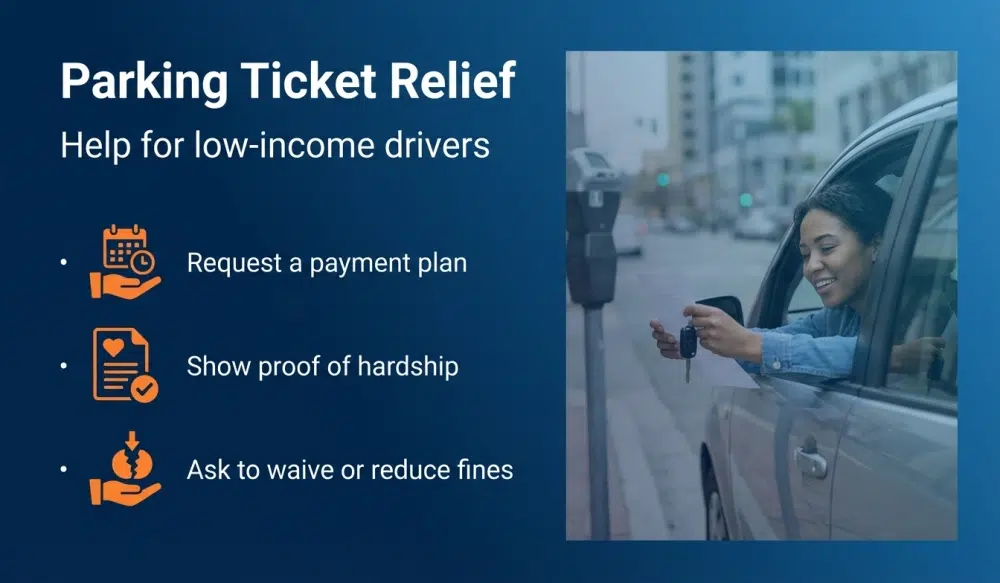
Assembly Bill 1299 authorizes local governments to waive or reduce parking penalties when a person demonstrates an inability to pay the full fine. The law also requires agencies to provide a payment plan upon request. These provisions prevent escalating fines, vehicle towing, and lien sales that disproportionately harm low-income individuals who cannot afford lump-sum payments. By offering flexible payment options, the law helps people resolve violations without losing their vehicles or facing mounting debt [2].
Why did California pass parking penalty relief legislation?
Parking tickets can snowball into financial crises for people living paycheck to paycheck. A $50 parking ticket can double or triple with late fees, leading to vehicle impoundment when fines go unpaid. Losing a vehicle often means losing employment, compounding hardship. Advocates documented cases where individuals experienced homelessness after their cars were towed and sold to satisfy parking debts. Assembly Bill 1299 recognizes that punishing poverty through escalating fines harms families and communities without improving public safety or parking compliance [2].

How can someone request parking penalty relief under the 2026 law?
Individuals who receive parking tickets and cannot afford to pay the full penalty should contact the issuing agency—typically the city or county where the violation occurred—and request relief under Assembly Bill 1299. You will need to provide evidence of financial hardship, which may include pay stubs showing low income, proof of public benefits enrollment, documentation of homelessness, or other financial records. Agencies must evaluate requests in good faith and offer waivers, reductions, or payment plans as appropriate. If you request a payment plan, the agency must provide one [2].
What responsibilities do local governments have under AB 1299 in 2026?
Cities, counties, and other agencies that issue parking citations must establish procedures for evaluating hardship requests, training staff to process waivers and reductions, creating payment plan options, and publicizing these relief mechanisms so that ticketed individuals know their rights. Agencies should avoid aggressive collection tactics against individuals who demonstrate hardship and work cooperatively to resolve violations without causing undue harm. This law shifts the approach from punishment to practical problem-solving [1].
What new penalties apply to license plate obstruction devices in 2026?
Assembly Bill 1085 makes it an infraction punishable by a $1,000 fine to manufacture in California any product or device designed to obscure or interfere with the visual or electronic reading of a license plate. The law targets illegal license plate covers, sprays, and other devices that enable toll evasion, red-light camera avoidance, and other criminal activity. Manufacturers who produce or distribute these devices in California face significant financial penalties [4].
Why did California ban license plate obstruction devices?
License plate covers and obscuring devices undermine law enforcement, toll collection, and traffic safety enforcement. Drivers use these products to avoid paying bridge tolls, evade red-light and speed camera tickets, and hide their identities after committing crimes. Legitimate drivers and taxpayers bear the cost when scofflaws avoid tolls and fines. By prohibiting the manufacture and sale of these devices, California removes the supply chain that facilitates illegal behavior. While some covers claim to protect plates from weather or dirt, many are designed specifically to prevent cameras from capturing plate numbers [4].
Does AB 1085 affect drivers who already own license plate covers?
Assembly Bill 1085 targets manufacturers rather than end users. However, drivers should be aware that using a device that obscures a license plate remains illegal under existing California Vehicle Code provisions. Officers can cite drivers for obscured plates regardless of whether the device was manufactured before or after the new law takes effect. Drivers with plate covers should remove any that interfere with visibility or camera reading to avoid tickets and ensure compliance [4].
How are off-highway electric motorcycles regulated starting in 2026?
Senate Bill 586 defines “off-highway electric motorcycles” or “eMoto” vehicles as a specific category of off-highway motor vehicle. To qualify, the vehicle must be designed primarily for off-highway use, powered by an electric motor that does not require a motor number, have handlebars for steering, include a manufacturer-provided straddle seat, have two wheels, and not be equipped with manufacturer-provided pedals. These vehicles occupy a space between traditional electric bicycles and gas-powered dirt bikes [5].

What requirements apply to eMoto operators in 2026?
Starting January 1, 2026, anyone operating an off-highway electric motorcycle must follow all off-highway vehicle rules. This includes wearing a safety helmet at all times while riding and displaying a DMV-issued identification plate or placard on the vehicle. The helmet requirement applies regardless of the rider’s age or experience. The identification plate requirement ensures that these vehicles can be traced to an owner, similar to other OHVs. Riders who fail to wear helmets or display proper identification face citations [5].
Where can eMoto vehicles be ridden under 2026 rules?
Because eMoto vehicles are classified as off-highway motor vehicles, they cannot be operated on public streets, highways, or bike paths designated for street-legal vehicles. Riders must use them on designated OHV trails, private property with permission, or other areas where off-highway vehicles are permitted. Riders should check local regulations for specific trail access rules, as some areas may have restrictions on electric-powered OHVs or specific trail designations [5].
How should eMoto manufacturers, dealers, and riders prepare for SB 586?
Manufacturers and dealers must inform buyers about the helmet and identification plate requirements before purchase. Retailers should stock helmets and provide information about obtaining DMV-issued plates. Riders who already own eMoto vehicles must obtain identification plates from the DMV before January 1, 2026, and purchase DOT-approved helmets. Parents buying eMoto vehicles for minors should supervise use and ensure children understand off-highway riding rules and safety practices [2].
Which counties can remove abandoned recreational vehicles under 2026 rules?
Assembly Bill 630 authorizes Alameda County and Los Angeles County to remove and dispose of abandoned recreational vehicles valued at $4,000 or less, provided that a public agency verifies the vehicle is inoperable before removal. This authority remains in effect until January 1, 2030. The law provides a pilot program for these two counties to address growing problems with abandoned RVs that occupy public spaces, create safety and sanitation hazards, and reduce livability in neighborhoods [6].
Why do Alameda and Los Angeles counties need special RV removal authority?
Both counties have experienced significant increases in abandoned recreational vehicles parked on streets and public property. Many of these RVs are inoperable, lack registration, and serve as semi-permanent encampments. Existing laws made removal difficult and expensive, requiring lengthy notification processes and expensive storage. By allowing expedited removal of low-value, inoperable RVs, the law helps counties address blight and public health concerns while recognizing that these vehicles no longer function as transportation and have minimal resale value [6].
What protections exist for RV owners under AB 630?
The law requires verification that the RV is inoperable before removal. This prevents counties from seizing functional vehicles. The $4,000 value threshold ensures that only low-value vehicles are subject to expedited disposal. RV owners who maintain their vehicles in working condition and follow parking regulations are not affected. However, owners who abandon inoperable RVs risk losing them without the extended notice periods that apply to higher-value vehicles [6].
Will other California counties gain RV removal authority after 2026?
Assembly Bill 630 functions as a pilot program limited to Alameda and Los Angeles counties through 2030. Legislators will likely evaluate the program’s effectiveness, legal challenges, and impact on homelessness before deciding whether to expand the authority statewide or to additional counties. Residents and advocates in other counties facing similar RV abandonment issues should monitor the pilot program and provide feedback to their legislators about whether expanded authority is needed [6].
What safety equipment must electric bicycles have in 2026?
Assembly Bill 544 mandates that all electric bicycles must have a red reflector or a solid or flashing red light with a built-in reflector on the rear at all times during operation, not just during darkness as previous law required. This ensures that e-bikes remain visible to motorists throughout the day, particularly in conditions with reduced visibility such as fog, rain, or dawn and dusk. The law recognizes that electric bicycles travel at higher speeds than traditional bicycles and share roadways with motor vehicles, making constant visibility critical [7].
What online training option does AB 544 provide for minors?
The law allows the California Highway Patrol-developed online electric bicycle safety and training program to satisfy the safety course requirement for minors who receive helmet violations involving electric bicycles. Previously, minors cited for not wearing helmets had limited options for fulfilling court-ordered safety training. The online program provides convenient, accessible education covering safe riding practices, traffic laws, and the importance of protective equipment. This approach combines enforcement with education to improve long-term safety behavior [7].
Why are rear reflectors required during daylight hours starting in 2026?
Electric bicycles can reach 28 mph on pedal-assist models, making them as fast as many mopeds and scooters. At these speeds, motorists need maximum advance warning of a bicycle’s presence, especially when overtaking or turning. Rear reflectors improve visibility in shadows, tunnels, under bridges, during overcast conditions, and at dawn or dusk when lighting is transitional. Requiring reflectors at all times eliminates confusion about when equipment is necessary and ensures riders are always prepared for changing conditions [7].
What should electric bicycle owners do to comply with AB 544 in 2026?
Owners should inspect their e-bikes and verify that a red reflector is mounted on the rear. Many e-bikes come with reflectors pre-installed, but riders who removed them or whose equipment has worn out must replace them before January 1, 2026. Reflectors are inexpensive and available at bicycle shops and online retailers. Riders can also install a solid or flashing red rear light with a built-in reflector as an alternative. Parents with children who ride e-bikes should check equipment and discuss the importance of visibility and helmet use [7].
What devices does Assembly Bill 486 prohibit possessing with burglary intent?
Assembly Bill 486 makes it a misdemeanor to possess a key programming device, a key duplicating device, or a signal extender with the intent to commit burglary. These three tools join the existing list of burglary instruments that are illegal to possess when carried with criminal intent. Key programming devices allow thieves to create new keys for stolen vehicles. Key duplicating devices let criminals copy keys without authorization. Signal extenders amplify the wireless signals from key fobs, enabling thieves to unlock and start cars remotely. All three facilitate modern vehicle theft and property crimes [8].
What penalties apply for illegal possession of these burglary tools in 2026?
Conviction for possessing key programming devices, key duplicating devices, or signal extenders with burglary intent can result in up to six months in county jail, a fine of up to $1,000, or both. These penalties align with other misdemeanor burglary tool offenses. Prosecutors must prove that the defendant possessed the device and intended to use it to commit burglary. Mere possession without criminal intent does not violate the law, so locksmiths, automotive technicians, and security professionals who use these tools legitimately are not affected [8].
Why did California criminalize possession of key programming and signal extending devices?
Vehicle theft has become increasingly sophisticated as criminals exploit wireless key fob technology. Signal extenders allow thieves to capture and relay the signal from a key fob inside a home to a vehicle parked in the driveway, unlocking and starting the car without physically touching the key. Key programming devices enable thieves to create functional keys for stolen vehicles, making it easier to resell them. By criminalizing possession of these devices when carried with burglary intent, California gives law enforcement tools to intervene before thefts occur and disrupt criminal networks that specialize in high-tech car theft [8].
How can legitimate users of these devices demonstrate lawful intent?
Locksmiths, automotive technicians, security researchers, and others who possess key programming devices, key duplicating devices, or signal extenders for legitimate professional purposes should maintain documentation of their business licenses, employment, and the lawful reasons for possessing the equipment. Keeping devices secured when not in use and maintaining records of their application in legitimate work helps demonstrate that possession lacks criminal intent. If questioned by law enforcement, clearly explaining the professional context and providing verification can prevent misunderstandings [8].
How should drivers, parents, and vehicle owners prepare for these 2026 changes?
Anyone facing charges for vehicular manslaughter or gross vehicular manslaughter while intoxicated should understand that conviction will result in probation lasting between three and five years, significantly longer than the previous two-year term. Work with defense counsel to prepare mitigation evidence and demonstrate readiness for rehabilitation. Complete alcohol treatment programs, install ignition interlock devices, and engage with victim impact panels before sentencing to show the court that you take responsibility and are committed to change [1].
How should parents and school communities prepare for lower school zone speeds?
Parents, school administrators, and community members should advocate for local governments to adopt 20 mph school zone speed limits promptly using the authority granted by Assembly Bill 382. Contact city councils and county boards of supervisors to request ordinances or resolutions reducing school zone speeds. Volunteer to help install or fund new signage. Remind drivers through school newsletters, social media, and community meetings about the importance of slowing down near schools. Model safe driving behavior during drop-off and pick-up times [3].
What should individuals with unpaid parking tickets do in 2026?
If you have outstanding parking tickets and cannot afford to pay them, contact the issuing agency immediately and request relief under Assembly Bill 1299. Gather documentation of your financial hardship, such as income records, proof of public benefits, or evidence of homelessness. Ask for a waiver, reduction, or payment plan. Do not ignore the tickets, as agencies may still pursue collection, but the new law gives you tools to resolve violations without losing your vehicle or facing escalating penalties [2].
How should manufacturers and retailers respond to license plate obstruction laws?
Businesses that manufacture or sell products in California should immediately audit their inventory and cease production and sales of any devices designed to obscure or interfere with license plate reading. The $1,000 fine per violation creates significant liability. Focus on products that enhance plate visibility or provide weather protection without interfering with cameras or law enforcement visibility. Update marketing materials to clarify that products comply with California law [4].
What should eMoto owners and riders do before January 1, 2026?
Owners of off-highway electric motorcycles must obtain DMV-issued identification plates or placards before riding on or after January 1, 2026. Visit the DMV website or local office to complete registration. Purchase a DOT-approved helmet if you do not already own one. Learn the rules for off-highway vehicle operation, including where eMoto vehicles can legally be ridden. Parents should supervise minor riders and ensure they understand safety practices and legal requirements [5].

How should Alameda and Los Angeles county residents with RVs avoid removal?
RV owners in Alameda and Los Angeles counties should ensure their vehicles remain operable, registered, and parked in compliance with local ordinances. Do not abandon RVs on public streets or property. If you can no longer maintain an RV, sell it, donate it, or arrange proper disposal rather than leaving it to be impounded and destroyed. Individuals living in RVs should connect with social services and housing assistance programs to explore alternatives and avoid losing shelter [6].
What should electric bicycle riders and parents of young riders do for 2026 compliance?
Inspect your e-bike and install a red reflector or a solid or flashing red rear light with a built-in reflector if one is not already present. Purchase and wear a properly fitted helmet every time you ride. Parents should supervise children riding e-bikes, enforce helmet use, and ensure children complete safety training. If your child receives a helmet citation, take advantage of the CHP online safety training program to fulfill the requirement and reinforce safe riding habits [7].
What precautions should automotive professionals take regarding key programming and signal extending devices?
Locksmiths, dealership technicians, and security professionals who use key programming devices, key duplicating devices, or signal extenders for legitimate work should document their business licenses and maintain clear records of how they use these tools. Store devices securely when not in use and train employees on legal possession requirements. If stopped by law enforcement, clearly identify your profession and the lawful purpose for possessing the equipment. Consider carrying business cards and identification that verify your credentials [8].
References and resources
- California Highway Patrol – New Year, New Laws: CHP Highlights Public Safety Laws Taking Effect in 2026
- California DMV – DMV Highlights New Laws in 2026
- California Legislature – Bill Text AB-382 Pedestrian Safety: School Zones: Speed Limits
- California Legislature – Bill Text AB-1085 License Plates: Obstruction or Alteration
- California Legislature – Bill Text SB-586 Off-Highway Electric Motorcycles
- NBC Los Angeles – LA to Start Removing Certain Abandoned RVs from Streets
- California Legislature – Bill Text AB-544 Electric Bicycles: Required Equipment
- BillTrack50 – California AB486 Crimes: Burglary Tools