- What is vehicle black box EDR data, and why does it matter in civil cases?
- How quickly must we act to preserve EDR and other crash data?
- What laws and rules govern EDR, ECM, and telematics preservation?
- How do attorneys use preservation letters and litigation holds?
- What should a preservation letter include?
- How is EDR downloaded, and how is data integrity protected?
- When do courts sanction spoliation of crash data, and what are the consequences?
- How do subpoenas and court orders work in Texas, California, and Illinois?
- What truck specific data should be preserved, and how long does it last?
- What practical steps can you take after a serious crash?
- How do technical teams use EDR and related sources to reconstruct a crash?
- Who is GoSuits, and how can technology driven legal service help you?
- References and resources
What is vehicle black box EDR data, and why does it matter in civil cases?
Modern passenger cars, SUVs, and many light trucks contain an event data recorder, often called a black box. The recorder typically stores a short burst of crash related information, such as speed, throttle, brake use, seat belt status, change in velocity, and airbag deployment timing. Federal regulations describe the content and format of this data for vehicles that are equipped with an EDR, which makes the data useful for both sides in a civil case because it captures what happened in the seconds before and during a collision [1].
In a courtroom, numbers can speak clearly. EDR files can corroborate or challenge testimony, clarify how fast vehicles were traveling, show whether brakes were applied, and reveal if occupants were belted. These facts matter in disputes about fault, comparative responsibility, and injury mechanism. National safety data shows the stakes are high. Early federal estimates project about 40,990 traffic deaths in 2023, a decrease from 2022, but still a tragic number that underscores the importance of preserving reliable crash evidence [2].
When you are dealing with medical care, vehicle repairs, insurance calls, and missed work, it is easy to lose track of evidence issues. That is why lawyers move quickly to lock down the data. For many families, having car accident lawyers coordinate preservation can prevent vital information from being lost in the first few days.
How quickly must we act to preserve EDR and other crash data?
Quickly. Physical repair, salvage processing, and routine vehicle power cycles can overwrite or degrade data. Some EDRs keep non deployment events only temporarily. Dashcams and fleet telematics may overwrite on a rolling basis. For commercial trucks, electronic logging device information and duty status records must be retained for a limited time under federal rules, so acting within weeks rather than months can be critical [11].
A prompt preservation letter and litigation hold can stop routine deletion, protect vehicles from disposal, and create a documented path for later downloads. When needed, counsel can seek a temporary restraining order to prevent alteration or sale until inspections and downloads occur. The longer the delay, the higher the risk of spoliation disputes, and the greater the chance a court will have to reconstruct what might have been preserved.
Practical timing often turns on who currently controls the vehicle. If a tow yard or insurer plans to move it to a salvage auction, counsel should communicate immediately, confirm a hold, and arrange inspection before transfer. Clear, early notice reduces the likelihood of unintentional loss and the later need for sanctions or curative measures under Rule 37(e) [3].
What laws and rules govern EDR, ECM, and telematics preservation?
Several layers of law and guidance are relevant.
- Federal EDR regulations: The federal regulation in 49 CFR Part 563 describes EDR data elements, format, and retrieval for vehicles that are equipped with an EDR. It does not require an EDR in every vehicle, but where present, it standardizes aspects of the data and retrieval, which helps reliability in litigation [1].
- Electronic discovery and sanctions: In federal court, Rule 37(e) addresses loss of electronically stored information. If EDR or telematics data qualifies as ESI and is lost after a duty to preserve begins, the court can impose measures to cure prejudice, and in certain circumstances may instruct the jury to presume the lost information was unfavorable [3].
- State spoliation law: State decisions guide how judges evaluate missing evidence. Texas has a detailed framework for spoliation and adverse jury instructions [7]. California courts analyze whether sanctions are proportionate to the prejudice and the culpability surrounding loss of evidence [9]. Illinois recognizes negligent spoliation claims under certain circumstances when a duty to preserve arises from a relationship or a specific undertaking [8].
- Commercial motor carrier obligations: Federal hours of service regulations require retention of records created by electronic logging devices and related support documents for a defined period. That creates a baseline for what exists before any litigation hold extends retention [11].
Courts also look to leading e discovery opinions for preservation and sanction principles in cases involving electronic information, which extend by analogy to EDR and telematics systems when duties to preserve have clearly attached [10].

How do attorneys use preservation letters and litigation holds?
A preservation letter is a formal notice sent early to the opposing party and sometimes to nonparties, such as tow yards, storage facilities, dealers, and telematics providers. The letter puts recipients on notice of the claim, identifies specific categories of data to preserve, and requests that routine deletion be suspended. In a trucking case, it will typically cite the federal retention rules and clearly ask for ELD, engine control module data, active and historical fault codes, dashcam video, inward and outward facing camera clips, dispatch messages, and GPS breadcrumbs [11].
Within a law firm, a litigation hold is an internal instruction that suspends routine deletion of relevant data. For a corporate defendant, that hold should reach custodians in operations, safety, IT, fleet management, and claims, so that nothing is lost in the ordinary course. Courts often evaluate whether a party implemented a timely and effective hold when deciding spoliation issues [10].
If you were hit by a tractor trailer, California truck accident lawyers typically coordinate a comprehensive hold that covers the truck head unit, trailer sensors, third party telematics vendors, and any driver handheld devices. In a sedan or SUV case, the focus may begin with the airbag control module EDR and any aftermarket dashcam or infotainment modules that store driving history.
What should a preservation letter include?
A thorough letter should be specific, reasonable, and focused on the systems likely to hold relevant information. It is also important to protect safety and property interests while preserving evidence. Common elements include the following.
- Clear identification: Name the vehicles by make, model, VIN, plate, and fleet unit if applicable. Identify storage locations and claim numbers, if known.
- Scope of data: Specify EDR, airbag control module, engine control module, braking control, transmission control, advanced driver assistance event logs, telematics, fleet management platforms, ELD duty status data, driver messages, over the air update history, and any dashcam or surveillance video [1][11].
- Time period: Identify a reasonable window before and after the collision for telematics and video. For ELD logs, request the full regulatory retention and any additional time covered by backups [11].
- Hold instructions: Ask that automatic overwriting be suspended and that no vehicle repairs that could affect data retention be performed until inspections occur.
- Access and inspection: Request cooperative scheduling for a non destructive download by a qualified technician, with a proposed protocol for imaging, verification, and chain of custody.
- Third parties: Ask that the recipient notify vendors and contractors who may possess relevant data and instruct them to hold and preserve records.
When parties collaborate on a protocol, downloads often proceed faster and with fewer disputes. A neutral or joint inspection can further reduce friction if trust is low.
How is EDR downloaded, and how is data integrity protected?
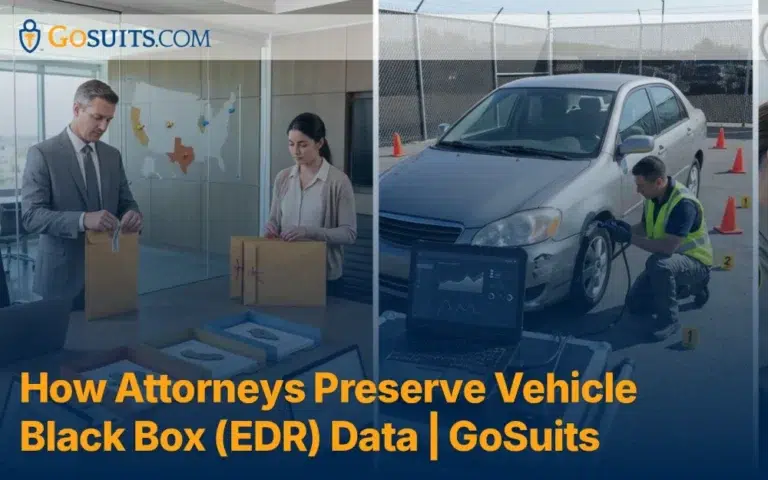
EDR downloads are typically performed with a crash data retrieval tool, so that data is captured in a standardized format with associated metadata. Many airbag control modules can be accessed through the diagnostic link connector, which avoids removing parts. In some situations, especially if wiring is damaged, a bench download may be necessary. Proper documentation is essential for admissibility and reliability.
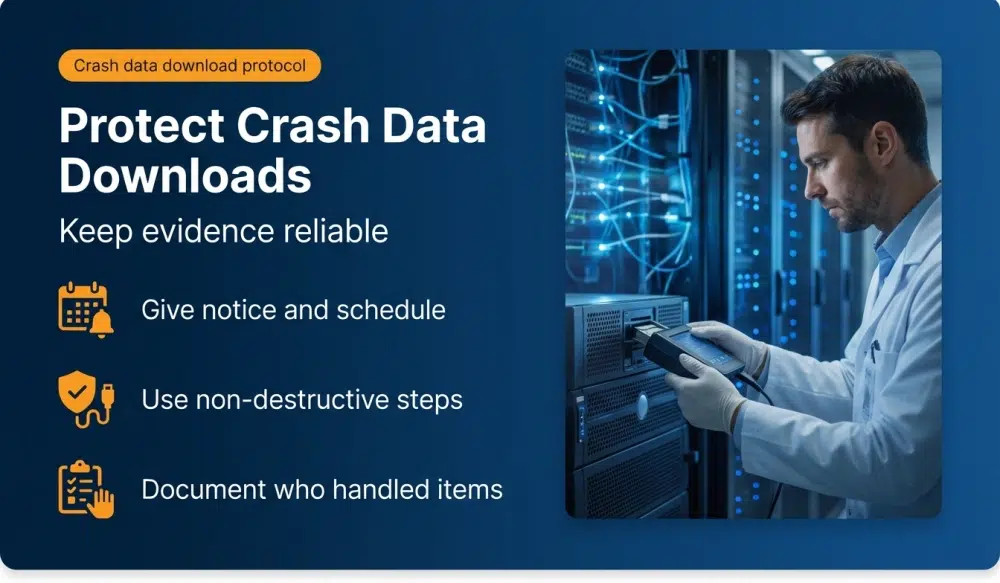
To protect integrity and reduce later challenges, counsel often agree to a simple protocol that includes the following.
- Notice and scheduling: Provide dates, location, and a contact for coordination with all parties.
- Non destructive first: Attempt a port based download before any component removal. If removal is needed, agree on who will do it and how parts are secured and labeled.
- Imaging and verification: Save the native files and any exported, human readable PDFs. Verify hash values, if generated, to support authenticity and later verification under the authentication rules [14].
- Chain of custody: Use standard evidence collection logs to record who handled the vehicle, modules, and data, when, and where. Chain of custody documentation is widely recognized by courts and investigators as a cornerstone of trustworthy evidence handling [12].
- Preserve originals: Store the original modules and data in sealed, labeled containers, maintaining temperature and moisture considerations where relevant.
When downloads are complete, both sides usually exchange the native files along with processing notes, so that each team can reproduce the results if needed. That transparency helps avoid unnecessary motion practice.
Technical teams also document the exact tool versions used, any diagnostic codes displayed, and the steps taken to establish stable power. Careful documentation supports later authentication and reduces disputes about reliability, relevance, and potential alteration [14].

When do courts sanction spoliation of crash data, and what are the consequences?
Judges focus on two questions. Did a duty to preserve exist when the data was lost. Did the loss cause prejudice, and, if so, what remedy is proportional. The answers depend on the facts and the jurisdiction.
- Texas: The Texas Supreme Court provides a structured approach. Trial courts assess whether a duty to preserve arose, the culpability of the party who lost evidence, and the prejudice to the other side. Severe sanctions, such as an adverse inference instruction, are reserved for intentional spoliation or for egregious negligence that deprives the other side of a fair trial [7].
- California: California appellate decisions instruct courts to tailor sanctions to the harm caused. When loss of evidence undermines a fair resolution, judges may impose evidentiary or issue sanctions after considering fault and prejudice. Courts scrutinize whether the sanction fits the problem rather than acting as punishment [9].
- Illinois: Illinois law recognizes a tort claim for negligent spoliation in certain relationships and circumstances. A key question is whether the party undertook a duty to preserve or had a special relationship triggering that duty. Courts will weigh causation and damages based on the lost evidence’s significance to the underlying case [8].
- Federal ESI loss: When EDR or telematics qualify as ESI, Rule 37(e) governs. If data is lost after a duty to preserve arises and reasonable steps were not taken, the court can order measures no greater than necessary to cure prejudice. If the court finds intent to deprive, it may instruct the jury it may presume the lost information was unfavorable, or may impose more serious sanctions [3].
Courts often look to influential opinions on e discovery for guidance about the timing of litigation holds and the proportionality of sanctions in electronic evidence disputes [10]. In practical terms, this means both sides should act promptly and document their preservation efforts to avoid, or defend against, spoliation claims.
How do subpoenas and court orders work in Texas, California, and Illinois?
When voluntary cooperation is not forthcoming, counsel can seek a subpoena or court order to obtain access to vehicles, modules, or data, or to compel third parties to produce records.
- Texas: Texas Rule of Civil Procedure 176 governs subpoenas. It specifies who may issue them, service, protections for nonparties, and objections. Practitioners often pair a subpoena with a protective order addressing confidentiality and inspection protocols for EDR or ECM downloads [4].
- California: California Code of Civil Procedure section 2020.010 outlines discovery from nonparties, including deposition subpoenas for business records, which can reach telematics vendors or tow yards holding relevant materials [5].
- Illinois: Illinois Supreme Court Rule 204 addresses subpoenas and depositions. In vehicle cases, counsel can use this framework to obtain records or to arrange a site inspection and data download with appropriate safeguards [6].
- Federal: When a case proceeds in federal court, Rule 45 provides the subpoena mechanism, including protections against undue burden and procedures for quashing or modifying a subpoena [13].
Courts prefer protocols that minimize intrusion and protect data integrity, particularly when vehicles are needed for daily life, or when a business depends on getting trucks back on the road. Agreeing to a non destructive download and joint custody of copies often speeds resolution.
What truck specific data should be preserved, and how long does it last?
Commercial vehicles can hold multiple sources of valuable data and video. A focused list helps capture what matters before it cycles off the system.
- ELD duty status and location: The hours of service rules require motor carriers to retain specific ELD records and supporting documents for a baseline period, commonly six months, with proper safeguards. Litigation holds often extend this period once a claim is reasonably anticipated [11].
- Engine and brake controllers: Engine control module data can include speed, throttle, cruise control, hard brake flags, and sometimes incident snapshots. Braking systems may record diagnostic codes and select event parameters.
- Telematics platforms: Many fleets use third party platforms that store breadcrumb locations, harsh event alerts, and vehicle health data. These platforms may have shorter default retention for high frequency data unless preservation steps are taken.
- Video: Inward and outward facing dashcams often store event based clips and sometimes rolling buffered video. These clips are frequently overwritten unless promptly flagged or exported.
Cooperative preservation with defense counsel typically saves time and reduces disputes, because the carrier can generate system level exports and authenticate them efficiently. If preservation is delayed and routine deletion occurs after notice, courts may consider remedies under state spoliation law or Rule 37(e) [3].
Where possible, request both native and viewer compatible formats from fleet platforms. Native files preserve metadata, while viewer exports help counsel and the court understand the information quickly. Maintain clear chain of custody for both forms of the data [12].
What practical steps can you take after a serious crash?
We know you have a lot to manage after a collision. Here are steps that help preserve your legal options while you focus on recovery.
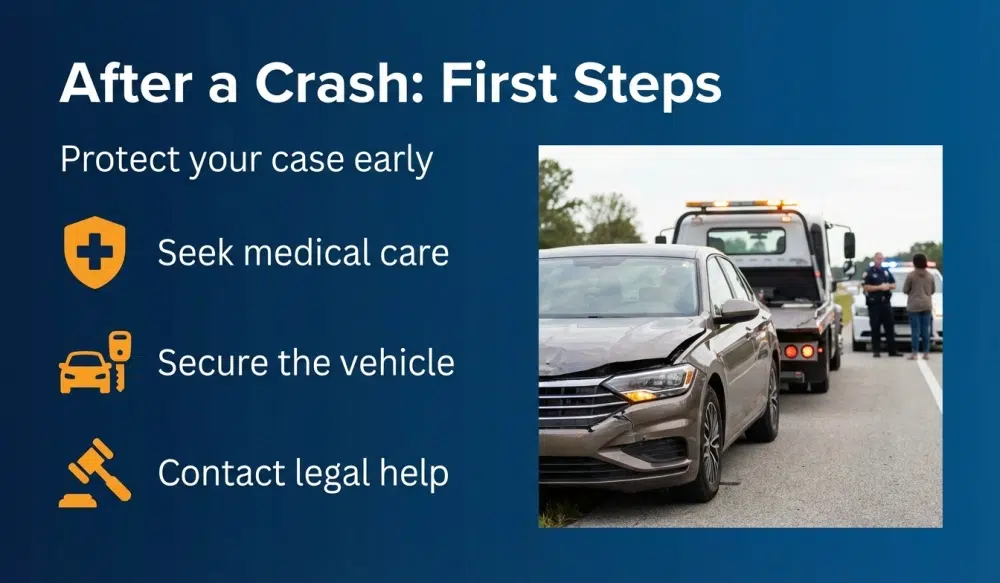
- Seek medical care: Your well being comes first. Prompt evaluation creates a clear record of your injuries.
- Secure the vehicle: If safe to do so, keep the vehicle in its post crash condition at a storage yard until counsel arranges inspections and downloads.
- Gather information: Save photos, the police report number, witness contacts, and any dashcam files. Keep correspondence from insurers and storage yards.
- Avoid repairs: Do not authorize repairs or disposal until a preservation plan is in place. Repairs can inadvertently wipe data or change physical evidence.
- Contact legal help: A lawyer can send preservation letters, coordinate downloads, and handle insurers while you recover. Civil rules about electronic evidence and spoliation vary by state, and can affect your case [3][7][8][9].
Families in California often work with truck accident lawyers in California to quickly lock down fleet data, including camera footage and breadcrumb paths, before automatic cycling occurs. A focused plan in the first two weeks can make a long term difference.
How do technical teams use EDR and related sources to reconstruct a crash?
Reconstruction draws on multiple streams of information to form a coherent timeline. EDR data provides second by second or sub second detail just before and during the impact. Telematics breadcrumbs fill in the minutes leading up to the event. Camera clips show lane position, following distance, and driver inputs at crucial moments. Police diagrams, physical measurements, and photographs provide scene level context, including final rest positions, yaw marks, and crush patterns.
In court, judges evaluate whether the collection and analysis methods are reliable, whether chain of custody is credible, and whether the conclusions tie back to the underlying data rather than assumptions. That is why a careful preservation and download process is so important. It is also why both sides benefit from exchanging the native files, so each can verify the numbers. Federal EDR standards and established e discovery principles support that reliability framework [1][10][14].
Insurers also rely on EDR and telematics for claim decisions. A complete and correctly handled data package can shorten disputes and improve the accuracy of fault assessments in complex, multi vehicle collisions. Teams should document all assumptions, the limits of the data window, and any gaps, so the court can weigh the analysis appropriately.
Who is GoSuits, and how can technology driven legal service help you?
Personal injury cases often turn on evidence that disappears quickly. We use secure digital workflows to send preservation letters within hours, coordinate EDR and ECM downloads, and track chain of custody in real time. Our proprietary software gives our team a unified view of deadlines, storage locations, inspection protocols, and document exchange, which helps move cases forward faster and with fewer disputes.
GoSuits represents clients in Texas, California, and Illinois. We combine twenty first century tools with time tested advocacy in depositions and the courtroom. Although technology accelerates our work, every client has a designated attorney with direct access. We do not use case managers. You can reach your lawyer when you need to, and your lawyer will be the one preparing your case for settlement discussions and, when needed, trial.
We have obtained meaningful results for injured clients and families, including complex highway collisions and serious injury cases. You can review illustrations of our work at prior cases. Learn about the lawyers who will handle your case at our attorneys, and explore our firm story at about us. We handle a full range of injury matters that intersect with the issues discussed in this guide, including car, motorcycle, and commercial vehicle cases. See the full list at practice areas.
- Why a consultation helps: A no cost consultation gives you a plan for preserving vehicles, requesting telematics, and scheduling downloads before data is lost.
- Where we work: Texas, California, and Illinois.
- How we lead: Proprietary software for case orchestration and chain of custody tracking, backed by 30 years of combined experience and trial ready advocacy.
References and resources
- 49 CFR Part 563 Event Data Recorders EDR, eCFR
- Early Estimate of Motor Vehicle Traffic Fatalities in 2023, NHTSA CrashStats
- Federal Rule of Civil Procedure 37 e Failure to Preserve ESI, LII Cornell
- Texas Court Rules including Texas Rules of Civil Procedure Rule 176, Texas State Law Library
- California Code of Civil Procedure 2020.010, California Legislative Information
- Illinois Supreme Court Rules including Rule 204, Illinois Courts
- Brookshire Brothers Ltd. v. Aldridge 438 S.W.3d 9 Tex. 2014, Texas Courts
- Boyd v. Travelers Insurance 166 Ill. 2d 188 1995, CourtListener
- New Albertsons Inc. v. Superior Court 168 Cal. App. 4th 1403 2008, CourtListener
- Zubulake v. UBS Warburg LLC 220 F.R.D. 212 S.D.N.Y. 2003, CourtListener
- 49 CFR Part 395 Hours of Service and ELD records, eCFR
- Chain of Custody Guidance, U.S. Department of Justice
- Federal Rule of Civil Procedure 45 Subpoena, LII Cornell
- Federal Rule of Evidence 901 Authentication, LII Cornell