- What we know about the Wonder Lake crash
- Local context and Howe Road conditions
- Investigations underway and evidence that matters
- Seat belts, impairment, and Illinois safety law
- Potential civil claims after a single-vehicle fatal crash
- How families can obtain official records in McHenry County
- Insurance considerations and common pitfalls
- Steps to preserve your rights after a fatal crash
- Timelines and statutes that could apply in Illinois
- Why timely action matters now
- Commentary from Gosuits Wonder Lake, Illinois Personal Injury Attorney
- References
What we know about the Wonder Lake crash
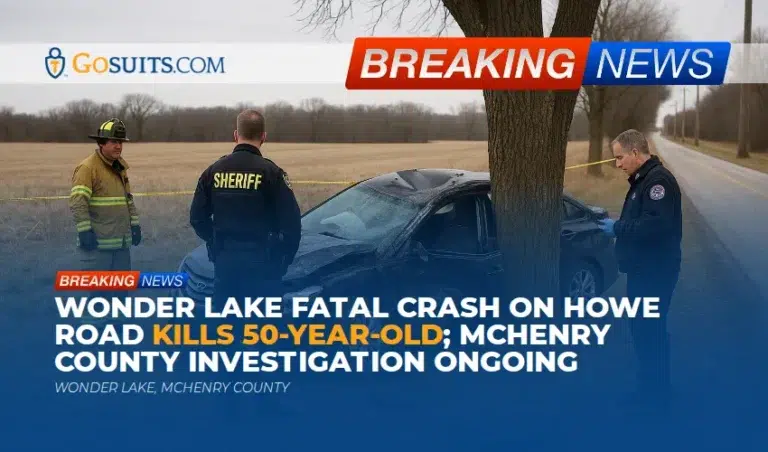
On a quiet Monday morning near Wonder Lake in McHenry County, a 50-year-old driver was killed when his 2011 Hyundai Sonata left the roadway in the 7700 block of Howe Road, traveled through a field, and struck a tree. According to the McHenry County Sheriff’s Office, first responders from Wonder Lake police and fire districts arrived shortly before 8:30 a.m. The driver, who was reportedly not wearing a seat belt, was pronounced dead at the scene. The Sheriff’s Office has indicated alcohol is believed to be a factor. The investigation remains active with the McHenry County Sheriff’s Office Major Crash Investigation Unit and the McHenry County Coroner’s Office involved.
At this time, the name of the driver had not been released pending official identification and family notification. In McHenry County, that process is handled by the Coroner’s Office, often including an autopsy and toxicology testing, followed by formal cause and manner of death determinations. Those conclusions can take weeks depending on laboratory turnaround times and the complexity of the findings.
Local context and Howe Road conditions
Wonder Lake sits northwest of the City of McHenry, a mix of wooded corridors, open fields, and subdivisions. Howe Road and many nearby township roads are bordered by trees and ditches, with limited shoulders in places. That kind of setting can increase the severity of single-vehicle roadway departure crashes because fixed objects like trees are close to the travel lane. Federal roadway safety research recognizes run-off-the-road crashes as a significant source of severe injuries and fatalities, and engineers address them with clear zones, shoulder improvements, and targeted countermeasures where feasible [8].
It is understandable that the Wonder Lake community is shaken. Morning commutes on roads like Howe Road are routine, used by school staff heading toward McHenry and Woodstock, and tradespeople routing to job sites through Ringwood or Johnsburg. Residents know how quickly a momentary distraction, a patch of frost, or a sudden swerve can turn dangerous. While the Sheriff’s Office has preliminarily cited suspected alcohol involvement, it is also common for investigators to evaluate other contributing factors, such as roadway geometry, vehicle mechanical condition, and visibility.
Investigations underway and evidence that matters
Major crash investigations typically proceed in stages. Deputies and crash reconstructionists document the scene, including tire marks, yaw or gouge marks, and the point of impact with the tree. They collect roadway measurements, vehicle data, and photograph damage patterns to estimate speed and pre-impact maneuvers. If the vehicle is equipped with an Event Data Recorder, technicians may retrieve pre-crash data points like speed, brake application, throttle position, and even seat belt status moments before impact.
The McHenry County Coroner’s Office focuses on medical findings: autopsy results, toxicology, and injuries consistent with the mechanics of the crash. These findings help determine cause and manner of death. Coroner conclusions can either support or refute preliminary assumptions about impairment, medical emergencies, or other contributing conditions. Families should know that toxicology reports often take several weeks, and the final coroner report may come later. While it is difficult to wait, that timeline is normal across Illinois due to the rigor required for accurate results.
Key evidence that can matter in civil proceedings includes:
- Scene documentation including measurements, photographs, and crash reconstruction notes.
- Vehicle data from onboard modules, infotainment systems, and airbag control units which sometimes record seat belt use and delta-V.
- Mechanical inspections of the steering, suspension, brakes, and tires to rule out or confirm failures.
- Coroner findings on injuries and toxicology, as well as medical records if a medical event preceded the crash.
- Weather and roadway information from official sources and maintenance records for the specific stretch of Howe Road.
While families can feel pressure to move quickly, it is generally important to preserve evidence, obtain official records, and speak with a seasoned attorney before giving any recorded statement to an insurer.
Seat belts, impairment, and Illinois safety law
Illinois law requires most occupants to be properly restrained with a seat belt, and law enforcement has long emphasized belts as a critical lifesaving measure [1]. National highway safety data consistently shows seat belts dramatically reduce the risk of fatal injury in passenger vehicles [7]. The Sheriff’s Office noted that the driver was not wearing a seat belt, a factor investigators may weigh when reconstructing the circumstances.
Regarding impairment, Illinois law prohibits driving under the influence of alcohol or other intoxicating substances. The Illinois State Police publish extensive guidance on DUI enforcement and the associated standards and penalties [2]. In crash investigations where alcohol is suspected, toxicology results from the Coroner are often a key component. It is important not to draw conclusions until those results are finalized, and investigators tie together all sources of evidence.
Illinois follows a modified comparative negligence rule for civil cases. In practical terms, a claimant’s compensation can be reduced by their percentage of fault, and recovery is barred if that percentage exceeds 50 percent under Illinois law [3]. That framework can be relevant in multi-party cases, product or roadway liability questions, or when multiple contributing factors are identified. Even in a single-vehicle crash, lawyers sometimes evaluate whether any third party may have contributed to risk, such as a component failure or unsafe conditions.

Potential civil claims after a single-vehicle fatal crash
When a life is lost, families naturally ask what legal options might exist. In Illinois, two legal paths often arise after a fatal crash. The first is a claim under the Wrongful Death Act, which allows eligible family members to seek damages for the loss of their loved one [4]. The second is a Survival Act claim, which allows the decedent’s estate to recover for harms the person suffered before death, like conscious pain and medical expenses, if applicable [5]. These are different claims with separate measures of damages, and they can be brought together when facts support them.
But how do these laws fit a single-vehicle crash? After all, there may not be another driver to hold accountable. Experienced attorneys still examine several pathways:
- Vehicle defect or component failure: If a critical component failed, a potential product claim could be explored. This requires expert inspection and sometimes retention of the vehicle to prevent spoliation of evidence.
- Roadway hazards or design issues: Run-off-the-road crashes can intersect with questions about fixed-object placement, signage, or shoulder conditions. Roadway departure countermeasures are a recognized safety priority nationally [8], and lawyers sometimes analyze whether a particular location had known risks or a history of serious crashes.
- Dram shop implications: If a commercial establishment overserved alcohol in violation of Illinois law and that overservice contributed, Illinois’ dram shop framework could become relevant in some circumstances. Whether it fits depends entirely on evidence and the timeline of events.
- Maintenance or repair negligence: Tire service, brake work, or steering repairs performed shortly before the crash can be scrutinized if there is evidence of improper work contributing to loss of control.
Families often find the legal and technical landscape overwhelming. It is common to speak with car accident lawyers to understand whether the facts suggest any third-party liability pathway. Early consultation can also help with preserving evidence like the vehicle itself, which may be crucial for any future analysis.
How families can obtain official records in McHenry County
Multiple agencies are involved in a fatal crash investigation, and each holds different records. Here is a roadmap for McHenry County, focusing on official public agencies that community members regularly contact:
McHenry County Sheriff’s Office
The Sheriff’s Office is typically the lead for crash reports in unincorporated areas. Records that may be available include the Illinois Traffic Crash Report and, when completed, supplemental narrative or diagram materials. The Sheriff’s Office provides public information and records request options on the county’s official website [9]. Some records may require a Freedom of Information Act request, and the county has published FOIA procedures and contacts [15].
Wonder Lake Police Department
Wonder Lake police responded according to initial reporting. In some situations, local police hold supplemental reports or dispatch logs. If the Sheriff’s Office is the primary investigative agency, the village police may point requesters back to the Sheriff for the official crash report. The process can vary by case, so it is reasonable to ask which agency has the primary record of the incident before submitting requests.
Illinois State Police crash reports portal
Illinois maintains a statewide crash reports portal through the Illinois State Police that can help the public locate certain crash documents when agencies participate. Availability varies by jurisdiction and incident type [13].
McHenry County Coroner’s Office
The Coroner’s Office manages identification, autopsies, and toxicology analysis in relevant deaths. Families can request the final coroner report, autopsy report, and toxicology results when complete. The Coroner’s official site offers contact information and procedures for requesting records [10]. Turnaround times depend on lab results and case complexity.
Death certificates
Certified death certificates are issued through Illinois Department of Public Health Vital Records or the local registrar. IDPH provides guidance on eligibility, required documentation, and ways to request certificates [11].
FOIA guidance
If an agency requests a formal FOIA submission, Illinois provides statewide guidance on how FOIA works, response timelines, and exemptions through the Office of the Attorney General [12]. Submitting a clear, narrow FOIA request can reduce delays. If you are unsure what to ask for, consider consulting an attorney before filing so you do not accidentally limit your request or overlook a critical record.
Insurance considerations and common pitfalls
When a crash results in death, insurance questions arise quickly. Auto policies can include several coverages that may be implicated, including liability coverage, medical payments coverage, and sometimes endorsements for funeral benefits. If third-party liability is even a possibility, it is important to think before you speak to any insurer. Adjusters often ask for recorded statements early, and what is said can be used in ways the speaker may not anticipate later.
As a general best practice, contact a qualified attorney before you provide statements to insurers. Insurers can be courteous yet still focused on minimizing their exposure. Claims handlers may also request broad authorizations or prompt releases that are not in a family’s best interest. If there is any chance of third-party responsibility, even a small one, early legal guidance can help safeguard the claim and prevent missteps.
In the Chicago region and throughout McHenry County, families often ask how long claims take to resolve. Timelines depend on the complexity of the investigation, the number of involved parties, and whether litigation becomes necessary. For a deeper overview tailored to Illinois cases, see our resource on How Long Does It Take to Resolve a Personal Injury Case in Illinois?.
For those considering community-based legal help, some prefer working with car accident lawyers in Wonder Lake who understand local roads, typical investigation practices of the Sheriff’s Office, and regional court procedures in McHenry County.
Steps to preserve your rights after a fatal crash
Every situation is unique, and nothing here should be taken as a directive for any particular family. That said, in our work with the northern Illinois community, the following practical steps can preserve options while the official investigation continues:
- Request and secure official records including the crash report, coroner’s preliminary findings when available, and later the final reports. Use agency portals and follow posted instructions [9] [10] [13].
- Preserve the vehicle if feasible. If third-party liability is a question, the vehicle can hold vital evidence about component failures, crash forces, and seat belt function. Do not authorize destruction without legal guidance.
- Collect available data like photos from the scene, dash cam footage, or location-sharing logs from a phone if they exist. These materials can help pin down timing and trajectory.
- Keep communication records with insurers, tow yards, and medical providers. Consider using a simple log to track dates, contacts, and key points discussed.
- Be careful with social media. Posts can be discovered and taken out of context. Many families choose to keep details private until facts are clear.
- Talk to an attorney first before providing any recorded statement to an insurer. Insurers can later use those statements to question liability or damages.
- Plan for documentation needs including identification, next-of-kin paperwork, and death certificate applications through IDPH or local registrars [11].
Timelines and statutes that could apply in Illinois
Illinois law sets time limits for civil claims. While the specific statute of limitations can vary based on the claim and the parties involved, it is essential to understand the general landscape and ensure deadlines are not missed. Two frameworks are commonly relevant after fatal crashes:
- Comparative negligence framework: Illinois uses a modified comparative negligence rule. A claimant found more than 50 percent responsible cannot recover, and any recovery is reduced by their percentage of fault [3].
- Substantive claims for fatal crashes: Wrongful Death Act and Survival Act claims carry specific requirements and damages frameworks [4] [5].
Statutes of limitation can also be affected by who the defendant is. For example, potential claims involving a government entity often have shorter notice requirements or distinct claim procedures. If roadway design, maintenance, or signage is at issue, counsel may advise rapidly preserving evidence and evaluating any claim presentation deadlines.
Although statistics cannot predict any single case, Illinois crash data compiled by the Illinois Department of Transportation provides context about how often fatal roadway departures occur and where trends are heading statewide [6]. These datasets help engineers target safety investments and can sometimes inform case analysis when patterns emerge at specific locations.
Why timely action matters now
When a serious crash happens close to home, it can be hard to think about paperwork and procedures. Yet certain steps are time-sensitive. Vehicle preservation requests need to reach tow yards rapidly. FOIA requests take time to process. Insurer calls often come within days. Acting deliberately helps ensure crucial evidence is not lost and rights are protected.
- What should be done now: Identify the lead investigative agency, request the crash report when available, and ask the Coroner’s Office about timelines for releasing findings. Preserve the vehicle and photographs. Before speaking to insurers, consult with an attorney to understand which facts to share and what to hold until records are in hand.
- Why it matters: Early steps can prevent accidental waivers, avoid harmful recorded statements, and keep physical evidence intact. Once a vehicle is destroyed or data is overwritten, that information is gone.
- Timing: Many records take weeks to finalize, but notice deadlines and preservation issues cannot wait. Quick, organized action now creates options later.
Insurers and corporations often move quickly. That speed can be stressful, especially while families grieve. Being prepared, staying organized, and getting guidance first can make a meaningful difference in both the process and the outcome.
Commentary from Gosuits Wonder Lake, Illinois Personal Injury Attorney
Our hearts are with the Wonder Lake community and the family affected by this tragedy. The information above is offered for general education, so neighbors understand the investigative process, the records they can request, and the civil law concepts that may arise after a fatal crash.
Based on the reported facts, investigators will likely focus on roadway departure dynamics, seat belt nonuse, and suspected alcohol involvement. It is also common for reconstructionists to examine vehicle data and mechanical systems to make sure no component failure contributed. Thorough work by both the Sheriff’s Office and the Coroner’s Office will bring needed clarity.
In our experience, insurance companies and corporations sometimes exploit uncertainty and grief. They may seek early statements, broad authorizations, or quick releases. Those steps feel administrative but can carry significant consequences. People often do not realize how a single phrase in a recorded statement can be used to diminish or deny claims later.
That is why a free consultation with a seasoned injury attorney can be so important. It allows people to understand their rights, learn what to request and when, and avoid missteps while official reports are still pending. No one should have to navigate complicated rules, deadlines, and evidence preservation alone in the aftermath of a loss.
References
- Seat Belt Safety Information – Illinois State Police
- DUI Laws and Enforcement – Illinois State Police
- 735 ILCS 5/2-1116 Comparative Negligence – Illinois General Assembly
- Illinois Wrongful Death Act, 740 ILCS 180 – Illinois General Assembly
- Illinois Survival Act, 755 ILCS 5/27-6 – Illinois General Assembly
- Illinois Roadway Crash Data – Illinois Department of Transportation
- Seat Belts: Get the Facts – National Highway Traffic Safety Administration
- Roadway Safety and Design – Federal Highway Administration
- McHenry County Sheriff’s Office – McHenry County Government
- McHenry County Coroner’s Office – McHenry County Government
- Death Certificates – Illinois Department of Public Health
- Freedom of Information Act in Illinois – Illinois Attorney General
- Crash Reports Portal – Illinois State Police
- Winter Driving Safety – Illinois Department of Transportation
- FOIA Requests – McHenry County Government