- What Happened On Singleton Boulevard and N. Hampton Road
- Timeline, Location, and What Authorities Reported
- Eyewitness Accounts and On-Scene Response
- Civil Liability After a Drunk Driving Crash in Texas
- Evidence That Can Make or Break a Dallas Intersection Case
- Where Families Can Get Official Records and Information
- Insurance Issues and Practical Steps for Injured Passengers and Families
- Medical Care, Grief, and Community Support in Dallas
- Safety Context Around This West Dallas Intersection
- Step-by-Step Actions After a Fatal or Severe Crash
- Why Taking Action Soon Matters
- Commentary from Gosuits Dallas, Texas Personal Injury Attorney
- References
What Happened On Singleton Boulevard and N. Hampton Road
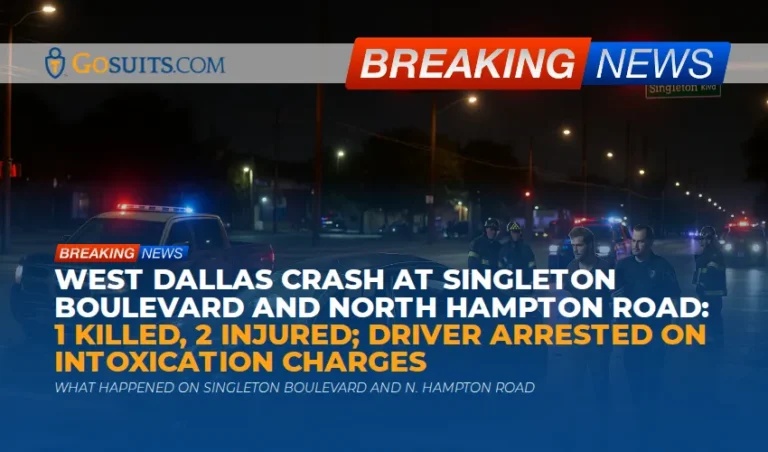
On the evening of February 1, a devastating two-vehicle collision at Singleton Boulevard and North Hampton Road in West Dallas left one person dead and two others seriously injured. According to Dallas police and local reporting, a pickup traveling eastbound on Singleton allegedly ran a red light at high speed and struck a sedan moving along N. Hampton. The crash caused catastrophic damage and trapped occupants inside, requiring firefighters to cut through the sedan’s driver’s side to free those inside. A 33-year-old man later died, and two other passengers from the sedan remain hospitalized with serious injuries. The pickup’s driver, a 31-year-old man, was arrested at the scene on suspicion of intoxication manslaughter and intoxication assault.
This intersection sits near the Trinity Groves district, not far from the white arch of the Margaret Hunt Hill Bridge. It is a busy corridor where evening traffic can be heavy, especially on weekends with restaurant and nightlife activity. First responders moved quickly, but the level of vehicle intrusion the witnesses described is the kind of force that can change a family forever within seconds.
Timeline, Location, and What Authorities Reported
Time and location
The crash occurred on February 1 at the intersection of Singleton Boulevard and N. Hampton Road in West Dallas. The pickup was reportedly heading east on Singleton and ran a red light before striking the sedan, which was traveling along N. Hampton. This is a signalized urban intersection that carries a mix of commuter and neighborhood traffic.
Emergency response and extraction
Multiple occupants were pinned or trapped following the impact. Dallas Fire-Rescue used hydraulic rescue tools to cut through the sedan to remove victims. All three occupants of the sedan were transported to local hospitals. Despite emergency care, one man did not survive his injuries.
Arrest at the scene
Police detained and arrested the pickup truck driver at the scene. Investigators indicated they believed the driver was intoxicated. He faces intoxication manslaughter and intoxication assault charges. While those are criminal allegations, the same facts often form the basis of civil claims for injury and wrongful death. We focus below on civil rights, remedies, and next steps for injured people and families.
Eyewitness Accounts and On-Scene Response
Witnesses described a chaotic, heartbreaking scene. One bystander told reporters they saw the pickup’s driver pleading with people nearby to help him leave, although a severe leg injury appeared to prevent him from going anywhere. The shock for neighbors and passersby is real, and experiences like this can linger. For the families involved, early days are often a blur of hospitalizations, updates from physicians, and efforts to coordinate transportation, work, and childcare. It is common to feel overwhelmed.
In West Dallas, particularly near Trinity Groves and across the Sylvan Avenue corridor, people are used to busy signal cycles and occasional speeding. Hearing a high-speed impact followed by sirens is a nightmare scenario. The community’s quick 911 calls and cooperation at the scene helped rescuers reach victims who were pinned inside.

Civil Liability After a Drunk Driving Crash in Texas
A drunk driving crash opens several civil avenues. Under Texas law, negligent or grossly negligent driving that causes serious injury or death can create liability for medical bills, lost earnings, future care, pain and suffering, and other damages. When a death occurs, the surviving family members may have a claim under the Texas Wrongful Death Act, and the decedent’s estate may also have a claim under the Survival Statute. These are separate but related civil remedies that can proceed alongside or independent of any criminal case.
- Wrongful death claims: Certain family members may seek losses such as companionship, mental anguish, and lost financial support. Texas law outlines who may file and the types of damages available [1].
- Survival claims: The decedent’s estate may pursue the decedent’s own injury-related damages that accrued before death, including conscious pain and suffering and medical expenses [2].
- Statute of limitations: Often two years from the date of the crash for both injury and wrongful death claims in Texas, with some exceptions. Timely action helps protect claims and preserve evidence [3].
- Potential dram shop liability: If an alcohol provider served someone who was obviously intoxicated and that intoxication was a cause of the crash, the provider may face civil liability under Texas’s Dram Shop Act [4].
Families never want to think in legal terms while grieving. Still, understanding who might be accountable and what losses are compensable helps people plan for medical costs, time away from work, long-term care needs, and the difficult path after a fatality.
Evidence That Can Make or Break a Dallas Intersection Case
Evidence disappears quickly. Intersection cases often hinge on who had the green or red light, speed estimates, alcohol evidence, and how the impact unfolded. Here is what often matters most in Dallas intersection crashes like Singleton and N. Hampton.
- Police crash report and scene documentation: The responding agency’s report, diagram, and listed witnesses form the foundation of most claims. In Texas, people typically obtain crash reports through TxDOT’s system [5].
- ECM or event data recorder downloads: Many vehicles store speed, braking, and throttle data for seconds before impact. Preserving and downloading this data can confirm light timing disputes and speed estimates [6].
- Surveillance or dash camera video: Restaurants, convenience stores, apartment buildings, and private vehicles near Trinity Groves often capture signals and approach paths. Those files can overwrite within days.
- 911 recordings and CAD logs: These can help establish timing, location accuracy, and immediate witness impressions. In Texas, public information requests may help obtain certain records [7].
- Hospital and EMS records: Medical notes can document intoxication observations, mechanism of injury, and the severity of trauma. Consistent care records demonstrate the trajectory of recovery or loss.
- Alcohol source evidence: Receipts, digital transactions, bar tabs, and witness statements may become relevant if dram shop liability is investigated [4].
Because evidence can be lost or altered quickly, families often move fast to send preservation requests. Working with seasoned car accident lawyers can help coordinate evidence preservation early.
Where Families Can Get Official Records and Information
Families navigating this tragedy may need several official documents and records. Here is how the process commonly works in Dallas and across Texas.
Police crash reports
Texas crash reports are centrally handled through TxDOT’s Crash Records Information System. After processing, eligible parties can purchase the report online. The report number, date, and location are helpful when searching [5].
Death certificates and autopsy information
Death certificates in Texas are issued through the Texas Department of State Health Services Vital Statistics Section. Certified copies are typically required to manage estates, insurance, and benefits [8]. Autopsy reports are generally handled by the county’s medical examiner. In Dallas County, families can request the report directly from the Medical Examiner’s Office once it is complete. Policies vary, and identification plus proof of relationship may be required.
Toxicology and custody of evidence
Toxicology results may be part of the medical examiner’s file or the criminal case file. Access can depend on case status. Families or their representatives can inquire about timelines and availability, and submit public information requests when appropriate [7].
Insurance records
Claim files, policy declaration pages, and communications can become evidence in a civil case. Texas consumers can review state guidance on navigating auto claims and understanding insurer obligations [9].
For those looking for practical, step-by-step guidance after a Dallas collision, see what to do after a car accident in dallas.
Insurance Issues and Practical Steps for Injured Passengers and Families
Insurance after a drunk driving crash can get complicated, even when fault seems obvious. Coverage questions often include liability limits, whether there were multiple claimants, potential underinsured motorist coverage, PIP or MedPay availability, rental car needs, and total loss valuation for vehicles.
- Multiple claimants: When several injured people make claims against one policy, available limits can be quickly exhausted. Identifying all possible coverages early is critical.
- UM and UIM: If the at-fault driver’s insurance is insufficient, injured people may turn to their own uninsured or underinsured motorist coverage, if purchased. This often requires prompt notice and careful documentation.
- Recorded statements: Insurers may request recorded statements or medical releases. A misstatement can be used to minimize or deny claims later. People are commonly advised to consult an attorney first before communicating with insurance adjusters to understand their rights.
- Billing and liens: Hospitals and health insurers may assert liens against any recovery. Managing these properly keeps more of any funds available for ongoing care and family needs.
Many families in tragedies like this turn to Dallas car accident lawyers to help coordinate insurance benefits, identify all policies, and send preservation letters for critical evidence.
Medical Care, Grief, and Community Support in Dallas
Dallas is home to world-class trauma care. UT Southwestern’s Clements University Hospital operates as a major academic center that supports trauma services in the region [10]. Emergency staff across Dallas hospitals are skilled at stabilizing polytrauma patients who arrive from high-speed intersection crashes like the one on Singleton Boulevard. Still, the road to recovery can be long, involving surgery, inpatient rehab, and outpatient therapy.
For families mourning a loved one, details like funeral arrangements, employer notifications, and estate tasks come on fast. It is normal to ask friends, faith leaders, or community groups for help with meals, childcare, and rides. West Dallas neighbors often rally around tragedy, and local organizations can coordinate support while loved ones manage hospital visits or memorial planning.
Safety Context Around This West Dallas Intersection
Singleton Boulevard and N. Hampton Road are familiar to West Dallas residents and people heading to Trinity Groves. Speeds on Singleton can feel high, and at night drivers sometimes misjudge signal cycles. TxDOT and national data consistently show impaired driving and speed as leading contributors to severe intersection crashes and fatalities [11] [12]. Community conversations about lighting, enforcement during late-night hours, and pedestrian safety are common along this corridor, especially on weekends when restaurants and venues draw more visitors.
None of this suggests the people in the sedan did anything wrong. Rather, it highlights a shared reality on urban corridors across Texas. When a driver runs a red light at speed, outcomes are often catastrophic for those with the right of way.
Step-by-Step Actions After a Fatal or Severe Crash
Immediate health and safety
- Prioritize medical care: Follow up with trauma teams, orthopedic specialists, and primary care to document symptoms and treatment. Some injuries are not obvious at first.
- Organize care records: Keep discharge summaries, imaging reports, and medication lists. A simple folder or binder can help track bills and appointments.
Information and documentation
- Obtain the crash report: Use TxDOT’s system once the report is processed. The report number, date, and location will help search and purchase [5].
- Preserve vehicle data: Do not authorize disposal or repair of the vehicles until an attorney advises on preservation and inspection. EDR data and physical crush profiles are powerful evidence [6].
- Identify potential video: Ask nearby businesses for retention times and save any dash cam footage. The area around Trinity Groves often has cameras that face intersections and approaches.
Communications and insurance
- Be cautious with adjusters: Before giving any statements or signing medical authorizations, consult an attorney. What is said to an insurer can be used later to reduce or deny a claim.
- Notify your insurers: Report the crash to your auto carrier, and if applicable, your UM or UIM insurer. Keep communications factual and brief until you receive legal guidance.
- Track expenses: Save receipts for hospital parking, travel to appointments, and any out-of-pocket costs. These can be part of a claim.
For families after a fatality
- Request certified death certificates: You will likely need multiple certified copies for insurance, benefits, and estate matters [8].
- Ask about autopsy and toxicology timelines: The Medical Examiner’s Office can advise when reports will be ready and how to obtain them.
- Understand your civil options: Wrongful death and survival claims in Texas are time sensitive. Statutes set deadlines and determine who may file [1] [2] [3].
To help organize the earliest days after a Dallas wreck, you might also find this resource helpful: Dallas Accident Injury Symptoms To Watch For In The First 48 Hours.
Why Taking Action Soon Matters
Here is why timely steps can matter so much in Dallas crash cases.
- Evidence has a short shelf life: Traffic and security camera systems often overwrite within days. Vehicles get moved, repaired, or salvaged. Early preservation requests protect key proof of fault and speed.
- Insurance moves quickly: Adjusters may contact people within 24 to 72 hours. Statements made in the fog of trauma can be twisted later. Securing guidance before speaking to insurers helps guard against missteps.
- Medical documentation starts now: Consistent treatment notes, imaging, and specialist visits build a timeline that supports the true scope of injuries and losses.
- Legal deadlines apply: Texas law imposes specific time limits on personal injury, survival, and wrongful death claims. Missing a deadline can limit recovery options [3].
What should happen next
- Preserve the vehicles and their data: Put all storage lots and carriers on notice to keep vehicles intact for inspection and EDR downloads.
- Secure the official crash report and hospital records: Start a central file for all documents and bills.
- Consult an attorney before contacting insurers: An initial consultation can clarify your rights and help avoid mistakes that reduce claims later.
- Map all insurance coverages: Identify liability, UM or UIM, PIP or MedPay, and any health insurer liens that could affect the net recovery.
Non-linked action buttons
Consult a personal injury attorney Preserve evidence now Request police crash report
Commentary from Gosuits Dallas, Texas Personal Injury Attorney
Our hearts are with everyone affected by this West Dallas tragedy. One life is gone, and two more people are reported to have serious injuries. This brief commentary is for general information and education only.
Based on what officials and witnesses report, a driver ran a red light at speed, with intoxication suspected. In civil terms, that points to negligence, and possibly gross negligence. For families and survivors, the law recognizes separate paths to seek accountability. Wrongful death claims allow certain relatives to pursue the profound losses that follow a death, and survival claims allow the estate to pursue the decedent’s own damages before passing.
Insurance companies and corporations know the playbook. They often move fast to shape the narrative with early statements, broad medical authorizations, and valuation tactics that downplay long-term harm. Without full information, people sometimes agree to recorded statements or accept early offers that do not reflect the true cost of ongoing treatment, lost wages, or grief-related needs. In multi-claimant crashes, liability limits can be spread thin, and those who hesitate can be left with less than what the situation truly calls for.
Early guidance makes a difference. A free consultation helps people understand deadlines, evidence preservation, lien issues, and potential sources of recovery. It also helps families avoid preventable mistakes when speaking with insurers. Even in the fog of grief or injury, a few right steps in the first days and weeks can protect important rights.
References
- Texas Civil Practice and Remedies Code Chapter 71, Wrongful Death – Texas Legislature Online
- Texas Civil Practice and Remedies Code Section 71.021, Survival – Texas Legislature Online
- Texas Civil Practice and Remedies Code Section 16.003, Two-Year Limitations – Texas Legislature Online
- Texas Alcoholic Beverage Code Chapter 2, Dram Shop Act – Texas Legislature Online
- Crash Records and Reports in Texas – Texas Department of Transportation
- Event Data Recorder Information – National Highway Traffic Safety Administration
- Making a Public Information Request – Office of the Texas Attorney General
- Death Records in Texas – Texas Department of State Health Services
- Auto Insurance Guide and Claims Help – Texas Department of Insurance
- Trauma Surgery and Acute Care – UT Southwestern Medical Center
- Drunk Driving Facts and Safety – National Highway Traffic Safety Administration
- Impaired Driving Prevention and Data – Centers for Disease Control and Prevention