- What happened on Angeles Crest Highway
- Where and when the crash occurred
- How to obtain official records and updates
- Safety and legal implications of a single-vehicle mountain road crash
- Insurance considerations in a Los Angeles car accident involving a fatal collision
- How investigations typically proceed on California state highways
- Community context and roadway safety on SR 2
- Practical next steps families often take
- What should happen next and why timing matters
- Commentary from Gosuits Los Angeles, California Personal Injury Attorney
What happened on Angeles Crest Highway
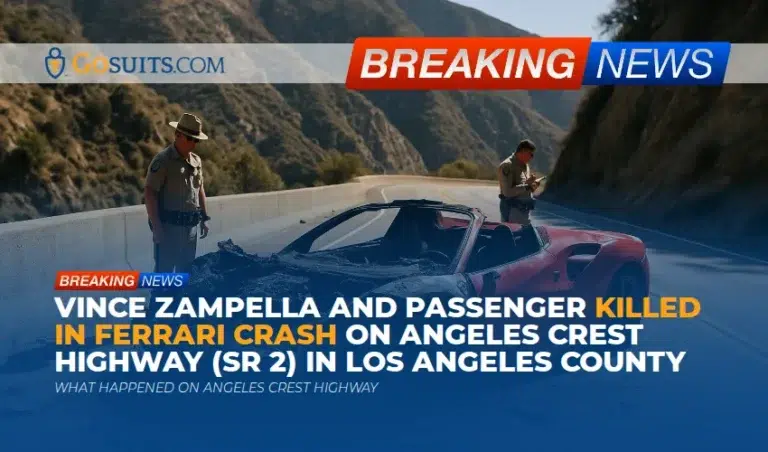
According to major media reports, a single-car crash on Angeles Crest Highway in the San Gabriel Mountains north of Los Angeles led to the death of the driver, Vince Zampella, and later the passenger. The California Highway Patrol responded at around early afternoon, and preliminary information indicated the southbound Ferrari left the roadway, struck a concrete barrier, and caught fire. The driver was reportedly trapped, and the passenger was ejected. The driver died at the scene, and the passenger died at the hospital. Officials had not released the passenger’s identity at the time of the reports.
Los Angeles residents know this stretch of State Route 2 for its sweeping vistas, high elevations, and winding turns. Crashes here can be complex. Even when only one vehicle is involved, a mountain-road collision can raise many questions about roadway conditions, vehicle performance, and human factors that should be carefully documented.
Where and when the crash occurred
Location matters in any car accident analysis. This incident occurred on Angeles Crest Highway, which is State Route 2 in the San Gabriel Mountains, north of the city and near communities like La Cañada Flintridge, Altadena, and Wrightwood. The area features tight curves, steep drop-offs, variable weather, and limited shoulders. Reports placed the crash around 12:45 p.m., a time of day when recreational traffic often mixes with commuters and tourist sightseeing.
If you drive SR 2, you know common landmarks like Red Box Junction near the Mount Wilson Road turnoff, the Clear Creek Information Station, and the long grades leading toward Chilao. Seasonal factors can shift conditions quickly here, especially in winter when shaded segments hold ice even after sunny mornings.
How to obtain official records and updates
Families and loved ones often need official documentation after a fatal crash. In Los Angeles County, several agencies may hold records related to a Los Angeles car accident on a state highway. The following resources are authoritative and can help you understand what to request and from whom.
California Highway Patrol collision report
Angeles Crest Highway is a state route generally patrolled by the California Highway Patrol (CHP). A CHP traffic collision report contains the investigating officer’s narrative, diagram, measured evidence, and sometimes statements from involved persons and witnesses.
- Where to request: The CHP’s official page explains who can obtain a report and how to request it. See Request a Collision Report at the CHP website: chp.ca.gov.
- What you may need: The date, time, location, and names of involved parties, along with the CHP incident or report number if known.
- Why it matters: The collision report is central evidence in any personal injury or wrongful death review, including potential insurance claims.
Los Angeles County Department of Medical Examiner
The coroner’s office in Los Angeles County is the Department of Medical Examiner. For a fatal collision, the office typically conducts a forensic examination, establishes cause and manner of death, and releases an official report when complete.
- Where to start: Visit the Los Angeles County Department of Medical Examiner site for information about case status and how to request reports: me.lacounty.gov.
- What to request: Autopsy report, toxicology report, and the final investigative summary, when available.
- Timing: Toxicology testing and final reports can take weeks or months depending on the case complexity.
Death certificates and vital records
Certified death certificates in Los Angeles County are issued by the Registrar-Recorder/County Clerk. These are often required for probate, insurance submissions, and other administrative needs.
- How to request: See Vital Records guidance at the Los Angeles County Registrar-Recorder/County Clerk: lavote.gov.

Real-time roadway and incident information
- CHP incident log: The CHP Computer Aided Dispatch page may show active or recent incidents by area. See the CHP CAD system: cad.chp.ca.gov.
- Caltrans QuickMap: For closures, chain controls, or hazards on SR 2, the official QuickMap provides live updates: quickmap.dot.ca.gov.
Why official documents matter
In a potential wrongful death review, authenticated documents from the CHP, the Department of Medical Examiner, and vital records agencies supply the factual backbone. They can corroborate timelines, mechanisms of injury, and environmental conditions in ways that insurance adjusters and courts recognize.
Safety and legal implications of a single-vehicle mountain road crash
Single-vehicle incidents on mountain roads can be tragic. Many are preventable, yet they present complicated questions about responsibility. Without speculating about this specific crash, here are common issues that families and investigators examine in a Los Angeles car accident on SR 2.
Passenger rights in a single-vehicle collision
- Passengers can have claims: Even if only one vehicle is involved, an injured passenger or the family of a deceased passenger may have a claim for a personal injury or wrongful death against the driver’s liability policy. This is a standard avenue of recovery that focuses on the facts of negligence, not on personal relationships.
- Multiple insurance layers: In addition to the driver’s liability coverage, there may be medical payments coverage, uninsured or underinsured motorist coverage, and possibly an umbrella policy.
Potential liability theories that may be evaluated
- Driver negligence: Speed, inattention, or misjudgment on tight curves can figure in many collisions. Nationally, speeding is a major factor in traffic deaths, according to the National Highway Traffic Safety Administration. See NHTSA on speeding and fatal crashes: nhtsa.gov.
- Roadway conditions: Debris, potholes, ice, or inadequate warning signs can be relevant. Caltrans manages state routes and publishes live conditions on QuickMap: quickmap.dot.ca.gov.
- Defective product claims: A product defect, such as brakes, tires, or safety systems, can be considered in a product liability review. Mechanical failures should be documented immediately to preserve a potential defective component for analysis.
- Third-party responsibility: If a vehicle was borrowed or leased, ownership and maintenance records may matter. If work use was involved, employer-related insurance could be implicated. These determinations are fact specific.
Evidence families should consider preserving
- Vehicle preservation: Secure the auto at the tow yard before it is destroyed. Physical evidence, including data from the event data recorder, can be critical.
- Scene photographs: Curvature of the roadway, guardrails, skid marks, debris fields, and signage conditions change quickly in mountain environments.
- Witness information: Names and contact information of bystanders, cyclists, or other motorists who stopped to help can be invaluable.
- Digital evidence: Phone location history, vehicle telematics, dashcams, and smartwatch data can help reconstruct timelines.
Insurance considerations in a Los Angeles car accident involving a fatal collision
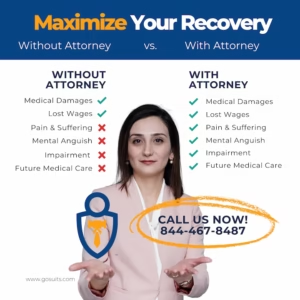
Insurance questions can feel overwhelming after a fatal crash. Adjusters will often move quickly. General guidance below is educational and should not be taken as legal advice. In any complex or fatal incident, it is prudent to speak with a seasoned attorney before contacting any insurance company. What someone says to an adjuster can be recorded and may be used against them later.
Common coverages that may apply
- Liability coverage: Pays claims of others when the insured driver is legally responsible for a collision. For passengers, this is often the first avenue of recovery.
- Medical payments coverage: Can provide limited benefits for medical or funeral expenses regardless of fault, depending on the policy.
- Uninsured or underinsured motorist coverage: If liability limits are low or non-existent, UM or UIM may help. This can apply for passengers and sometimes households with applicable policies.
- Umbrella coverage: Offers additional protection above underlying policies if in force.
Do not rush to recorded statements
It is common for insurance carriers to request recorded statements quickly. In a wrongful death context, facts are still developing, and early statements can be incomplete. Consulting with counsel first can help protect rights and ensure that communications with insurers are accurate and appropriately limited.
Statute of limitations in California
California generally provides two years to file a civil action for wrongful death. See California Code of Civil Procedure section 335.1 at the official legislative website: leginfo.legislature.ca.gov. Specific timelines can vary, and different deadlines can apply if a public entity is involved.
How investigations typically proceed on California state highways
On state routes like SR 2, the CHP conducts the primary investigation. Depending on severity, specialized teams may assist with reconstruction. The goal is to establish factors such as speed, line of sight, roadway geometry, environmental hazards, and vehicle dynamics.
Standard investigative steps
- Scene documentation: Measurements, photographs, and diagrams of the crash site including curve radius, grade, skid or yaw marks, gouges, and debris.
- Vehicle inspection: Examination of steering, suspension, tires, brakes, airbags, and safety restraints. In potential product liability issues, chain-of-custody for a defective component is critical.
- Environmental assessment: Weather, lighting, road surface condition, signage visibility, and temporary hazards like rockfall or ice.
- Human factors: Driver condition, experience on mountain roads, distraction analysis, and in some cases toxicology results pursued through the Department of Medical Examiner.
Medical Examiner’s role
The Los Angeles County Department of Medical Examiner independently determines cause and manner of death. Families can monitor case status and request reports when available through me.lacounty.gov. Coroner findings can intersect with collision reconstruction to clarify mechanism of injury or survivability.
Community context and roadway safety on SR 2
Angeles Crest Highway is beloved for its views and access to trailheads, but it is unforgiving. Local drivers know the pullouts near Inspiration Point, how fog can build across passes, and how snow and black ice linger on shaded corners above 5,000 feet.
Nationally, speeding remains a leading factor in fatal crashes. NHTSA notes that speeding contributed to a substantial portion of traffic fatalities, underscoring how physics and reduced reaction time raise risks on curving mountain roads. See NHTSA’s speeding overview: nhtsa.gov.
California’s Office of Traffic Safety publishes state data and safety initiatives aimed at reducing serious and fatal collisions. Their resources can help communities understand trends and advocate for targeted improvements. See OTS Quick Stats and research at ots.ca.gov.
Before heading up SR 2, check Caltrans QuickMap for closures and chain controls, especially after storms or during winter cold snaps: quickmap.dot.ca.gov. Conditions change quickly. Locals have seen sudden closures due to rockslides, high winds, and snow near Dawson Saddle and Islip Saddle.
Practical next steps families often take
Every situation is different, but the list below outlines common steps families pursue after a fatal car accident on a mountain road in Los Angeles County. This is general information intended to help organize tasks and preserve key information.
- Secure official records: Request the CHP collision report, the Medical Examiner’s autopsy and toxicology reports, and certified death certificates from the Registrar-Recorder/County Clerk.
- Preserve the vehicle: Instruct the tow yard in writing to hold the vehicle for inspection. If a defective part or potential product failure is suspected, preservation is critical.
- Gather visual evidence: If safe and feasible, capture photos or video of the scene from public vantage points. Document signage, guardrails, and roadway conditions similar to the day of the collision.
- Collect medical and expense documents: Hospital records, transport invoices, funeral expenses, and any out-of-pocket costs help tell the full story of loss and damages.
- Identify all insurance policies: Locate auto, umbrella, and any household policies with possible UM or med pay benefits. Note policy numbers and carriers, but avoid recorded conversations with adjusters until you speak with counsel.
- Record memories and timelines: Written recollections from family and friends can be useful, including last known plans, route familiarity, and vehicle condition before the trip.
- Mind deadlines: California’s general deadline for a wrongful death claim is two years, per CCP 335.1. If any public entity issues are involved, special claim notices can have much shorter timelines.
- Consider grief and community support: Local organizations and faith communities in Los Angeles often provide grief counseling and practical assistance with memorial planning.
What should happen next and why timing matters
Several actions are time sensitive after a serious or fatal auto collision on SR 2 in the San Gabriel Mountains. The benefits of moving promptly are practical and evidentiary. Here is what should be done and why it matters.
- Request and preserve official records immediately: Collision reports, coroner files, and roadway condition logs form the backbone of any later claim evaluation. Early requests help ensure nothing is lost and that information is obtained while memories are fresh.
- Put the tow yard on notice to hold the vehicle: Vehicles are often destroyed within days. Preservation allows experts to inspect brakes, tires, and data recorders that can clarify how the crash unfolded.
- Avoid recorded statements to insurers until after consulting counsel: Insurance adjusters may contact people within hours. Waiting to understand rights reduces the risk of statements being used out of context later.
- Document expenses from day one: Funeral costs, travel, and memorial arrangements add up. Keeping receipts and invoices supports reimbursement pathways if coverage applies.
- Track road conditions and closures: Saving screenshots from Caltrans QuickMap or CHP CAD logs can help reconstruct the environmental backdrop of the incident day.
- Identify all potentially applicable insurance policies: Sometimes coverage exists where it is least expected, such as UM on a household policy. Catalog policies before deadlines to notify carriers.
The urgency is simple. Evidence can disappear, memories fade, and statutory deadlines approach faster than most people realize. Acting promptly preserves options and creates a clearer pathway to understanding what happened and why.
Commentary from Gosuits Los Angeles, California Personal Injury Attorney
Our hearts are with everyone affected by this devastating event in the San Gabriel Mountains. Articles like this are offered to help the community understand the process after a serious roadway loss. They are educational and general in nature.
From a civil perspective, a single-vehicle collision on Angeles Crest Highway invites careful examination of several threads at once. Investigators will look at roadway geometry, recent weather patterns, signage and guardrail placement, and the performance of the vehicle and its safety systems. On steep mountain corridors, even small deviations in speed or steering can magnify consequences. Preserving the vehicle, obtaining the full CHP report, and reviewing the Department of Medical Examiner’s findings are foundational steps to answer the central question families ask: how did this happen.
Insurance companies, and sometimes large corporations involved in manufacturing or maintaining vehicles, tend to move quickly and to their advantage. They often ask for recorded statements before people have all the facts, reference policy exclusions in ways that seem final, and press for early resolutions that may not reflect the full scope of loss. Without a clear understanding of coverages like liability, medical payments, UM or UIM, and potential product liability issues, people can unintentionally limit their own options.
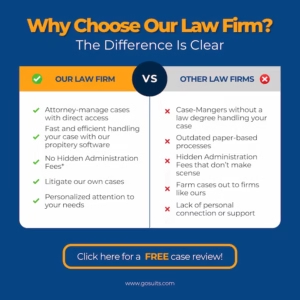
That is why obtaining a free consultation before speaking with any insurer is so important. A short conversation can help outline rights, identify which documents to request first, and map the immediate steps that protect those rights. No one can change what happened on SR 2, but informed decisions in the hours and days that follow can make a meaningful difference in how the process unfolds.
Additional government resources
- California Highway Patrol collision report
- Los Angeles County Department of Medical Examiner
- LA County Registrar-Recorder/County Clerk vital records
- Caltrans QuickMap road conditions
- NHTSA: Speeding and traffic safety
- California Office of Traffic Safety Quick Stats