- What We Know About the Mesa Neighborhood Collision
- Location Context: Meigs Road and Dolores Avenue on the Mesa
- Immediate Steps to Take After a Two Vehicle Crash in Santa Barbara
- How California Law May View a Two Vehicle Intersection Crash
- Working With Law Enforcement and Agencies: Who to Contact for Records
- Medical Follow Up and Documentation After a Crash That Seems Minor
- Insurance and Property Damage Basics in California
- Data and Safety Patterns: Teen Drivers, Intersections, and Dusk Visibility
- A Practical Timeline for Handling a Santa Barbara Collision Claim
- Community Notes and Roadway Safety Near the Mesa
- Next Steps: Why Acting Promptly Matters
- Commentary from Gosuits Santa Barbara, California Personal Injury Attorney
- References
What We Know About the Mesa Neighborhood Collision
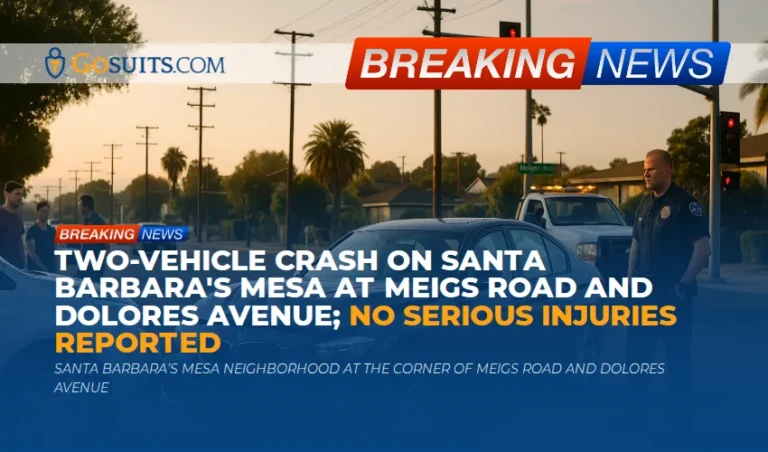
On Thursday evening, March 18, 2026, just before 6:00 p.m., a two vehicle collision occurred in Santa Barbara’s Mesa neighborhood at the corner of Meigs Road and Dolores Avenue, a short walk from the Mesa McDonald’s and Taco Bell. According to a reader report, one vehicle was a BMW 3 series reportedly driven by a teenager. The second vehicle was described as a minivan or SUV carrying a family of four. The BMW’s front end appeared heavily damaged, and all occupants from both vehicles were seen outside, waiting along the side of the street. The on scene observation suggested there were no apparent serious injuries. A Santa Barbara Police Department officer and a tow truck responded. No further official information had been provided at the time of the reader’s report.
While this initial account offers helpful context, it is preliminary and based on a single observer at the scene. Official crash reports, if generated, typically provide more detail on vehicle movements, statements, diagrams, and any citations. Those documents often become the foundation for insurance assessments and potential civil claims.
Location Context: Meigs Road and Dolores Avenue on the Mesa
Neighbors know the Mesa is a unique blend of residential streets and busy nodes serving locals and visitors. Meigs Road connects key parts of the Mesa, carrying steady neighborhood traffic, school pickups, and diners heading to quick service restaurants near Cliff Drive. Around the dinner hour, sight lines can change quickly as the light drops. Vehicles turn in and out of driveways, and drivers can be looking for parking or family friendly spots after work.
At Meigs and Dolores, the traffic mix can include parents heading home with kids, students commuting between City College and the Mesa, and delivery vehicles. Even a momentary lapse at a corner like this can result in a front end impact or a side hit if vehicles turn or merge without a full check. That is why documentation and calm, careful steps immediately after the crash matter so much, even when injuries seem minor at first.
Immediate Steps to Take After a Two Vehicle Crash in Santa Barbara
When a collision happens near dinner time with families and teens involved, the priority is safety followed by documentation. If this crash affects you or people you know, consider the following sequence.
- Move to a safe location and check for injuries. Turn on hazard lights. If anyone reports head, neck, or back pain, avoid unnecessary movement and wait for first responders to evaluate.
- Call 911 to request police and medical if needed. A police response helps preserve a record. In Santa Barbara, a call can result in an officer preparing a report number and documenting statements and damage, which may be requested later [6].
- Exchange information calmly. Collect names, driver’s license numbers, vehicle plates, and insurance information for all drivers. If a driver is a teen, gather the parent or guardian’s details as well.
- Photograph the scene thoroughly. Capture vehicle positions, damage, road markings, signage, the intersection corners, and any debris. Take wide shots for context and close ups for detail. Photograph the environment at the time of day it happened, including fading light conditions.
- Identify witnesses. Ask for names and contact information. Independent accounts often help clarify movement and right of way.
- Seek a same day medical check if there is any pain or confusion. Delayed onset injuries are common. Documenting symptoms early can protect health and clarify causation [8].
- File required state forms when applicable. California requires a driver to submit an SR 1 report to the DMV within 10 days if anyone is injured or if there is property damage exceeding $1,000, regardless of fault [1].
- Preserve repair and tow records. Keep all invoices, towing slips, and communications. These show the damage pathway and costs.
- Before calling any insurance carrier, consider speaking with a lawyer. Early recorded statements can be used to minimize or challenge a claim later. A brief consult can help you understand rights and typical traps.
For a step by step refresher tailored to California drivers, many readers find this resource helpful: What to do after a California car accident.
It is common for people to reach out to car accident lawyers to understand next steps such as property damage handling, rental options, and what to do if symptoms worsen in the days following the collision. The timing of that outreach can affect access to evidence and the clarity of a claim.
How California Law May View a Two Vehicle Intersection Crash
Even without official findings, it helps to understand some California rules that often apply when two vehicles collide near an intersection or driveway. The specifics below are general and not tied to any individual driver in this Mesa crash.
Right of way rules likely to be relevant
- Left turns must yield to oncoming traffic that is close enough to pose a hazard. California Vehicle Code section 21801 addresses left turns and U turns at intersections and requires yielding until the movement can be made with reasonable safety [3].
- Stop and yield sign obligations. Sections 21802 and 21803 address drivers facing stop or yield signs. They must stop or yield and proceed only when it is safe and lawful to do so [4] [5].

Comparative fault in California
California follows a pure comparative negligence framework. That means responsibility and any potential damages can be allocated in percentages among involved parties based on their share of fault. A driver who is partly at fault can still bring a claim, but any recovery may be reduced by their assigned percentage of responsibility. The doctrine appears in case law and is reflected in jury instructions used statewide [2].
Teen drivers and provisional licensing
California’s provisional licensing rules restrict newly licensed teens during their first 12 months, including limits on transporting passengers under 20 without a licensed driver 25 or older, and time of night restrictions. These rules are designed to reduce risk during the highest learning curve period. Any assessment of a teen driver’s compliance would depend on age, license status, who was in the vehicle, and whether an adult was present. The DMV provides a clear summary of these requirements [7].
Again, the above points are general and not judgments about this particular incident. Official reports and, if necessary, further investigation determine specific fault and any citations.
Working With Law Enforcement and Agencies: Who to Contact for Records
After a neighborhood crash, clear documentation can make the insurance process smoother. Here are common places people contact. Processes can vary slightly by agency, so check details when you request.
- Santa Barbara Police Department Records. If SBPD responded and created a collision report, you can request it from the City’s records portal. Availability dates depend on report completion, reviews, and legal exemptions. The City of Santa Barbara outlines public records request processes on its official website [6].
- California Highway Patrol collision reports. If CHP handled the incident, use the CHP 190 form and provide the collision date, time, location, and report number if known. You can submit in person or by mail to the appropriate Area office [9].
- DMV SR 1 Accident Report. If the damage threshold is met or there are injuries, drivers must file the SR 1 with DMV within 10 days, regardless of fault. This is separate from any police report and is required even if an officer took a report at the scene [1].
- Coroner’s Office records. In crashes involving a fatality, next of kin may contact the county coroner’s office for information about reports and timelines. While this Mesa crash did not appear to involve fatalities, families in other incidents typically coordinate with their local coroner’s bureau and law enforcement for release procedures and documentation.
When requesting any record, have the following ready: date and time, exact location, vehicles involved, report number, and your relationship to the incident. Some records may require proof of involvement or identification.
Medical Follow Up and Documentation After a Crash That Seems Minor
At first glance, everyone being out of the vehicles and walking around is a relief. Still, it is common for symptoms to emerge in the hours or days after a collision. The body’s adrenaline response can mask pain, stiffness, headache, or dizziness. If a child was in the minivan or SUV, they might have trouble articulating pain clearly on day one, then report issues later.
- Watch for delayed symptoms. Headache, confusion, neck stiffness, back pain, nausea, sensitivity to light or noise, sleep changes, and mood changes can appear later. Medical agencies advise monitoring and timely evaluation for potential head or soft tissue injuries [8].
- Document everything. Keep a symptom journal starting the first night. Note what worsens or improves. Save receipts for over the counter items and co pays. Follow medical guidance on rest and return to activities.
- Share your crash details with your provider. Mechanism matters. Let the clinician know about the front end impact, seat belt use, airbag deployment if any, and whether anyone briefly felt dazed or disoriented.
- Children and teens. Even when they say they feel fine, watch closely. If any red flag symptoms appear, seek follow up care promptly.
These steps protect health first. They also create a clear medical timeline that helps avoid disputes later about whether pain is related to the crash.
Insurance and Property Damage Basics in California
After a two vehicle crash, insurance questions pile up quickly. Who pays for the tow, repairs, rental, and medical visits if needed? Every situation is different, but California claims typically follow a few common paths.
- Liability claim against the at fault driver’s insurer. This claim may include vehicle repairs or total loss valuation, rental reimbursement or loss of use, and injury related costs if applicable. Proof of fault, repair estimates, and medical documentation drive these discussions.
- Your own collision coverage. If you carry collision coverage, you may choose to go through your insurer for repairs and let them seek reimbursement from the other carrier. This can be faster, though it may involve a deductible that is potentially recoverable later.
- Recorded statements and early offers. Insurers often ask for recorded statements soon after the crash. Before speaking with any carrier, it is wise to consult with a lawyer. What you say can be used to limit or dispute your claim later, especially around pain levels, pre existing conditions, or how the impact occurred.
- Rental and total loss. Ask for the policy language that applies to rental periods and total loss valuations. If your vehicle is declared a total loss, you can request the valuation basis and comparable listings that were used. Keep communications documented in writing when possible.
If you decide to contact a lawyer, many in the region handle vehicle claims regularly and can flag issues like incomplete police narratives, lowball vehicle valuations, or requests for blanket authorizations that are too broad. Santa Barbara car accident lawyers can also help preserve time sensitive evidence, like nearby security footage that may be overwritten if no one asks for it promptly.
Data and Safety Patterns: Teen Drivers, Intersections, and Dusk Visibility
Crashes around 6:00 p.m. often occur against a backdrop of heavier neighborhood traffic and changing light. While we do not have confirmed causes for this specific Mesa collision, a few broader patterns are worth noting.
- Teen driver risk patterns. National data show elevated crash risk for novice drivers, particularly within the first months of licensure and when transporting peer passengers. Education, supervision, and compliance with provisional licensing restrictions can reduce risk [10] [7].
- Intersection and turning movements. A significant portion of crashes happen in or near intersections due to left turns, crossing traffic, and visibility limitations. Federal safety guidance highlights how conflicts increase at intersections, making scanning and gap assessment critical [11].
- Twilight conditions. As the sun sets, glare and reduced contrast can affect depth perception and hazard detection. Federal roadway safety resources address how lighting and visibility interact with driver behavior and roadway design [11].
- California traffic safety context. State agencies track trends to inform enforcement and engineering. While city level statistics fluctuate year by year, statewide dashboards show persistent challenges with intersection safety and vulnerable road users, especially during peak hours [12].
These patterns underscore why detailed documentation at the time of day the crash occurred can be so valuable. Photos that capture the sky, shadows, and nearby traffic flows provide context that basic descriptions sometimes miss.
A Practical Timeline for Handling a Santa Barbara Collision Claim
Even when injuries seem minor, organization matters. Here is a general roadmap people in Santa Barbara often follow after a neighborhood collision.
Within the first 24 to 72 hours
- Medical evaluation and rest. Get checked if there is any pain, headache, or dizziness. Follow treatment guidance and begin a symptom journal.
- Preserve evidence. Save photos, witness contacts, and tow or repair invoices. Make a folder for all documents.
- Request the police report number. If SBPD responded, note the officer’s name, badge, and the report number for your records [6].
- Consider a legal consultation. A short consult can help you understand how to coordinate repairs, rentals, and any potential injury claim. It also helps you avoid pitfalls with early insurer statements.
Within 10 days if applicable
- File the DMV SR 1 form if there were injuries or property damage of $1,000 or more, regardless of fault. This is a personal responsibility separate from a police report [1].
Within the first few weeks
- Repair planning and valuation. Secure estimates from trusted shops. If total loss is discussed, request the valuation report and comparable vehicles used.
- Follow up medical care. If symptoms persist or new ones emerge, continue care. Documentation helps tie the timeline to the crash [8].
- Evidence retention. If nearby businesses have cameras, timely outreach may be crucial, because many systems overwrite footage within days or weeks.
Longer range guardrails
- Statute of limitations. In most California personal injury cases, the general time limit to file a civil action is two years from the date of injury, but that can vary depending on the parties involved and claim types. There are shorter deadlines when a public entity is involved. California’s statutes are published by the state and can guide timeline awareness [13].
Staying organized from day one helps avoid missed deadlines and supports clearer communication with any insurer or adjuster assigned to the claim.
Community Notes and Roadway Safety Near the Mesa
Our Mesa streets are community spaces. Around Meigs and Dolores, it is common to see families grabbing dinner, students commuting, and neighbors walking dogs at dusk. The area’s mix of driveways and turns calls for extra care as people enter or exit restaurants and homes along the corridor. Even for attentive drivers, a moment of glare or a missed signal can create a close call.
Drivers who frequent this corner know to scan for turning traffic and watch speeds as the light changes. At twilight, using headlights early and keeping windshields clean can improve visibility. It is also wise to pause that extra second at the corner for a more deliberate look for cross traffic or a vehicle rolling up to turn in.
When collisions do occur, neighbors often show real concern and practical help. Still, the follow up steps often take longer than anyone expects. A bit of front loaded organization, a cautious approach to insurance contacts, and asking questions when something does not add up can make a meaningful difference in outcomes.
For a deeper dive on preserving footage and building a stronger record after a crash, you may find this guide useful: request cctv footage after a california car accident gosuits.
Next Steps: Why Acting Promptly Matters
What is the most important action to take after a neighborhood crash like this? Prioritize health, gather information methodically, and make careful choices about when and how to engage with insurers.
- What to do next. Get a medical evaluation if any symptoms appear. Organize your photos, witness contacts, and expenses. Obtain the police report number and plan for any required DMV form. Before initiating any recorded statement with insurance, consider a brief attorney consultation to understand your rights and common pitfalls.
- Why it matters. Acting within days preserves evidence that is often lost quickly, like store camera footage or skid marks that fade. Early medical documentation ties symptoms to the crash and can prevent future disputes over causation.
- Timing considerations. The DMV SR 1 deadline can arrive sooner than expected. Some claims have shorter deadlines when public agencies are involved. Insurance adjusters may call quickly; waiting to understand the process can protect you from statements that may be used against you later.
- Outcome benefits. A clean factual record, clear medical notes, and a careful approach to insurer communications tend to resolve claims more efficiently and reduce frustration down the line.
In short, move with purpose, protect your health, and get clarity before you make statements or sign documents. That combination often prevents avoidable setbacks later.
Commentary from Gosuits Santa Barbara, California Personal Injury Attorney
We are grateful no serious injuries were reported at the scene, especially with a family of four involved. Collisions in our Mesa neighborhood feel personal because this is where our kids, friends, and neighbors travel every day. This overview is for educational purposes and general information, to help our community understand typical steps and considerations after a two vehicle crash.
From a civil injury perspective, a front end impact at a corner like Meigs and Dolores raises familiar questions about right of way, turning movements, speed, and visibility at dusk. Thorough documentation, including photos showing the lighting conditions and any lane markings at the time, is often essential. If a teen was driving, license status and passenger rules may be evaluated, but those details only matter as part of a broad, fact driven analysis.
Insurance companies and corporations know most people are unfamiliar with the process. Early recorded statements can be used to chip away at claims. Valuation reports might omit better comparable vehicles. Medical records can be misconstrued if the first visit is delayed. These are ordinary tactics that rely on inexperience and the stress of the moment.
A free consultation can be important because it gives people a chance to understand timing, evidence, and communication strategies before dealing with adjusters. It also helps clarify what to do if symptoms appear later, or if a report contains errors that should be corrected. Knowledge early on reduces surprises and makes the path forward more manageable.
References
- Accident Reporting Requirements and SR 1 Form – California DMV
- California Civil Jury Instructions 2023 Edition, see CACI 405 Comparative Fault – California Courts
- California Vehicle Code § 21801 Left Turns and U-Turns – California Legislature
- California Vehicle Code § 21802 Stop Signs – California Legislature
- California Vehicle Code § 21803 Yield Signs – California Legislature
- Records and Public Information – City of Santa Barbara
- Provisional Driver License Requirements – California DMV
- Concussion Signs and Symptoms – Centers for Disease Control and Prevention
- Requesting a Collision Report CHP 190 – California Highway Patrol
- Teen Driving Safety – National Highway Traffic Safety Administration
- Intersection Safety – Federal Highway Administration
- Traffic Safety Reports and Data – California Office of Traffic Safety
- Code of Civil Procedure § 335.1 Two Year Personal Injury Limitations – California Legislature