- What Happened on I-20 Near Spur 408
- Where and When the Collision Occurred
- Official Information Released So Far
- Why Roadside Workers Are at Risk in Dallas
- Civil Law Context After a Fatal Highway Crash in Texas
- What Evidence Matters and How Families Can Secure It
- How to Obtain Key Records in Dallas County
- Insurance Landscape After a Suspected Drunk Driving Crash
- Community Safety Notes for I-20, Spur 408, and Mountain Creek
- Next Steps: Why Prompt Action Matters
- Commentary from Gosuits Dallas, Texas Personal Injury Attorney
- References
What Happened on I-20 Near Spur 408
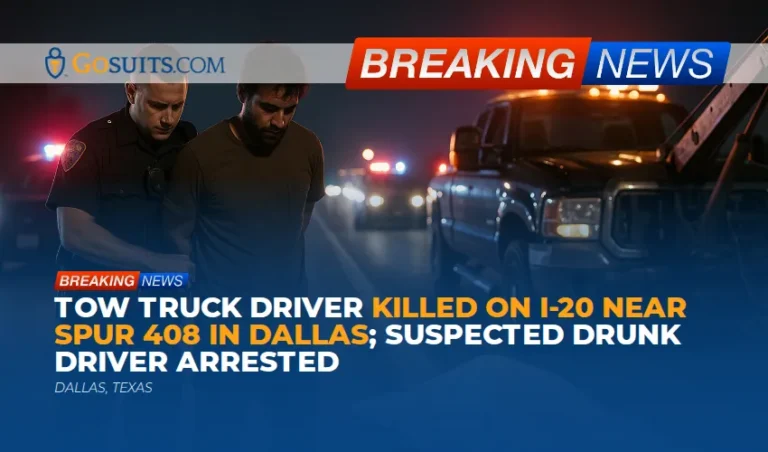
On Wednesday afternoon in Dallas, a tow truck driver who had pulled to the shoulder along Interstate 20 to fix a tire was struck by an SUV and later died at the hospital. The collision occurred near Spur 408 by Mountain Creek Parkway, a stretch of I-20 that funnels traffic between Duncanville and the Mountain Creek area of southwest Dallas. A witness who had come to assist described an SUV veering toward them just before impact. The Dallas Police Department stated that the driver of the SUV was arrested on suspicion of intoxication manslaughter after allegedly failing a field sobriety test and admitting to drinking earlier that day. This loss is felt deeply in the Mountain Creek community, where many residents commute across I-20 daily to reach the Dallas Baptist University area, local warehouses, and industrial corridors that line the highway.
Where and When the Collision Occurred
The incident happened around 3:30 p.m. along I-20 close to the Spur 408 interchange and Mountain Creek Parkway. That junction sits west of Mountain Creek Lake, not far from Dallas Baptist University and the western edges of Kiest Park’s greenbelt. Afternoon traffic here is often heavy with commercial vehicles, and merging patterns near the spur can cause sudden lane shifts and congestion. The shoulder is narrow in places, which leaves limited room for roadside workers and stranded motorists to safely handle tire changes or loading operations during busy hours.
Local drivers know this stretch for quick changes in speed and visibility as the roadway rolls past the lake and rises toward the spur. When someone is on the shoulder, whether it is a wrecker operator or a Good Samaritan, they are relying on approaching drivers to pay attention, move over, and slow down. Texas law requires it. The Move Over or Slow Down statute mandates drivers either change lanes away from stopped vehicles displaying emergency or service lights or reduce speed significantly when a lane change is not safe [1].
Official Information Released So Far
According to Dallas Police, the tow operator had pulled over to address a flat tire when an SUV swerved toward the shoulder and struck him. He succumbed to his injuries shortly after arriving at the hospital. Officers arrested the SUV’s driver on suspicion of intoxication manslaughter, noting indicators of impairment and statements about prior alcohol use. An arrest affidavit reportedly referenced a failed sobriety assessment.
While criminal charges proceed through a separate court process, the civil implications focus on how and why the injury occurred, who bears responsibility under Texas negligence and roadway safety laws, and which insurance coverages may apply. Texas law recognizes intoxication manslaughter as a felony offense, which is a matter for the criminal court system [2]. In parallel, a civil wrongful death claim looks to compensate eligible family members for losses permitted by Texas statutes [3].

Why Roadside Workers Are at Risk in Dallas
Roadside work around Dallas is uniquely hazardous. Tow operators, roadside assistance workers, and even stranded drivers face multiple hazards at once: high traffic speeds, distracted driving, low shoulder widths, and limited sight distance near interchanges like Spur 408. National research shows tow truck workers experience a heightened rate of struck-by fatalities compared to many other occupations [10]. Broader transportation sector fatality data also highlight how dangerous roadway-adjacent jobs can be [11].
Impairment compounds these risks. NHTSA’s data consistently show that driving under the influence reduces reaction time, narrows field of vision, and impairs judgment, leading to deadly outcomes on high-speed corridors like I-20 [2]. Public health resources further underscore how even moderate blood alcohol concentration levels significantly raise crash risk and severity [12]. Texas’ Move Over or Slow Down law was designed to counter some of these dangers by creating space and time for roadside workers and emergency personnel [1].
Civil Law Context After a Fatal Highway Crash in Texas
In a civil case arising from a fatal crash, Texas law centers on whether a driver breached a duty of care and whether that breach caused the harm. Operating a vehicle while impaired violates multiple safety rules and often supports a theory of negligence under Texas law. When the tragedy leads to a death, two distinct civil claims may be available: a wrongful death action and a survival action. Each addresses different damages and beneficiaries.
Wrongful Death and Survival Actions
Texas recognizes a wrongful death cause of action that allows certain family members, typically a spouse, children, and parents, to recover for losses stemming from a loved one’s death caused by another’s wrongful act or negligence [3]. A separate survival action allows the estate to seek damages the decedent could have pursued had they survived, such as conscious pain and suffering before passing [3].
In tragic roadway fatalities, families often face hospital bills, funeral expenses, and the loss of companionship and support. Legal pathways exist, but they must be navigated carefully and within strict time limits. Generally, Texas imposes a two-year statute of limitations for wrongful death and survival claims, though there are exceptions in certain situations [9].
Potential Liability Theories
Several civil liability theories may be evaluated in a case like this:
- Negligence and Negligence Per Se: Evidence of impairment or failure to move over and slow down may support negligence claims. Violations of safety statutes can constitute negligence per se in appropriate circumstances [1][2].
- Dram Shop Liability: If an alcohol-serving business overserved a visibly intoxicated patron who later caused the crash, a claim under the Texas Dram Shop Act may be considered. These cases are fact intensive and require prompt evidence collection and investigation [8].
- Comparative Responsibility: Texas applies proportionate responsibility rules. Fault can be apportioned among multiple parties. How the crash unfolded, lighting, traffic flow, and the positions of vehicles on the shoulder all matter to this analysis.
Because legal and factual questions are intertwined, families often speak with trusted advisors to understand immediate steps. In many Dallas roadway tragedies, guidance from Dallas car accident lawyers can help protect evidence and clarify which insurance policies may apply.

What Evidence Matters and How Families Can Secure It
In a roadside fatality, evidence can disperse quickly if no one steps in to preserve it. Photographs of the scene, vehicle positions, tire marks, debris fields, and lighting conditions are central to reconstructing what happened. In urban corridors like I-20 and Spur 408, additional data sources may include dashcam video from passing vehicles, traffic cameras, nearby business surveillance, and telematics or event data recorder information from the involved vehicles.
- Police Crash Report and Supplements: The official Texas CR-3 crash report, officer narratives, diagrams, and any later supplements are foundational. In Texas, official crash reports can be purchased through the state’s CRIS system [6].
- Witness Information: Timely outreach to known witnesses preserves critical details. Written statements and contact information should be secured before memories fade.
- Vehicle Inspections: Prompt inspection preserves evidence of speed estimation, impact points, lighting, and damage patterns. Qualified reconstructionists can extract black box data when available.
- Medical Examiner and Hospital Records: Dallas County’s Institute of Forensic Sciences maintains autopsy and related records that may be requested by authorized parties [7]. Hospital charts document the nature and timing of injuries and interventions.
- Alcohol Service Records: In potential dram shop cases, point-of-sale receipts, surveillance video, and training logs at a bar or restaurant may be relevant. Legal tools like preservation letters are often used to prevent spoliation.
For a structured, paperwork-focused starting point, see the Dallas wrongful death checklist families. It lines up the kinds of documents people commonly gather, from official records to personal financial materials.
Families dealing with parallel criminal proceedings should also note that criminal case files typically become available only after key milestones. Civil counsel may coordinate with prosecutors to avoid conflicts and secure records once releasable.
How to Obtain Key Records in Dallas County
Accessing official records can feel complicated during a time of grief. Here is where they typically live in Dallas County and across Texas, along with notes about timing and eligibility.
- Texas CR-3 Police Crash Report: Order the official report through the Texas Department of Transportation’s CRIS system once it is available. You will need basic crash details to search and purchase the report [6].
- Dallas Police Department Records: Certain supplemental materials such as 911 incident logs, Computer Aided Dispatch entries, or body-worn camera metadata may be requested through public information processes when releasable. Processing times vary and some items are restricted during active investigations.
- Dallas County Institute of Forensic Sciences: Autopsy reports, death certificates, and toxicology may be requested by authorized next of kin or legal representatives. The Institute’s website provides request procedures and contact details [7].
- Hospital and EMS Records: Health records require appropriate authorizations. Hospital records document treatment chronology, while EMS prehospital care reports describe on-scene findings and times.
- Traffic and Highway Data: Road design, traffic volume, and speed data may be available from transportation agencies, which can inform reconstruction and hazard analysis.
It is common for different agencies to release records on different timelines. In addition, some sensitive items could be withheld or redacted under Texas law while a criminal case is active.
Insurance Landscape After a Suspected Drunk Driving Crash
Texas auto policies generally start with the at-fault driver’s bodily injury liability coverage. State minimum liability limits are relatively low, which can be quickly exceeded in severe injury or fatality claims. The Texas Department of Insurance publishes consumer guidance on coverages that may supplement or protect families, including Personal Injury Protection, Medical Payments, and Uninsured or Underinsured Motorist coverage [5].
When a family faces catastrophic harm, multiple insurance layers may be at play: the at-fault driver’s liability policy, any employer coverage if a driver was on the job, and the decedent’s own UM or UIM coverage if the at-fault policy is inadequate. Communication with insurers must be careful and consistent. Statements to an insurer can be used later, and recorded calls may shape the claim’s trajectory. Speaking with car accident lawyers before engaging with insurance adjusters helps protect rights, clarify coverage priorities, and plan evidence collection.
Claims potentially expand if a licensed alcohol provider negligently overserved an intoxicated patron who then caused the crash. Those claims proceed under the Texas Dram Shop Act and require prompt, focused investigation because video, receipts, and witness availability are time sensitive [8].
Finally, parallel criminal charges do not automatically resolve civil questions. Civil liability, damages, and insurance coverage are evaluated under different rules, and the civil timeline can be shorter than the criminal one. Experienced guidance from Dallas car accident lawyers can help keep deadlines on track and prevent critical evidence from going missing.
Community Safety Notes for I-20, Spur 408, and Mountain Creek
Anyone who drives I-20 near Mountain Creek Parkway knows how quickly traffic can compress as lanes shift near Spur 408. Even on clear days, rolling grades and frequent lane changes amplify risks for those on the shoulder. The following reminders matter across southwest Dallas, from the Mountain Creek Lake bridges to the western edges of Kiest Park.
- Move Over or Slow Down: If you see flashing lights from a tow truck, police cruiser, fire truck, or TxDOT service vehicle, change lanes away from the scene. If a safe lane change is not possible, slow substantially as required by Texas law [1].
- Expect the Unexpected: Near interchanges like Spur 408, vehicles enter and exit quickly. Scan far ahead, reduce distractions, and anticipate sudden stops.
- Protect Space for Roadside Workers: Create a buffer by easing off the accelerator and leaving the shoulder clear. Even at low speeds, a glancing strike can be fatal.
- Night and Low-Light Conditions: Dusk and dawn glare near Mountain Creek Lake can reduce visibility. Headlights, hazard flashers, and high-visibility apparel are vital for anyone outside a vehicle.
- Call for Help Early: If a vehicle becomes disabled, use hazard lights immediately, pull as far onto the shoulder as possible, and consider calling roadside assistance rather than attempting high-risk repairs on a narrow shoulder.
Next Steps: Why Prompt Action Matters
Major crash cases are time sensitive. Key records and physical evidence can fade or be lost if not addressed quickly, and legal deadlines are strict. Here is why acting promptly can change outcomes later.
- Preserve Critical Evidence: Vehicle inspections, black box downloads, nearby camera footage, and on-scene measurements are all more reliable the sooner they are obtained.
- Control the Insurance Narrative: Insurance carriers may reach out for statements early. Without preparation, these conversations can narrow or confuse the scope of a claim. It is safer to understand rights and obligations before giving recorded statements.
- Meet Deadlines: Texas civil claims, including wrongful death and survival actions, generally must be filed within two years, and some notice requirements can be even shorter depending on the parties involved [9].
- Coordinate With the Criminal Case: When a criminal investigation is ongoing, the timing of record releases and witness access can be affected. Coordinated planning helps maintain momentum on the civil side without disrupting the criminal proceedings.
- Clarify All Available Insurance: Early policy verification identifies all layers of coverage, including UM or UIM, and ensures timely notice to implicated insurers [5].
Before contacting an insurance company, it is prudent to first consult an attorney about rights and strategy. What is said in those early insurance conversations can be used later, and it is important to avoid misstatements or assumptions that limit recovery.

Commentary from Gosuits Dallas, Texas Personal Injury Attorney
Our hearts go out to the family, friends, and coworkers mourning this loss. Roadside workers keep Dallas moving, and they deserve protection on our highways. This overview is meant for general information and education only.
From what has been publicly reported, this looks like a preventable tragedy in which a driver allegedly failed to keep the roadway safe for a tow operator handling a tire on the shoulder. Texas’ Move Over or Slow Down rule exists precisely to guard against this kind of danger, and impairment on a high-speed corridor like I-20 can turn a small mistake into an irreversible loss.
In the aftermath of a fatal crash, insurance companies and corporations often act swiftly to protect their interests. Adjusters may call early, press for statements, or float quick offers before the full picture is known. Complexities like multiple policies, disputed liability, and overlapping criminal proceedings can disadvantage families without context. These dynamics are common, and they are one reason evidence preservation and careful communications are so important.
A confidential, no cost consultation can provide clarity about potential claims, timelines, and evidence preservation without any obligation. Understanding rights before speaking with insurers can prevent avoidable setbacks and ensure the civil process moves forward on the right track.
References
- Texas Transportation Code §545.157 Move Over or Slow Down – Texas Statutes
- Drunk Driving – National Highway Traffic Safety Administration
- Texas Civil Practice and Remedies Code Chapter 71 Wrongful Death – Texas Statutes
- Texas Penal Code §49.08 Intoxication Manslaughter – Texas Statutes
- Auto Insurance Consumer Guide – Texas Department of Insurance
- Texas Crash Records Information System (CRIS) – Texas Department of Transportation
- Dallas County Institute of Forensic Sciences – Dallas County
- Texas Alcoholic Beverage Code Chapter 2 Civil Liabilities (Dram Shop) – Texas Statutes
- Texas Civil Practice and Remedies Code §16.003 Statute of Limitations – Texas Statutes
- Tow Truck Workers Face Significant Dangers – CDC NIOSH Science Blog
- Census of Fatal Occupational Injuries – U.S. Bureau of Labor Statistics
- Impaired Driving: Get the Facts – Centers for Disease Control and Prevention