- What this statewide ranking means for riders and families in our community
- What happened and what the study reported, plus the verified public data behind it
- Why nighttime motorcycle speeding crashes are so deadly
- Local context around Texarkana and East Texas roads after dark
- Where families can obtain official records in Texas
- Liability, insurance, and time limits under Texas law
- Practical steps to preserve evidence after a Texas motorcycle crash
- Safety responses that reduce deadly nighttime motorcycle crashes
- How to view Texas and national crash data yourself
- Commentary from Gosuits Texas Personal Injury Attorney
- Why acting quickly matters in Texas motorcycle collision cases
What this statewide ranking means for riders and families in our community
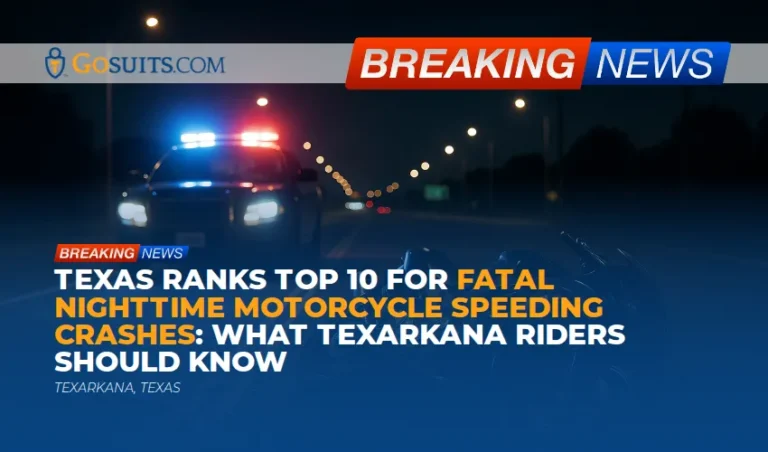
New coverage shared with our community reports that Texas ranks among the top 10 U.S. states for fatal nighttime motorcycle speeding crashes. That headline is sobering, and it hits close to home. For people riding I-30 between Texarkana and Dallas after work, crossing State Line Avenue for a late meal, or heading back from Wright Patman Lake at dusk, the combination of darkness and speed can turn a short ride into a life-altering event. Families across Bowie County and neighboring Cass and Red River counties know how quickly an evening drive can change forever.
This article is meant to help local residents understand the risk, find trustworthy public data, and know where to get essential records if a loved one is hurt or killed. It also offers practical, Texas-specific steps to protect evidence and navigate insurance after a Texas motorcycle accident at night. Where possible, we reference reliable government sources so you have clear, verifiable information.
What happened and what the study reported, plus the verified public data behind it
According to a media report, a private study analyzed federal data from 2019 to 2023 and concluded that Texas has the seventh-highest fatality rate for nighttime motorcycle speeding crashes, estimating an average of more than 700 fatal incidents per year statewide during that period. The reported worst year was 2022, and the lowest in the period was 2019. While that analysis was compiled by a private firm, the underlying numbers come from the National Highway Traffic Safety Administration’s public database.
You can explore the federal crash database directly using NHTSA’s query tool, which aggregates police-reported fatal crash data and allows searches by state, time of day, crash factors like speed, and more. That system is available here: NHTSA Fatality Analysis Reporting System query. Federal safety analyses consistently warn that speed, darkness, and limited conspicuity increase the risk of a deadly outcome for motorcycle riders and their passengers. See NHTSA’s program page on motorcycles for general information and safety strategies: NHTSA Motorcycles. NHTSA also highlights the role of speeding in crash severity: NHTSA Speeding.
It is important to separate two things. First, the private statistical ranking is an interpretation. Second, the base data it relies on is publicly available federal data. If you want to see Texas-specific counts or trends, you can confirm them yourself using the NHTSA tool above and the Texas Department of Transportation’s Crash Records systems described later in this article.
Why nighttime motorcycle speeding crashes are so deadly
Speed and darkness form a dangerous combination for every road user, and the risks for riders are acute. Here is why nighttime motorcycle speeding crashes in Texas are often severe or fatal:
- Reduced sight distance. Headlights shorten the visible horizon. At higher speeds, riders need more distance to perceive a hazard, decide, and brake. That gap tightens dramatically at night.
- Conspicuity problems. Motorcycles have a smaller lighting signature than passenger vehicles. Drivers often misjudge an approaching bike’s speed and distance after dark. Reflective surfaces, auxiliary lighting, and high-visibility apparel help, but they cannot fully offset a driver’s lapse or glare from oncoming traffic.
- Roadway hazards that are hard to see. Gravel at the edge of FM roads, wildlife crossing near treelines, and debris from prior crashes are more difficult to detect in low light.
- Fatigue and impairment. Evening and late-night hours are associated with fatigue and higher rates of alcohol involvement across all road users in national data sets. NHTSA’s public pages address the roles of impairment and speeding in fatal crashes across the country.
- Inadequate or inconsistent lighting. Rural stretches in East Texas may have limited fixed lighting. Pockets of darkness on curves or near county lines can catch riders off guard.
These factors come together quickly. A rider traveling the speed limit on US 82 or US 67 might still have only seconds to respond to a truck entering from a side road if the truck’s driver misjudges a bike’s approach. Add speeding, and that reaction window can disappear.
Local context around Texarkana and East Texas roads after dark
Local residents know the character of our roads. The I-30 corridor between Texarkana and the Dallas area invites higher speeds and close quarters with heavy vehicles. State Line Avenue blends Texas and Arkansas traffic patterns. Two-lane connectors like FM 559 and rural cut-throughs toward New Boston or DeKalb can be scenic in daylight but feel unforgiving at night. Seasonal traffic for football games, the Four States Fairgrounds, and holiday shopping intensifies congestion and frustration on evenings and weekends.
Wildlife crossings spike in fall. Fog patches can form over low-lying areas near the Sulphur River and Wright Patman Lake. Construction zones shift lane markings just enough to complicate a rider’s line through a curve. Anyone who has ridden long enough has a story. Unfortunately, some families are left with a loss that statistics can never express.

Where families can obtain official records in Texas
After a serious or fatal Texas motorcycle crash, official records matter. They preserve facts and help families with insurance, benefits, and potential civil claims. Here are the primary sources and how to access them.
Police crash report
In Texas, the official crash report is typically obtained through the Texas Department of Transportation’s Crash Records Information System. You can purchase eligible reports online. The statewide portal is the best starting point: TxDOT CRIS Public Portal. If you do not see the report, contact the investigating agency’s records unit, such as the Texarkana, Texas Police Department, Bowie County Sheriff’s Office, or the Texas Department of Public Safety Highway Patrol. Have the date, time, location, and names of involved parties ready.
Autopsy, inquest, and coroner records
Texas uses a mix of medical examiner systems and justice of the peace inquests depending on the county. In counties without a medical examiner’s office, a justice of the peace conducts inquests into certain deaths. The law governing inquests is found in the Texas Code of Criminal Procedure Chapter 49. You can read the statute here: Texas CCP Chapter 49. Families should contact the county medical examiner office if one exists, or the Justice of the Peace office in the county where the death occurred, to ask about the status of the report and how to request copies. Some materials may be restricted or partially redacted by law.
Death certificates
Certified death certificates are issued by the Texas Department of State Health Services Vital Statistics Section. Instructions and eligibility requirements are here: Texas DSHS Vital Records. Funeral homes often help initiate the process. Keep in mind that insurers and certain benefits administrators will require certified copies.

911 audio, CAD logs, and body camera video
Some families request 911 audio or officer body camera footage to understand what happened. These fall under the Texas Public Information Act with various exceptions. The statute is here: Texas Government Code Chapter 552. Requests go to the specific agency that holds the records. If a case is still under investigation, releases may be delayed or limited by law.
Roadway maintenance and traffic control records
When a crash location raises questions about lighting, signage, speed limits, or pavement conditions, maintenance logs and traffic control plans can be important. In Texas, those records may be held by TxDOT for state highways or by city and county public works for local roads. The process, timelines, and exemptions vary. Consider speaking with a seasoned and skilled attorney about requesting these materials so they are preserved correctly.
Liability, insurance, and time limits under Texas law
Every Texas motorcycle crash is unique, but there are common civil issues that tend to arise in nighttime speeding cases.
- Comparative responsibility. Texas allocates fault among all involved parties. Even where speeding is reported, other drivers may share responsibility if they failed to yield, made an unsafe left turn, or did not keep a proper lookout. Roadway defects or uncontained animals on open-range roads can complicate fault assessments.
- Evidence of speed. Police crash reports, skid measurements, video, and event data from nearby vehicles or commercial fleets can become critical when speed is disputed. Many motorcycles lack traditional EDRs, so timely scene documentation and third-party video are vital.
- Insurance pathways. Typical recovery avenues include at-fault driver liability coverage, underinsured motorist coverage, med-pay, and potential claims involving commercial entities if a company vehicle or rideshare is involved. Policy language, exclusions, and notice requirements vary.
- Government liability. If a claim involves roadway maintenance or signals, additional hurdles apply under the Texas Tort Claims Act, including shorter notice deadlines and damage caps. The statute is here: Texas Civil Practice and Remedies Code Chapter 101.
- Civil statute of limitations. In many Texas injury and wrongful death cases, the general filing deadline is two years from the date of the incident, subject to exceptions. See Texas Civil Practice and Remedies Code Chapter 16. Specialized notice rules for claims against governmental units can run much sooner. Time matters.
If an insurance company calls quickly to take a recorded statement, consider pausing. What is said early on can be used later. It is generally wise to consult an attorney first, at no cost, to understand your rights before speaking with any insurer.
Practical steps to preserve evidence after a Texas motorcycle crash
When a crash happens at night, crucial details are easy to lose. Preserving evidence can make the difference in understanding fault and securing benefits or compensation through an insurance claim.
- Secure the motorcycle and gear. Do not authorize disposal or repairs. Store the motorcycle and protective equipment in a safe place. Photos of helmet damage, jacket tears, or scraped boots can be important.
- Save location and phone data. Screenshots of ride-tracking apps, phone location history, and smartwatch health metrics can corroborate speed, direction, and timing.
- Collect third-party video. Canvass nearby businesses, city traffic cameras, and residential doorbell cameras. Many systems overwrite footage within days. A preservation request should go out immediately.
- Obtain the police report and supplemental materials. Request the TxDOT crash report through the CRIS portal and ask the investigating agency if supplemental diagrams, photographs, or reconstruction files exist.
- Identify witnesses promptly. Nighttime scenes disperse quickly. Record names, phone numbers, and any details they recall about lighting, speed, or unsafe turns.
- Document the scene in comparable lighting. If safe, return to the location around the same hour to photograph sight lines, lighting, and any obstructed signs. Avoid trespassing or unsafe activities.
- Preserve medical and employment records. Keep discharge paperwork, imaging results, invoices, and communications related to time off work.
- Speak with an attorney before insurer calls. Insurance adjusters are trained to minimize exposure. A free consultation helps you understand what to say and, importantly, what not to say.
Safety responses that reduce deadly nighttime motorcycle crashes
Evidence-based countermeasures are available and have been studied by federal agencies. Communities like ours can reduce risk with layered strategies.
- Speed management. Targeted evening enforcement and temporary speed reductions in work zones reduce severe crashes. See NHTSA’s overview on speeding risks: NHTSA Speeding.
- Nighttime visibility. Better retroreflective signage, maintained pavement markings, and functioning roadway lighting improve detection distance. The Federal Highway Administration discusses nighttime visibility initiatives here: FHWA Nighttime Visibility.
- Motorcycle conspicuity. High-visibility gear, auxiliary lighting that complies with Texas law, and reflective decals increase a rider’s visual signature. NHTSA’s motorcycle safety page summarizes strategies: NHTSA Motorcycles.
- Roadside hazard control. Regular sweeping on curves prone to gravel accumulation, wildlife crossing signage in identified hot spots, and trimming vegetation near intersections deliver outsized benefits at night.
- Data-informed interventions. Using TxDOT and NHTSA data to map nighttime speed-related motorcycle crashes allows local leaders to focus resources on corridors that need them most.
How to view Texas and national crash data yourself
Two public systems are particularly useful.
- NHTSA Fatality Analysis Reporting System. The federal database allows you to filter fatal crash data by state, year, time of day, speeding, and motorcycle involvement. Access the query portal here: NHTSA FARS Query.
- TxDOT Crash Records. The State of Texas maintains crash records and offers a way for the public to purchase eligible crash reports online. The public portal is here: TxDOT CRIS Public Portal.
If you want to understand nighttime patterns where you ride in Bowie County or along the I-30 corridor, these tools are a strong start. The raw numbers can feel impersonal, but they can also drive changes that save lives on our local roads.
Commentary from Gosuits Texas Personal Injury Attorney
First, to every family touched by a nighttime motorcycle crash anywhere in Texas, our hearts are with you. Articles like this are shared for educational purposes and general information, not as a substitute for tailored guidance. When a loss happens after dark, the questions often outnumber the answers. We see the resilience of this community every day, from riders on State Line Avenue to neighbors commuting along I-30 before sunrise.
As to the reported ranking, we are not surprised that Texas appears high on a list tied to nighttime speeding. Our state has long stretches of high-speed corridors, pockets of limited lighting in rural areas, and seasonal traffic that swells on weekends. In our experience, a significant share of deadly outcomes involves compounded factors: speed, a driver’s misjudgment of a motorcycle’s approach, and a moment of low visibility where a left-turn gap or lane change is misread. That does not mean every case is the same. Nighttime crash reconstruction demands care, fast preservation of video, and attention to lighting, sight lines, and human factors.
Insurance companies and large corporations understand that early narratives set the tone. Adjusters often ask to record a statement quickly. They may suggest a fault conclusion before all video is collected or imply that speed alone ends the discussion. That is not how civil fault works in Texas. Multiple parties can share responsibility, and roadway conditions can matter. It is important to level the playing field before key evidence goes missing.
If a crash affected your household, a free consultation allows someone to review the facts, walk you through insurance options like underinsured motorist coverage, and outline deadlines without pressure. You do not have to navigate recorded statements, medical liens, or public records requests alone, and you should not feel rushed to speak with an insurer before you understand your rights.

Why acting quickly matters in Texas motorcycle collision cases
- Preservation of video and digital evidence. Corner-store cameras, interstate traffic systems, and home doorbells routinely overwrite footage within days. Acting promptly increases the chance that critical nighttime lighting and speed context is captured before it disappears.
- Accurate documentation of conditions. Lighting outages get fixed, potholes get patched, and construction zones move. Prompt photographs and measurements can lock in what the scene looked like on the night in question.
- Timely retrieval of official records. Police crash reports, autopsy findings, and roadway maintenance logs can take time to obtain. Initiating the process early avoids downstream delays with insurance or benefits claims.
- Careful preparation before insurer contact. Recorded statements taken too soon can create problems later. Before engaging with any insurance company, first speak with an attorney for a free consultation to understand what to say and what to avoid. Early misstatements about speed or visibility can be difficult to correct.
- Meeting deadlines under Texas law. Texas civil claims are subject to strict time limits, and specialized notice requirements may apply in cases involving governmental entities. Early action helps protect the ability to bring a claim if that becomes necessary.
- Relieving administrative burdens. Medical bills, funeral costs, and lost income documentation pile up quickly. Organizing records from the start prevents mistakes and reduces stress on households already under strain.
Here is what to do next in a general sense: secure the motorcycle and safety gear, list potential video sources, request the TxDOT crash report through the CRIS portal, note the agency case number for follow up, and schedule a no-cost meeting with a qualified attorney before any insurance statement. Taking these steps early can protect evidence, keep options open, and bring clarity when it is needed most.
Reliable public sources cited
- National Highway Traffic Safety Administration FARS Query
- NHTSA Motorcycles Road Safety
- NHTSA on Speeding
- Federal Highway Administration Nighttime Visibility
- TxDOT Crash Records Information System Public Portal
- Texas DSHS Vital Records for Death Certificates
- Texas Code of Criminal Procedure Chapter 49 Inquests
- Texas Civil Practice and Remedies Code Chapter 101 Tort Claims Act
- Texas Civil Practice and Remedies Code Chapter 16 Limitations
- Texas Government Code Chapter 552 Public Information Act