- What we know about the Temecula crash on Margarita Road
- Local context on Margarita Road, traffic flow, and lighting
- What investigators look for and how evidence is preserved
- Who to call for help: police report, coroner, and crucial records
- Your rights after a fatal single-vehicle crash in California
- Potential civil liability issues to watch
- Insurance paths that may apply
- Downed power lines at a crash scene: safety notes for our community
- Steps to preserve time-sensitive evidence
- Community safety reminders for Temecula teens and parents
- Before you talk to any insurance company
- Why timely action matters in the next 7 to 14 days
- References
- Commentary from Gosuits Temecula, California Personal Injury Attorney
What we know about the Temecula crash on Margarita Road
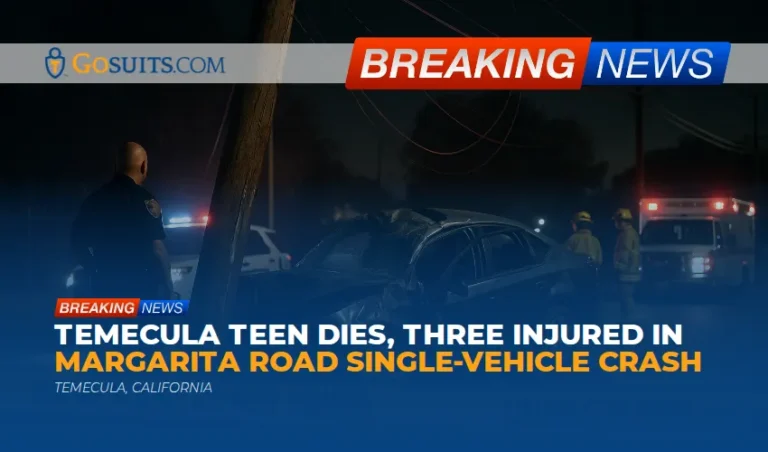
Late Thursday evening in Temecula, a single-vehicle collision on Margarita Road near Pio Pico Road led to the tragic death of a 16-year-old boy and sent three other passengers to a nearby hospital in stable condition, according to officials on scene. The Riverside County Sheriff’s Department Coroner’s Bureau identified the teen as Landen Ried, 16, of Temecula, after next-of-kin notifications. The crash prompted an extended road closure on Margarita Road between Jedediah Smith Road and Pico Road while authorities documented the scene and utility crews addressed damage to a split power or telephone pole and low-hanging lines.
Initial statements from law enforcement noted the vehicle appeared to be traveling at a high rate of speed before the driver lost control for reasons still under investigation. Witness accounts described significant damage to the pole and wires sagging 8 to 10 feet over the roadway, with community members stepping in to keep other drivers away from the wreckage until first responders arrived. Any mention of alcohol involvement remains unconfirmed at this time. As of the latest update, the identity of the driver has not been publicly released pending notification of next of kin. Our thoughts are with the Ried family and every family involved as the investigation continues.
Local context on Margarita Road, traffic flow, and lighting
If you live in Temecula, you know Margarita Road serves as a major north-south connector running past neighborhoods, schools, and shopping areas, including the corridor north of SR-79 South/Temecula Parkway. Lighting and sight lines vary along this stretch, especially in transitions near Santiago Road and pockets where lane merges, driveways, or side streets like Pio Pico can add to driver workload at night. When the sun drops behind the western hills over the Santa Rosa Plateau, glare can quickly give way to darkness, and speeds that feel fine in daylight can become risky after dusk.
Even before investigators pinpoint a cause, speed consistently shows up nationwide as a critical crash factor. Federal safety data has long associated speeding with increased crash frequency and severity, especially at night and for younger drivers who have less experience managing sudden hazards and limited visibility [1] [2]. California’s basic speed law requires drivers to travel at a speed that is reasonable and prudent for conditions, even if it is below the posted limit when roadway or environmental conditions warrant slower speeds [4].
What investigators look for and how evidence is preserved
Serious crash investigations typically analyze three major categories: the roadway, the vehicle, and the people involved. On Margarita Road, deputies and traffic investigators may examine skid marks or yaw marks, debris fields, the angle of impact with the pole, and roadway conditions. With a utility pole split and wires reported hanging low, agencies will coordinate with utility crews to safely access and document the scene.
On the vehicle side, investigators may retrieve Event Data Recorder information when available, sometimes called the vehicle’s “black box.” Depending on the make and model, EDRs can record pre-crash speed, throttle, braking, and seat belt status. Federal guidance provides technical frameworks for these recorders and how they store crash-related data [12].
For the people aspects, statements from occupants and witnesses are collected, along with any surveillance or nearby traffic camera footage that may exist. Toxicology results for involved drivers can take weeks. In fatal cases, the coroner’s findings, including cause and manner of death and any available toxicology, become important documents for families to understand what happened, and for insurance and civil claims teams evaluating liability.

Who to call for help: police report, coroner, and crucial records
Families often need guidance on which agencies hold which records. Here are common contact points and what to request. Because each office updates phone numbers and hours periodically, it is best to confirm current details on official government websites or by calling main county or city information lines before visiting.
- Riverside County Sheriff’s Southwest Station, serving Temecula: Ask about the traffic collision report number, report availability timeline, and how to request a copy. If multiple agencies responded, ask whether the primary report will be produced by the Sheriff’s station or a partner agency. Bring valid ID and case details. For online request options, verify through official county sites.
- Riverside County Sheriff’s Coroner’s Bureau: Inquire about the decedent’s case number, next steps for release, and how to request the coroner’s report and, if available, toxicology. Note that coroner reports can take several weeks or longer to finalize. The Coroner’s Bureau typically provides guidance on death certificates and coordination with funeral homes.
- California Department of Motor Vehicles: If any party needs to report the crash to the DMV using an SR-1 Crash Report, the DMV provides guidance on who must file and within what timeframe when there is any injury, death, or property damage meeting state thresholds [10].
- Utility company for downed lines or pole damage: If your vehicle or property was damaged due to secondary effects from the crash or utility repairs, ask how to initiate a property damage claim. If you encounter downed or sagging lines following a crash, call 911 and the utility’s emergency line. Do not approach.
Even if you are still waiting on the official report, you can start documenting what you remember, collecting medical records for injured passengers, and saving receipts for transportation, medications, and counseling. That paper trail often matters later.
Your rights after a fatal single-vehicle crash in California
In California, the family of a person who dies because of another’s wrongful act or neglect may bring a wrongful death action under the Code of Civil Procedure [5]. A separate but related survival action can allow the decedent’s estate to pursue certain claims the decedent could have brought if they had lived, such as conscious pain and suffering in specific circumstances or property damage, subject to statutory limits [6].
When a teen is a passenger, legal claims may focus on the driver’s conduct. If the driver was under 18 and was driving with parental consent, California law can place limited liability on a parent or guardian who signed the driver’s license application [7]. Separately, the registered owner of a vehicle can face permissive-use liability for a driver’s negligence even when the owner was not present [8]. These statutory routes complement the broader negligence framework and may affect available insurance coverage.
For families exploring next steps, it can help to read plain-language overviews like our guide on what happens if someone is killed in a car accident. It explains documents to expect, timelines to anticipate, and the general flow of civil claims after a fatal crash.
Potential civil liability issues to watch
Every collision is different, but several civil liability questions commonly arise in single-vehicle crashes with multiple occupants:
- Driver negligence: Was the driver traveling at an unsafe speed for conditions, distracted, or otherwise careless in a way that caused the crash? California’s basic speed law applies even when a driver is below the posted limit if conditions require more caution [4].
- Vehicle owner liability: If the driver was not the owner, did the owner give permission? If so, California’s permissive-use law can impose limited financial responsibility on the owner for the driver’s negligence [8].
- Parent or guardian responsibility for minor drivers: If the driver was a minor operating with parental consent, separate statutory liability may apply to the signer of the minor’s license application [7].
- Alcohol-related liability: California generally limits liability for those who furnish alcohol. However, there is an exception that can create civil liability for providing alcohol to an obviously intoxicated minor [9]. Any such claim is fact intensive and depends on verified evidence.
- Hazard contributions: If roadway design defects, inadequate lighting, or other environmental factors contributed, claims against public entities follow strict notice and timing rules. These require early investigation to preserve rights, as government-entity claims are subject to special deadlines and immunities. Families should not delay in getting legal guidance when a potential government defendant may be involved.
Conversations about civil liability are hard in the immediate aftermath, especially in a close-knit area like Temecula where families share schools, teams, and churches. Still, evaluating these questions early is often necessary to protect long-term rights.
Insurance paths that may apply
Passengers or their families typically look first to the driver’s auto liability policy. If that coverage is limited or multiple injured passengers are making claims, uninsured or underinsured motorist coverage may be available through the policy covering the vehicle or through a household policy of an injured passenger. Policy language matters, and coordination among insurers can be complex.
It is common for insurers to ask for recorded statements soon after a crash. Before you speak with any insurer, consider consulting a lawyer so you understand your rights and the scope of your coverage. Many people do not realize that what they say in an early call can be used to limit or dispute their claim later. Seasoned wrongful death attorneys can also explain how wrongful death and survival statutes interact with available insurance limits in California [5] [6].
In serious collisions, families often look for guidance from car accident lawyers on evidence preservation, policy-limit requests, and coordinating medical and counseling records. The law allows civil recovery for a range of losses, and understanding all potential coverage paths can make a real difference during a difficult time.
Downed power lines at a crash scene: safety notes for our community
Witnesses reported wires sagging over Margarita Road after the impact. If you ever approach a crash scene with downed or low-sagging lines, assume they are energized. Keep your distance, warn others away, and call 911. Do not attempt rescue if doing so requires passing under or near wires. If a live wire contacts a vehicle you are in, stay inside if possible until responders confirm it is safe to exit. State agencies provide consumer guidance on electrical hazards and power outage safety planning that is worth reviewing before an emergency [11].
Steps to preserve time-sensitive evidence
Important evidence can disappear within days. Here are practical steps that families, friends, or trusted supporters can take:
- Secure photos and videos: Collect what you or others recorded at the scene, including the position of the vehicle, damage patterns, and any visible debris or roadway markings. Save originals in a secure folder with the date and time.
- Identify cameras: Note any homes, small businesses, or city intersections near Margarita Road and Pio Pico that might have captured pre- or post-impact footage. Camera systems often overwrite within 24 to 72 hours, so prompt requests matter.
- Document medical care: Save ER discharge papers, imaging reports, follow-up referrals, and receipts for prescriptions, mobility aids, or therapy. Maintain a journal of symptoms and emotional impacts for injured passengers.
- Vehicle data: Ask about preserving the vehicle in its post-crash state until a qualified inspector or engineer can review it. If the car is towed to a yard, make sure you know the location and any storage deadlines so crucial parts are not discarded.
- Emergency communications: If available, request 911 audio or CAD logs that may capture timing, witness notes, and first-responder observations. This often requires a public records request to the appropriate agency.
Community safety reminders for Temecula teens and parents
In Temecula, many teen drivers navigate routes like Temecula Parkway, Winchester Road, and Margarita after practices at Birdsall Sports Park or late evenings at the Promenade. Night driving and peer passengers are known risk multipliers for teens statewide. Public health research shows crash risk rises with each additional teen passenger and is higher at night while young drivers are gaining experience [2] [3]. California has provisional licensing restrictions that limit nighttime driving and carrying teen passengers during the first year of licensure, with specific exceptions. Families can review these rules and recommended safety practices through the DMV’s teen driver resources [3] [10].
And because speed is a consistent factor in severe outcomes, especially after dark, please share reminders about easing off the accelerator on long straight stretches of Margarita and similar corridors. National guidance continues to tie speeding to a higher likelihood of fatal and severe injury crashes [1].
Before you talk to any insurance company
After a catastrophic crash, insurers often reach out quickly. Before making any recorded statement or signing anything, speak with an attorney first to understand your rights. What you say to an insurer can be used against you later, even if you are doing your best to be accurate under stress. For families in mourning, this step is especially important.
In complex fatal collisions, people often look for guidance from Temecula car accident lawyers on how to channel communications, keep timelines on track, and avoid unintentional missteps that can affect insurance evaluations.
Why timely action matters in the next 7 to 14 days
Here is why early, focused action often makes a difference:
- Evidence fades: Camera systems auto-overwrite. Towing yards move vehicles. Roadway markings wash away. Acting now helps preserve the factual record.
- Medical documentation: Early and consistent care for injured passengers builds a reliable picture of injuries and recovery needs. Gaps in treatment can be misunderstood later.
- Coordination with agencies: Police and coroner timelines move quickly. Getting your requests in early helps ensure you receive key documents when released.
- Insurance notifications: There are prompt-notice requirements in most policies. Coordinating this correctly can help avoid coverage disputes down the road.
- Potential government claims: If any public entity issues could be in play, specialized deadlines may apply. Missing them can prevent a claim from being heard at all.
Many in our community step in to help during heartbreak. Assign someone you trust to begin gathering paperwork, keeping a calendar for deadlines, and organizing communications. Thoughtful organization now can reduce stress later.
For families evaluating legal options, conversations with Temecula wrongful death attorneys can clarify how California’s wrongful death and survival frameworks work, what timelines apply, and how insurance coverage integrates with those claims [5] [6]. Others may find it helpful to read plain-language explainers and checklists to get oriented before making decisions.
References
- Speeding – National Highway Traffic Safety Administration
- Teen Drivers – Centers for Disease Control and Prevention
- Teen Drivers – California Office of Traffic Safety
- California Vehicle Code § 22350 Basic Speed Law – California Legislature
- California Code of Civil Procedure § 377.60 Wrongful Death – California Legislature
- California Code of Civil Procedure § 377.30 Survival Actions – California Legislature
- California Vehicle Code § 17707 Liability of Person Signing Minor’s License – California Legislature
- California Vehicle Code § 17150 Owner’s Liability for Permissive Use – California Legislature
- Business and Professions Code § 25602.1 Furnishing Alcohol to an Obviously Intoxicated Minor – California Legislature
- Accident Reporting Requirements – California DMV
- Power Outages Safety Tips – California Governor’s Office of Emergency Services
- Event Data Recorder (EDR) – National Highway Traffic Safety Administration
Commentary from Gosuits Temecula, California Personal Injury Attorney
First, to every family affected by the crash on Margarita Road, we are deeply sorry for your loss and for the injuries that followed. This article is meant to provide general information and education for the community. Grief and uncertainty are overwhelming, and we hold your families in our thoughts.
Based on publicly available details, investigators noted speed as a likely factor. With a single vehicle, multiple teen passengers, and a nighttime collision with a pole, the civil analysis will focus on whether the driver operated the car in a reasonably safe manner for the conditions and whether any other influences or environmental factors contributed. While witnesses have shared observations and concerns, official conclusions will depend on the completed investigation, physical evidence, and any coroner and toxicology findings.
From our vantage point, insurance carriers and large corporations often move fast to manage risk after a serious crash. They collect statements early, frame the narrative, and may push for quick resolutions that can underestimate the long-term effects on a family. People in shock are vulnerable to accepting narrow explanations or incomplete information about coverage and legal timelines. A measured approach helps level the playing field.
Free consultations serve an important role in moments like this. They give families space to ask questions, understand wrongful death and survival frameworks in California, and get clarity on next steps before speaking with any insurer. You deserve accurate information about evidence preservation, potential liability, and coverage options without pressure or promises. When you are ready, reach out for guidance that prioritizes your family’s needs and protects your rights while the facts are still developing.