- What We Know About the Two-Vehicle Collision on Rancho California Road
- Timeline and Location Details in Temecula
- Agencies Responding and How Investigations Typically Proceed in Riverside County
- Injury Considerations for Adults and Children After a Crash
- Where and How to Obtain Official Records in Riverside County
- Insurance and Liability Basics Under California Law
- Steps to Protect Your Rights After a Temecula Car Crash
- Community Safety Notes for Rancho California Road and Wine Country Corridors
- How Minors’ Claims Work in California After a Car Crash
- Medical Follow-Up and Documentation After the Collision
- Why Acting Now Matters
- References
- Commentary from Gosuits Temecula, California Personal Injury Attorney
What We Know About the Two-Vehicle Collision on Rancho California Road
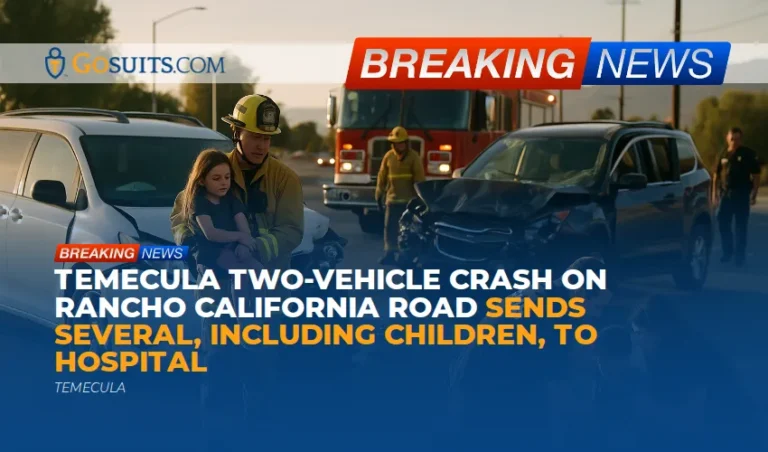
Just before Easter weekend, a two-vehicle collision was reported on the 28000 block of Rancho California Road in Temecula. According to a statement provided to media by the Riverside County Sheriff’s Department, deputies were dispatched at approximately 5:44 p.m. on April 2, 2026. When they arrived, they found two vehicles with collision damage and all occupants were medically evaluated at the scene. Several people, including an adult and multiple children, were transported to area hospitals for further care. Authorities indicated the cause remains under investigation, and no arrests were made at the scene. Those are the currently available facts, and further official updates typically follow once investigators complete their work.
Rancho California Road is a familiar route for Temecula residents. It connects Old Town to the Temecula Valley Wine Country and sees steady weekday traffic, with heavier flows near the evening commute and around major holidays and special events. A Thursday early-evening crash in that corridor often affects local families heading home or out for dinner in Old Town or along the vineyards.
Timeline and Location Details in Temecula
Investigators placed the response time just before 6 p.m., on a weekday evening when traffic builds across Old Town, Pauba Road, and Rancho California Road toward the wineries. The 28000 block sits near mixed-use stretches that blend neighborhood access with out-of-town visitors who may be unfamiliar with local traffic patterns. At that hour, sun angle and glare can change rapidly in spring, and stop-and-go conditions can form unexpectedly when drivers are turning into neighborhood side streets or commercial driveways.
For community members hoping to understand the circumstances, official collision reconstructions typically consider factors like speed, right-of-way, line of sight, traffic controls, mechanical condition, seat belt and child restraint use, and whether any distraction or impairment evidence exists. Those findings are documented in the agency’s collision report and, in some cases, by follow-up technical investigations.
Agencies Responding and How Investigations Typically Proceed in Riverside County
Within the City of Temecula, law enforcement response is provided by the Riverside County Sheriff’s Department under a contract for local policing. Depending on the precise roadway and incident details, the California Highway Patrol may also respond or assist. Once first responders secure the scene and ensure medical transport where needed, the investigating agency documents vehicle positions, roadway evidence such as skid marks or debris fields, driver and witness statements, and any available video or photos. If injuries are involved, certain reporting requirements are triggered under the California Vehicle Code and state regulations, including driver obligations to report serious crashes to authorities and to the Department of Motor Vehicles under specific circumstances [1] [10].
If questions arise later about who had the right-of-way, visibility at the time of the crash, or how children were restrained, those are addressed through the investigation, applicable California traffic laws, and, where appropriate, expert accident reconstruction. Where injury claims are made, insurance adjusters will also conduct reviews, but their assessments are not the same as law enforcement findings and are not necessarily final in a civil liability context.
Injury Considerations for Adults and Children After a Crash
Even when everyone is conscious and talking at the scene, post-crash symptoms can evolve over hours or days. Head, neck, and back complaints may present later as inflammation increases. For children, it can be especially difficult to recognize subtle signs of concussion, abdominal injury, or seat belt-related bruising without a professional assessment. National research consistently shows that proper restraints and seat belts reduce the risk of serious injury and death for both adults and children, and child passenger safety guidelines stress age- and size-appropriate restraints in the back seat whenever possible [8] [9].
In practical terms, it is wise for families to document symptoms, follow discharge instructions, and attend recommended follow-up visits. Medical providers’ notes, imaging, and care plans become essential records later, especially if lingering injuries affect school attendance, sports, or work for parents. If specialists are recommended by the emergency department, maintaining consistent care helps both recovery and clarity on prognosis.

Where and How to Obtain Official Records in Riverside County
Police collision report
To obtain an official collision report, request it from the investigating agency. If the California Highway Patrol handled the scene, CHP provides a public process for requesting collision reports, including a form and identification requirements [2]. The CHP Temecula Area office page lists contact information and office location for in-person or mail requests [3]. If the Riverside County Sheriff’s Department investigated, requests are typically made through the Sheriff’s Records unit. Requestors should be prepared with the report number, date, time, location, and names of involved parties if known.
Medical records
For hospital or clinic records, families can request copies through the provider’s medical records department. Expect a HIPAA release form and, for minors, proof of parental authority or legal guardianship. Treating providers may also supply a summary of care or after-visit summary which should be saved for later use.
When the coroner is involved
In fatal incidents, the Riverside County Sheriff-Coroner’s Bureau manages decedent investigations and releases. Next of kin can request records through the coroner’s office once they are available. While that is not applicable to this reported Temecula collision as of the latest information, it is an important point for families navigating other serious roadway tragedies in the region.
Insurance and Liability Basics Under California Law
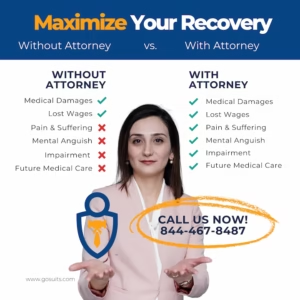
In California, civil liability after a crash is governed by negligence principles and comparative fault. That means fault can be shared among drivers, and compensation can be reduced by a person’s percentage of fault if any. California jury instructions spell out comparative fault in clear terms that courts and attorneys use to evaluate these cases [7]. Because adjusters often push early narratives based on limited facts, many people seek guidance from car accident lawyers before giving detailed recorded statements to any insurer.
Two practical timeframes matter. First, when an injury is involved, California law requires prompt police notification if no officer was present at the scene [10]. Second, most personal injury claims must be brought within two years of the crash under California’s statute of limitations [6]. There are shorter deadlines if a government entity is involved, and special procedures may apply in claims that involve public property or public employees.
California also now requires disclosure of auto liability policy limits upon a proper written request during the claims process, which can help families assess whether medical bills and other losses may exceed the at-fault driver’s insurance [4]. Insurers must handle claims fairly, and the California Department of Insurance publishes consumer-facing guidance explaining how auto claims should be processed and how to seek help if an insurer delays or mishandles a claim [5].
Steps to Protect Your Rights After a Temecula Car Crash
No two collisions are the same, but several steps commonly strengthen both health outcomes and any future claim. If you plan to open a claim, it is generally wise to consult an attorney before speaking in detail with insurance adjusters. What is said to the insurer can be used later to challenge liability or minimize injuries.
- Get and follow medical care. Complete recommended imaging, re-checks, and specialist referrals. Document symptoms daily for the first weeks. Keep all discharge instructions and prescriptions.
- Preserve evidence. Save photos, dashcam clips, and torn or bloodied clothing. If nearby businesses along Rancho California Road or Old Town may have cameras, request that they retain footage. California guidance exists on requesting video evidence from public sources in some contexts [11].
- Request the official report. Track the report number from the investigating agency and follow the steps for CHP or Sheriff’s Department records [2] [3].
- Be careful with insurer communications. Before giving a recorded statement or signing medical releases, consider discussing the request with counsel so you understand scope and consequences [5].
- Understand children’s needs. Pediatric follow-up is often recommended after crashes. Children may not describe certain pain or dizziness the way adults do, making primary care and concussion screening valuable.
For a practical, California-focused checklist of immediate steps after a crash, see What should you do immediately after a car crash in California.
Local families often look for guidance tailored to where they live. In that spirit, Temecula residents can consider speaking with Temecula car accident lawyers who understand traffic patterns near Old Town, Pauba Road, and the Wine Country corridors, including the frequent left-turn and driveway-entry conflicts that arise on Rancho California Road.
Community Safety Notes for Rancho California Road and Wine Country Corridors
As many neighbors know, Rancho California Road serves multiple purposes. It is a commuter route, a main street for local errands, and the gateway to Wine Country. That mix can create sudden slowdowns around driveway entrances, vantage-limited left turns near medians, and clusters of out-of-town visitors who are unfamiliar with Temecula’s turn pockets. During spring holiday weeks, traffic often increases on weekday evenings for family outings and pre-holiday errands.
Statewide crash data visualized by UC Berkeley’s Transportation Injury Mapping System shows how volume and intersection controls correlate with collision patterns across California communities, including Riverside County. Tools like TIMS help planners and residents understand where drivers should be extra cautious [12]. Locally, reviewing crash patterns can inform everyday driving decisions, such as avoiding sudden lane changes to reach a driveway, braking earlier near medians, and scanning for vehicles turning out of commercial lots in Old Town.
How Minors’ Claims Work in California After a Car Crash
When a child is injured in a crash, California courts provide specific protections for any settlement or judgment. A minor’s settlement typically requires court approval, often called a “compromise of a minor’s claim,” to ensure the funds are used for the child’s benefit and safeguarded until adulthood. California courts publish guidance on the process and required forms for these approvals [13]. That means injury claims for children can move on a slightly different track than adult cases, even when they arise from the same collision. The court may require a blocked account or structured annuity, and it can scrutinize medical bills and proposed attorney fees for reasonableness.
Because of those added steps, families benefit from early documentation of the child’s symptoms, school impacts, and any activity restrictions. Clear records can make the court approval process more straightforward and reduce the need for additional hearings. Comparative fault generally does not apply to very young children in the same way it does to adults, though facts always matter and courts apply established standards when evaluating responsibility [7].
Medical Follow-Up and Documentation After the Collision
Emergency departments in Southwest Riverside County regularly coordinate with primary care and specialists for post-crash care plans. After the initial evaluation, continuing with physical therapy, concussion re-checks, or imaging can feel like a burden, especially during a holiday week. But consistent care is often what distinguishes a fully documented recovery from an incomplete record that an insurer may later question. The California Department of Insurance encourages consumers to keep thorough records of medical bills, out-of-pocket costs, and communications with insurers during the claims process [5].
It is also important to verify whether all children involved were in age- and size-appropriate restraints at the time of the crash. If a seat was in use during a collision, families may be advised to replace it afterward. CHP offers child passenger safety resources, and California maintains specific laws on child seating and restraint requirements [8] [9]. Keeping purchase receipts and replacement recommendations can help with reimbursement discussions later.
Why Acting Now Matters
When a crash disrupts a family week in Temecula, it is understandable to put paperwork to the side. A few timely actions, however, can make a measurable difference.
- Preservation deadlines. Some video systems overwrite footage within days. Requesting preservation quickly can secure key evidence for later review [11].
- Statutory timelines. Legal time limits apply to injury claims, and shorter claim deadlines can apply if a public entity is involved [6]. Acting early helps identify all potentially responsible parties.
- Medical clarity. Early follow-up often produces clearer diagnoses and better treatment plans. That documentation can reduce unnecessary disputes with insurers about the cause of injuries.
- Insurance positioning. Early, unscripted statements to insurers can be misinterpreted or taken out of context. Understanding rights before engaging deeply with adjusters helps avoid common pitfalls [5].
What is the exact action to take now? Confirm everyone has appropriate medical follow-up, preserve photos and potential video, and secure the incident report as soon as it is available. Why now? Evidence and memories fade quickly, and several California rules impose short timelines for reporting and documentation. The immediate benefit is clarity: health needs can be prioritized, critical evidence protected, and any necessary claims positioned on solid ground instead of guesswork.
Request a free consultation Know your rights before speaking to insurance Secure the collision report and records
References
- File a Traffic Accident Report SR-1 – California DMV
- Requesting a Collision Report – California Highway Patrol
- Temecula Area Office – California Highway Patrol
- Code of Civil Procedure § 2017.210 – California Legislative Information
- Auto Insurance Claims Guide – California Department of Insurance
- Code of Civil Procedure § 335.1 – California Legislative Information
- CACI No. 405 Comparative Fault – Judicial Council of California
- Child Passenger Safety – National Highway Traffic Safety Administration
- Child Passenger Safety – California Highway Patrol
- Vehicle Code § 20008 – California Legislative Information
- Traffic Collision Reports and Public Records – California DMV
- Transportation Injury Mapping System – UC Berkeley SafeTREC
- Compromise of a Minor’s Claim – California Courts Self-Help
Commentary from Gosuits Temecula, California Personal Injury Attorney
First, our thoughts are with everyone affected by this crash, especially the children who were transported for care. Collisions that involve kids are frightening for families and unsettling for the wider Temecula community. This overview is for educational purposes and general information. It is not tailored to any single person’s situation.
Based on the public details, this was a two-vehicle collision on Rancho California Road with a timely response, on-scene evaluations, and hospital transports. The cause remains under investigation, which is exactly when preserving evidence and obtaining the official report becomes critical. In Temecula, driveway entries along Rancho California, changing light conditions, and mixed local-tourist traffic can all contribute to split-second mistakes. Determining what truly happened requires more than initial impressions. It takes a careful look at roadway design, vehicle damage, witness statements, and any available video.
In our experience, insurance companies and corporate claim departments often move fast to shape the narrative. They may request recorded statements before all injuries are known, rely on incomplete snippets of the report, or downplay subtle pediatric symptoms that surface days later. That imbalance in information can disadvantage families who are still juggling medical visits and school schedules. Knowing your rights from the start helps level the field. Simple steps like preserving photos, confirming medical follow-up, and waiting to sign broad medical releases until you understand their scope can prevent costly missteps.
It is also important to understand the low-visibility parts of the process. For example, California’s policy-limits disclosure rule can reveal whether the at-fault driver’s insurance is likely to cover the full scope of losses. Comparative fault principles can shift outcomes, especially on corridors like Rancho California Road where turn pockets, medians, and driveway movements create layered responsibilities. And for children, court approval is required for settlements, which protects their long-term interests and can influence how a claim is documented and resolved.
When questions arise about what to do next, a free consultation helps people understand the landscape before they speak extensively with insurers. No one has to guess. A clear, early plan can protect health, preserve rights, and set the record straight while the facts are still fresh.