- What We Know About the Mira Mesa Pedestrian Fatality
- Local Context: Camino Ruiz and Hydra Lane in Mira Mesa
- Why Nighttime Fog Complicates Driver and Pedestrian Safety
- Potential Civil Liability Questions After a Teen Pedestrian Death
- What Families Can Do Right Now: Reports, Records, and Where to Call
- Preserving Evidence Early (Even Before Insurance Calls Begin)
- Understanding Insurance in a Pedestrian Fatality
- Data Snapshot: Pedestrian Safety in California and the U.S.
- How Investigations Typically Unfold in San Diego
- Guidance on Respectful Communication With Insurers
- Why Acting Promptly Matters in Pedestrian Wrongful Death Cases
- Commentary from Gosuits San Diego, California Personal Injury Attorney
What We Know About the Mira Mesa Pedestrian Fatality
A boy, estimated to be about 15 years old, was struck and killed by a white 2020 Chevrolet Traverse SUV in Mira Mesa on Saturday night. According to the San Diego Police Department, the collision occurred around 11:10 p.m. at the intersection of Camino Ruiz and Hydra Lane. The vehicle was traveling northbound on Camino Ruiz. Officers noted that the area was foggy at the time, and it was unknown what direction the pedestrian was traveling when the impact occurred. The 40-year-old driver was not injured. Officers stated that driving under the influence is not suspected. The teen was pronounced deceased at the scene.
San Diegans familiar with the area know Camino Ruiz as a well-used corridor through Mira Mesa, with late-night local traffic even on weekends. Foggy nights are not unusual in December, as cooler inland temperatures draw in marine moisture. That combination can make visibility change suddenly between streetlights and darker residential segments. While those details provide context, investigators will ultimately rely on physical evidence, witness statements, and any available recordings to understand what happened in those minutes before 11:10 p.m.
The San Diego Police Department remains the primary point of contact for information about the investigation. The department’s official website is available at sandiego.gov/police.
Local Context: Camino Ruiz and Hydra Lane in Mira Mesa
Mira Mesa is a large residential neighborhood north of the SR-52 and west of I-15. Camino Ruiz runs north-south through the community and connects to neighborhood streets and pocket parks. Intersections along this corridor can vary in lighting and width, with some areas featuring marked crosswalks and others relying on curb ramps and neighborhood signage. Residents often use these streets to walk to nearby homes, visit friends, or reach amenities without driving.
At night, particularly close to midnight, traffic speeds can feel faster because fewer vehicles are on the road. In fog, the challenge is compounded: drivers may be navigating a dim field of view, and pedestrians may be less visible, even when wearing light clothing, due to water droplets scattering light. Road conditions, lighting, vehicle speed, headlight use, and pedestrian route choices all become part of the investigative picture.
Why Nighttime Fog Complicates Driver and Pedestrian Safety
Fog reduces contrast and depth perception. Even small lapses in attention or speed control can translate into critical stopping-distance problems. California’s Basic Speed Law requires drivers to adjust speed to account for weather and visibility conditions. The law prohibits driving at a speed greater than is reasonable or prudent given the weather, visibility, and traffic on the road. See California Vehicle Code section 22350, available from the Legislature at leginfo.legislature.ca.gov.
State rules also require that vehicles use proper headlamps during darkness; see Vehicle Code sections such as 24250 and 24400 via leginfo.legislature.ca.gov. For practical fog-driving guidance, the California DMV’s driver handbook advises using low-beam headlights in fog and reducing speed to match visibility and stopping distance. See the DMV’s handbook portal at dmv.ca.gov.
On the pedestrian side, national resources underscore the risk profile. The National Highway Traffic Safety Administration notes that pedestrian fatalities are more frequent in low-light conditions and at night, when visibility is compromised. See NHTSA’s pedestrian safety resource at nhtsa.gov. The Centers for Disease Control and Prevention similarly highlights the increased danger to pedestrians after dark and the importance of visibility and driver vigilance. See cdc.gov.
Potential Civil Liability Questions After a Teen Pedestrian Death
When a pedestrian is killed, families often ask a difficult but necessary question: who may be responsible under civil law? In California, a wrongful death claim can be brought by eligible family members defined by statute. See California Code of Civil Procedure section 377.60 at leginfo.legislature.ca.gov. The statute of limitations for a wrongful death claim is generally two years from the date of death in California, per Code of Civil Procedure section 335.1, also accessible at the Legislature’s site above. If any claim could involve a public entity (for example, if a roadway defect or traffic signal issue is alleged), a government claim generally must be presented within six months. See Government Code section 911.2 at leginfo.legislature.ca.gov.
Liability analysis is fact-intensive. Investigators and reconstruction experts typically look at, among other things:
- Vehicle speed relative to fog and darkness, including stopping distances and the Basic Speed Law’s reasonableness standard.
- Headlight use and visibility at the time of the crash, including whether low beams were used in fog as recommended by the DMV.
- Crosswalk presence and pedestrian path, including whether the teen was in a marked or unmarked crosswalk. California Vehicle Code section 21950 discusses drivers’ duties to yield to pedestrians in crosswalks, while also noting pedestrians must not suddenly leave a curb and step into the path of a vehicle—see the code link at leginfo.legislature.ca.gov.
- Driver reaction and line of sight based on lighting, roadway geometry, and any visual obstructions.
- Roadway lighting and signage conditions, such as streetlamp functionality, sign visibility, and pavement markings.
- Vehicle condition, including brakes, tire condition, and headlamps.
- Witness accounts and time-distance analysis to assess whether either party could have avoided the collision with reasonable care.
It is important not to speculate about fault. The San Diego Police Department’s Traffic Division will develop an evidence-based understanding of the crash. Civil liability, if any, is determined separately in the civil justice system and often hinges on a combination of the police investigation, independent analysis, and insurance evaluations.
What Families Can Do Right Now: Reports, Records, and Where to Call
It’s overwhelming to manage paperwork while grieving, but some steps help ensure accurate information and support the practical needs that follow a sudden loss.
- San Diego Police Department (SDPD) information. For updates about the investigation or how to request a collision report when it is available, start with the SDPD’s official site at sandiego.gov/police. Families can ask about the case number, the Traffic Division handling the investigation, and the expected timeline for report release.
- San Diego County Medical Examiner. The Medical Examiner determines cause and manner of death and maintains autopsy and investigative records. See the office’s site at sandiegocounty.gov/me for guidance on next-of-kin notifications, record requests, and support resources.
- Death certificates and vital records. Certified copies are typically obtained through the San Diego County Assessor/Recorder/County Clerk. Visit sandiegocounty.gov/arcc for procedures on ordering death certificates, which may be required for insurance and estate matters.
- City public records (if roadway information is needed). For streetlight maintenance logs, signal timing charts, or other city-held documents, a California Public Records Act request can be submitted through the City of San Diego’s portal: sandiego.gov/public-records.
Witnesses or community members with information are often encouraged to contact investigators directly. Crime Stoppers has shared a tip line number in public reporting for this incident: 888-580-8477. If you have details that could help, calling sooner rather than later helps preserve memories and accuracy.
Preserving Evidence Early (Even Before Insurance Calls Begin)
Key evidence can be lost quickly, especially in a neighborhood setting where security camera systems overwrite footage after only a few days. Consider these early steps:
- Identify potential cameras. Doorbell and driveway cameras along Camino Ruiz and nearby streets, as well as cameras on homes off Hydra Lane, may have captured vehicle movement before or after the crash.
- Request preservation. A written preservation request can be sent to the driver’s insurance carrier and (if applicable) the vehicle’s corporate owner, asking them to secure on-board data (event data recorder), photos, and adjuster notes. When in doubt, consult an attorney first to ensure the request is properly framed.
- Document the scene as soon as it is safe. Nighttime lighting conditions and fog can change day-to-day; photographs or video taken around the same time of night may be useful documentation when done safely and lawfully.
- Keep records organized. Save all emails, letters, and voicemails from the police, medical examiner, insurers, and any at-fault party representatives.
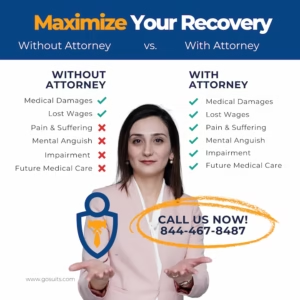
Insurance representatives may reach out early. Before speaking with any insurance company, it’s prudent to consult a qualified attorney to understand your rights and potential consequences. Statements made to insurers can be recorded and used later in ways that aren’t always obvious at the time of the call.
Understanding Insurance in a Pedestrian Fatality
Insurance coverage is complex in pedestrian cases. Each policy can have different limits, exclusions, and conditions. Common threads include:
- At-fault driver’s liability coverage. This is the primary source of compensation when a driver is found legally responsible. Insurers will closely examine fault, visibility, speed, and pedestrian positioning.
- Vehicle owner’s liability. If someone other than the driver owns the vehicle, the owner’s policy may be implicated depending on permissive use and policy language.
- Household uninsured/underinsured motorist coverage. Some families carry UM/UIM coverage that may apply to pedestrian incidents if the at-fault party’s insurance is not sufficient. Policy language controls.
- Potential public entity issues. If roadway design, lighting, or signal timing is credibly implicated, specialized notice rules under the Government Claims Act apply, with short deadlines. See Government Code section 911.2 at leginfo.legislature.ca.gov.
Before any formal insurance statement or recorded interview, consider speaking with a seasoned attorney. Insurers are trained to ask questions that can narrow or contest liability. What’s said in the early days—sometimes before full facts are known—can shape the claim later on.
Data Snapshot: Pedestrian Safety in California and the U.S.
Data can’t capture the human loss felt in Mira Mesa, but it helps make sense of risk factors.
- Nighttime risk. National data consistently show that most pedestrian fatalities occur in low-light conditions. NHTSA emphasizes nighttime visibility challenges and the role of speed and impairment in severe outcomes. See nhtsa.gov.
- Injury severity and vehicle type. Larger vehicles can increase the risk of severe injury to pedestrians due to mass and front-end geometry, especially at higher speeds. NHTSA’s safety analyses address these risk mechanisms, including the role of speed and vehicle characteristics in pedestrian harm. See nhtsa.gov.
- Public health perspective. The CDC outlines prevention strategies for communities, including improved lighting, traffic calming, and safe crossings, noting that pedestrian deaths remain a significant public health concern. See cdc.gov.
- Engineering and design solutions. The Federal Highway Administration promotes proven safety countermeasures like high-visibility crosswalks, pedestrian refuge islands, and roadway lighting improvements. See FHWA resources at highways.dot.gov.
Local agencies can use these frameworks when evaluating corridors like Camino Ruiz. If gaps are identified—whether lighting, signage, or crossing treatments—cities often consider traffic engineering reviews to improve safety.
How Investigations Typically Unfold in San Diego
After a fatal collision, several steps occur:
- Scene response. SDPD patrol and traffic officers secure the area, call medical aid, and begin preliminary measurements. The Medical Examiner may respond or coordinate transport.
- Evidence collection. Officers document vehicle damage, final rest positions, roadway marks, lighting, and weather. They’ll look for skid or yaw marks, headlight condition, and any debris path indicative of speed or trajectory.
- Witness canvassing. Officers will identify and interview witnesses. Tips from neighbors and passersby can be pivotal in visibility and timing disputes.
- Follow-up. Reconstruction may involve time-distance calculations, line-of-sight analysis, and data from the vehicle’s event data recorder if available.
- Report and review. A traffic collision report is compiled. Insurance carriers and, in some cases, independent investigators hired by families or insurers will undertake their own reviews.
Families are not required to accept any party’s initial theory of the crash. Independent analysis can be valuable, especially when visibility and lighting are central issues, as they are on foggy December nights in Mira Mesa.
Guidance on Respectful Communication With Insurers
Insurance adjusters may reach out soon after the incident—sometimes within days. It’s understandable to want to share everything you know. Still, consider the following:
- Consult an attorney first. Before giving a recorded statement or signing any documents, speak with an attorney about your rights and the possible implications. Early statements can be taken out of context later.
- Limit speculation. If you choose to speak, share only what you know firsthand. Don’t guess about speed, distance, or lighting if you didn’t observe it.
- Request copies. Ask for written confirmation of any offer, coverage position, or policy explanation. Keep everything organized.
- Be mindful of social media. Public posts can be discovered and misinterpreted. Caution helps protect privacy and the integrity of any claim.
Why Acting Promptly Matters in Pedestrian Wrongful Death Cases
There are specific, time-sensitive reasons to take steps quickly after a fatal pedestrian crash:
- Video overwrites fast. Home and business cameras often overwrite files within days. Prompt outreach can preserve crucial footage showing vehicle movement, lighting, or visibility.
- Public records have lead times. City lighting logs, sign maintenance records, and traffic studies take time to obtain through public-records requests. Early requests help ensure nothing is lost and that evaluation can begin sooner.
- Insurance investigations begin immediately. Carriers may form early impressions about liability. Timely input and careful documentation help ensure the full picture is considered.
- Statutes and notice deadlines apply. California’s general wrongful death statute of limitations is two years from the date of death, per Code of Civil Procedure section 335.1. If a claim could involve a public entity, a government claim typically must be presented within six months under Government Code section 911.2. Both are available at leginfo.legislature.ca.gov.
- Family needs and benefits. Death certificates, Medical Examiner records, and other documents are often required for funeral arrangements and benefits. Agencies have set processes; starting early prevents downstream delays. See the San Diego County Medical Examiner at sandiegocounty.gov/me and the County Assessor/Recorder/County Clerk at sandiegocounty.gov/arcc.
When insurance claims are involved, it’s advisable to consult with an attorney before speaking to insurers. Statements to insurance companies can be used against claimants later, and a brief consultation can clarify what to share and what to defer until more facts are known.

Commentary from Gosuits San Diego, California Personal Injury Attorney
Our hearts are with the Mira Mesa community and the family grieving a young life cut short. Nights like this leave a lasting ache on a neighborhood. The thoughts here are intended for educational purposes and general information, grounded in what’s publicly known.
From a civil perspective, fog and darkness raise difficult questions about speed, headlight use, pedestrian visibility, and roadway conditions. California law expects drivers to modulate speed for weather and visibility and to use proper lighting during darkness. Investigators will look closely at the northbound approach on Camino Ruiz, the intersection design at Hydra Lane, and any physical evidence of reaction or braking. At the same time, they’ll assess the pedestrian’s likely path and how visibility may have changed from one streetlight to the next.
Insurance carriers and corporate defendants often move quickly. They gather statements, shape narratives about visibility, and may emphasize uncertainty about a pedestrian’s direction of travel. In our experience, that early framing can affect claim decisions later on. Families who don’t work with this process regularly may not know what evidence to secure, how to request it, or how particular California Vehicle Code sections are applied in collision evaluations.
A free consultation can help people understand the process, timelines, and options before they speak to insurance companies. It’s not about promising outcomes; it’s about clarity. Knowing the difference between an initial claim position and a final liability determination, understanding how statutes and notice deadlines operate, and learning what to preserve today so it’s available tomorrow—those are practical, immediate benefits of early guidance for anyone navigating the aftermath of a tragedy like this one in Mira Mesa.
Sources and Government References
- San Diego Police Department
- San Diego County Medical Examiner
- San Diego County Assessor/Recorder/County Clerk
- City of San Diego Public Records
- California DMV Driver Handbook
- California Vehicle Code and California Codes (Legislature) (including VC 21950, 22350, 24250; CCP 335.1; CCP 377.60; Gov. Code 911.2)
- NHTSA: Pedestrian Safety
- FHWA: Pedestrian and Bicyclist Safety
- CDC: Pedestrian Safety