- What we know about the Seal Beach 405 Freeway DUI crash and the latest federal sentence
- Timeline of key events: 2021 crash to 2026 federal sentencing
- Official statements and community response in Orange County
- Civil law context: wrongful death claims after a DUI crash in California
- Who may have civil liability
- How insurance typically works after a fatal DUI crash on I-405
- Practical next steps: obtaining reports and records in Orange County
- Preserving evidence and protecting rights
- Data snapshot: impaired driving in California
- Common pitfalls when dealing with insurers
- Why taking action quickly matters
- Related reading
- Commentary from Gosuits Seal Beach, California Personal Injury Attorney
- References
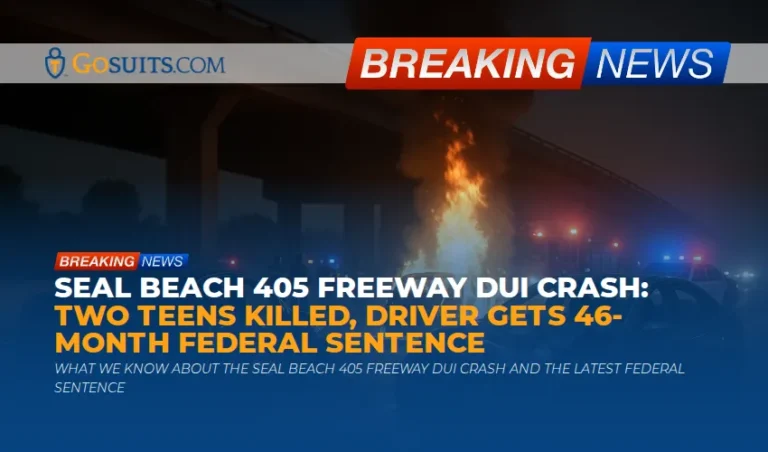
What we know about the Seal Beach 405 Freeway DUI crash and the latest federal sentence
Late on the night of November 13, 2021, a high speed crash on the southbound I-405 near Seal Beach Boulevard took the lives of two California teens, Anya Varfolomeev and Nicholay Osokin. According to reporting verified by knowledgeable sources, the driver of a Volkswagen, later identified as Oscar Eduardo Ortega Anguiano, was intoxicated when he plowed into a 2000 Honda carrying the teens. The collision sparked a fiery scene on one of Orange County’s busiest corridors, where traffic funnels between the Seal Beach Naval Weapons Station and the interchange that connects drivers toward the San Gabriel River Freeway and Long Beach.
In the years that followed, Ortega Anguiano pleaded guilty in state court to gross vehicular manslaughter with gross negligence and driving without a valid license. A judge imposed a 10 year term but, after custody and credit calculations, he was released early in 2025, prompting widespread criticism and renewed focus on how time credits are applied under California law. Federal authorities then pursued a separate case for illegal reentry after deportation, leading to a 46 month federal sentence imposed on January 23, 2026, at the Ronald Reagan Federal Building and U.S. Courthouse in Santa Ana. As reported, the court also imposed three years of supervised release, and Ortega Anguiano faces likely removal after completing his federal term.
All of this played out in a community that knows the 405 well, from commuters who pass the Old Town Seal Beach pier in the morning light to families traveling for school and youth sports across the OC corridor. The names, the place, and the timing matter here because they ground the legal and safety implications in our local reality.
Timeline of key events: 2021 crash to 2026 federal sentencing
November 13, 2021
Shortly before midnight, a Volkswagen driven by an intoxicated motorist collided at high speed with a Honda on southbound I-405 near Seal Beach Boulevard. Both teens in the Honda were killed.
State criminal case and sentencing
Ortega Anguiano pleaded guilty to gross vehicular manslaughter with gross negligence and to driving without a valid license. A state court judge imposed a sentence of 10 years and 10 days.
2025 early release and federal custody
News of Ortega Anguiano’s pending early release generated intense public reaction. After he left state custody, he was taken into federal custody on an existing federal indictment alleging illegal reentry after deportation.
January 23, 2026
At a hearing in Santa Ana, a federal judge imposed a 46 month sentence for illegal reentry, along with supervised release to follow. The defendant is expected to be deported after serving his federal term, according to statements referenced in court.

Official statements and community response in Orange County
Public officials and family members expressed strong, sometimes conflicting, views. Family members described a permanent grief and anger that intensified when they learned of the defendant’s immigration history. Local and state officials debated how California’s credit system and charging decisions intersected with the sentence actually served. Federal officials, for their part, referenced policy constraints and available tools to take custody upon release.
These statements underscore two themes that matter for civil justice. First, the criminal process focuses on punishment and public safety, not on making a family financially whole. Second, the outcome in criminal court rarely mirrors what must be proven in a civil wrongful death case, where the standard of proof, available damages, and timelines are different.
Civil law context: wrongful death claims after a DUI crash in California
When a family loses a loved one to an impaired driver, California law allows certain relatives to pursue a wrongful death claim. This civil claim is separate from any criminal case, even when the conduct is the same. In California, surviving spouses, domestic partners, children, and in some cases other heirs identified by statute can bring the claim, seeking compensation for the economic and non-economic harm the death caused. The statute governing who may sue is California Code of Civil Procedure section 377.60, and the general deadline to file is two years from the date of death under section 335.1 [1] [2].
It is common for families to feel unsure where the civil claim fits alongside criminal proceedings. A simple way to think about it is this: criminal cases are the state versus the defendant, while wrongful death claims are the family versus the parties responsible under civil standards. Civil claims aim to account for lost financial support, funeral costs, loss of companionship, and other harms the law recognizes.
If you are reading about this incident because you live or work near the 405 in north Orange County, you know how quickly a regular weeknight drive can turn into a catastrophe. In those moments and the months that follow, families often turn to fatal accident lawyers to help them navigate insurance, police reports, medical bills, and the legal deadlines that do not pause even when grief is raw.
Who may have civil liability
Liability is typically centered on the impaired driver. Under California negligence law, driving while intoxicated and causing a collision can establish liability for resulting injuries or death. Beyond the driver, additional parties sometimes come into focus, though it depends on facts and evidence that must be developed carefully. Considerations may include:
- The impaired driver as the primary at fault party for negligent or reckless driving.
- The vehicle owner if a negligent entrustment theory applies, such as knowingly allowing an unsafe driver to use the car. This requires evidence and is fact specific.
- An employer if the driver was on the job within the scope of employment or using a company vehicle.
- A bar or social host rarely, under narrow circumstances. California’s dram shop law is limited, but there are specific exceptions for serving obviously intoxicated minors. These situations require careful legal review.
- A public entity only if a dangerous roadway condition substantially contributed and strict procedural claim steps were met. This is uncommon and very evidence dependent.
Families in our community often want to know whether punitive damages are possible. In California, punitive damages may be available in civil cases when the defendant’s conduct shows malice, oppression, or fraud. Courts have recognized that driving while intoxicated can support punitive damages where the facts show a conscious disregard for safety, but the availability and pursuit of these damages depend on the specific evidence in each case.
Because these cases turn on details, Irvine fatal accident lawyers often coordinate quickly to identify every potential insurance policy, time sensitive claim, and witness who can shed light on what happened in those final seconds on I-405.
How insurance typically works after a fatal DUI crash on I-405
Insurance coverage is the practical engine behind most civil recoveries. The at fault driver’s auto liability policy is the first place claims are presented. If that coverage is too low, families may have claims under their own policy’s uninsured or underinsured motorist coverage, if applicable. There may also be umbrella policies or employer policies in play.
Even when the at fault driver faces criminal charges or immigration custody, the civil insurance process continues. Insurers will still investigate liability and damages. They will request statements and records, and they will assess the strength of the claim. It is crucial to understand that anything said to an insurer, even your own, can be used to minimize compensation later. That is why many families speak with fatal accident lawyers before giving recorded statements or signing medical authorizations.
Insurers sometimes argue that a decedent’s injuries or the collision dynamics were partly caused by factors other than the impaired driver. Skilled counsel can work with accident reconstruction, medical records, and witness testimony to respond effectively to those arguments.
For those living along the 405 corridor, where construction, lane merges, and late night traffic are constant, these insurance issues are not theoretical. They are the nuts and bolts of how families regain a measure of stability after the worst kind of phone call.
Practical next steps: obtaining reports and records in Orange County
Accurate records anchor the truth. In freeway crashes within Orange County, the California Highway Patrol typically investigates. For incidents on surface streets, the local police department generally takes the lead. In a fatal crash, the Orange County Sheriff Coroner’s Division handles decedent investigation and family notifications. Here is how to approach each agency to secure key documents:
California Highway Patrol collision report
Request a CHP collision report using the CHP 190 form. Requests can be made by mail or in person once the report is approved for release. You will need as much of the following as possible: date, time, location, parties involved, and the investigating area office. CHP provides instructions on how to obtain a collision report and the types of documentation you must include with your request [3].
Seal Beach Police Department report
If a collision occurs within city limits on local streets, Seal Beach PD Records might hold the report. The City of Seal Beach maintains records request procedures through its official city website and public records portal. Provide incident details and a report number if available. City websites explain the process and applicable exemptions for release.
Orange County Sheriff Coroner records
The Orange County Sheriff’s Department Coroner Division manages death investigations in the county. Next of kin may request certain records, including the autopsy report, once the investigation is complete and the report is finalized. The Coroner’s website outlines eligibility, fees, processing times, and the steps to request documents [4].
Medical and EMS records
If emergency responders or hospitals provided care prior to passing, medical records can be requested by the legal next of kin or a personal representative. Hospitals will ask for proof of authority and identification.
Victim services and rights
California’s Victims’ Bill of Rights enumerates important protections for crime victims and survivors, including notice of certain court proceedings and the right to restitution orders. The California Department of Justice provides an overview of these rights and links to local victim assistance programs that can guide families through notifications and support services [5].
Preserving evidence and protecting rights
Evidence does not wait. Traffic camera footage, dashcam files, 911 recordings, towing invoices, and even vehicle black box data can be overwritten or lost in days or weeks. Photographs of the scene, debris fields, and layout near Seal Beach Boulevard can help later reconstruction. So can mapping lighting conditions and roadway maintenance at the time of the crash.
- Secure the police report number and request the report as soon as it becomes releasable.
- Preserve vehicle evidence by holding the car in its post crash state until an inspection can occur.
- Identify and contact witnesses quickly while memories are fresh.
- Request 911 audio and traffic video from the appropriate agencies before routine deletion windows pass.
- Centralize records in one place, including funeral expenses and proof of financial support the decedent provided.
Before contacting any insurance carrier, it is wise to speak with an attorney about rights, deadlines, and strategy. What gets said to insurers can be used later to challenge liability or reduce damages. In almost every wrongful death case, early planning reduces disputes about causation, damages, and coverage.
Data snapshot: impaired driving in California
Impaired driving remains a leading cause of roadway deaths. State and national data provide sobering context.
- NHTSA national data shows that thousands of people are killed each year in crashes involving drivers with blood alcohol concentrations of .08 or higher. Alcohol impairment is a factor in a significant share of nighttime and weekend fatalities [6].
- CDC analysis highlights the human and economic toll of impaired driving, including the increased risk for young drivers and the role of high BAC levels in fatal crashes [7].
- California OTS emphasizes the state’s multi agency push against impaired driving, noting enforcement, education, and high visibility campaigns across counties including Orange County [8].
For our neighbors who travel the 405 through Seal Beach and across Orange County, the numbers are not abstractions. They translate into patrol cars staged near interchanges, DUI checkpoints on holidays, and families who carry anniversaries that no one ever asked for.
Common pitfalls when dealing with insurers
After a fatal crash, claims adjusters move fast. Here are patterns we see that can complicate a family’s path forward:
- Recorded statements too soon. Insurers often ask for statements while trauma is fresh. That can lock in incomplete or imprecise details.
- Broad medical authorizations. Forms that allow an insurer to comb through a decedent’s entire medical history may open irrelevant issues.
- Early low offers. Quick settlement checks can seem helpful but may not reflect long term economic loss or the full value of a wrongful death claim.
- Overlooking UM or umbrella coverage. Families sometimes miss additional sources of insurance that can make a critical difference.
- Deadlines. California’s two year statute for wrongful death is strict, and some claims have shorter claim notice windows, especially if a public entity is involved [2].
When in doubt, consult an attorney before interacting with insurers. It helps to set the strategy, identify all coverages, and prevent avoidable missteps. Statements, forms, and even informal emails can surface later in ways that reduce claim value.
Why taking action quickly matters
There is a narrow window to safeguard evidence, identify all insurance coverages, and meet legal deadlines. Waiting can mean losing traffic camera footage, dashcam files, or black box data that would have proven speed, braking, or lane position on that final approach near Seal Beach Boulevard. It can also mean missing important policy notices that carriers require before they will consider underinsured motorist coverage.
- What to do now. Organize documents, note every potential witness, and secure copies of the collision report and coroner records as they become available. Preserve the vehicles and avoid repairs until inspections are complete. Avoid recorded statements and broad authorizations until you understand the legal implications.
- Benefit of acting. Early action preserves leverage. It supports accurate reconstruction, documents economic loss, and ensures claims are presented to every available insurer within the right timelines.
- Urgency. Evidence retention policies can be as short as days or weeks. Statutes of limitation continue to run regardless of ongoing criminal cases or public controversy. The sooner claims are positioned correctly, the fewer surprises later.
It is prudent to contact an attorney first, prior to speaking with any insurance company, for a free consultation to learn about rights and risks. Anything said to an adjuster can be used later to narrow or deny portions of the claim.
Related reading
For a step by step overview of what families can expect when a collision results in a fatality, see What Happens If Someone Is Killed in a Car Accident?

Additional insurance considerations specific to Orange County corridors
The I-405 through Seal Beach is a unique stretch, with heavy commuter load, nearby naval facilities, and frequent construction. These factors can affect evidence sources and claims. For example, nearby traffic cameras, Caltrans maintenance logs, and even road work notices can shed light on roadway conditions and lighting at the time of the crash. While the core liability often rests on the impaired driver, these supplemental records can help rebut insurer arguments about visibility or roadway configuration.
Because multi agency evidence can get complicated fast, many families turn to car crash counsel who understand local agencies and Orange County procedures. That familiarity with area offices, record units, and common evidence sources speeds what can otherwise be a slow and confusing process. In practice, that means coordinating requests to CHP, the City of Seal Beach, and the Sheriff Coroner while also tracing applicable auto, umbrella, and UM/UIM policies. It is here that working with fatal accident lawyers in Irvine can simplify the journey.
Commentary from Gosuits Seal Beach, California Personal Injury Attorney
Our hearts are with the families of Anya Varfolomeev and Nicholay Osokin, and with the friends and neighbors across north Orange County who have carried this loss since 2021. This overview is offered for general information and education. Every situation is different, and the details matter.
From a civil injury standpoint, the facts reported about a high speed, alcohol involved collision on the 405 near Seal Beach Boulevard line up with what we often see in catastrophic highway cases. The later federal sentence for illegal reentry is separate from civil remedies. While criminal developments may impact timing or the availability of certain records, they do not resolve the financial harms California’s wrongful death law recognizes.
Insurance carriers and large institutions understand the advantage of moving quickly and narrowing claims. They use recorded statements, broad authorizations, and selective evidence to push toward outcomes that save them money. Without guidance, families can be overwhelmed by documents that seem routine but have real consequences.
It is important to obtain a free consultation before contacting any insurance company. People deserve to know their rights, understand the risks of recorded statements, and map out the steps to preserve evidence and meet deadlines. Having a seasoned, local advocate can level the field, especially in a case tied to a major corridor like I-405 where traffic dynamics and evidence sources are complex.
References
- California Code of Civil Procedure 377.60 Wrongful death; persons who may sue – California Legislative Information
- California Code of Civil Procedure 335.1 Two-year statute of limitations for wrongful death – California Legislative Information
- How to Obtain a Collision Report – California Highway Patrol
- Coroner Division Services and Records – Orange County Sheriff’s Department
- Victims’ Services and Rights in California – California Department of Justice
- Drunk Driving Facts and Data – National Highway Traffic Safety Administration
- Impaired Driving: Get the Facts – Centers for Disease Control and Prevention
- Impaired Driving Program Overview – California Office of Traffic Safety