- What we know about the Sausalito Yacht Harbor incident
- Emergency response at the harbor and current investigation status
- Why vehicles can end up submerged near docks and marinas
- First steps for families in the days after a fatal waterfront crash
- Civil legal pathways families may consider in California
- Insurance and coverage issues to evaluate after a fatal crash
- Evidence to preserve around Sausalito Yacht Harbor and nearby streets
- How long investigations and civil claims often take
- Community perspective and prevention opportunities around Sausalito’s waterfront
- Local resources and who to call in Marin County
- Why timely action matters
- Commentary from Gosuits Sausalito, California Personal Injury Attorney
- References
What we know about the Sausalito Yacht Harbor incident
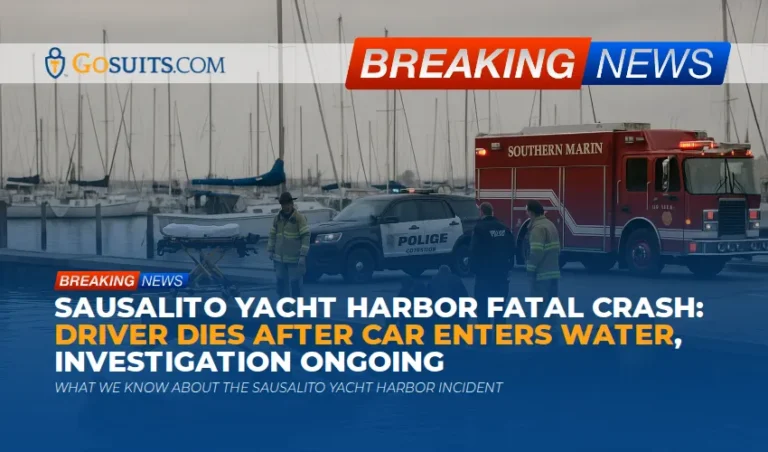
Late Monday afternoon, at about 2:40 p.m., a vehicle left the boardwalk area on Humboldt Avenue at the Sausalito Yacht Harbor and entered the water. According to Sausalito police, the driver’s vehicle became submerged under approximately 10 feet of water. A passenger was able to escape before the car left the sidewalk. Southern Marin firefighters, working alongside a private diver, located and recovered the driver and brought him to a dock for transport to a hospital, where he was later pronounced deceased.
The Marin County Chief Deputy Coroner identified the driver as a 76-year-old Sausalito resident. Officials stated the vehicle came to rest upside down in the water, complicating rescue efforts. The specific cause of death and the circumstances that led to the vehicle driving forward toward the D Dock area remain under active investigation. A firefighter sustained minor injuries during the rescue attempt, and the passenger did not require hospital care, per police.
This part of the harbor sits off Richardson Bay, just a short walk from Bridgeway and a few blocks from Dunphy Park. Many locals know the boardwalks here can be narrow, with changing foot traffic depending on tide, weather, and marina activity. While investigators have not released conclusions about the cause, they have confirmed that the car faced the water near D Dock before traveling forward.
Emergency response at the harbor and current investigation status
In Sausalito and much of southern Marin, water-related vehicle incidents draw multiple agencies quickly, particularly when submersion is reported. In this case, Sausalito police coordinated with Southern Marin Fire Protection District crews and a private diver. These joint efforts are common when visibility is limited, currents are uncertain, or a vehicle’s final position is unknown.
Police have not announced any citations or fault determinations. The coroner’s office continues to review medical findings to establish an official cause and manner of death, a process that can take time depending on testing and records review. Families often experience radio silence during this stage, which can be difficult. It is normal, though frustrating, for some details to stay confidential until the investigation is complete.
Why vehicles can end up submerged near docks and marinas
Marina parking and boardwalk areas often place cars within a short distance of the water’s edge. Submersion can occur for many reasons unrelated to impairment or recklessness. Mechanical issues, pedal confusion, medical emergencies, and visibility challenges may all play roles in some cases. Once a vehicle leaves the pavement and follows a sloped ramp or pier edge, buoyancy can cause it to pitch or roll. That helps explain why police noted the vehicle here was upside down at rest, which complicated the rescue.
Rescues are time-critical. Cold water shock, disorientation, seat belt entrapment, locked doors, and water pressure on doors and windows can reduce the odds of self-escape in mere minutes. Public health data consistently shows how quickly drowning can occur when a person is submerged and unable to reach breathable air, particularly among older adults and in colder conditions [6]. Tides and currents within the greater San Francisco Bay can also affect conditions at the surface and below, which is relevant for responders planning a safe approach [8].
First steps for families in the days after a fatal waterfront crash
In the immediate aftermath, it is hard to know where to start. The steps below focus on securing essential records, preserving evidence that may fade quickly, and avoiding common pitfalls when dealing with insurers or public entities.

Secure official records and notices
Police report. Request the incident report from the Sausalito Police Department’s Records Unit. Confirm the date, time, exact location on Humboldt Avenue, dock reference, responding officers, and any witness names included. Sausalito uses public records procedures consistent with California’s Public Records Act, which provides access to many government records, with exemptions for active investigations and privacy [9].
Coroner’s report. The Marin County Sheriff’s Office Coroner Division handles autopsies, coroner’s findings, and release of remains. Families can request the coroner’s report and toxicology once available. Processing often takes several weeks. While we are not listing links here, the division’s contact information is publicly available through county channels.
Death certificate. Certified copies are typically issued by the county’s vital records office. Funeral homes can often assist with ordering. Keep multiple certified copies for insurance and estate matters.
Preserve time-sensitive evidence
Witnesses. Note the names and phone numbers of dock workers, slip holders, nearby business staff, and anyone who saw the moments before the car entered the water. Memories fade quickly.
Surveillance video. Marina offices, private slips, and nearby storefronts along Bridgeway and Humboldt Avenue frequently use security cameras. Many systems overwrite footage in days. A written preservation request should go out immediately to the marina operator and any nearby businesses.
911 audio and dispatch logs. Families can request copies of the 911 recording and computer-aided dispatch (CAD) logs. These sometimes document critical timing and observations. If CHP assisted at any stage, their collision reports and logs have a defined request process [10].
Vehicle data. Modern vehicles often store crash-related information in their Event Data Recorder. That data can be overwritten or lost if the car is powered on or if salvage handling is not careful. NHTSA provides general information about EDR data and its role in reconstructing certain crash events [7].
Communicate carefully with insurance companies
Before notifying any insurer, consider speaking with an attorney to understand rights, coverage, and possible theories of liability. Insurers will record calls, and statements given early on can be used later in ways that create problems. If a notice must be sent to preserve a policy condition, a lawyer can help draft it in a neutral way and handle all follow up.
Families navigating a tragedy like this often look for immediate financial help for funeral costs and other losses. If there are applicable policies, such as auto liability, medical payments, or other coverages, a planful approach preserves options. It is common for adjusters to push for quick statements or blanket authorizations. That is rarely in a family’s best interest without counsel.
Civil legal pathways families may consider in California
This incident is under investigation and, to be clear, there is no official public finding assigning fault. That said, families often ask what legal pathways may exist generally after a fatal vehicle-into-water event. The following are standard civil concepts in California.
Wrongful death and survival actions
California allows certain relatives to bring a wrongful death claim seeking legally recognized damages when a death is caused by another’s wrongful act or neglect [2]. Separately, a survival action allows the decedent’s estate to recover for certain damages the person sustained between injury and death [3]. The general statute of limitations for wrongful death in California is two years from the date of death [1].
Possible defendants vary by case. If a vehicle defect, maintenance error, or dangerous condition played a role, the focus may extend beyond the driver. Where a public walkway, boardwalk, or marina design contributed, claims may consider property owners or, if a public entity is involved, strict procedures and timelines apply.
Public entity claims
If a dangerous condition of public property is a plausible theory, the Government Claims Act requires a written claim to be filed with the government entity typically within six months of accrual for death and personal injury claims [4]. The underlying standard for liability based on a dangerous condition is set out in Government Code section 835 [5]. Meeting the six-month deadline is critical to preserve the right to later file a lawsuit, and the content of the claim should be carefully prepared.
When claims involve privately owned marina property, different standards and timelines may apply. Identifying the property owner, any management company, and their insurers early can be important.
Choosing help
Families sometimes look for generalist representation, but fatal incidents on waterfronts can involve unique evidence sources and complex insurance questions. Guidance from fatal accident lawyers who regularly address wrongful death and related coverage issues can make a practical difference in protecting a family’s options.
Insurance and coverage issues to evaluate after a fatal crash
Coverage after a fatal incident can come from multiple potential sources. The applicability, policy limits, exclusions, and interaction between those sources will control much of what is possible.
Auto liability. The driver’s policy is typically the first to review. For single-vehicle incidents, additional theories sometimes look to product defect or property conditions if evidence supports them.
Medical payments coverage. Some auto policies include a medical payments endorsement, which may help with certain expenses regardless of fault. Policies vary, so careful reading is needed.
Uninsured/underinsured motorist coverage. If the sequence of events involves another vehicle that is unidentified or lacks adequate coverage, UM or UIM coverage could become relevant. The specifics depend on the facts and whether contact occurred.
Homeowners or commercial general liability. In certain premises-related theories, a property policy could come into play for a private marina or boardwalk operator, subject to exclusions.
Wrongful death damages. In California, wrongful death damages focus on losses suffered by the surviving family, while the survival action may cover different items. California’s courts provide public-facing resources explaining who may be eligible to bring such claims and the types of harms recognized by law [12].
When insurance carriers get involved, it is not unusual for multiple adjusters to request overlapping documents and recorded statements. As a practical matter, many families find it helpful for a single point of contact to coordinate those communications. If a government entity could be involved, the six-month claim window makes early organization essential [4].
Evidence to preserve around Sausalito Yacht Harbor and nearby streets
The waterfront near Humboldt Avenue, D Dock, and the Sausalito Yacht Harbor offers several potential evidence sources. Some are highly perishable.
- Dock cameras and marina office systems. Ask in writing that the Sausalito Yacht Harbor operator preserve any footage showing the vehicle before entry, including cameras facing the D Dock approach, parking areas, or the boardwalk alignment. Request a copy of the operator’s camera retention policy and the exact time the footage will be overwritten.
- Nearby businesses and residences. Bridgeway businesses and residences along Humboldt may have cameras that captured the approach. Provide a time window that starts well before 2:40 p.m. to account for clock drift.
- 911 audio and CAD logs. The timeline in dispatch audio sometimes reveals details not in initial reports, including early witness descriptions. Local agencies maintain these records under public records rules [9].
- Vehicle inspection and EDR download. Coordinate with the tow yard and any salvage company so the car is secured and not powered prior to an examination. An independent download of the Event Data Recorder should be arranged under chain-of-custody practices, consistent with NHTSA guidance about EDR significance [7].
- Responder logs and dive notes. Fire department and diver notes sometimes document visibility, vehicle position, and rescue challenges. Ask for incident and patient care reports, as permitted.
- Tide and current data. NOAA’s public tide and current records for San Francisco Bay can help reconstruct environmental conditions at the time of the incident [8].
Because evidence at marinas can be lost quickly, families often ask about a written preservation letter to involved parties. A carefully worded notice, sent promptly, can reduce the risk of overwriting or disposal of important materials.
How long investigations and civil claims often take
Timelines vary. Police and coroner investigations may take weeks to months, depending on findings and lab testing. Insurance carriers often await official reports before making coverage decisions. Civil claims can proceed in parallel if the family chooses, with early steps focused on evidence preservation and meeting statutory deadlines.
Many families want a realistic sense of how long a case might take. There is no single answer, but factors include the complexity of liability, number of parties, and availability of critical records. For a deeper look at pacing and milestones in these matters, see How Long Does It Take to Settle a Wrongful Death Lawsuit?
Local understanding can help with practical hurdles, like identifying who operates specific dock segments or where certain marina records are stored. In that sense, Sausalito fatal accident lawyers familiar with Richardson Bay’s marinas may be positioned to navigate local processes more efficiently.
Community perspective and prevention opportunities around Sausalito’s waterfront
Residents in Sausalito know that foot and vehicle traffic ebbs and flows with bay weather, ferry arrivals, tourism along Bridgeway, and marina events. In shoulder seasons, wind and glare at the water’s edge can catch drivers off guard. The D Dock approach, like many dock corridors, is designed primarily for pedestrian and marina use, not for through motor vehicle traffic.
Communities sometimes evaluate safety enhancements after waterfront incidents. These can include:
- Physical barriers. Bollards, wheel stops, or guardrails in high-risk spots adjacent to vehicle paths can reduce the chance a car reaches the water.
- Signage and markings. Clear, reflective, and weather-resistant signage and pavement markings near dock approaches can warn drivers that a travel lane is ending or that a pedestrian area lies ahead.
- Lighting and visibility. Targeted lighting helps at twilight and during overcast afternoons common on the Bay.
- Operational controls. Speed humps, curbing, or access controls for vehicles in boardwalk-adjacent areas can reduce the chance of pedal confusion translating into forward motion toward docks.
Any discussion of prevention is not a comment on this specific case. It reflects general community measures that many waterfront cities consider to protect residents, visitors, and first responders.
Local resources and who to call in Marin County
Here are the primary public offices and records most families ask about after a fatal incident near the water. Contact details are widely available on their official websites or by calling the city or county’s main information lines.
- Sausalito Police Department, Records Unit. For the incident report, supplemental narratives if available, and public records requests under the California Public Records Act [11] [9]. Ask for any reference to dock designations, diagrams, or photographs taken by officers.
- Marin County Sheriff’s Office, Coroner Division. For autopsy and coroner findings, and instructions on how and when results can be released to next of kin. They can also advise on how to designate a representative to receive records.
- Marin County Vital Records. For certified death certificates. Funeral homes typically help families submit and track these requests.
- California Highway Patrol (if CHP responded or assisted). For collision reports or supplemental documentation in the event of multi-agency response [10].
- Tow and salvage companies. Request storage location, photographs taken upon intake, and chain-of-custody logs. Ask that no power be applied to the vehicle pending an EDR download and inspection.
- Marina operator for Sausalito Yacht Harbor. For any incident records, dock maps, maintenance logs, and security video. Send a written preservation letter immediately to reduce the risk of overwriting recorded footage.
When calling or writing, have the incident date and approximate time ready, the location along Humboldt Avenue and the D Dock reference, and the vehicle make and model if known. Note the name of the call taker and any case numbers provided.
Why timely action matters
Several important deadlines begin running immediately after a fatal incident, and some key evidence can vanish within days. Acting promptly can preserve options while the investigation continues.
- Preserve video and physical evidence now. Security systems typically auto-delete on a short cycle. A short, written notice asking for preservation can make the difference between having footage or losing it forever.
- Meet statutory timelines. California’s wrongful death claims generally have a two-year window [1]. Claims involving public property may require a written government claim within six months [4]. Missing these can limit legal options.
- Organize insurance communications. What is said to an insurer can be used later. Before giving recorded statements or signing releases, consider consulting counsel to understand the implications.
- Coordinate vehicle inspection. Salvage handling can unintentionally alter or erase critical data. Plan a controlled inspection and EDR download consistent with best practices [7].
Suggested next actions:
- Document and request. Create a simple checklist for records requests: police report, coroner report, 911 audio, CAD logs, tow intake photos, and marina video.
- Consult first. Before contacting insurers, speak with a qualified attorney about rights, timelines, and strategy.
- Track deadlines. Note the two-year wrongful death statute and the six-month public entity claim deadline on a calendar with reminders.
Talk to a local attorney Preserve evidence today

Commentary from Gosuits Sausalito, California Personal Injury Attorney
Our hearts are with everyone affected by this tragedy at the Sausalito Yacht Harbor. Losing a neighbor in such a sudden, disorienting way is deeply painful. The thoughts here are provided for general education and context only.
From what is publicly reported, the vehicle faced the water near D Dock and for an undetermined reason moved forward, ultimately resting upside down. Rescue teams moved quickly, but submersion in 10 feet of water can be unforgiving. In these circumstances, families often have urgent questions about why this happened and what, if anything, could have prevented it. Objective answers come from thorough investigation, not assumptions. That usually means assembling the official reports, securing video, reviewing vehicle data, and understanding the layout and controls at the exact spot on the boardwalk or dock approach.
It is important to understand how large insurers and sometimes corporate property owners approach incidents like this. Their first goal is information control. Adjusters may push for quick recorded statements or broad medical and records releases. Property owners might indicate that any video was overwritten or that no incident documents exist. None of that necessarily reflects the whole picture. Early, organized requests and a careful communication plan help neutralize those tactics and keep families on a level field.
Finally, a no-cost initial consultation can help families understand timelines, what to preserve, and how different coverages might apply, without any commitment or pressure. In situations involving possible public property conditions, that early conversation can be especially important because of the six-month government claim requirement. Even where liability ultimately points to a single-vehicle event, a focused review of design, maintenance, and warning systems is part of a responsible approach to due diligence.
References
- California Code of Civil Procedure § 335.1 – California Legislative Information
- California Code of Civil Procedure § 377.60 (Wrongful Death) – California Legislative Information
- California Code of Civil Procedure § 377.30 (Survival Actions) – California Legislative Information
- California Government Code § 911.2 (Government Claims Act Deadline) – California Legislative Information
- California Government Code § 835 (Dangerous Condition of Public Property) – California Legislative Information
- Unintentional Drowning: Get the Facts – Centers for Disease Control and Prevention
- Event Data Recorder (EDR) Information – National Highway Traffic Safety Administration
- NOAA Tides and Currents Portal, San Francisco Bay – National Oceanic and Atmospheric Administration
- California Public Records Act Overview – California Office of the Attorney General
- Request a Collision Report – California Highway Patrol
- City of Sausalito – Official Website
- Wrongful Death Basics – California Courts Self-Help Guide