- What we know about the South LA 110 Freeway pedestrian fatality
- Location context at the 110 and 105 Freeways
- How freeway pedestrian fatalities are investigated in California
- Potential civil liability after a freeway pedestrian death
- Where families can obtain official records and information
- Insurance issues after a fatal pedestrian collision on a freeway
- Preserving evidence around the 110 and 105 interchange
- Community safety context and data on pedestrian fatalities
- Practical next steps many families consider
- Why timely action matters and what to do now
- Commentary from Gosuits Los Angeles, California Personal Injury Attorney
- References
What we know about the South LA 110 Freeway pedestrian fatality
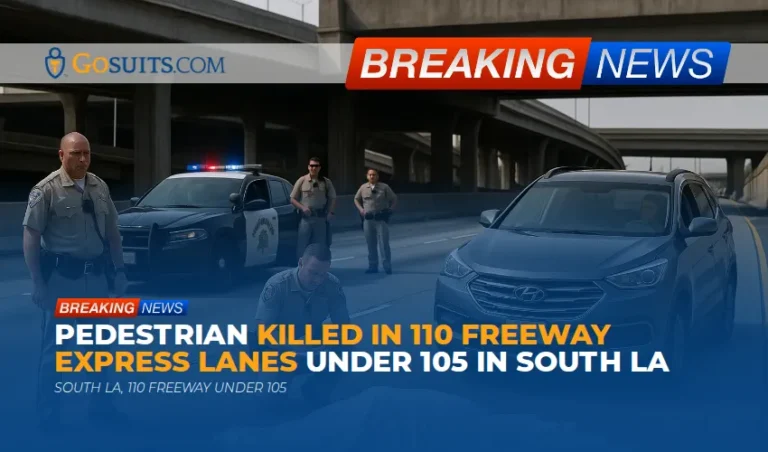
A pedestrian was struck and killed Saturday afternoon while crossing lanes on the Harbor Freeway in South Los Angeles. According to the California Highway Patrol, the crash was reported at about 12:40 p.m. in the northbound Express Lanes of the 110 under the Glenn Anderson Freeway. The pedestrian was found in the Express Lanes and pronounced dead at the scene. The victim’s age and gender were not immediately available at the time of reporting.
The driver of a gray Hyundai SUV, a woman, remained at the scene. CHP officers held traffic in the northbound Express Lanes, and a SigAlert was issued at 1:17 p.m. while investigators worked.
Those are the core facts released publicly so far. No additional details about speed, lighting, weather, or the precise movements of the parties have been announced as of the time of this writing.
Location context at the 110 and 105 Freeways
Locals know the interchange of the Harbor Freeway and the Glenn Anderson Freeway well. The 110 runs north toward downtown Los Angeles and south toward the Harbor area, while the 105 runs east and west serving communities such as Hawthorne, Lynwood, and Norwalk, and providing access toward LAX. The 110 Express Lanes in South LA are heavily used on weekends too, often carrying both regional commuters and event traffic.
The stretch beneath the 105 includes elevated structures, limited shoulder areas, and barrier-separated lanes. Although the exact lane configuration at the moment of the collision has not been disclosed, Express Lanes are typically separated from general-purpose lanes. On California freeways in general, pedestrians are restricted from entering except under specific emergency circumstances and where posted restrictions apply, per California law [2] and related pedestrian roadway rules [3].
How freeway pedestrian fatalities are investigated in California
When a fatal collision occurs on a state freeway in Los Angeles County, the CHP is generally the lead investigative agency. Their investigators document scene evidence, photograph the roadway and vehicles, diagram lane positions, and interview involved parties and witnesses. If available, investigators may also review any nearby traffic management cameras and look for private video sources, such as dashcams from passing drivers. Autopsy and cause of death determinations are handled separately by the Los Angeles County Department of Medical Examiner.
In freeway settings, investigators often focus on several categories of evidence and data points:
- Scene and roadway evidence such as debris fields, tire marks, scuff marks, and lane positions at the time officers arrived.
- Vehicle condition and damage profiles which can help reconstruct impact angles and speeds.
- Lighting and visibility conditions based on the time of day and weather observations, as well as roadway lighting infrastructure.
- Statements and witness accounts including from the driver who remained on scene and any motorists who stopped or later came forward.
- Electronic data potentially from vehicle event data recorders if warranted, along with any traffic operations data promptly requested from relevant agencies.
Because this incident occurred in the Express Lanes, investigators will be attentive to the specific lane separation and access points in that area. The presence of temporary traffic controls associated with the SigAlert will also be documented, though those measures generally occur after the collision for safety and congestion management.
Potential civil liability after a freeway pedestrian death
It is too early to draw conclusions about liability here. In California civil cases, liability is fact dependent and can involve multiple theories and parties depending on what the evidence shows. In pedestrian freeway fatality cases, common questions include: how and why the pedestrian entered a restricted freeway area, the actions of the involved driver, sight lines and visibility, and whether any third-party factors played a role. California applies comparative fault rules, so responsibility can be allocated among multiple parties if supported by evidence.
In a fatal collision, surviving close family members may have the ability to bring a wrongful death action under California Code of Civil Procedure section 377.60 [8], while the decedent’s estate may have a survival claim under section 377.30 [9]. The availability of each claim turns on statutory eligibility and case-specific facts. The potential role of a public entity is considered if roadway design or maintenance is credibly alleged to have contributed, which triggers unique deadlines under the Government Claims Act [7].
Families often speak with fatal accident lawyers to understand who can file, what damages might be recoverable under the statutes, and which deadlines apply. Eligibility can include a spouse, domestic partner, children, and sometimes other dependents per the statute’s definitions, but each family’s situation is different.
Timeframes matter. Wrongful death and survival actions have statutes of limitations, and claims against public entities have shorter administrative claim deadlines. For a deeper dive into timing generally, here is a helpful overview: How long does it take to settle a wrongful death lawsuit.

Where families can obtain official records and information
After a fatal crash, official documents provide clarity and are often necessary for insurance claims and any civil legal process. Agencies and records that can help include the following.
California Highway Patrol collision report
The CHP prepares a Traffic Collision Report. Immediate next of kin and certain authorized parties can request a copy. Requests are typically made using CHP Form 190. The CHP provides instructions on how to request collision reports and the documentation you will need [1]. It can help to have the date, time, freeway, and any known report number ready when you inquire.
Los Angeles County Department of Medical Examiner records
The Medical Examiner handles identification, cause and manner of death determinations, and releases reports and certificates to authorized next of kin. The department publishes procedures for obtaining records and related information for families [4]. Turnaround time can vary depending on testing and case complexity.
Death certificates from Los Angeles County
Certified copies of death certificates are typically obtained through the Los Angeles County Registrar-Recorder and are often needed by families for estates, benefits, or insurance. Information and instructions are available through the county’s official site [5].
Traffic data and public records
Some families or their representatives request public records related to traffic operations, such as lane closure logs, maintenance records, or other agency documents that might exist. Requests are generally made under the California Public Records Act. The California Attorney General provides guidance on how the Public Records Act works [10].

When in doubt, call first
It can be helpful to call the relevant CHP Area office to confirm what information is needed before submitting a written request, especially for collision reports. Similarly, contacting the Medical Examiner’s office to understand next steps and document requirements can make the process more manageable during a difficult time.
Insurance issues after a fatal pedestrian collision on a freeway
Insurance will be involved. Auto liability coverage, potential uninsured or underinsured motorist coverage, and sometimes additional policies can be implicated. If a commercial or governmental entity is part of the factual picture, risk management departments and third-party administrators may also be involved.
Before speaking with any insurer, it is wise to consider getting guidance. Statements given to insurance adjusters can be recorded and may be used to shape the insurer’s position later. A brief free consultation with a seasoned attorney can help families understand their rights and obligations and which documents they may need to gather first. If a claim must be opened, consider contacting an attorney first to help avoid statements that can be taken out of context and used against the family later on.
In the South LA context, fatal accident lawyers in Los Angeles can also advise on potential policy limits, coordination between multiple insurers, and whether any governmental claim deadlines could apply based on the facts.
Preserving evidence around the 110 and 105 interchange
Evidence preservation is often time sensitive, especially near a busy interchange like the 110 and 105 where maintenance crews and traffic are constantly moving. Consider the following practices that attorneys commonly coordinate on behalf of families:
- Vehicle preservation by locating the towed vehicle quickly and ensuring it is not salvaged or repaired. Written preservation requests are often sent to tow yards and insurers.
- Scene photographs documenting lane configurations, signage, and lighting conditions at similar times of day.
- Witness outreach including potential appeals for dashcam footage from drivers who passed through the area around 12:40 p.m., if appropriate.
- Public records requests for traffic operations logs, maintenance records, and any available video. Some systems overwrite data quickly, so prompt requests under the Public Records Act are important [10].
- Medical Examiner coordination to confirm timelines for reports and to secure necessary authorizations for release.
Attorneys often send “spoliation” or preservation letters to potentially involved parties and agencies to request that relevant evidence be retained.
Community safety context and data on pedestrian fatalities
Pedestrian safety remains a concern across Los Angeles County. Statewide and national data reflect ongoing risks for people on foot, with pedestrians comprising a significant portion of traffic deaths. The California Office of Traffic Safety regularly notes the vulnerability of pedestrians in its traffic safety materials and data summaries [6]. Nationally, NHTSA has reported elevated levels of pedestrian fatalities in recent years, underscoring the need for multi-pronged safety strategies at the engineering, enforcement, and education levels [11].
Freeways present a unique danger. California Vehicle Code provisions authorize pedestrian restrictions on freeways and across roadway medians because of high speeds and limited refuge areas [2][3]. Even when emergency circumstances bring people onto a freeway, drivers approaching at freeway speeds often have very little time to react. In complex interchanges like the 110 and 105, multilayer structures and barrier separations can limit sight lines.
South Los Angeles neighborhoods like Vermont Vista, West Athens, and the areas around the Metro C Line corridor see substantial freeway traffic flowing to and from downtown and the South Bay. When a fatality occurs, congestion impacts cascade quickly, hence the SigAlert issued at 1:17 p.m. so responders could work safely.
Practical next steps many families consider
The hours and days following a tragic loss can feel overwhelming. Many families find it helpful to prioritize a short list of tasks and then expand as information becomes available.
- Confirm the case number with the investigating CHP office so you can request the collision report when it is available [1].
- Coordinate with the Medical Examiner for identification, next-of-kin notifications, and to understand the expected timeline for reports [4].
- Obtain certified death certificates through the county to manage estates, benefits, and any insurance processes that require them [5].
- Preserve vehicles and personal items and avoid authorizing repairs or disposal until you receive guidance on evidence preservation.
- Keep a log of all agencies and individuals you speak with, including dates, names, and phone numbers, and save any letters or emails.
- Speak with a qualified legal professional about wrongful death and survival claims, deadlines, and whether any public entity claims may be implicated [7][8][9].
If an insurance representative reaches out early, you can politely note that you will respond after you have had a chance to obtain and review the official reports and get advice.
Why timely action matters and what to do now
Here is why timing matters and what concrete steps are often taken promptly:
- Deadlines can be short. Claims against public entities may require a formal claim notice within six months in California [7]. Waiting too long can restrict options later.
- Evidence can disappear. Traffic camera data, dashcam footage, and tow yard vehicles can be lost or overwritten. Acting quickly increases the chances of preserving critical information [10].
- Insurance sets the narrative early. Initial statements can shape how insurers view liability and damages. Getting guidance first can help avoid unintended consequences.
- Documentation takes time. Collision reports, Medical Examiner files, and certificates each have their own timelines. Starting requests early keeps the process moving [1][4][5].
What should be done now, in practical terms, by those supporting the family:
- Identify the investigating CHP office for the 110 northbound Express Lanes under the 105 and note the incident time and SigAlert details for reference.
- Request guidance from the Medical Examiner regarding next steps for record releases to next of kin.
- Begin collecting basic information including the vehicle tow location, any personal effects, and contact information for potential witnesses.
- Consult an attorney before contacting insurance to understand rights and obligations. Statements to insurers can be used later and should be made with care.
- Prepare a short evidence preservation plan that identifies potential sources of video and documents, and outlines who will send preservation requests.
These steps help protect options while the family prioritizes care and arrangements.
Commentary from Gosuits Los Angeles, California Personal Injury Attorney
Our hearts are with everyone affected by this loss in South Los Angeles. Articles like this are meant for general information and education, not a substitute for guidance about any specific situation.
Based on the information released so far, the collision occurred in the 110 northbound Express Lanes beneath the 105 at around 12:40 p.m., with a SigAlert at 1:17 p.m. The driver remained at the scene and CHP is handling the investigation. Freeway pedestrian incidents are uniquely dangerous because of speed, sight lines, and limited refuge. Determining civil liability requires a careful review of evidence from the scene, vehicle data, witness accounts, and the Medical Examiner’s findings.
In our experience, insurance companies and large organizations often move quickly to shape the narrative about what happened. They may seek early statements, ask for broad authorizations, or interpret facts in a way that minimizes responsibility. Without a clear understanding of the law and the available evidence, families can find themselves at a disadvantage.
A free consultation can be an important early step. It allows families to understand how wrongful death and survival claims work in California, what deadlines might apply, and how to preserve evidence. It also helps ensure that any contact with insurers is thoughtful and accurate, recognizing that what is said early on can be used and revisited later.

References
- Collision Reports (CHP 190) – California Highway Patrol
- California Vehicle Code § 21960 – Legislature.ca.gov
- California Vehicle Code § 21956 – Legislature.ca.gov
- Records and Requests – Los Angeles County Department of Medical Examiner
- Los Angeles County Registrar-Recorder/County Clerk – LAVote.gov
- Traffic Safety Facts – California Office of Traffic Safety
- Government Code § 911.2 (Government Claims Act) – Legislature.ca.gov
- Code of Civil Procedure § 377.60 (Wrongful Death) – Legislature.ca.gov
- Code of Civil Procedure § 377.30 (Survival Actions) – Legislature.ca.gov
- California Public Records Act Overview – California Attorney General
- Pedestrian Safety – NHTSA
Legal insight notes
Many families find it helpful to talk with Los Angeles fatal accident lawyers to plan evidence preservation, understand which statutes apply, and prepare for insurance communications. Thoughtful early steps can protect options later.