- What we know about the Panorama City multi-vehicle collision
- Local context at Woodman Ave and Terra Bella St
- Official agencies and records families often request
- How fatal crash investigations typically proceed in Los Angeles
- Civil liability considerations in multi-vehicle crashes
- Insurance considerations and common pitfalls
- Preserving evidence and protecting civil claims
- Community safety observations and prevention
- What the data shows about night multi-vehicle collisions
- Potential next steps for those affected by serious collisions
- Commentary from Gosuits Panorama City, California Personal Injury Attorney
- Act now: time-sensitive steps that protect families
What we know about the Panorama City multi-vehicle collision
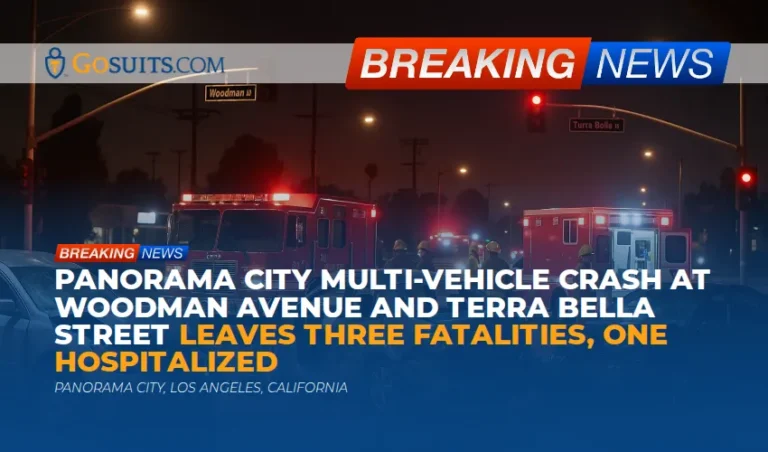
A multi-vehicle collision in Panorama City on Friday night resulted in three fatalities and one additional person transported to the hospital. The crash involved three vehicles and occurred around 9:30 p.m. near Woodman Avenue and Terra Bella Street. According to information shared by the Los Angeles Fire Department, three people were pronounced dead at the scene. A 35-year-old man was trapped in a vehicle, extricated by responders, and taken to a local hospital in unknown condition. As of this report, the cause of the crash has not been determined, and details about contributing factors remain unclear.
When a deadly collision occurs in the central-east San Fernando Valley, multiple agencies typically respond. Fire and EMS handle rescue and medical transport, while law enforcement secures the scene and initiates traffic-collision investigation protocols. The Los Angeles County Medical Examiner-Coroner later confirms identities and causes of death and notifies next of kin.
It’s important to be clear about what’s confirmed and what isn’t. Publicly available details at this time do not identify the deceased, do not state which agency is leading the collision investigation, and do not outline whether speed, impairment, distraction, or mechanical failure played a role. That information usually emerges after preliminary and final collision reports are completed.
Local context at Woodman Ave and Terra Bella St
Neighbors in Panorama City know the Woodman Avenue corridor well. Woodman runs north-south through the Valley, carrying steady traffic past apartment clusters, small businesses, schools, and neighborhood churches. Terra Bella Street cuts east-west and sits just north of Roscoe Boulevard, not far from the Tujunga Wash and the industrial blocks that stretch toward Whiteman Airport. At night, this area can see a mix of commuter traffic and local trips, with visibility influenced by lighting, parked vehicles, and the long straight stretches that can tempt higher speeds.
This time of year, evenings arrive early. At 9:30 p.m., many retail spots around Panorama Mall have closed or are winding down, and traffic patterns shift to more through-travel. Cooler winter nights can bring slicker pavement from condensation or mist. All of these real-world conditions remind us why evidence like lighting conditions, signal timing, skid marks, and vehicle data can matter so much in reconstructing what happened.
Official agencies and records families often request
In the aftermath of a fatal or serious-injury crash, certain official records can be crucial for understanding what happened and for any civil claims. Below are common records and where they usually come from. Where possible, links are provided to government resources or procedures.
Police traffic collision report
Depending on the investigating agency, families may request the official collision report once it’s available. In Los Angeles City, fatal collisions are typically investigated by the LAPD’s Valley Traffic Division when they occur in Panorama City. Report availability can take weeks. If the California Highway Patrol (CHP) handled the scene, collision reports are requested using the CHP 190 process. Guidance is available through the CHP’s official page at chp.ca.gov.
California’s Public Records Act offers a framework for requesting certain public records, though active investigations may limit immediate access. The California Attorney General provides an overview of public records rights at oag.ca.gov.
Medical examiner and autopsy records
Los Angeles County Medical Examiner-Coroner manages decedent identification, cause and manner of death, and related reports. Families can find official information on how to request records through the LA County Medical Examiner-Coroner at mec.lacounty.gov.

Death certificates
Certified death certificates in Los Angeles County are issued by the Registrar-Recorder/County Clerk. Instructions for ordering are available at lavote.gov (Registrar-Recorder/County Clerk). The Registrar’s site domain is rrcc.lacounty.gov.
911 calls and CAD logs
Audio of 911 calls and computer-aided dispatch (CAD) logs may be requested via the City’s public records process. Availability can be limited by privacy laws and ongoing investigations. California’s Public Records Act guidance from the Attorney General at oag.ca.gov explains general access principles.
Traffic signal timing, maintenance, and roadway records
Signal timing data, maintenance logs, and work orders can help clarify whether any infrastructure issues were involved. These records are generally obtained by submitting a public records request to the City of Los Angeles under the California Public Records Act, often directed to the specific department that holds them. Again, see statewide CPRA guidance at oag.ca.gov.
Vehicle data and towing documentation
Vehicles today frequently store event data recorder (EDR) information. Retrieval requires specialized tools and, sometimes, court orders or owner authorization. NHTSA hosts general information about vehicle safety and post-crash research at nhtsa.gov. Towing invoices and yard intake logs also matter because they help establish chain of custody and timing.
How fatal crash investigations typically proceed in Los Angeles
When a collision results in fatalities, investigators follow methodical steps to preserve evidence and document the scene. They’ll often map the roadway, take photographs, collect debris fields, record vehicle resting positions, measure skid or yaw marks, and note lighting and signage. Witness statements are gathered. If impairment is suspected, testing protocols are initiated. Vehicles may be impounded for inspection and data retrieval.
In multi-vehicle collisions, the dynamics can be complex. Impact angles, pre-impact speeds, braking, and secondary collisions can all affect how fault is determined. Investigators may consult traffic engineers or collision reconstruction professionals to interpret the evidence. Families sometimes pursue independent reconstruction to supplement official findings, especially when civil liability and insurance coverage are disputed.
It’s fairly common for preliminary findings to change as more information comes in. That’s why patience and careful documentation are so important.
Civil liability considerations in multi-vehicle crashes
From a civil personal-injury perspective, liability turns on negligence and causation. In California, negligence is grounded in the duty of ordinary care. While every case is fact-specific, several recurring issues often arise in three-car crashes:
- Chain reaction impacts where one vehicle initiates a crash sequence but secondary impacts cause additional harm. Allocation of fault may be split among multiple drivers depending on spacing, speed, and reaction time.
- Signal or right-of-way disputes at controlled intersections or stop-controlled approaches. Signal phase and timing, sight lines, and compliance with traffic controls are critical pieces of evidence.
- Speed, distraction, or impairment as potential contributing factors. Nighttime crashes can also raise visibility questions, including headlight use and roadway lighting.
- Vehicle defects or maintenance issues such as brake failure or tire separation. Mechanical inspections and recall checks can be relevant.
- Roadway hazards including poor lighting, faded markings, or malfunctioning signals. In limited circumstances, a public entity may face claims for a dangerous condition of public property if the statutory elements are met.
California recognizes wrongful death and survival actions. Wrongful death claims are brought by eligible family members for losses such as financial support and companionship, while a survival action belongs to the decedent’s estate for claims the person could have brought had they lived, limited by statute. The relevant statutes are found in the California Code of Civil Procedure at leginfo.legislature.ca.gov, including sections 377.60 and 377.34.
California’s general statute of limitations for wrongful death is two years from the date of death under Code of Civil Procedure section 335.1, also available at leginfo.legislature.ca.gov. Cases that potentially involve a government entity, such as claims tied to roadway conditions or a city vehicle, often require a government claim within six months under the Government Claims Act. See California Government Code claim requirements at leginfo.legislature.ca.gov (e.g., Gov. Code section 911.2).
Because the facts of the Panorama City crash are still developing, no conclusions should be drawn about fault or liability at this time. The key is to preserve the option to pursue civil remedies once the facts are known.
Insurance considerations and common pitfalls
Insurance issues after a three-car collision can be intricate. Multiple liability policies, underinsured motorist coverage, medical payments coverage, and property-damage provisions may all come into play. Adjusters typically move fast and seek recorded statements. That’s where caution matters.
- Recorded statements can be used later to dispute fault or damages. It’s generally prudent to speak with a qualified attorney before giving a statement to any insurer, including your own. The California Department of Insurance provides consumer information at insurance.ca.gov.
- Medical billing and liens may be coordinated through health insurance, medical payments coverage, or hospital liens. Tracking explanations of benefits and lien notices is essential.
- Property damage valuation often includes loss-of-use claims, rental coverage limits, and total loss valuation disputes. Keep all receipts and photographs.
- Underinsured motorist (UIM) coverage may become critical if liable parties lack sufficient insurance. Review declarations pages and policy endorsements for stacking, offsets, and arbitration provisions.
Finally, be mindful of repair authorizations and vehicle disposal. Once a vehicle is destroyed, important evidence can be lost forever.
Preserving evidence and protecting civil claims
Preserving evidence early can make a decisive difference in a multi-vehicle case, especially when the cause is disputed. Consider the following practical steps that people often take in serious collisions:
- Send preservation notices to involved parties and custodians of evidence, such as towing companies and storage yards, seeking to retain vehicles and EDR data.
- Document the scene as soon as it’s safe to do so. Nearby businesses on Woodman and Terra Bella may have exterior cameras facing the street. Footage is routinely overwritten within days.
- Request official records promptly, understanding that investigative holds may apply. Calendar follow-up dates and keep communications organized.
- Coordinate medical documentation for injured survivors, including discharge summaries, imaging reports, and follow-up care plans. This documentation connects injuries to the crash.
- Consult a personal injury attorney before contacting insurers. Early legal guidance can help avoid missteps. What someone says to an insurance company can be used to minimize or deny a claim later.
For collisions near residential and commercial stretches like this part of Panorama City, canvassing within a few days can uncover eyewitnesses who weren’t interviewed at the scene. Small details, like which lane a car started in or how long a signal was red, can shift responsibility in a multi-vehicle chain.
Community safety observations and prevention
Residents have long discussed speeding and quick light changes on certain Valley corridors. While each intersection has its own engineering and traffic patterns, nighttime visibility and driver attentiveness are constant themes. Near Woodman and Terra Bella, parked cars along side streets, the angle of curb cuts, and the distance between signals influence driver behavior.
Prevention is always community-wide. Drivers can slow down and scan farther ahead at night. Pedestrians can wait for a fresh cycle when crossing wide arterials. Businesses can keep exterior lighting in good repair. The City evaluates signals and signage through engineering studies, and public feedback through service requests or CPRA submissions can help highlight patterns that aren’t obvious from raw crash statistics.
What the data shows about night multi-vehicle collisions
National and state-level research offers context, even when the facts of a specific crash remain under investigation.
- Speeding and impairment remain leading contributors to fatal crashes nationally. The National Highway Traffic Safety Administration provides annual summaries and topic pages identifying speed, alcohol, and distraction among the most persistent factors. See NHTSA’s safety topics and research hub at nhtsa.gov.
- Nighttime crashes carry elevated risk because visibility is reduced and drivers may be fatigued. NHTSA’s resources address night visibility and driver impairment trends at nhtsa.gov.
- Multi-vehicle dynamics complicate fault allocation. Secondary impacts, evasive maneuvers, and sightline obstructions can spread liability among multiple drivers. This is one reason comprehensive scene documentation and EDR downloads can be so important.
- California traffic safety priorities are outlined by the Office of Traffic Safety, which supports enforcement and education on speeding, seat belts, and impaired driving. See California OTS at ots.ca.gov.
Public reports will eventually clarify which, if any, of these factors were involved in the Panorama City crash. Until then, these data-driven touchpoints help explain why investigators examine lighting, timing, speed, impairment, phones, and vehicle condition in detail.
Potential next steps for those affected by serious collisions
People navigating the aftermath of a fatal or serious injury crash often work through a similar sequence. The specifics vary, but the overarching priorities tend to be stability, information, and preservation of rights.
- Stabilize immediate needs such as medical care, bereavement support, and time-sensitive family logistics.
- Identify the lead investigating agency and obtain the incident number for tracking. In Panorama City, the lead is often LAPD’s Valley Traffic Division for city streets.
- Request official records including the traffic collision report, ME-Coroner determinations, and later, any supplemental reports.
- Secure vehicles and key evidence by notifying tow yards and storage facilities not to release or destroy vehicles without notice.
- Coordinate insurance communications strategically. Before making recorded statements, consider speaking with a seasoned personal injury attorney. Statements can be used later to challenge liability or damages.
- Calendar civil deadlines, including the two-year wrongful death statute under Code of Civil Procedure section 335.1 and the six-month deadline for government claims under Government Code 911.2, both hosted at leginfo.legislature.ca.gov.
Where to find key public resources
- LA County Medical Examiner-Coroner for decedent and autopsy information: mec.lacounty.gov.
- LA County Registrar-Recorder/County Clerk for death certificates: rrcc.lacounty.gov and program page at lavote.gov.
- CHP collision report requests (if CHP is the investigating agency): chp.ca.gov.
- California Public Records Act overview from the Attorney General: oag.ca.gov.
- California Department of Insurance consumer resources: insurance.ca.gov.
- NHTSA research and data on crash factors and safety: nhtsa.gov.
- California Office of Traffic Safety for statewide safety trends: ots.ca.gov.
Commentary from Gosuits Panorama City, California Personal Injury Attorney
Our hearts are with everyone impacted by the collision near Woodman Avenue and Terra Bella Street. Three lives lost is a profound tragedy for families, friends, and the entire Panorama City community. Please know this article is meant for educational purposes and general information, not specific guidance for any one person or case.
Based on what’s publicly known, we understand that three vehicles were involved, three people were declared deceased at the scene, and a 35-year-old man was rescued and hospitalized. The cause has not yet been determined. In circumstances like these, we expect investigators to examine speed, impairment, distraction, mechanical condition, intersection control, lighting, and roadway conditions. Multi-vehicle collisions are complex, and it often takes time for facts to settle into a clear timeline with reliable conclusions.
In our experience, insurance companies and corporate stakeholders move quickly after a serious crash. They may request recorded statements, seek broad medical authorizations, or extend early settlement offers before the full scope of loss is known. That can put people at a disadvantage. Without a firm handle on the investigative record, vehicle data, and medical trajectory, it’s simply too easy for claims to be undervalued or responsibilities to be shifted.
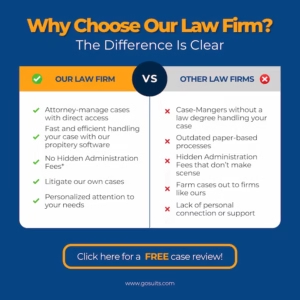
This is why a free consultation with a seasoned injury lawyer can be so important, even if only to understand the landscape. It helps people know which records to request, how to preserve vehicles and EDR data, and what deadlines apply. It also ensures that any communication with insurance carriers is thoughtful and protected. Again, what’s said to an insurer can be used later to challenge a claim.
Act now: time-sensitive steps that protect families
What is the exact thing people in these situations should do? The most effective early actions tend to share three goals: preserve evidence, secure official information, and avoid avoidable claim mistakes.
- Preserve vehicles and data by notifying tow yards and insurers that no vehicle should be destroyed or altered without inspection and, if needed, EDR downloads.
- Track the investigation by obtaining the incident number, identifying the lead agency, and calendaring follow-ups for report release dates.
- Request key records from the LA County Medical Examiner-Coroner and, when appropriate, submit public records requests for traffic data, signal timing, and maintenance logs.
- Organize medical documentation for any injured survivors, from emergency room records to follow-up appointments and prescriptions.
- Consult a personal injury attorney before speaking with insurers or providing recorded statements. This can prevent inadvertent admissions and protect a person’s ability to recover civil damages.
- Calendar deadlines for the two-year wrongful death limitation period and any six-month government claim requirements, using the official code links at leginfo.legislature.ca.gov.
Why act now? Evidence fades fast. Surveillance footage can be overwritten in days. Vehicles can be scrapped or repaired before anyone examines airbag modules or braking systems. Witness memories dim. Insurers start building their narrative immediately. Taking early, deliberate steps improves accuracy, protects rights, and reduces the risk of missing a deadline that can’t be extended.
When timing matters most, focus on immediate preservation, official records, and smart communication sequencing. These actions create a foundation for whatever comes next, including potential civil claims.
Preserve Vehicle and EDR Data Request Official Records Review Deadlines and Legal Options Plan Insurance Communications
Sources and references
- NHTSA Research and Data overview: nhtsa.gov
- California Office of Traffic Safety: ots.ca.gov
- California Department of Insurance consumer information: insurance.ca.gov
- California Code of Civil Procedure (statutes including 335.1, 377.34, 377.60): leginfo.legislature.ca.gov
- California Government Claims Act (e.g., Gov. Code 911.2): leginfo.legislature.ca.gov
- California Highway Patrol collision report requests (CHP 190): chp.ca.gov
- Los Angeles County Medical Examiner-Coroner: mec.lacounty.gov
- LA County Registrar-Recorder/County Clerk: rrcc.lacounty.gov and program page at lavote.gov
- California Attorney General, Public Records Act overview: oag.ca.gov