- What Happened at San Fernando Road and Paxton Street
- Location Context: Traffic Patterns and Risks Near Pacoima’s San Fernando Road Corridor
- Official Agencies Involved and How to Request Records
- How Fault May Be Evaluated in a Single-Vehicle Pole Collision
- Rights of Injured Passengers and Families After a Fatal Wreck in California
- Insurance Considerations That Often Arise After a Serious Crash
- Practical Next Steps for Community Members
- Local Safety Reflections and Potential Improvements
- One Helpful Resource
- Call-to-Action: Take Informed Steps Now
- Commentary from Gosuits Los Angeles, California Personal Injury Attorney
- References
What Happened at San Fernando Road and Paxton Street
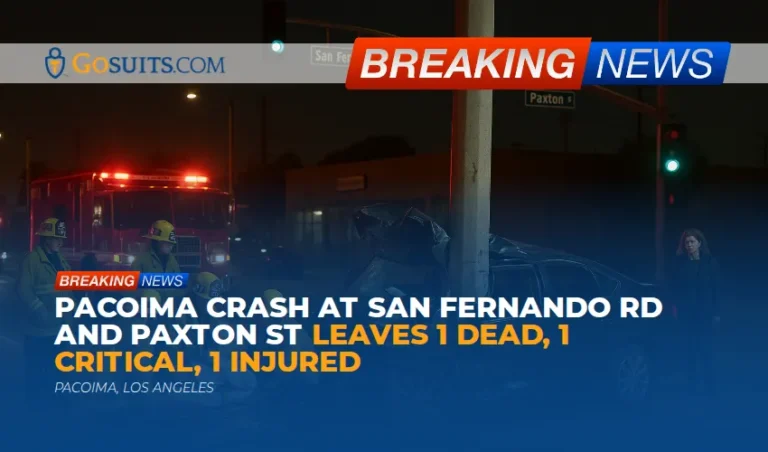
On Friday evening around 8:20 p.m., a vehicle crashed into a pole at the corner of San Fernando Road and Paxton Street in Pacoima, a neighborhood in the northeast San Fernando Valley within the City of Los Angeles. According to the Los Angeles Fire Department, three people were inside the vehicle. A 30-year-old man was extricated and pronounced deceased at the scene. A 27-year-old man was extricated and transported to a local trauma center in critical condition. A 39-year-old woman sustained minor injuries. Authorities did not immediately provide information on what caused the crash.
At this stage, responders have publicly confirmed the location, time, and the general condition of those involved. When cause is unknown, investigators typically examine speed, roadway conditions, potential impairment, distraction, and any mechanical issues. It is common for a formal collision report and technical findings to take weeks as agencies collect statements, measurements, and data.
Location Context: Traffic Patterns and Risks Near Pacoima’s San Fernando Road Corridor
Pacoima’s stretch of San Fernando Road is a busy, mixed-use corridor that carries commuter, freight, and local traffic. Paxton Street is a well-traveled east-west connector serving residential blocks, small businesses, and industrial destinations. The area experiences weekday congestion and frequent turning movements, especially near rail lines, warehouses, and service yards. Evening hours can bring a mix of shoppers heading home, deliveries wrapping up, and local residents traveling between work and family obligations.
Nearby, Whiteman Airport and the rail right-of-way create long blocks and wide intersections in certain spots, which can increase vehicle speeds if drivers are not attentive to posted limits. Lighting, pole placement, sight lines, and curb conditions also matter. Even on clear nights, momentary distraction or a misjudged turn can have devastating consequences when a vehicle strikes a fixed object like a utility pole. Research consistently shows that speed dramatically increases crash severity and the likelihood of fatal injuries, especially in fixed-object impacts [4][5].
Official Agencies Involved and How to Request Records
When a fatal or severe-injury collision occurs in Los Angeles, several agencies may hold different parts of the official record. Families and injured people often need multiple documents to understand what happened. Below are common records and where they typically originate.
Police Collision Report and Traffic Investigation
Collisions on city streets in Pacoima are generally investigated by the Los Angeles Police Department’s Valley Traffic Division. The primary record is the Traffic Collision Report, which may include scene diagrams, measurements, involved parties, witness statements, and citations if any are issued. While LAPD’s public website is not on a .gov domain, those seeking records can use California’s Public Records Act to submit a request for accessible, non-exempt portions of reports. The California Attorney General provides a plain-language overview of the Public Records Act and request process [13].
Coroner and Autopsy Records
In Los Angeles County, the Department of Medical Examiner determines cause and manner of death and maintains related records. The Medical Examiner also provides decedent information and instructions for requesting autopsy and investigative documents for authorized requesters. Their official site offers contact and request details [1]. Families may also need certified death certificates, which are issued by the Los Angeles County Registrar-Recorder/County Clerk [2].
Fire Department Incident Records
The Los Angeles Fire Department documents emergency medical responses, patient extrication, and transport. Portions of incident records may be requested by patients or next of kin, subject to privacy laws. While LAFD’s online presence is not on a .gov domain, requesters may rely on the California Public Records Act framework for applicable records [13].
911 Calls and City Video Systems
In some cases, 911 audio and certain municipal video feeds may be available, subject to exemptions. The California Public Records Act governs these requests [13]. Where collisions occur near state highways, Caltrans sometimes manages closed-circuit traffic cameras, though these are typically for live monitoring rather than archival footage. Caltrans’ traffic operations information explains how the state manages roadway systems and may guide where to inquire regarding highway-adjacent areas [12]. The San Fernando Road and Paxton Street intersection is on city streets, so any city-operated cameras would likely be managed by local departments.
Private and Nearby Business Footage
Shops, auto yards, and warehouses along San Fernando Road sometimes have security cameras with valuable footage. Prompt, respectful requests to nearby businesses can preserve evidence. If a civil claim is anticipated, legal counsel can send preservation letters to help ensure relevant recordings are not overwritten.
Medical Records and Trauma Centers
Los Angeles County’s trauma system directs the most seriously injured patients to designated trauma centers. The County’s EMS Agency provides an overview of its trauma program and designated facilities [11]. Injured patients and authorized family members can request hospital records, which are essential for documenting injuries, treatment, and prognosis.
How Fault May Be Evaluated in a Single-Vehicle Pole Collision
Single-vehicle collisions can involve complex causes. Even when a car strikes a fixed object, investigators do not automatically assume the driver is solely responsible. They look broadly at contributing factors and evidence.
Common areas of inquiry include:
- Speed and stopping distance Investigators analyze skid marks, yaw marks, vehicle crush damage, and roadway friction to estimate pre-impact speed. Speed is a major predictor of injury severity [5].
- Distraction or impairment Phone records, vehicle infotainment logs, and toxicology can play a role if warranted under investigative protocols.
- Evasive maneuvers Swerving to avoid another vehicle, a pedestrian, or debris can lead to loss of control. Witness statements and video can help confirm or rule this out.
- Roadway design and maintenance Potholes, ponding water, poor lighting, obstructed signs, or poles set close to the curb can turn minor errors into catastrophic outcomes. Public agencies and contractors may have potential exposure in limited circumstances involving dangerous conditions of public property, subject to strict notice and proof requirements.
- Mechanical failure Brake, steering, or tire failures sometimes contribute. Post-crash inspections and recall checks help answer these questions.
- Event Data Recorder (EDR) Many vehicles store pre-crash speed, throttle, braking, and seat belt status. Federal regulations define EDR data elements and retrieval standards for equipped vehicles [6].
Evidence often used in serious crash investigations includes:
- Scene documentation Photos, measurements, vehicle rest positions, debris fields, and road surface conditions.
- EDR downloads Useful for objective speed and pedal data during the seconds before impact [6].
- Municipal and private video City traffic systems, nearby businesses, and rail-adjacent cameras sometimes capture key moments.
- Witness statements Independent accounts can clarify sudden swerves or hit-and-run involvement of a secondary vehicle.
- Vehicle and roadway inspections To identify mechanical defects or environmental contributors.
Rights of Injured Passengers and Families After a Fatal Wreck in California
California law offers distinct civil paths after a deadly or severe crash. Different family members and injured passengers may have different claims.
- Wrongful death claims Certain heirs and dependents may bring a claim for losses suffered due to a death, including loss of financial support and companionship, under California Code of Civil Procedure section 377.60 [7].
- Survival actions The decedent’s estate can pursue claims the decedent could have brought if they had lived, such as medical expenses and, in some cases, punitive damages, under CCP section 377.30 [8].
- Passenger injury claims Passengers who were hurt can generally assert claims against any at-fault party or parties, which may include the driver, another motorist, a vehicle manufacturer in a defect case, or a public entity in limited scenarios involving dangerous conditions of public property.
- Comparative negligence California applies comparative negligence principles, apportioning fault among responsible parties based on the evidence.
- Deadlines California’s general statute of limitations for personal injury and wrongful death is typically two years, but claims against government entities have far shorter deadlines, usually requiring a claim within six months under the Government Claims Act before a lawsuit may proceed [9].
Many people begin researching car accident lawyers to understand which claims may apply to their situation, how liability might be allocated, and what timelines must be met.
Those seeking local context sometimes consult Los Angeles car accident lawyers to better understand city versus state roadway responsibilities, how to preserve EDR data, and whether public records requests might uncover helpful video or maintenance logs.
Insurance Considerations That Often Arise After a Serious Crash
Insurance questions surface quickly after a fatal or severe-injury wreck, and the answers can be complicated.
- Liability coverage minimums increased California increased minimum auto liability limits starting in 2025 through SB 1107. The bill text and legislative history are available on the state’s official site [10]. Higher minimums can affect available coverage but do not guarantee adequate compensation in catastrophic cases.
- Uninsured/underinsured motorist (UM/UIM) UM/UIM may help if the at-fault party’s liability coverage is insufficient or nonexistent. Policy terms and notice requirements are critical.
- Medical payments coverage Med-pay can help with immediate medical bills regardless of fault, subject to limits and coordination with health insurance.
- Multiple policies In complex crashes, there may be multiple potentially applicable policies, including personal auto, employer policies if a driver was on the job, or products coverage if a defect is involved.
- Recorded statements What someone says to an insurance adjuster can be used to limit or dispute a claim. It is wise to consult a qualified attorney before speaking to any insurer. Adjusters are trained to protect their company’s financial interests.
Practical Next Steps for Community Members
After a tragic collision, it helps to focus on a short, doable checklist. What should come first? What can wait a week? The steps below emphasize preservation of evidence, personal well-being, and careful handling of insurance and records.
- Preserve evidence now Photograph the vehicle, interior, airbag modules, and visible roadway markings. If the vehicle is towed to a yard on San Fernando Road or elsewhere in the Valley, note the yard name and address. Ask that the vehicle be preserved unaltered until an inspection can occur.
- Identify potential video sources Walk the corridor in daylight and respectfully ask nearby businesses if they have exterior cameras that may have captured the crash or moments before. Request that any relevant footage be preserved.
- Request official records Prepare to request coroner records if applicable [1] and obtain certified death certificates from LA County if a family member has passed [2]. For police and fire records, rely on California’s Public Records Act guidance when preparing requests [13].
- Medical follow-up Even if injuries seem minor, follow through with trauma center and primary care visits. Soft-tissue, head, and internal injuries can evolve over days. LA County’s trauma system overview provides context for facilities that treat severe injuries [11].
- Insurance notifications Many policies require prompt notice. Before speaking substantively or giving a recorded statement, consult an attorney. Statements can be used to minimize claims later.
- Document losses Start a log of medical visits, time missed from work, out-of-pocket expenses, and pain or sleep disturbances. Consistent records help corroborate the human impact of the crash.
- Support services Traumatic events can strain mental health. The Los Angeles County Department of Mental Health shares services and hotlines for residents [14].
If a crash involved a state highway or ramp nearby, some look to Caltrans for potential camera views or maintenance logs. Caltrans traffic operations resources can help you identify the right district contacts, though many city-street collisions fall under municipal departments [12].
Local Safety Reflections and Potential Improvements
Fixed-object collisions like pole strikes are stark reminders that design details around major corridors matter. In Pacoima, steady truck traffic, evening visibility, and quick transitions from tightly spaced driveways to wider road segments can influence driver behavior. What changes help corridors like San Fernando Road?
- Speed management Targeted enforcement and self-enforcing street design lower typical speeds, reducing the odds of fatal injuries. Federal and state safety leaders routinely emphasize the link between speed and crash outcomes [4][5].
- Lighting and visibility Brighter, well-aimed lighting at corners and midblock crosswalks can reduce nighttime risk.
- Clear zones and pole setbacks Where feasible, increasing the setback of poles, signal cabinets, and other street furniture can reduce the severity of run-off-road crashes.
- High-friction surface treatments At curves or heavy-braking zones, improved surface friction can help drivers maintain control.
- Protective barriers In locations with a history of fixed-object strikes, bollards or guardrails may be warranted based on engineering judgment.
- Data-driven improvements Reviewing collision history, near-misses, and community feedback supports targeted fixes. California’s Office of Traffic Safety shares statewide safety facts that can inform priorities [4].
One Helpful Resource
Families navigating paperwork after a tragedy often face an overwhelming list of tasks. This guide may help organize early steps: Los Angeles Wrongful Death Paperwork Checklist for Families.
Call-to-Action: Take Informed Steps Now
Here is a practical, time-sensitive path others in similar situations have followed in the days after a serious collision:
- Secure the vehicle and data Ask the tow yard not to release or destroy the vehicle. Timely preservation enables an independent inspection and EDR download, which can clarify speed, braking, and seat belt status [6].
- Gather and safeguard records Keep discharge summaries, imaging, and pharmacy receipts. Copies of coroner findings and certified death certificates are often needed for benefits, insurance, and potential claims [1][2].
- Consult before speaking to insurers Adjusters may request a recorded statement quickly. Because statements can be used against the claimant, consulting a seasoned attorney first helps protect rights and prevents avoidable mistakes.
- Mind the deadlines In California, most personal injury and wrongful death claims must be filed within two years, but public entity claims have very short claim-presentment deadlines, often six months [9]. Early action preserves options.
- Request public records promptly Some camera systems overwrite footage in days. A well-drafted Public Records Act request can improve your chances of capturing critical evidence before it is lost [13].
Consultations with qualified personal injury attorneys are generally free and confidential, allowing a private space to ask questions and understand the landscape before decisions are made. Acting sooner rather than later keeps your options open.
Commentary from Gosuits Los Angeles, California Personal Injury Attorney
Our hearts go out to everyone affected by the Pacoima crash at San Fernando Road and Paxton Street. Sudden loss and severe injuries leave families and neighbors reeling. This overview is meant for general information and education during an incredibly difficult time.
Based on the limited details now available, investigators will likely focus on a few core issues: speed and vehicle dynamics in the moments before impact, sight lines and lighting at the corner, and whether any evasive action suggests another vehicle or hazard played a role. In single-vehicle pole collisions, event data from the vehicle and any nearby video sources can be decisive. Preserving the vehicle and quickly seeking video from adjacent businesses along the San Fernando Road corridor can make all the difference in determining what truly happened.
Insurance companies and large entities often move fast after severe crashes. They understand how to shape a narrative and may push early statements or quick, low offers before the full picture is known. People unfamiliar with the process may not realize that recorded statements can be used to dispute or minimize claims, or that EDR data and camera footage could contradict an early assumption. Without guidance, it is easy to miss short notice deadlines that apply to public entities or to overlook additional policies that may provide coverage.
A free consultation with a skilled attorney helps level the playing field. It provides a confidential space to triage next steps, discuss preserving critical evidence, and understand which claims may be available under California law. Before speaking with any insurer, it is wise to seek that guidance so nothing said can be turned against you later.
References
- Los Angeles County Department of Medical Examiner – LA County
- Death Records – Los Angeles County Registrar-Recorder/County Clerk
- SR-1 Traffic Accident Report – California DMV
- Speeding Safety Facts – California Office of Traffic Safety
- Speeding – NHTSA
- 49 CFR Part 563 Event Data Recorders – eCFR
- CCP § 377.60 Wrongful Death – California Legislative Information
- CCP § 377.30 Survival Actions – California Legislative Information
- Gov. Code § 911.2 Claims Presentation Deadline – California Legislative Information
- SB 1107 Auto Liability Minimums Bill Text – California Legislative Information
- Trauma Program – LA County Department of Health Services
- Traffic Operations – Caltrans
- Public Records Act Overview – California Attorney General
- Los Angeles County Department of Mental Health – LA County