- What we know about the Pacific Beach hit-and-run
- Location context: Pacific Beach Drive, alleys, and nighttime traffic patterns
- Why these collisions happen at alley entrances
- Legal duties on California drivers after injury crashes
- Rights of families after a fatal traffic collision in California
- Evidence to preserve right away in San Diego
- Where to obtain official records and assistance in San Diego County
- Insurance considerations after a fatal hit-and-run
- Community safety notes for Pacific Beach
- What to expect from the investigation timeline
- Steps to take now: a practical checklist
- Brief overview of California bicycling law basics
- Why taking prompt action matters after a fatal collision
- Commentary from Gosuits San Diego, California Personal Injury Attorney
What we know about the Pacific Beach hit-and-run
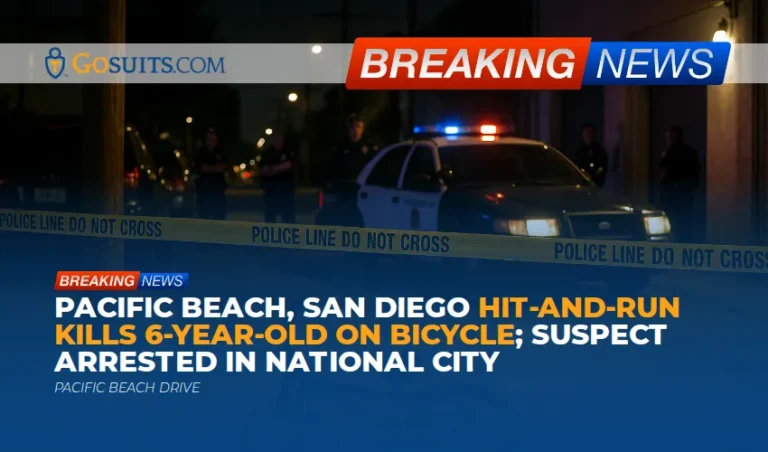
On a Saturday night in Pacific Beach, a six-year-old boy riding a bicycle on the sidewalk along Pacific Beach Drive was struck by a driver turning into a nearby alley. According to the San Diego Police Department, the driver briefly stopped, then left the scene and ran over the child while fleeing. The child was taken to a local hospital and later passed away from his injuries. Investigators report that the suspect, a 32-year-old woman, was located in National City and taken into custody. Authorities indicated alcohol does not appear to be a factor at this time. The San Diego Police Department Traffic Division is leading the investigation, and a portion of Pacific Beach Drive was closed while officers processed the scene. Neighbors described the aftermath and shared how shaken the community feels in the wake of the loss.
Details beyond these facts remain under investigation. When officials release further public information, it may include updated collision summaries, clarified roadway conditions, and additional witness accounts. Until then, it is important for the community to rely on credible public updates and avoid speculation.
Location context: Pacific Beach Drive, alleys, and nighttime traffic patterns
Pacific Beach Drive runs near the bayfront and is lined with residential alleys, beach rentals, and small businesses that feed traffic into narrow passages behind properties. On weekends, people walk to and from the beach, cruise along the boardwalk, and use bikes and scooters around Mission Bay. After dark, visibility drops, and those alley openings can create sudden conflict points between drivers and people moving on sidewalks. Even in a neighborhood residents often describe as feeling safe, any location where vehicles cross sidewalks and enter alleys demands careful, slow, and deliberate driving.
Alley entrances in Pacific Beach are common near cross streets leading to Grand Avenue, Garnet Avenue, and the waterfront. Drivers turning off Pacific Beach Drive into these corridors should anticipate pedestrians, families with strollers, and kids on bicycles. A quick left or right turn that overlooks a sidewalk user can lead to severe consequences. Locals know these routes well, but visitors and rideshare traffic may not, which makes clear signage, cautious turning, and constant scanning even more important.
Why these collisions happen at alley entrances
Crashes at alley entrances typically arise from a failure to scan for people on sidewalks, speed that is too high for conditions, or a turn that cuts across the path of someone already present on the sidewalk. At night, headlight glare, shadows, and distractions increase risk. The natural tendency to “hug the corner” and roll into the alley can also reduce the time a driver has to perceive and react to a child on a small bike. Children are particularly vulnerable because of their height, unpredictable movements, and limited visibility behind parked cars or landscaping.
From a safety perspective, the keys at alley crossings are low speed, complete stops where visibility is limited, and yielding to people already using the sidewalk. These steps create enough buffer to avoid tragic conflicts at the curb line.
Legal duties on California drivers after injury crashes
California law requires drivers involved in a crash causing injury or death to immediately stop at or near the scene, provide identifying information, and render reasonable assistance, including transporting or arranging transport for anyone who needs medical aid. Leaving the scene without fulfilling these requirements is illegal and a serious violation of state law [1]. The law does not hinge on who caused the collision; the duty to stop and provide aid applies regardless of fault.
Beyond the duty to stop, drivers must make safe turning movements. The California DMV’s driver handbook emphasizes the need to slow and check for pedestrians and people on bicycles before turning into driveways or alleys. Drivers are instructed to yield to sidewalk users who already occupy or are entering the path of the vehicle during such movements [2]. These are foundational rules intended to protect people outside vehicles, especially children.
Rights of families after a fatal traffic collision in California
When a life is lost in a traffic crash, California law allows certain surviving family members to pursue a civil claim for wrongful death. In general terms, a wrongful death claim seeks to hold a negligent party financially responsible for the harms caused by the death, including harm felt by family members. A separate but related claim, often called a survival action, may address harms suffered by the decedent prior to passing. While every situation is unique, both claims focus on accountability and the measurable impacts of the loss. This is a complex area, and families often turn to wrongful death attorneys to understand what may be available under the law, to protect their rights, and to navigate the insurance landscape without making statements that could be misconstrued later.
For a practical overview of what these cases can involve, see What happens if someone is killed in a car accident. While that resource offers general guidance, it does not replace a personalized, confidential conversation with a seasoned attorney who can explain options based on the specific facts and timelines involved.

Evidence to preserve right away in San Diego
Key evidence can disappear quickly after a hit-and-run. In a dense neighborhood like Pacific Beach, there are often multiple potential sources of video and witnesses, but many of them are time-sensitive. Consider the following sources and steps:
- Nearby business cameras – Stores, restaurants, and beach rentals along Pacific Beach Drive may have exterior cameras capturing the sidewalk, curb line, or alley entrance. Many systems overwrite footage in days. Promptly asking the owner to preserve video from the date and time of the crash can make a difference.
- Residential doorbell and security cameras – Houses and rentals facing the alley can capture the turn path or the fleeing vehicle. A simple, respectful request to preserve clips may help. If a formal preservation letter is needed, an attorney can draft and send it to ensure the request is documented.
- Public cameras – Some areas have traffic or safety cameras, and certain agencies may capture incident-related footage. Retention policies vary and can be short. Crafting a tailored public records request early can improve the chance that relevant clips are not overwritten. City programs, including Vision Zero, also maintain collision mapping resources that can inform a broader safety picture [5].
- Witness names and contact details – People who saw the immediate aftermath often move on within minutes. Collecting names, phone numbers, and a brief description of what they observed helps investigators and can prevent important details from fading.
- Physical evidence – Skid marks, debris, gouge marks at the alley entrance, and vehicle fluid trails tell a story, but they can be washed away or driven over. Photographs and video taken quickly may preserve valuable context for reconstruction.
If a family is considering a civil claim, an attorney can coordinate preservation letters, public records requests, and, when needed, expert analysis. This is especially important if multiple parties or insurers might point the finger at one another, which is common after severe roadway events.
Where to obtain official records and assistance in San Diego County
San Diego Police Department collision report
SDPD collision reports are generally available through the department’s Records Division after the initial investigative phase. Availability can be delayed in serious or ongoing investigations. The City’s official Records page explains how to request police records and the types of documents that may be available [3]. When requesting, it helps to provide the date, approximate time, exact location on Pacific Beach Drive, and any assigned incident number if you have it. Families can also ask about supplemental narratives, diagrams, and whether a traffic homicide team reconstruction is part of the file.
San Diego County Medical Examiner autopsy or examination reports
The San Diego County Medical Examiner maintains official death investigation records. Next-of-kin can request certified copies; certain materials may be publicly releasable, while others are restricted by law. Instructions, forms, and fee information are provided by the County Medical Examiner’s office on its Records page [4]. If an autopsy or external exam was performed, the final report can take weeks, depending on pending tests. The Medical Examiner may also provide cause and manner of death determinations when the investigation is complete.
City of San Diego Public Records Act requests
The City’s Public Records Act Requests page explains how members of the public can request city records, including 911 calls, Computer Aided Dispatch logs, or certain traffic engineering files, subject to legal exemptions [6]. For sensitive files related to an active criminal or traffic investigation, access can be limited until the investigation concludes, but families can still file targeted requests early to start the process.

Victim assistance and support
The California Victim Compensation Board may help eligible victims and families with certain crime-related expenses, such as funeral and burial costs, mental health counseling, and other needs, subject to program rules and documentation requirements [7]. The program is statewide and works alongside local victim advocates.
Traffic safety initiatives and data
San Diego’s Vision Zero program compiles collision data and works on street safety improvements. Reviewing where and how collisions occur can provide context for community safety discussions and infrastructure planning [5]. At the state level, the California Office of Traffic Safety publishes city crash rankings and statewide trends that help illuminate risks for people walking and biking [8].
Insurance considerations after a fatal hit-and-run
In many hit-and-run tragedies, civil accountability may involve multiple insurance layers. If the at-fault driver is identified and insured, liability coverage is usually the first source of recovery. If the at-fault driver is uninsured or has insufficient limits, Uninsured or Underinsured Motorist coverage carried by the household may apply, even when a child was outside a vehicle at the time, depending on policy language. Coordinating claims across policies can be complex, particularly when insurers dispute fault or attempt to narrow coverage.
It is wise to speak with wrongful death attorneys before giving recorded statements to any insurer. Insurance adjusters are trained to ask questions that can minimize a claim’s value. Statements recorded early, especially during grief, can be taken out of context later. An attorney can help organize communications, clarify coverage, and reduce the risk of unintentional misstatements. For families in San Diego, consulting with wrongful death attorneys in San Diego can ensure local rules, venues, and practices are considered.
Community safety notes for Pacific Beach
No single change will eliminate risk at alley crossings, but a combination of driver behavior, street design, and community vigilance helps. Consider these reminders that fit Pacific Beach’s unique setting, where alleys are part of daily life:
- Drivers – Slow to a crawl before entering an alley from Pacific Beach Drive, come to a full stop when sightlines are blocked, and look for small bicyclists who may be obscured by parked cars or landscaping. The DMV’s guidance emphasizes yielding to sidewalk users during turns into driveways and alleys [2].
- Families with children – Teach kids to pause at alley mouths, make eye contact with drivers, and listen at night when visibility is reduced. National safety resources reinforce the importance of supervised riding and high-visibility clothing or equipment for kids, especially after dark [9] [10].
- Property owners – Maintain clear sightlines near alley entrances by trimming shrubs and keeping bins or boards away from the sidewalk edge. Good lighting at the alley mouth can improve a driver’s ability to detect a person on the sidewalk.
- Community reporting – If residents observe recurring near-misses at a specific alley, documenting dates and times and sharing that with the city can help traffic engineers consider improvements. Vision Zero and city staff depend on both data and lived experience to prioritize changes [5].
What to expect from the investigation timeline
In fatal collisions, SDPD’s Traffic Division typically conducts a detailed investigation. This can include scene measurements, photographic documentation, collection of vehicle evidence, and interviews with witnesses. If a vehicle is recovered, investigators may examine impact points, damage patterns, and onboard data. In some cases, search warrants can be issued for vehicle data or phone records. The Medical Examiner’s findings can inform the timeline of injuries and medical care. These steps take time, and public release of certain documents may be limited until core investigative work is finished.
Even with a suspect located, the civil investigation proceeds on its own track. Families or their representatives often conduct parallel evidence gathering to preserve time-sensitive materials, ensure access to critical records, and evaluate liability under civil standards that differ from criminal standards.
Steps to take now: a practical checklist
For those close to this tragedy or similar incidents, organization and documentation can help during an incredibly difficult period. Consider the following practical steps:
- Centralize documents – Keep a folder for hospital records, SDPD incident details, Medical Examiner communications, and any receipts or expenses.
- Record recollections – Write down what you or others recall about the timing, conditions, and anything unusual at the alley or along Pacific Beach Drive. Details fade quickly.
- Identify potential video sources – List nearby businesses or residences with cameras facing the sidewalk or alley. Note addresses and dates contacted.
- Limit direct insurer communications – Before giving a statement to any insurer, consult an attorney. What is said to insurance can be used against the claim later.
- Monitor agency updates – Check the SDPD and County Medical Examiner websites for guidance on report timelines and how to request records [3] [4].
- Consider supportive resources – State victim compensation programs may help with certain immediate needs during the investigation process [7].
Brief overview of California bicycling law basics
California law generally provides that people riding bicycles on the roadway have the same rights and responsibilities as drivers of vehicles, with some exceptions set out in statute [11]. The California DMV also emphasizes yielding to sidewalk users and scanning carefully before turning into alleys or driveways to prevent conflicts [2]. Local rules can vary regarding bicycle riding on sidewalks, and riders should be mindful of posted signs and local regulations. Regardless of local variations, the fundamental safety principle remains the same: drivers must slow down, look carefully, and yield to people already in the path of travel during turning movements.
Why taking prompt action matters after a fatal collision
Time affects evidence, insurance coverage decisions, and legal deadlines. Surveillance systems overwrite recordings, witnesses’ memories fade, and paperwork piles up. Early steps to preserve video, identify witnesses, and request official records can prevent key proof from disappearing. Additionally, certain legal timelines can be shorter than expected, and there may be special claims procedures if a public entity is involved in any aspect of the roadway design or maintenance. California’s Government Claims Act sets specific procedures and condensed deadlines for claims involving public entities [12].
Before contacting insurance companies, it is prudent to obtain a free consultation with a qualified attorney who can explain rights and responsibilities. A conversation up front can reduce the risk of misunderstandings and ensure that communications with insurers do not inadvertently limit available options. If a claim is made with any insurer, be mindful that recorded statements are taken for the insurer’s file and can be cited later during negotiations or litigation.

Commentary from Gosuits San Diego, California Personal Injury Attorney
Our hearts are with the family and everyone in Pacific Beach who is hurting after this loss. Neighborhood alleys and sidewalks are places children should be able to move with confidence, and it is devastating when a routine evening turns into a tragedy. This information is shared to help the community understand the civil side of these incidents, how investigations unfold, and what steps can protect rights during a difficult time.
From a civil liability standpoint, turning into an alley across a sidewalk requires particular care. The law and the DMV’s own guidance underscore the need to yield to people on that sidewalk and to stop and remain at the scene when injury occurs. When a driver fails to do so and a child is struck, civil accountability generally focuses on whether reasonable care was used in the turn and whether the statutory duties to stop and assist were fulfilled.
Insurance companies and large corporate claim departments often move quickly to control the narrative. They may request recorded statements at a time when families are grieving, ask broad medical authorizations, or suggest a tight timeline for decisions. These tactics can leverage a lack of familiarity with the process. Without advocate support, it is easy for critical details to be framed in ways that later diminish a claim’s value or limit available coverage.
A free consultation can make a meaningful difference. It allows families to understand the legal landscape, discuss insurance interactions, and map out preservation of evidence before it is lost. It is also an opportunity to ask the hard questions about timelines, autopsy and police reports, and how to coordinate with investigators while protecting the civil case. No one should have to navigate that alone.
References
- California Vehicle Code 20001 – California Legislative Information
- Right-of-Way Rules – California DMV Driver Handbook
- Police Records – City of San Diego
- Records Requests – San Diego County Medical Examiner
- Vision Zero – City of San Diego
- Public Records Act Requests – City of San Diego
- Victim Services – California Victim Compensation Board
- Crash Rankings – California Office of Traffic Safety
- Bicycle Safety – National Highway Traffic Safety Administration
- Bicycle Safety – Centers for Disease Control and Prevention
- California Vehicle Code 21200 – California Legislative Information
- California Government Code 911.2 – California Legislative Information