- What we know about the North Collegiate Drive head-on collision in Paris
- Timeline and location context
- What law enforcement has reported
- Why head-on collisions are so dangerous
- Civil implications and victim rights in Texas
- Immediate steps families often take after a fatal crash
- How to obtain key records and who to call
- Insurance and property damage considerations
- Crash reconstruction and preserving crucial evidence
- Community and roadway safety context in Paris
- Verified resources and Texas laws
- Action steps that help protect rights and peace of mind
- Commentary from Gosuits Paris, Texas Personal Injury Attorney
What we know about the North Collegiate Drive head-on collision in Paris
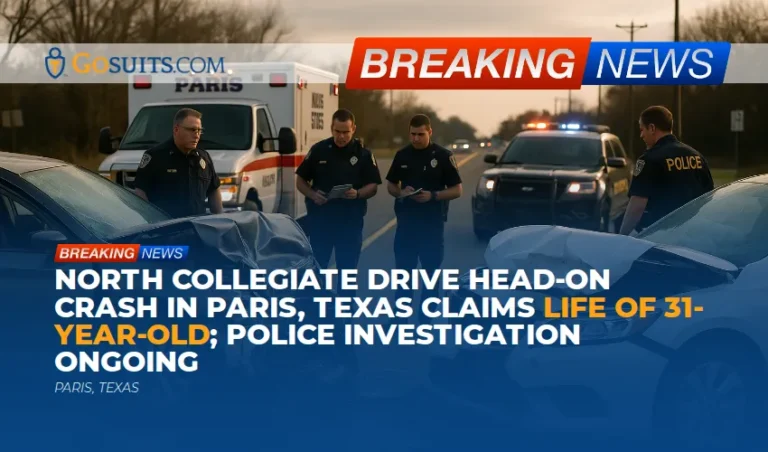
On December 3, Paris Police responded to a serious two-vehicle crash in the 900 block of North Collegiate Drive in Paris, Texas. According to officials, one vehicle crossed out of its lane and struck an oncoming vehicle head-on. First responders with Paris Police and Paris EMS provided rescue and medical treatment at the scene. The department’s Accident Reconstruction Team was notified to investigate. A 31-year-old driver was transported to Paris Regional Medical Center and was later pronounced deceased. The investigation remains ongoing, and no final cause or fault determination has been released as of the latest update.
At this stage, information is intentionally limited. Investigators typically withhold details while they collect measurements, secure vehicle data, speak with witnesses, and review any available video. That process can take weeks. Families often have questions long before answers are available. The sections below explain what typically happens next, how Texas law works in collisions like this, and where families often turn for essential records.
Timeline and location context
Timing matters in roadway investigations. The collision was reported on December 3 on North Collegiate Drive. December brings earlier sunsets and longer night driving in Paris, which can affect visibility, depth perception, and driver fatigue. Investigators commonly document lighting conditions, roadway markings, lane widths, and any visual obstructions when a lane departure is reported. They may also review whether recent weather contributed to road surface conditions on the date of the crash.
North Collegiate Drive is a well-used corridor within the city limits. While we won’t speculate about speed or traffic volume at the time of the crash, teams will note speed limits, advisory signs, centerline markings, and whether the segment includes curves or hills that can influence sight distance and stopping distance. Those facts help reconstruct the moment a vehicle left its lane and why the opposing driver had limited opportunity to avoid a head-on impact.
What law enforcement has reported
According to Paris Police, one driver departed their lane and struck the other driver in the opposing lane. Officers and Paris EMS assisted at the scene, and the department’s Accident Reconstruction Team is conducting a formal investigation. The 31-year-old driver who was transported to Paris Regional Medical Center was pronounced deceased at the hospital. No additional details on contributing factors have been released.
In Texas, officers typically prepare a peace officer’s crash report known as a CR‑3, along with scene diagrams and photographs. The Reconstruction Team may extract event data recorder information, interview witnesses, check for potential vehicle defects, and assess roadway factors. If impairment, distraction, a medical event, or fatigue is suspected, investigators will document those items using established protocols. Families should expect updates only after evidence is collected and analyzed.
Why head-on collisions are so dangerous
Head-on collisions concentrate energy in a frontal impact. Even at moderate speeds, the combined closing speed can be devastating. Safety agencies consistently identify roadway and lane departure as a major contributor to serious injuries and deaths nationwide. The Federal Highway Administration notes that roadway departure crashes are a significant share of traffic fatalities across the country, which guides investment in rumble strips, clearer markings, and other countermeasures designed to keep vehicles in their lanes and alert drivers who drift.
Seat belts, airbags, and crumple zones save lives, but they don’t eliminate risk when two vehicles meet head-to-head. Investigators pay close attention to lane position, pre-impact steering or braking, and whether either driver had time and space to respond. They’ll also examine whether additional measures like centerline rumble strips or improved nighttime visibility might have reduced the risk or severity of this type of crash.

Civil implications and victim rights in Texas
When a vehicle leaves its lane and causes a head-on crash, potential civil liability can arise under Texas negligence principles. Determining liability is fact-specific and depends on the complete record: crash reports, reconstruction analysis, witness statements, and physical evidence such as skid marks, damage profiles, and data from event data recorders.
Under Texas law, wrongful death and survival claims may be available to certain family members after a fatal collision. These are distinct civil actions with different purposes. Wrongful death claims are brought for the losses of eligible family members, while survival claims allow a decedent’s estate to pursue claims the person could have brought if they had survived. Texas law also applies proportionate responsibility where multiple actors may share fault in a crash. The full picture only emerges once investigators and, if needed, independent experts complete their reviews.
Nothing in this article is a promise of outcome or case strategy. It’s general information to help the community understand what typically follows a serious crash and where to find reliable resources. Anyone considering a claim should speak with a seasoned attorney before communicating with insurance representatives so they understand their rights and the implications of recorded statements.
Immediate steps families often take after a fatal crash
In the aftermath of a fatal crash, families often feel overwhelmed while also needing to make time-sensitive decisions. The steps below are common in Texas. Specifics can vary, so tailor them to your circumstances and always consider speaking with counsel before contacting an insurer.
- Request the peace officer’s crash report (CR‑3). The official report often becomes available within days to a few weeks, depending on the complexity of the reconstruction. It will list involved parties, road and weather conditions, and any preliminary contributing factors. Access to crash reports in Texas is governed by statute and limited to certain parties. More on how to request this is below.
- Identify who performed the inquest and any autopsy. In many Texas counties without a medical examiner’s office, a Justice of the Peace conducts the inquest and may order a forensic autopsy. Ask which authority has custody of autopsy or inquest records and what their release timeline looks like.
- Obtain certified death certificates. Death certificates are required for many tasks, including claims, benefits, and estate matters. In Texas, vital records are maintained by the Department of State Health Services, and certified copies can be requested through Vital Statistics.
- Preserve the vehicles and onboard data. If at all possible, do not authorize disposal or salvage until you’ve documented the vehicle and arranged for an event data recorder download. EDR data can be pivotal in lane departure cases, reflecting speed, braking, steering input, and restraint use in the seconds before impact.
- Collect photos, video, and witness details. Save any phone photos from the scene. Check for nearby homes or businesses along North Collegiate Drive that may have security or doorbell cameras that captured the moments before the collision. Many systems overwrite video within days.
- Keep all medical, funeral, and property records organized. Hospital records, EMS run sheets, and invoices help document the timeline and losses. HIPAA gives patients and personal representatives rights to access medical records; hospitals typically have a Health Information Management department to process requests.
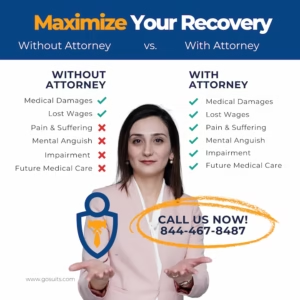
- Speak with an attorney before calling insurance. Anything said to an insurance company can be recorded and used to limit a claim. A brief consultation helps clarify what to say and, equally important, what not to say.
How to obtain key records and who to call
Police crash report (CR‑3)
Texas peace officers complete crash reports for qualifying collisions and submit them to the state. By law, access to these reports is limited to parties with a proper interest, and certain personal information is protected. The Texas Transportation Code addresses both an officer’s duty to investigate and the release of crash reports. After the report is filed and processed, copies are generally available through the state system or, in some cases, through the local agency’s records division. Be prepared with the date, location, and names or vehicle information when requesting.
Autopsy or inquest records
In Texas, inquests into deaths from unlawful means or accidents are governed by the Code of Criminal Procedure. In counties without a medical examiner’s office, a Justice of the Peace often conducts the inquest and may order a forensic autopsy at an accredited facility. Release of autopsy findings can take several weeks or longer depending on toxicology and other analyses. Families should ask the investigating agency which office handled the inquest and how to request copies when available.
Death certificates
Certified death certificates in Texas are issued through the Department of State Health Services Vital Statistics unit. Funeral homes commonly submit the initial paperwork, but families can order additional certified copies as needed. These documents are necessary for many administrative and legal tasks.
Medical and EMS records
Hospital records from Paris Regional Medical Center and EMS patient care reports document treatment and can be requested by an authorized personal representative. Under federal rules, individuals generally have a right to access their health information, and facilities must provide records within specific timeframes. Ask the hospital’s Health Information Management department about procedures and fees for copies.
Insurance and property damage considerations
Insurance issues begin quickly after a serious collision. Adjusters may call seeking statements within days. Before speaking with any insurance company, including your own, consider a free consultation with an attorney. Statements can be recorded and later used to dispute fault or limit recovery. A short conversation early on can help avoid avoidable missteps.
- Liability and bodily injury coverage. When a lane departure leads to a head-on collision, the at-fault driver’s liability policy is the usual first source of coverage for injury and wrongful death claims. In some cases, additional coverage may exist through employers, permissive users, or household policies.
- Uninsured/Underinsured Motorist (UM/UIM). If the at-fault driver has minimal coverage or coverage is denied, UM/UIM can be crucial. These claims often require careful timing and notices to avoid jeopardizing benefits.
- Property damage and total loss. If a vehicle is totaled, insurers will estimate its actual cash value and may arrange towing and storage. Families should ensure the vehicle is preserved until necessary inspections and data downloads are complete. Once a vehicle is released to salvage, critical evidence can be lost.
- Recorded statements. Be cautious. Even simple questions can lead to conclusions about speed, distraction, or visibility. It’s common to wait to provide statements until the crash report and early findings are available.
Crash reconstruction and preserving crucial evidence
The Paris Police Accident Reconstruction Team’s involvement signals a methodical review. Reconstruction typically includes scene measurements, photographs, crush analysis, and mapping of pre- and post-impact paths. If available, they’ll gather EDR data from both vehicles. That data can show speed, throttle, braking, steering angle, and seat belt status in the moments before the collision.
Beyond official efforts, families sometimes arrange independent inspections. While you don’t need to hire a reconstructionist in every case, early preservation steps help regardless of next steps:
- Secure both vehicles. Ask the storage lot to hold the vehicles and not allow destructive inspections without notice. Keep track of daily storage fees and document vehicle condition with photos and video.
- Request an EDR download. Modern vehicles store pre-crash data. A non-destructive download preserves information even if a vehicle is not drivable. Chain of custody matters, so use trained personnel and keep copies of the raw data and reports.
- Collect timeline evidence. Phone location logs, app data, and vehicle infotainment logs can corroborate timing and travel paths. Preserve this data early to avoid loss through automatic deletion.
- Canvas for video. Along North Collegiate Drive, homes or businesses may have exterior cameras aimed toward the roadway. Many systems overwrite footage within 48 to 168 hours. Quick, respectful requests can make the difference.
- Document roadway conditions. Photograph lane markings, centerlines, signage, and lighting conditions at a similar time of day. If temporary construction or utility work was present, document signs and traffic control placements.
Community and roadway safety context in Paris
Paris residents know that traffic patterns shift during the school year, holiday shopping season, and with early winter sunsets. December brings more dusk and nighttime driving within city streets and on Loop 286. Sun glare near sunset and headlight glare after dark can make a subtle drift more dangerous, especially along two-lane segments where a centerline is the only separation between directions of travel.
The city has invested in roadway improvements over the years, and drivers benefit from thoughtful design features like centerline markings and signage. Still, human factors play a large role. Fatigue after a long workday, distraction, or even a momentary lapse can lead to a lane departure. While we can’t draw conclusions about this case, it’s a reminder for all of us traveling through Paris to buckle up, slow down on familiar roads, and stay alert to the unexpected. Community vigilance and safe driving habits remain our best defense.
Verified resources and Texas laws
For those who want to read the underlying rules and neutral safety information, the links below lead to government sources with reliable guidance.
- Texas release of crash reports: Texas Transportation Code addressing release of peace officer crash reports and privacy rules. See Transportation Code § 550.065.
- Officer investigation duties: General statutory duties regarding crash investigations and reporting. See Transportation Code Chapter 550.
- Wrongful death and survival actions: Eligibility and general provisions. See Civil Practice and Remedies Code Chapter 71.
- Proportionate responsibility: Allocation of fault in civil cases. See Civil Practice and Remedies Code Chapter 33.
- Statute of limitations: General two-year limitations period for personal injury and wrongful death claims. See Civil Practice and Remedies Code § 16.003.
- Inquests and autopsies: Texas inquest procedures and Justice of the Peace authority. See Code of Criminal Procedure Chapter 49.
- Texas Public Information Act: Public records framework and exceptions for sensitive information. See Government Code Chapter 552.
- Seat belt and occupant protection basics: Federal safety overview. See NHTSA Seat Belts.
- Roadway departure safety: Federal Highway Administration overview of roadway departure crash risks and countermeasures. See FHWA Roadway Departure Safety.
- Access to medical records: Federal guidance on how to request records. See HHS HIPAA Right of Access.
- Texas Vital Statistics: Ordering death certificates. See Texas DSHS Vital Statistics.

Action steps that help protect rights and peace of mind
When tragedy strikes, the path forward can feel blurry. These actions help bring clarity and preserve options while the official investigation proceeds:
- Secure the vehicles and preserve data now. Ask the tow yard to hold the vehicles until an inspection and EDR download can be arranged. This can be time-sensitive because storage lots may move vehicles to salvage quickly.
- Request official records on a rolling basis. The CR‑3 crash report, EMS run sheets, hospital records, and later the autopsy report will not be ready all at once. Calendar reminders to check status weekly so momentum isn’t lost.
- Document communications and costs. Keep a simple log of every call, letter, or email with insurers, medical providers, and storage lots. Save receipts and invoices in one folder. This organization makes later steps far easier.
- Collect and safeguard digital evidence. Back up photos, video, and phone data to more than one location. Politely request nearby homeowners or businesses on North Collegiate Drive to save footage. Many systems overwrite within days.
- Avoid recorded statements until prepared. Insurance adjusters may ask for quick statements. Prepare first. What’s said early can narrow options later.
- Be mindful of Texas deadlines. Civil claims are subject to deadlines that, if missed, can end the ability to file. Understanding the general timeline early helps prevent surprises later.
There’s no perfect order to these tasks, and not all will apply in every situation. Acting promptly can reduce uncertainty and help ensure critical information isn’t lost while the city’s reconstruction team completes its work.
Commentary from Gosuits Paris, Texas Personal Injury Attorney
Our hearts go out to everyone impacted by the head-on collision on North Collegiate Drive. A 31-year-old community member lost his life, and that loss is felt far beyond the scene itself. This article is shared for educational purposes to help neighbors understand what typically happens after a serious crash in our city and how to locate reliable information while officials do their jobs.
From a civil perspective, a reported lane departure followed by a head-on collision raises immediate questions about driver attention, roadway conditions, and whether anything could have prevented the impact or reduced its severity. That’s exactly what the Accident Reconstruction Team will evaluate. In cases like this, early preservation of vehicles and onboard data, along with timely witness outreach, often makes a real difference in understanding what happened and why.
Insurance companies and large corporate stakeholders understand the system and timelines far better than most people who are dealing with sudden loss. Adjusters may reach out quickly for recorded statements or medical authorizations. Those conversations can seem routine, but the answers are often used later to reduce or deny claims. Paperwork that looks standard can give broad access to private information. Without context, it’s easy to say something that’s misunderstood or incomplete. Being informed before engaging with insurers helps level the playing field.
Speaking with a seasoned lawyer early, even briefly, can help clarify priorities, protect privacy, and ensure that critical evidence isn’t lost. Free consultations exist for exactly this reason: so people can understand their rights, the potential coverages in play, and the typical timing of state and local investigations before they make decisions that are hard to undo. No one can change what happened on North Collegiate Drive, but good information, gathered early and handled carefully, can bring clearer answers and a steadier path forward for those affected.