- What We Know About the Highway 95 Crash at the California Nevada Border
- Response on Scene and Highway Closure
- How Serious Crashes on Rural Highways Are Investigated
- Where Families Can Get Official Records and Updates
- Trauma Care and Air Transport in the Desert Corridor
- Civil Law Snapshot After a Fatal Highway Crash
- Safety and Prevention on the U.S. 95 Corridor
- Practical Steps to Preserve Evidence After a Major Collision
- Insurance and Claims Considerations
- What We Still Do Not Know
- Time-Sensitive Steps the Public Can Take Now
- Commentary from Gosuits Needles, California Personal Injury Attorney
- References
What We Know About the Highway 95 Crash at the California Nevada Border
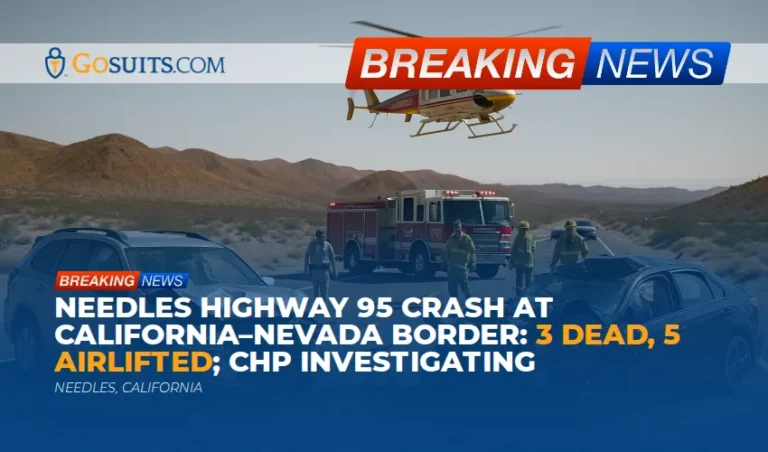
Early Sunday near the California and Nevada state line by Needles, a major collision on U.S. Highway 95 led to tragic loss of life and multiple serious injuries. According to initial public updates, three people were pronounced dead at the scene, and five additional patients were flown by helicopter to regional trauma centers. The highway was closed during rescue and investigation and later reopened. Local and regional agencies on scene included San Bernardino County Fire, the California Highway Patrol, Baker Ambulance, and the Clark County Fire Department. The precise sequence of events, how many vehicles were involved, and the immediate causes have not yet been publicly released by authorities.
If you drive this stretch, you know the landscape: the open Mojave Desert, the Colorado River not far off, and long desert straights where wind, glare, and speed can turn small mistakes into catastrophic outcomes. When a crash of this magnitude happens right at the border, multiple agencies work together, and information can take time to confirm.
Response on Scene and Highway Closure
In high-severity incidents on rural highways, response often involves a mix of ground units and air medical transport. On Sunday, crews extricated patients and used helicopters to move the most critically injured to trauma centers where rapid surgical capability is available. Caltrans typically coordinates closures and traffic control on the California side, and drivers can confirm current conditions on QuickMap [2]. Clark County Fire and Nevada transportation authorities may also provide situational updates for the Nevada side of the state line [6][15].
Crashes on rural corridors can require long-distance ambulance travel, staging of landing zones for helicopters, and collaboration across jurisdictions. That is particularly true at the California Nevada border where U.S. 95, Interstate 40, and local desert routes intersect travel for residents, truckers, and river recreation traffic.
How Serious Crashes on Rural Highways Are Investigated
On the California side, the California Highway Patrol’s Needles Area office typically leads the traffic collision investigation, documents the scene, and prepares the official collision report [1]. Investigators gather physical evidence like debris fields, skid and yaw marks, vehicle crush profiles, and roadway conditions. They often capture drone or overhead photographs to map final rest positions and sight lines, especially along long desert stretches where visual distance and shoulder drop-offs matter.
If commercial vehicles are involved, investigators may seek data from electronic control modules, GPS telematics, and hours-of-service logs. Weather and visibility are also evaluated. On U.S. 95, crosswinds, sand, twilight glare, and sudden speed differentials between passenger cars and heavy trucks can all be relevant factors. Toxicology, if indicated, is typically part of the post-incident process and is handled through coroner protocols.
It is common for preliminary details to remain limited until witness statements are collected, mechanical inspections are complete, and agencies reconcile jurisdictional considerations at the state line. CHP will ultimately release a collision report that summarizes the investigative findings. Families and involved drivers can request that report when it is available [3].
Where Families Can Get Official Records and Updates

CHP collision report
The California Highway Patrol’s Needles Area office is the local point of contact for a crash on U.S. 95 near the California side of the border. Families and involved parties can request the Traffic Collision Report from the Needles office, which is part of CHP’s Inland Division [1]. The report number, date and location of the crash, and proof of involvement or relationship are typically required. CHP provides instructions for requesting reports, including mail and in-person options, and may require a fee [3].
San Bernardino County Sheriff Coroner Division
For decedents pronounced in San Bernardino County, the Sheriff’s Coroner Division manages death investigations, identification, and coroner’s reports. The Coroner provides information on how families can request autopsy and investigative documents once they are finalized [4]. Death certificates are issued through the San Bernardino County Assessor-Recorder-Clerk, and the county provides guidance on certified copies and eligibility [5].
Clark County agencies if the incident crosses into Nevada
Because this crash occurred at the state line, some medical transport and emergency response resources may involve Nevada. Clark County Fire provides emergency services just across the border and maintains public information channels [6]. If a death is pronounced in Clark County or a decedent is transferred there for examination, the Clark County Office of the Coroner/Medical Examiner will handle next-of-kin notifications and record requests [7].
Highway conditions and closures
To verify reopening times or ongoing lane restrictions on the California side, Caltrans QuickMap provides live updates for closures, chain controls, and incident markers [2]. On the Nevada side of the line, the Nevada Department of Transportation publishes travel information and statewide road advisories [15].
Trauma Care and Air Transport in the Desert Corridor
In a remote desert corridor like U.S. 95, air medical transport can make the difference between a survivable injury and a fatal one. The Emergency Medical Services Authority oversees California’s trauma system and coordinates with local EMS agencies to ensure critically injured patients reach appropriate facilities, often Level I or Level II trauma centers where immediate surgery and 24-hour specialist coverage are available [8].
Families may not learn the receiving hospital immediately; privacy rules and the urgent pace of care can delay those details. As the situation stabilizes, hospitals or law enforcement typically notify next of kin.
Civil Law Snapshot After a Fatal Highway Crash
When a crash results in a fatality, California’s civil law provides two distinct but related pathways, depending on the circumstances and survivors. A wrongful death claim belongs to eligible survivors and addresses losses such as financial support, companionship, and funeral costs. California’s wrongful death statute describes who may bring such a claim and under what conditions [12]. In parallel, a survival action may address the decedent’s own damages up to the time of death, including medical expenses and conscious pain and suffering in limited scenarios under recent legislative updates.
Complexity can increase at the state line. Choice-of-law, venue, and the mix of California and Nevada drivers or insurers can affect how claims are evaluated. Policies issued in one state may have different minimum limits and endorsements than policies issued in another. In multi-vehicle collisions, multiple liability policies may be in play, as well as uninsured or underinsured motorist coverage. Sorting out which coverage applies first can be challenging, and it often turns on policy language and fault allocation across drivers.
If a roadway defect, missing signage, or unsafe work zone contributed to a crash, claims involving public entities can have very short notice deadlines. In California, a claim against a government entity is generally due within six months under the Government Claims Act [13]. That is a strict timeline that can expire before families have had a chance to grieve, so early awareness of deadlines is important.
Safety and Prevention on the U.S. 95 Corridor
Rural highways see a disproportionate share of severe and fatal crashes relative to the number of miles driven. National datasets show persistent risks tied to speed, run-off-road collisions, and head-on impacts on two-lane roads. The National Highway Traffic Safety Administration’s FARS program aggregates and publishes fatal crash data that researchers use to identify trends on corridors like U.S. 95 [10].
The Federal Highway Administration promotes countermeasures such as centerline and shoulder rumble strips, high-visibility signage, and targeted speed management to reduce run-off-road and head-on crashes on rural routes [11]. For drivers moving between Needles and Laughlin or beyond toward Searchlight, checking Caltrans QuickMap before departure can help avoid closures and secondary crashes caused by sudden traffic backups [2]. On days with strong desert winds, sand on the roadway can lengthen stopping distances and obscure lane markings. Evening glare over the river and early morning cold patches can also matter more than you might expect.
Practical Steps to Preserve Evidence After a Major Collision
After a catastrophic crash, facts matter, but evidence can vanish quickly in the desert. Tire tracks fade, debris gets swept, and vehicles are moved to storage yards hours from Needles. If someone chooses to explore their civil options, preserving evidence promptly is a practical necessity. The following steps are commonly helpful.
- Secure the official documents. Request the CHP Traffic Collision Report when it is available and note the report number, the reporting officer’s name, and the date and location reference points like mile markers or nearby crossroads [3]. If any responding medical or fire agencies provide run numbers, keep those too.
- Preserve vehicle data. Modern vehicles often record speed, throttle, brake, and seatbelt status for seconds before a crash. If commercial trucks were involved, engine control module data and electronic logging device records can be vital. These records can be overwritten in routine operation or lost if a vehicle is salvaged, so a timely preservation letter is important.
- Keep your own media. Save dashcam files, phone photos, and even short clips that show traffic patterns, weather, or waiting traffic during the closure. Back up these files to more than one location.
- Identify witnesses. Many travelers on U.S. 95 are in transit between states. Names, phone numbers, and even plate numbers of helpful witnesses can be lost in the shuffle unless captured early.
- Document the roadway. If safe and permitted, return to photograph sight lines, signage, lane drops, shoulder condition, and any unusual hazards. Confirm that what you photograph matches the location where the crash occurred; long stretches of highway can look similar.
- Track medical records. From helicopter transport to emergency department care and follow-up, keeping a list of all facilities helps later when requesting records under HIPAA rights for patients and authorized representatives. The federal government provides consumer information on accessing medical records [9].
For a deeper overview of building a record in California cases, see How to Gather Strong Evidence for Personal Injury Cases in California.
People often search for car accident lawyers when a crash is severe and there are multiple vehicles or insurers involved. It is understandable to want professional guidance on preserving black box data, locating out-of-state witnesses, and coordinating with storage yards in remote parts of San Bernardino County.
Insurance and Claims Considerations
In the aftermath of a tragedy, insurers for each involved driver will open claim files quickly. Adjusters may request recorded statements, medical authorizations, and early settlement discussions. It is generally wise to consult an attorney before providing a recorded statement or signing any releases. What someone says to an insurance company can be used against them later if disputes arise about fault or injuries. California’s Department of Insurance maintains consumer-facing guidance on auto claims, claim timelines, and policyholder rights [14].
Policy limits can be reached rapidly in catastrophic losses, particularly if several people were injured. Liability, uninsured/underinsured motorist coverage, medical payments coverage, and umbrella policies may all play roles. If commercial vehicles or rideshare drivers were involved, additional coverage layers or different claim pathways may apply. Needles car accident lawyers can help the public understand how multiple claim files interact, including claims that cross the California Nevada line.
Nothing prevents someone from contacting an insurer on their own, but many community members prefer to get a free consultation first so they understand their rights and potential pitfalls in recorded statements and early forms. That can be especially important if a government entity’s potential responsibility is at issue, because the Government Claims Act imposes a tight six-month deadline for notice [13].
What We Still Do Not Know
At the time of this writing, the specific cause and fault allocation in this Highway 95 crash have not been publicly released. Unknowns include the number and type of vehicles, whether a medical event, sudden hazard, or weather played a role, and whether a secondary collision occurred within the closure. It is also not yet public which trauma centers received patients or the condition of those transported. Those details will typically emerge in the days and weeks ahead via official reports and agency releases.
Time-Sensitive Steps the Public Can Take Now
In the wake of a deadly crash, time matters. The following general steps can help the broader community protect information and options while agencies complete their work.
- Note identifying details now. Dates, approximate times, mile markers, nearby landmarks like the I-40 junction or river crossings, and responding agencies will help later when requesting records.
- Request official records promptly. CHP collision reports, coroner records, and death certificates each have their own processes and timelines. Initiating those early can prevent delays once you need them [1][3][4][5].
- Preserve vehicles before they are salvaged. Storage yards may start accruing fees and may eventually release vehicles. If documentation or inspections are anticipated, act quickly to avoid loss of critical evidence.
- Be cautious with insurer communications. Adjusters may move quickly. Early statements, medical authorizations, or partial settlements can affect later options. Getting a free consultation before substantive insurer discussions can help people understand the implications.
- Track deadlines. Standard statutes of limitations apply, but some deadlines are much shorter. Claims involving public entities in California generally require notice within six months [13].
- Use verified road sources. For persistent closures, detours, or weather hazards on the California side, monitor Caltrans QuickMap and official alerts rather than relying only on social media posts [2].
These steps are intended to help the community move in a careful, informed way while official investigations continue.
In multi-vehicle incidents that span jurisdictions, car accident lawyers often coordinate preservation letters, insurer communications, and public records requests concurrent with the official investigation timeline.

Commentary from Gosuits Needles, California Personal Injury Attorney
Our hearts are with everyone affected by the U.S. 95 border crash. Three lives lost and several more people airlifted is devastating for Needles, for families across San Bernardino County, and for neighbors just over the line in Clark County. This commentary is offered for educational and general information purposes.
From a civil-injury perspective, crashes on rural corridors at the state line raise important questions. Investigators will look at lane position, speed, visibility, and whether any vehicle crossed the center or lost control on the shoulder. If a commercial vehicle was involved, hours-of-service, load securement, and equipment condition may be examined. If there were unusual road or signage conditions, that can factor into the analysis. Right now, without official findings, it is best to let the evidence lead.
It is also important to understand how insurance carriers and large corporations approach these events. Their teams move fast. Early recorded statements, quick medical authorizations, and low initial offers can work to limit exposure, especially when policy limits are at risk across multiple injured people. Many folks do not realize that casual comments about speed, visibility, or seatbelt use can be quoted back at them later in ways that do not capture the full context. That imbalance in information and experience can have real consequences.
Getting a free consultation before speaking at length with insurers helps community members understand their rights, the sequence of steps, and the deadlines that apply, including the six-month claim notice period when public entities may be involved. Even if someone chooses not to retain counsel, a brief conversation can clarify what should be preserved and what should wait until official reports are available.
References
- Find an Office: Needles Area – California Highway Patrol
- QuickMap – Caltrans
- Traffic Collision Report – California Highway Patrol
- Coroner Division – San Bernardino County Sheriff
- Recorder Services: Vital Records – San Bernardino County
- Fire Department – Clark County, Nevada
- Coroner/Medical Examiner – Clark County, Nevada
- Trauma Center System – California EMS Authority
- Vehicle Accidents – California DMV
- Fatality Analysis Reporting System (FARS) – NHTSA
- Rumble Strips and Rumble Stripes – FHWA
- Wrongful Death Actions, Code Civ. Proc. § 377.60 – California Legislature
- Government Claims Act Notice Deadline, Gov. Code § 911.2 – California Legislature
- Consumer Auto Insurance Guide – California Department of Insurance
- Nevada Department of Transportation