- What we know about the Malibu PCH pedestrian fatality
- Where it happened and why this PCH stretch can be risky
- How CHP and investigators handle fatal pedestrian crashes
- Where families can get official records and updates
- Key California laws that may apply to a pedestrian death on PCH
- Evidence to preserve after a fatal pedestrian crash on PCH
- Insurance and financial considerations after a fatal pedestrian crash
- Community safety notes for Malibu and Pacific Coast Highway
- A two week action timeline to stay organized
- What investigators will likely review next
- Call to action for the community: steps to take now and why timing matters
- Commentary from Gosuits Malibu, California Personal Injury Attorney
- References
What we know about the Malibu PCH pedestrian fatality
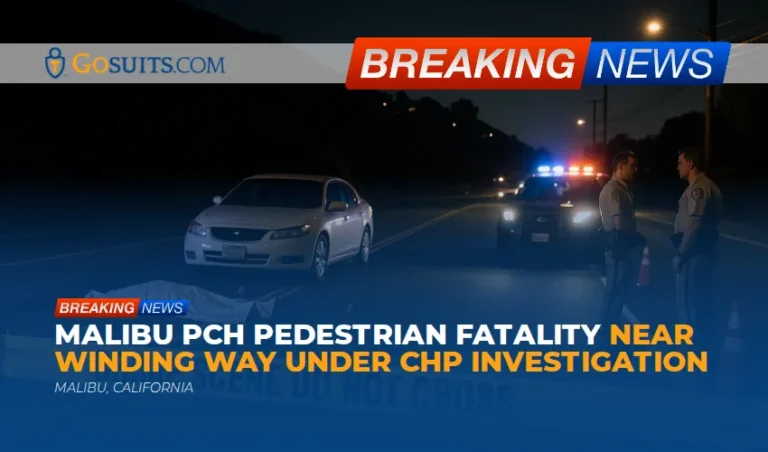
On Monday evening, Pacific Coast Highway in Malibu was temporarily closed after a pedestrian was struck and killed near Winding Way, just east of Kanan Dume Road. Authorities reported the collision around 7:30 p.m. The victim has not been publicly identified. Los Angeles County Fire Department paramedics pronounced the pedestrian deceased at the scene. California Highway Patrol officers stated that the driver remained on site and cooperated with the investigation. At this time, officers indicated they do not believe impairment or speed were factors. The cause of the crash remains under investigation. PCH was expected to remain closed between East Winding Way and West Winding Way for several hours during the on scene work.
When fatal collisions occur on PCH through Malibu, closures often ripple east toward Pepperdine University and the Malibu Pier and west toward Zuma Beach and Point Dume. Detours can push traffic up to Mulholland Highway or further into the canyons. That was the case Monday as investigators documented the scene and emergency responders ensured the public’s safety.
Where it happened and why this PCH stretch can be risky
The area around Winding Way sits in a transition between residential hillside neighborhoods and coastal access points. Beachgoers and trail users head to Winding Way to reach nearby public access, while drivers exiting Kanan Dume Road funnel toward the coast at highway speeds. Lighting along parts of PCH can be limited at night. There are few protected crossings across long stretches, and pedestrian activity increases on fair weather days and during holidays.
Locals know that dusk along PCH brings glare from the setting sun and heavy flows as people head home from Zuma or Surfrider. Even when speed is not excessive, the basic speed law requires drivers to travel at a safe speed for conditions that accounts for darkness, traffic, and roadway features. That principle matters along segments where sight lines can change quickly as the highway curves and rises.
None of these factors determine fault in this case. They do reflect the context of Malibu’s coastal corridor, where a mix of pedestrians, cyclists, and vehicles share narrow space with limited crossing points. Investigators will put all of that into perspective with measured facts, not guesses.
How CHP and investigators handle fatal pedestrian crashes
In Los Angeles County, California Highway Patrol typically leads collision investigations on state highways like PCH. After a fatal crash, officers secure the scene, photograph and map evidence, interview witnesses, inspect involved vehicles, and coordinate with the Los Angeles County Department of Medical Examiner. The formal collision report is prepared on the CHP 555 form. Families or authorized representatives can request that report through the CHP process using a CHP 190 request after it is finalized [1].
The Medical Examiner confirms identity, determines cause and manner of death, and releases certified documents. Some cases involve additional testing, which can extend timelines. Next of kin are notified by law enforcement or the Medical Examiner’s office before information is released publicly [2].
While the roadway is closed, Caltrans District 7 supports traffic management and detours. Its QuickMap can display closures in real time and is commonly used by residents to plan routes when PCH shuts down for investigations, rock slides, or storms [3][4].
Where families can get official records and updates
CHP traffic collision report
Families and legal representatives can request the CHP Traffic Collision Report once it is approved. Submit a CHP 190 with sufficient detail to locate the file, such as date, time, location near Winding Way, and names if known. Proof of relationship or authorization may be required for full reports containing sensitive information [1].
Medical Examiner records
The Los Angeles County Department of Medical Examiner provides autopsy and investigative records to authorized requesters. Their portal explains how to request a case file, timelines, and any fees. They also provide guidance on release of remains to a mortuary and next steps for families [2].
Death certificates
Certified death certificates are issued by the Los Angeles County Registrar Recorder and are often needed for insurance claims, probate, and other legal matters. The County outlines who can request, required documentation, and processing options [5].
Road closure and maintenance data
For road closure documentation and lane closure logs, Caltrans District 7 is the custodian. Caltrans posts planned closures and can respond to California Public Records Act requests for maintenance or design records relevant to a location like PCH near Winding Way [4].
Emergency response records
Los Angeles County Fire Department may have incident logs or basic response records that document dispatch times and units responding. Families sometimes request these to understand the timeline of care and scene management [6].
Public records requests in California
Public agencies respond to records requests under the California Public Records Act. Requests should be specific, identify the records sought, and propose reasonable date ranges. If a claim might involve a public entity, request records early so evidence is preserved [7].
Key California laws that may apply to a pedestrian death on PCH
California law assigns duties to both drivers and pedestrians. Some key statutes and principles that may be reviewed in a case like this include:
- Right of way in crosswalks. Drivers must yield the right of way to pedestrians in marked and unmarked crosswalks at intersections. Pedestrians also have duties to use care for their safety. Investigators assess where the person was walking and whether any crosswalks apply [8].
- Basic speed law. Even when a driver is below the posted limit, driving faster than is reasonable or prudent for conditions is prohibited. Conditions include visibility at night, traffic, weather, and roadway characteristics [9].
- Freedom to Walk Act. California adjusted jaywalking enforcement beginning 2023. An officer should only cite a pedestrian for crossing outside a crosswalk when a reasonably careful person would realize there is an immediate danger of a collision. This change reframed how pedestrian crossings outside marked areas are evaluated [10].
- Wrongful death and survival actions. California Code of Civil Procedure section 377.60 allows specific family members to bring a wrongful death claim, while section 377.30 allows the estate to bring a survival action for claims the decedent could have pursued had they lived. Each remedy addresses different harms [11][12].
- Time limits. Most wrongful death claims must be filed within two years of the date of death. If a public entity is involved because of alleged roadway defects, a separate government claim usually must be filed within six months, and different rules apply [13][14].
- Dangerous condition of public property. Claims alleging an unsafe roadway design, inadequate lighting, or missing warnings are governed by California Government Code section 835. These claims are complex and heavily fact dependent [15].
- Comparative fault. California uses comparative fault. A jury can apportion responsibility among parties if appropriate. The Judicial Council’s civil jury instructions outline how fault shares can be considered in personal injury and wrongful death trials [16].
Families sometimes search for Los Angeles wrongful death lawyers to help explain how these rules fit together and how deadlines work when multiple entities are involved. Early guidance can prevent missed steps.
Evidence to preserve after a fatal pedestrian crash on PCH
Some evidence disappears quickly along the coast. Tides, wind, and daily traffic can disturb debris patterns and erase tire marks within hours. If a family is considering civil claims, preserving evidence early can make a difference in understanding what happened and why.
- Scene documentation. Capture photos or video of the roadway, nearby signs, lane markings, lighting, landscaping, and any temporary cones or flares. Nighttime photos taken around the same hour can document illumination and glare conditions.
- Debris and marks. Photograph any shoe prints, scuffs, metal or plastic fragments, and fluid stains. Note their positions relative to fixed landmarks like utility poles or mile markers.
- Witnesses. Collect names, phone numbers, and any statements. Malibu residents often walk along this corridor, and a nearby homeowner or beachgoer may have seen or captured key moments.
- Nearby cameras. Homes and beach access points along Winding Way and adjacent neighborhoods may have security cameras. Many systems overwrite within days. Make courtesy preservation requests promptly.
- Vehicle data. Modern vehicles often store pre crash data such as speed, braking, and throttle in their event data recorders. Preserving the striking vehicle and its data requires coordinated steps and sometimes a court order.
- 911 and dispatch records. Request audio, CAD logs, and unit histories for response times and scene notes where available. These are often retained for limited periods.
- Medical and coroner records. Coroner findings can include injury patterns that correlate with impact points or directions of movement. These can help experts understand the mechanics of the collision.
Families navigating paperwork can use tools that keep tasks organized. A practical resource is the Los Angeles wrongful death checklist, which outlines common documents and deadlines encountered in the months after a loss.
Insurance and financial considerations after a fatal pedestrian crash
Insurance coverage analysis after a fatal pedestrian crash often involves several layers. The striking driver’s liability insurance is primary if that driver is found legally responsible. Many households also have uninsured or underinsured motorist coverage that can apply to a pedestrian fatality, even if the decedent was not in a vehicle. There can also be MedPay or accidental death benefits in some policies.
Before calling any insurance company, it is wise to consult with wrongful death lawyers to understand rights and obligations. Statements made to an insurer can be recorded and may be used later to challenge liability or damages. An early review of all possible policies ensures that claims are directed to the proper carriers in the right order, with the correct legal representatives identified.
When different policies are in play, coordination of benefits and subrogation must be managed carefully. If there is a potential roadway defect claim involving a public entity, government claim rules and separate timelines come into play. That is why detailed documentation, accurate claimant identification, and preservation letters to insurers and public agencies need attention in the first weeks.
Local families sometimes search for wrongful death lawyers in Los Angeles when insurers begin calling immediately after a tragedy. Having a seasoned advocate handle those communications can protect the record and reduce stress while official investigations are still developing.
Community safety notes for Malibu and Pacific Coast Highway
Pedestrian safety along Malibu’s stretch of PCH has been a community focus for years. While the specific cause of this collision is not yet known, statewide and national trends help frame the risk profile for pedestrians at night on high speed coastal routes.
- Nighttime risk. National data shows the majority of pedestrian fatalities occur during dark conditions. NHTSA reported that in recent years, most pedestrian deaths happened in urban areas and at non intersection locations, with a significant share after sunset [17].
- California pedestrian safety initiatives. The California Office of Traffic Safety highlights education and enforcement campaigns focused on pedestrian visibility and driver yielding behavior, especially on high speed corridors [18].
- Driving basics still matter. California’s Driver Handbook reminds motorists to slow for limited visibility, watch for pedestrians near parking areas and beach access points, and approach curves with caution. These basics are especially relevant where PCH transitions between residential driveways and open coastline [19].
Malibu residents often request additional crosswalks, improved lighting, and traffic calming. Caltrans District 7 has ongoing projects and studies that interact with these concerns along the State Route 1 corridor in western Los Angeles County. Community meetings and comment windows are posted periodically for public input [4].
A two week action timeline to stay organized
This is a general organizational roadmap that community members and support networks often find helpful after a fatal incident on PCH. Adjust as needed for the situation and guidance you receive.
Within 48 hours
- Designate a point person. Choose one trusted coordinator for information and documents.
- Note key details. Write down date, time, exact location near Winding Way, and any witnesses or responding agencies.
- Preserve evidence. Photograph the area at night around 7:30 p.m. if safe to do so, and make friendly requests to nearby residents or businesses to save any footage.
- Secure communications. Avoid public social media discussions about the facts until basic records are obtained.
Days 3 to 7
- Request official records. Prepare the CHP 190 for the collision report and review the Medical Examiner’s guidance on records and next steps [1][2].
- Collect insurance policies. Gather household auto and homeowner policies and any life or accidental death coverages.
- Coordinate with the mortuary. Align with the Medical Examiner for release of remains and ask whether any additional examinations are pending [2].
- Map the scene. Mark measurements of distances to the nearest crosswalk or intersection and photograph signage, lane markings, and lighting.
Days 8 to 14
- Consult a qualified attorney before speaking with insurers. Discuss rights, beneficiaries, and next steps. Insurers may contact family members quickly. What is said early can affect the record later.
- Send preservation letters. Ask insurers, vehicle owners, and any relevant public entities to preserve evidence including vehicle data and maintenance logs.
- Consider public records requests. If roadway conditions may be relevant, identify Caltrans or other agencies that may hold maintenance logs or lighting plans [4][7].
- Track deadlines. Note the two year limit for most civil actions and shorter deadlines for government claims when applicable [13][14].
What investigators will likely review next
Without speculating about fault, the following are common focus areas in a fatal pedestrian collision investigation:
- Lighting and visibility. Placement and performance of street lighting, headlamp use, and ambient illumination at the time of day involved.
- Sight lines. Curvature and elevation changes on PCH that may affect how soon a driver can see a person at the roadway edge or crossing.
- Pedestrian route. The path the pedestrian was taking, including any nearby crosswalks or access points that may affect positioning and timing.
- Speed relative to conditions. Even when below the posted limit, safe speed for nighttime and traffic is considered under the basic speed law [9].
- Driver attention. Potential distraction, fatigue, or other non impairment factors assessed through interviews and device data when available.
- Vehicle condition. Headlight or brake light functionality and any relevant mechanical concerns.
- Environmental factors. Glare at dusk, fog, slick pavement, and other coastal conditions that can change quickly.

Call to action for the community: steps to take now and why timing matters
Several time sensitive steps can protect information and reduce confusion after a fatal collision on PCH.
- Preserve video immediately. Many home and security systems overwrite in 3 to 7 days. Early, respectful requests to save footage can capture vehicles entering and leaving the area.
- Request official records on a rolling basis. Collision reports, coroner determinations, and incident logs release at different times. Starting requests now helps information arrive in sequence as investigations progress [1][2].
- Document conditions at the same hour. Nighttime photos around 7:30 p.m. can show the level of darkness, shadowing, and headlight visibility at the relevant time.
- Organize beneficiaries and legal documents. Locating wills, insurance policies, and contact information for next of kin avoids delays with agencies and insurers.
- Consult an attorney before speaking to insurers. A free consultation helps clarify who should speak, what to say, and what to avoid. Statements to adjusters are recorded and can shape the case.
- Calendar government claim deadlines if roadway conditions are suspected. The six month claim window in California for public entity claims is short and requires specific filing steps [14].
The benefit of acting promptly is simple. Evidence is preserved, deadlines are met, and communications happen through the right channels. That allows the investigation to run its course while protecting rights and reducing administrative stress.
Commentary from Gosuits Malibu, California Personal Injury Attorney
Our hearts go out to everyone affected by this loss near Winding Way. Malibu is a close community, and the pain after a sudden tragedy on PCH is felt well beyond one neighborhood. This article is meant for general information and education, and it is not a substitute for tailored guidance about any specific situation.
Based on what officials have shared so far, investigators are proceeding carefully and without rushing to conclusions. That is appropriate. At night on PCH, visibility, roadway design, and human factors can intersect in complicated ways. The right approach is to let the facts develop while preserving what might otherwise be lost in the first days.
Insurance companies and corporations often move quickly after a fatal crash. Adjusters know that early statements can lock people into positions before all the evidence is gathered. Recorded interviews can be used later to minimize responsibility or dispute the scope of losses. Families deserve room to breathe while a knowledgeable advocate handles those communications and ensures that all available coverages are identified the first time.
Getting a free consultation early can make a real difference. It helps clarify which claims exist, who has standing to bring them, and what deadlines apply, especially if a public entity could be involved. It also helps set a plan for evidence preservation, insurance communication, and record collection while the official investigation continues.
References
- Requesting a Collision Report with CHP 190 – California Highway Patrol
- Request Records – Los Angeles County Department of Medical Examiner
- QuickMap – California Department of Transportation
- District 7 Los Angeles and Ventura – California Department of Transportation
- Death Records – Los Angeles County Registrar Recorder
- Los Angeles County Fire Department
- The Public Records Act – California Department of Justice
- Vehicle Code Section 21950 – California Legislative Information
- Vehicle Code Section 22350 – California Legislative Information
- AB 2147 2022, Freedom to Walk Act – California Legislative Information
- Code of Civil Procedure Section 377.60 – California Legislative Information
- Code of Civil Procedure Section 377.30 – California Legislative Information
- Code of Civil Procedure Section 335.1 – California Legislative Information
- Government Code Section 911.2 – California Legislative Information
- Government Code Section 835 – California Legislative Information
- California Civil Jury Instructions, CACI Comparative Fault – Judicial Council of California
- Traffic Safety Facts 2022 Data, Pedestrians – National Highway Traffic Safety Administration
- Pedestrian Safety – California Office of Traffic Safety
- California Driver Handbook, Right of Way – California DMV