- What we know about the Highway 99 crash in Madera
- Local context along Highway 99 near Avenue 12
- How big rig collision investigations typically proceed
- Agencies to contact for reports and official documents
- Rights of injured people and families in California after a fatal truck collision
- Potential civil liability and insurance issues in truck collisions
- Safety insights about loss of control crashes and large trucks
- Practical next steps that can help after a deadly crash
- How insurance companies handle statements after a deadly crash
- Community and state resources that may help
- Preserving vehicle and electronic evidence
- Act now: time‑sensitive steps following a fatal truck crash
- Commentary from Gosuits Madera, California Personal Injury Attorney
What we know about the Highway 99 crash in Madera
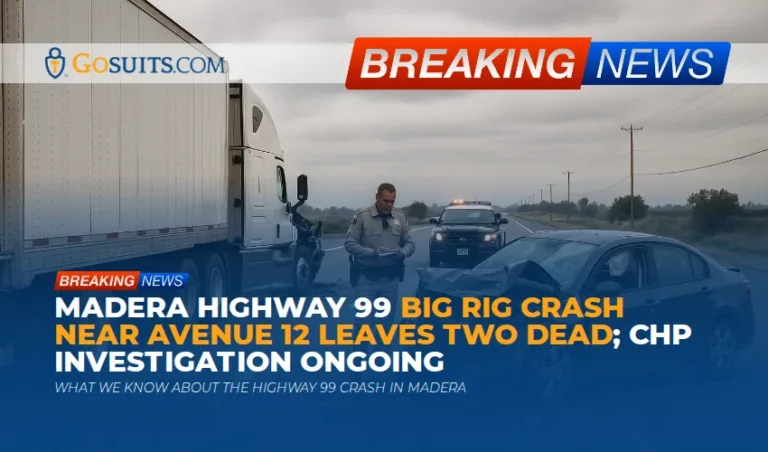
On a Thursday night in Madera, two people died in a collision involving a Honda sedan and a big rig on southbound Highway 99 near Avenue 12. According to early statements from the California Highway Patrol, both vehicles were traveling southbound when the Honda driver lost control and veered into the path of the tractor trailer. The truck driver braked, but the truck crashed into the Honda. The driver of the Honda and a passenger, both believed to be around 30 years old, died at the scene. The truck driver and his family who were riding with him were not hurt. Officers reported no signs of drugs or alcohol and closed the number one southbound lane for roughly an hour while crews cleared the scene. The investigation remains ongoing.
Details may change as the investigation develops. For now, the public information communicates a tragic loss of life on one of the Central Valley’s busiest corridors. Families and community members along the Highway 99 stretch between Avenue 12 and the Madera city limits know how fast conditions can change near merges and lane shifts, especially at night. If you witnessed the incident or have dash camera footage from that time frame, consider preserving it and waiting for investigators to clarify how best to share it.
Local context along Highway 99 near Avenue 12
Highway 99 is the San Joaquin Valley’s spine, carrying commuters, farm traffic, and a heavy flow of tractor trailers moving through Madera County between Merced to the north and Fresno and Selma to the south. The Avenue 12 area connects the Madera Ranchos communities toward the freeway, and the on and off ramps can see brisk merges in the evening as people return from work or head toward Fresno. Local drivers are also familiar with intermittent maintenance work or shoulder activity that can tighten lanes without much warning.
The mix of passenger vehicles and big rigs is constant here. Tractor trailers need longer following distances and more time to stop, and drivers in smaller vehicles sometimes misjudge how quickly a truck can slow or change paths. That is not a comment on fault in this specific crash. It is a reminder about the realities of physics on a corridor that never fully quiets down, even late in the evening. When something goes wrong at freeway speed, outcomes can be devastating in a matter of seconds.
How big rig collision investigations typically proceed
After a fatal collision on a state freeway, multiple layers of investigation are common. The responding CHP area office will document the scene, collect statements, and prepare a collision report. Photographs, skid measurements, vehicle rest positions, and roadway evidence are often captured. If a commercial motor vehicle is involved, investigators may also review federal and state regulatory compliance by the motor carrier and driver.
Evidence that can matter in a truck collision investigation often includes:
- Event data recorders from passenger vehicles that may store pre‑crash speed, braking, and throttle inputs. The federal rule on EDRs is at 49 CFR Part 563.
- Electronic logging device data for the truck driver, which can reflect hours of service and duty status under hours of service rules and ELD requirements.
- Motor carrier accident registers and related records, which carriers must maintain under 49 CFR 390.15.
- Hours of service logs and supporting documents, which have specific retention periods referenced in 49 CFR 395.8.
- Dash or inward‑facing cameras from the truck, which many fleets use for safety monitoring, and any dash cameras from nearby vehicles.
- Trailer cargo and securement details, tire and brake inspections, and recent maintenance, which can be relevant where vehicle condition may play a role.
For families, the most important first step is preserving what exists. Vehicles should be secured in their post‑crash condition until qualified inspectors can document them. Photographs, phone videos, and witness identities should be written down while memories are still fresh. If there was any road construction, stormwater, or debris issues that evening, note the time, location landmarks, and lane markings that were present.
Agencies to contact for reports and official documents

California Highway Patrol collision report
CHP collision reports can be requested using the CHP 190 process. The agency provides instructions and the request form online. This report often includes the diagram, narrative, and initial findings by the investigating officer. Find the official CHP collision report information here: CHP Collision Reports.
When requesting, be ready to identify the date, time window, location near Avenue 12, and the involved vehicles. Only certain parties may obtain the full report, such as next of kin of a decedent, insurance representatives, or involved drivers.
Coroner and autopsy information
In California, county Sheriff‑Coroner offices oversee death investigations from crashes that result in fatalities. The coroner’s office typically manages next‑of‑kin notification, cause and manner of death findings, and release of remains to the family’s chosen funeral home. Autopsy and investigative reports are usually provided to legal next of kin upon request. Families can contact the Sheriff‑Coroner for Madera County to learn about the process, identification, and timeline. If you are unsure where to start, a funeral director in Madera County can often help coordinate release paperwork and guide you through coroner procedures.
Death certificates
Certified death certificates are issued through the county recorder or through the California Department of Public Health Vital Records. CDPH explains how to obtain certified copies statewide at CDPH Vital Records. Funeral homes usually assist with the initial ordering, and additional copies can be requested later if needed. Death certificates are important for insurance claims, financial accounts, and benefit matters.
Roadway and closure information
For updates about closures on Highway 99, Caltrans QuickMap provides live information on lane closures, incidents, chain controls, and traffic speeds. Check Caltrans QuickMap for current conditions if traveling near Avenue 12 or elsewhere in Madera County.
Rights of injured people and families in California after a fatal truck collision
California law provides pathways for families to pursue civil claims after a wrongful death. These cases look at whether a person or entity’s negligence or wrongful act caused the death. Typical claimants include close family members and, in some circumstances, dependents. California also recognizes a related claim called a survival action, which addresses certain claims the decedent could have brought if they had lived, such as the value of property damage or medical bills between injury and death.
Deadlines matter. California law generally allows two years to bring a claim for wrongful death under a statute of limitations outlined in the California Code of Civil Procedure. You can review California’s code at the state’s legislative website here: California Codes at leginfo.legislature.ca.gov. Specific circumstances can affect timing, especially where public entities are involved or where a dangerous roadway condition claim may be evaluated. Because deadlines can be complex, many families look for a free consultation to understand which timelines apply before taking any steps with insurance companies.
If an injured person survives, they can pursue claims for medical expenses, lost income, pain, and other legally recognized damages. After a fatal crash, family members can address funeral and burial expenses, loss of financial support, and the loss of love, companionship, and guidance. A seasoned legal team can help map out what categories of recoverable damages may apply and how to collect the documentation that supports them.
Potential civil liability and insurance issues in truck collisions
Every collision is unique, so the analysis must follow the facts. In the Madera crash, CHP’s initial statement describes a loss of control by the Honda, a veer into the truck’s path, and an emergency braking response by the truck driver. Investigators will consider why the Honda lost control, whether any roadway or mechanical factor contributed, and whether there were any third party hazards in play. They may also consider lighting, traffic density at the Avenue 12 merge, and visibility.
Civil liability can involve more than just the two drivers. Depending on the evidence, potentially relevant parties and issues might include
- Vehicle condition and maintenance such as tires, brakes, and steering systems.
- Manufacturer product defects if a component failed during normal use.
- Roadway conditions or design if a dangerous condition of public property contributed to the crash.
- Cargo load and securement for a commercial vehicle, if it affected handling or stopping distance.
- Driver fatigue or distraction, which investigators evaluate through logs, devices, and witness information.
Insurance coverage sets the practical framework. Commercial motor carriers that operate in interstate commerce must maintain minimum levels of financial responsibility. The Federal Motor Carrier Safety Administration explains these requirements at FMCSA Insurance Requirements. The specific minimums depend on cargo type and route classification, and many carriers carry higher limits for business reasons. These policies can involve multiple layers of coverage. Prompt preservation letters are often used to ask carriers to retain ELD data, camera footage, and maintenance records that might otherwise be overwritten or destroyed under ordinary retention schedules. Federal rules reference accident register retention at 49 CFR 390.15 and log retention in 49 CFR 395.8.
If an insurance representative calls quickly and asks for a recorded statement, it is often best to consult an attorney first. Statements can be used later to limit responsibility or contest damages. A free consultation helps people understand the types of questions insurers ask and the best way to protect their rights before any call takes place.
Safety insights about loss of control crashes and large trucks
Loss of control on a freeway can come from many factors. Tire issues, sudden swerves to avoid debris, lane changes that tighten too quickly, or an unexpected slick patch can each start a chain of events. This does not assign blame to any party in this crash near Avenue 12. It recognizes what local drivers already know from daily life on Highway 99, where traffic density and speed can amplify small mistakes.
For tractor trailers, physics limit maneuverability and stopping. Fully loaded combinations need longer following distances than passenger vehicles. FMCSA safety materials consistently emphasize that trucks need more time to stop, have larger blind spots, and handle lane changes differently because of weight and trailer dynamics. You can review federal safety guidance for commercial motor vehicles at FMCSA’s website here: FMCSA Safety.
For the community, a few reminders resonate:
- Give trucks room around merges and ramps, especially near Avenue 12 where evening traffic enters the freeway.
- Avoid lingering beside a trailer where visibility is limited.
- Keep tires in good condition and avoid sudden steering inputs at freeway speed.
- Plan for night driving by increasing following distance, using clear lane change signals, and scanning for brake lights ahead.
Public agencies and trucking companies both play roles in safety culture. Roadside maintenance that keeps shoulders clear and reflective markers bright matters at night. Fleet training, pre‑trip inspections, and tech like collision mitigation systems help too. Personal habits also matter, and in the Valley we share responsibility for keeping Highway 99 safer.
Practical next steps that can help after a deadly crash
When a crash takes lives, the immediate days are overwhelming. Families in Madera and nearby communities often juggle grief, logistics, and a sudden stream of calls. The following steps can help preserve options without adding unnecessary stress:
- Request the CHP collision report. Use the official process described by CHP for the Madera area incident. See CHP Collision Reports for how to request.
- Speak with the Sheriff‑Coroner’s office or your funeral home about autopsy findings and release procedures. Ask what documents will be available and when.
- Order certified death certificates through your funeral home or CDPH. Guidance is at CDPH Vital Records.
- Preserve all physical evidence, including personal items from the vehicle and any photos or videos from the scene.
- Avoid recorded statements to insurers until after a free consultation with an attorney. What gets said now can affect any civil claim later.
- Collect expenses and records, such as funeral invoices, time missed from work by family members, and any counseling or grief support receipts.
- Write down memories and timelines from the night of the crash while details are still fresh. Note travel plans, departure times, and any traffic conditions remembered by family or witnesses.
How insurance companies handle statements after a deadly crash
Insurers move quickly. They often call within days to ask for statements and gather documents. The questions may sound routine, but they are designed to evaluate potential defenses and reduce payouts. Small wording choices can be used against claimants later. In fatal collisions, there may be multiple policies at issue, including the passenger vehicle policy, the truck’s commercial policy, a motor carrier excess policy, or even an uninsured or underinsured motorist policy in some situations.
In California’s civil system, fault can be shared among multiple parties, and insurers may focus on percentages to minimize their own exposure. Before any recorded conversation, it is wise to consult an attorney and ask for a free consultation. People deserve to understand who the insurance representatives work for, how statements are used, and how to preserve their rights.
Community and state resources that may help
Grief can hit in waves. The Central Valley community looks out for one another, and many families lean on their churches, neighbors, and extended family networks during the first few weeks. For statewide information about coping with sudden loss, the Centers for Disease Control and Prevention offers guidance about grief, stress, and mental health after traumatic events. See CDC resources on grief and loss.
For travel planning around closures and delays, Caltrans QuickMap helps drivers avoid backups on Highway 99 as crews finish their work. You can check live conditions at Caltrans QuickMap before heading toward Avenue 12 or the Madera city limits.
If you are looking for more background about truck safety and federal oversight of motor carriers that travel through the Valley, FMCSA’s safety pages offer useful background information at FMCSA Safety.
Preserving vehicle and electronic evidence
Modern vehicles often store electronic data that can clarify what happened in the final seconds before a crash. Many passenger cars, including popular models like the Honda Civic, have event data recorders that can capture speed, throttle position, brake application, and seat belt use. Federal rules about EDRs appear at 49 CFR Part 563. The data can be lost if a vehicle is crushed or recycled. If a family controls the decedent’s vehicle, ask the storage yard to hold it without altering its condition until an inspection occurs.
For trucks, motor carriers often have separate telematics, GPS breadcrumbs, and inward or outward‑facing cameras. Under 49 CFR 390.15, carriers must maintain an accident register and related materials for a period of years. Hours of service documents referenced in 49 CFR 395.8 have their own retention rules. A timely, written preservation request can help prevent routine deletion of this information.
Act now: time‑sensitive steps following a fatal truck crash
Here is what should be done, why it helps, and why timing matters:
- Secure vehicles and personal property. Preserving the vehicles in their current condition protects vital evidence like EDR data, crush patterns, and potential component failures. Storage yards often move quickly, so early instructions can prevent loss of information.
- Request the CHP collision report. The report anchors dates, locations, and initial findings. It can take time to finalize, so starting the request process early helps families keep pace with insurance timelines.
- Gather key documents. Death certificates, funeral invoices, and any medical records from emergency responses will be needed for insurance claims and benefit matters. These items take time to obtain, and delays can slow down everything else.
- Preserve digital evidence. Save dash camera files, smartphone videos, and photos in multiple places. Many devices overwrite files automatically, and cloud backups can fail without notice.
- Decline recorded statements until after a free consultation. Statements can be used to limit recovery. Speaking with a lawyer first helps people understand their rights and the implications of any insurance calls.
- Note potential public entity issues. If a dangerous road condition might be involved, special claim procedures and short deadlines can apply. Early evaluation prevents missed windows.
Acting within the first few days makes a difference. Evidence begins to disappear immediately, and insurance investigations start quickly. A timely plan helps families keep control over the process and ensures that important details are not lost.
Commentary from Gosuits Madera, California Personal Injury Attorney
Our hearts go out to everyone affected by the fatal crash on southbound Highway 99 near Avenue 12. Losing two lives on a route so many of us drive every day is heartbreaking. This article is intended for education and general information. It reflects what is publicly known at this early stage and outlines steps that can help families preserve their options while the CHP investigation continues.
Based on the initial report, the Honda lost control and moved into the path of the tractor trailer. Investigators will work to understand why the loss of control happened and whether any external factors contributed. On a high‑speed corridor with heavy truck traffic, seconds matter. It is important not to jump to conclusions while evidence is being collected. Causes can include multiple factors that only a thorough investigation can sort out, including vehicle condition, roadway environment, and the interactions of traffic around the Avenue 12 area that night.
In the days after a deadly crash, insurance companies often contact families quickly. Their representatives sound courteous and professional, but their job is to protect the company’s bottom line. Many ask to record conversations. Those recordings can be used later to argue about fault or minimize damages like loss of support and funeral costs. Commercial carriers may also have layers of coverage with different adjusters, each with their own angle. Without context, people can feel backed into a corner or pressured to accept a version of events that does not match the full picture.
That is why a free consultation matters. It gives people a chance to understand the process before speaking with any insurer. It helps identify time‑sensitive evidence, explains how to request official reports, and sheds light on what federal and state rules require from motor carriers. Above all, it helps level the playing field so families can make informed choices while they grieve and begin to rebuild.