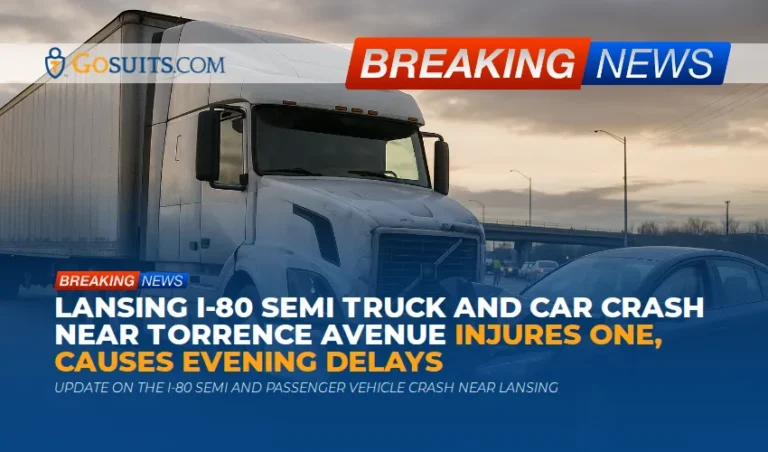
- Update on the I-80 semi and passenger vehicle crash near Lansing
- What we know so far from public reports
- Local context around Torrence Avenue, I-80, and the south suburban commute
- Why a 40,000-pound freight load changes crash dynamics
- What investigators typically examine after a semi collision
- Practical steps after a Lansing truck accident on I-80
- Where to get official records and updates
- Insurance and liability considerations in Illinois commercial collisions
- Common injuries and early care considerations after a semi crash
- Preserving rights and time limits in Illinois
- Ways to support an injured neighbor or loved one
- South suburban safety notes for sharing the road with big rigs
- What to do next: time-sensitive actions that help protect a claim
- Verified public information and safety references
- Commentary from Gosuits Lansing, Illinois Personal Injury Attorney
Update on the I-80 semi and passenger vehicle crash near Lansing
Illinois State Police troopers responded Monday afternoon to a collision on Interstate 80 eastbound, just west of Torrence Avenue near Lansing. The crash involved a semi transporting roughly 40,000 pounds of beer and at least one passenger vehicle. One person was reported injured. The extent of injuries and the cause of the crash were not immediately known, and the investigation is ongoing. Commuters experienced significant delays during the evening rush as lanes were impacted and the area was cleared.
This stretch of I-80 sits between the Thornton Quarry and the state line, a corridor that often carries heavy freight bound for Calumet River terminals and northwest Indiana. With a fully loaded tractor-trailer in the mix, even a routine fender-bender can quickly become a complex scene that requires careful crash reconstruction and cargo handling before the roadway can reopen.
What we know so far from public reports
Time, place, and initial response
Troopers were dispatched just after 3:15 p.m. to I-80 eastbound, west of Torrence Avenue in the south suburbs near Lansing. One person was injured and transported for care. The roadway saw backups consistent with evening commute volumes in this corridor. No public details were available on weather or road surface conditions at the time, and officials have not released contributing factors.
Vehicles involved
Reports indicate a semi and a passenger vehicle were involved. The semi was hauling approximately 40,000 pounds of beer. Whether the load contributed to the severity of the crash will be part of the investigation, along with speed, braking distances, lane changes, and any emergency maneuvers by either driver. The presence of a tractor-trailer and a private vehicle makes this both a commercial transport matter and a potential car accident claim from the perspective of the injured person.
Injury status
Authorities indicated at least one person was injured, but did not release a condition update. In these situations, injuries may evolve over the first 24 to 72 hours, especially with soft-tissue trauma or concussion. Documentation is important even when pain seems manageable at first.

Local context around Torrence Avenue, I-80, and the south suburban commute
Neighbors in Lansing and Calumet City know the I-80 and I-94 corridor well. Evening traffic can stack up past Torrence Avenue, especially when there is a lane closure near the Thornton Fractional area or around the ramps toward 394. The Lansing Municipal Airport is just south, and River Oaks Center traffic often adds mid-afternoon volume on local roads feeding Torrence. In late December, the south suburbs also face fast-changing pavement conditions. A patch of glare ice in the shadow of an overpass can surprise any driver, let alone a fully loaded big rig.
With multiple freight routes and interchange lanes, sudden stop-and-go traffic is common. That is why safe following distance and attentive driving are so critical in this corridor. A loaded 18-wheeler needs more room than a passenger car. If a passenger vehicle merges too closely or a truck driver is fatigued or distracted, the margin for error is slim.
Why a 40,000-pound freight load changes crash dynamics
When a tractor-trailer hauls tens of thousands of pounds, it changes basic physics. Heavier vehicles need longer stopping distances, have larger blind spots, and can become unstable if cargo shifts during sudden maneuvers. Federal transportation safety agencies emphasize that commercial motor vehicles require added space for braking and turning due to mass and momentum. NHTSA provides general safety guidance for sharing the road with large trucks, noting their wider turning radius and limited visibility around the trailer’s sides and rear. See NHTSA large trucks safety.
Federal Motor Carrier Safety Administration rules also set minimum standards for hours of service and cargo securement. Proper securement helps prevent load shifts that can worsen a collision or cause rollover risk. FMCSA’s hours-of-service framework is designed to reduce fatigue-related incidents, and its cargo securement rules aim to keep freight from moving under normal and emergency conditions. See FMCSA hours-of-service summary and FMCSA cargo securement rules.
In practical terms, a trailer carrying 40,000 pounds of beer can dramatically increase stopping distance on I-80, particularly on cold pavement. Even when a professional driver does everything right, an unexpected cut-in or abrupt slowdown ahead can cascade into a crash or rear-end collision that looks minor but transmits major forces to the occupants of a lighter vehicle.
What investigators typically examine after a semi collision
Illinois State Police and commercial vehicle enforcement typically look at a wide range of evidence in a truck and car accident investigation, including:
- Driver factors such as hours-of-service compliance, fatigue, impairment screening, distraction, and license status. See the FMCSA hours-of-service framework noted above.
- Vehicle condition including brakes, tires, lights, underride guards, and any mechanical defects. Post-crash inspections can uncover issues that lengthened stopping distance or affected control.
- Cargo documentation, bills of lading, weight tickets, and tractor-trailer load securement methods to assess whether the freight was properly restrained under FMCSA rules.
- Electronic data from the big rig engine control module, electronic logging device, and any inward or outward dash cameras that may show speed, braking, and lane position before impact.
- Scene evidence such as skid marks, yaw patterns, debris fields, and impact points to reconstruct movement and timing. Weather and lighting are also considered.
- Statements from the semi driver, the passenger vehicle driver, and any witnesses who were on I-80 or exiting at Torrence Avenue at the time.
In a multi-vehicle incident, investigators also consider whether chain reactions were involved. For example, a sudden slowdown can cause an upstream rear-end sequence where the first impact forces a second. Untangling that timing matters to apportion civil fault.
Practical steps after a Lansing truck accident on I-80
What should someone do after a Lansing truck accident in this corridor? The steps below are meant for general information and to help protect health and rights in the wake of an unexpected collision.
- Seek medical evaluation promptly. Even if pain is mild at the scene, see a clinician within 24 to 48 hours. Whiplash, concussions, and internal injuries can manifest later. Keep copies of discharge notes and any imaging reports.
- Document everything. Photos of the scene, the vehicle damage, the lane closure near Torrence, and any visible injuries can be helpful. Note traffic, weather, and any commercial markings on the semi and trailer.
- Identify witnesses. Get names and contact information for drivers who stopped near the ramps, plus any workers who were present if a tow or cleanup crew arrived quickly.
- Preserve evidence early. In a semi crash, onboard data and camera footage can be overwritten. Timely preservation requests are critical. A spoliation letter can help ensure a motor carrier keeps logs, ELD data, and dash cam video.
- Avoid early statements to insurance. Before speaking with any insurer, it is wise to consult a seasoned attorney. What someone says to a claims adjuster can be used against them later, and recorded statements often happen quickly after a wreck.
- Track expenses and time missed. Keep receipts, mileage to appointments, and notes about missed work or household duties you needed help with due to the injury.
Many south suburban residents also ask whether they should repair the car right away. Consider getting multiple estimates and photographing the damage thoroughly first. If a dispute arises about the force of impact, those photos can matter.
Where to get official records and updates
Illinois State Police crash reports
For collisions handled by Illinois State Police, request a copy of the crash report through the ISP portal. Start with the agency’s Crash Reports page: Illinois State Police Crash Reports. The report number and date of the incident will help locate the record. If you do not have the report number, the date, location, and the names of drivers may assist in the search.

Cook County Medical Examiner records in fatal cases
This incident has been reported as nonfatal. If a south suburban crash becomes fatal, next of kin can seek information from the Cook County Medical Examiner. Case status and record request information are available through the county’s official site: Cook County Medical Examiner and Request Medical Examiner Records. These materials can support an Illinois wrongful death claim evaluation when applicable.
IDOT crash data and safety resources
For context on statewide crash trends and safety initiatives, the Illinois Department of Transportation publishes resources and data. See IDOT’s roadway safety and crash information portal: IDOT Safety and Illinois roadway crash data: Illinois Roadway Crash Data.
Insurance and liability considerations in Illinois commercial collisions
In a Lansing truck accident involving a tractor-trailer and a passenger car, civil liability can be shared among several parties depending on the facts. Key considerations include:
- Potentially responsible parties. The commercial driver, the motor carrier, a freight broker, a shipper that loaded the cargo, or a maintenance provider could all be in the liability picture. The passenger vehicle driver’s actions are also evaluated. Illinois uses a comparative fault framework, which can adjust damages based on each party’s percentage of responsibility.
- Commercial insurance layers. Motor carriers often carry primary liability policies with potential excess layers. There can also be separate coverages for trailer owners, cargo, or other involved entities. Navigating these layers is not intuitive, which is why early guidance helps.
- Statements to insurers. Claims professionals sometimes request recorded statements within a day or two. It is generally prudent to consult a lawyer before giving a statement. Early narrative gaps or offhand remarks can be used to challenge causation and damages later.
- Evidence control. Motor carriers possess key evidence like ELD logs and dash cam footage. Timely preservation requests reduce the risk that routine overwriting erases valuable data.
- Property damage versus bodily personal injury. It is common for a claims representative to quickly address vehicle repairs while delaying or disputing medical costs and lost income. Keep these tracks separate and documented.
Residents sometimes say, “It was just a fender-bender.” With a big rig, a modest impact can still transmit forces that lead to neck, back, or head injuries. That is why a full assessment matters even when the bumper damage looks minor.
Common injuries and early care considerations after a semi crash
Every car accident is unique, but when a heavy 18-wheeler is involved, these injuries are frequently seen:
- Neck and back trauma. Strain, disc herniation, and facet joint injuries can result from sudden deceleration.
- Head injury and concussion. Even without a direct head strike, the brain can move within the skull. Watch for headache, light sensitivity, and cognitive fog. These are consistent with a mild brain injury or concussion.
- Shoulder and knee injuries. Seat belt loading and dashboard contact can injure joints or ligaments.
- Internal injuries. Seat belt and airbag forces can bruise internal organs. Seek care for abdominal pain, dizziness, or shortness of breath.
- Psychological impact. Anxiety, sleep disturbances, and driving avoidance are common after a serious collision.
Early steps that often help include documenting symptoms daily, following medical advice, and keeping all referrals or therapy appointments. If a provider recommends imaging and you do not have easy access, ask about scheduling assistance and whether a referral can be sent to a nearby south suburban facility you can reach.
Preserving rights and time limits in Illinois
Illinois law sets deadlines for bringing civil claims. Time limits can vary based on the type of claim and the parties involved. Some claims related to government entities may require quick notices. Because commercial carriers often begin their own investigations immediately, it is sensible to begin gathering records quickly as well. Waiting can make it harder to locate witnesses or preserve data from the semi involved.
A common question is whether someone should speak to the other driver’s insurer right away. As noted earlier, consider speaking with a lawyer first. There is no requirement to give a recorded statement immediately, and doing so can sometimes complicate the process if new information emerges later.
Ways to support an injured neighbor or loved one
After a Lansing car accident, practical help matters. Short-term assistance with transportation, meals, childcare, or navigating appointments can ease the burden while someone heals. Offer to help take photos of the damaged auto or retrieve personal items from a towed vehicle. If the person is uncomfortable dealing with insurers on the phone, sit with them while they note questions and decide on next steps. Community support is a strength in Lansing, from neighbors near Fox Pointe to families along Ridge Road.
South suburban safety notes for sharing the road with big rigs
The I-80 corridor near Lansing sees constant freight movement. A few reminders for everyday driving around tractor-trailer traffic:
- Give trucks more space. Leave extra room when merging in front of a semi. They cannot slow as quickly as cars, particularly with a heavy load.
- Stay out of blind spots. If you cannot see a truck driver’s mirrors, they likely cannot see you. Avoid lingering beside the trailer near the rear-quarter.
- Anticipate wide turns. Trucks swing wide, especially right turns near ramps and intersections like Torrence Avenue and 170th.
- Prepare for winter pavement. Shaded bridges and overpasses can ice first. December in the south suburbs can shift from dry to slick within minutes.
- Report dangerous driving. If you observe unsafe behavior from a commercial vehicle on I-80 or 394, move to a safe location and call authorities. Do not engage directly.
What to do next: time-sensitive actions that help protect a claim
This section offers a clear, neutral roadmap when a person has been involved in a Lansing truck accident on I-80. It is intended to highlight why prompt action matters.
- Obtain the crash report number. This unlocks insurance coordination and medical billing guidance later. Reach out to the Illinois State Police Crash Reports portal as soon as the report is available.
- Secure photos and video immediately. Roadside footage and dash cams are often overwritten within days. Ask nearby drivers for their clips the same day if possible.
- Send preservation notices. Commercial carriers may automatically overwrite ELD data and dash cam footage. A written preservation notice sent early can prevent loss of key evidence.
- Get a medical baseline. A complete initial exam creates a timestamped baseline that can be compared to symptoms that appear later. This helps separate preexisting issues from new injury.
- Consult a lawyer before speaking with insurers. Claims adjusters are trained to shape the narrative early. What is said in those first conversations can affect liability and damages down the line.
- Track all out-of-pocket costs. Small expenses add up. Keep receipts for prescriptions, braces, rideshares, and co-pays from the day of the crash forward.
Acting promptly helps ensure critical data is preserved, healthcare stays coordinated, and timelines are met. Waiting until symptoms worsen or bills arrive can narrow options and make it harder to reconstruct what happened on the roadway.

Verified public information and safety references
The following official resources provide reliable general information related to commercial truck safety, investigation, and records access in Illinois. These are not case-specific to this I-80 event but help community members understand the process:
- Illinois State Police Crash Reports for obtaining the official crash report.
- NHTSA Large Trucks Safety for general safety considerations when sharing the road with large trucks.
- FMCSA Hours-of-Service Summary for federal limits on commercial driver hours designed to mitigate fatigue.
- FMCSA Cargo Securement Rules for load securement standards on commercial motor vehicles.
- Illinois Roadway Crash Data and IDOT Safety for statewide crash trends and safety programs.
- Cook County Medical Examiner and Request Medical Examiner Records for guidance in the rare event of a fatal collision.
Commentary from Gosuits Lansing, Illinois Personal Injury Attorney
First, our thoughts are with the person hurt in this I-80 incident and with everyone who sat in that traffic unsure of what came next. Incidents like this shake a community, especially along a corridor so many of us travel daily between Lansing, Calumet City, and into northwest Indiana. This article is offered for educational purposes and general information to help neighbors understand next steps and available public resources.
Based on what is publicly known, a fully loaded tractor-trailer collided with a passenger vehicle during the evening commute. Even without confirmed causes, several issues typically come into focus in a Lansing car accident with a commercial truck: stopping distance at commuter speeds, following distance in heavy traffic, lane-change timing near ramp merges, and whether any cargo securement or driver fatigue factors played a role. The presence of a 40,000-pound load raises the stakes, and it intensifies the need to preserve ELD data, dash cam footage, and inspection records early.
It is important to understand how insurance companies and transportation corporations often respond after a semi crash. Adjusters may move quickly to close out property damage while pressing for a recorded statement about injuries before a complete diagnosis exists. They may request broad medical authorizations or suggest that symptoms are unrelated. Motor carriers control critical electronic evidence, and without a timely preservation request, that data can be overwritten as part of routine operations. These dynamics tend to favor the well-resourced party, especially when someone is dealing with pain, appointments, and work disruptions.
A free consultation can be an important early step. Speaking with a seasoned advocate before engaging with insurance companies helps level the playing field, clarifies what to document, and sets a plan for preserving evidence. It also helps prevent common pitfalls such as giving an early recorded statement or agreeing to inadequate repair valuations. For anyone affected by a Lansing truck accident on I-80, getting informed early can make a meaningful difference in how smoothly the civil process unfolds.
Additional local notes
Finally, a quick reminder for south suburban drivers: winter conditions can change quickly along I-80, particularly at overpasses west of Torrence Avenue and near the Thornton Quarry. Give extra space to 18-wheeler traffic, watch blind spots, and plan for longer braking distances. If you witness or are involved in a crash, prioritize safety by moving to a safe location and contacting authorities. For official documentation, the Illinois State Police Crash Reports portal is the starting point.