- What we know about the Lancaster crash on 170th Street East
- Timeline and exact location details
- CHP response and the ongoing investigation
- Immediate practical steps families can take
- How to obtain official records in Los Angeles County
- Potential civil liability considerations
- Insurance issues after a fatal two-vehicle collision
- Preserving evidence near 170th Street East and Avenue P
- Local context and traffic safety in Lancaster and the Antelope Valley
- Community support, grief resources, and practical next steps
- Call-to-action: Steps to take in the next 72 hours
- References
- Commentary from Gosuits Lancaster, CA Personal Injury Attorney
What we know about the Lancaster crash on 170th Street East
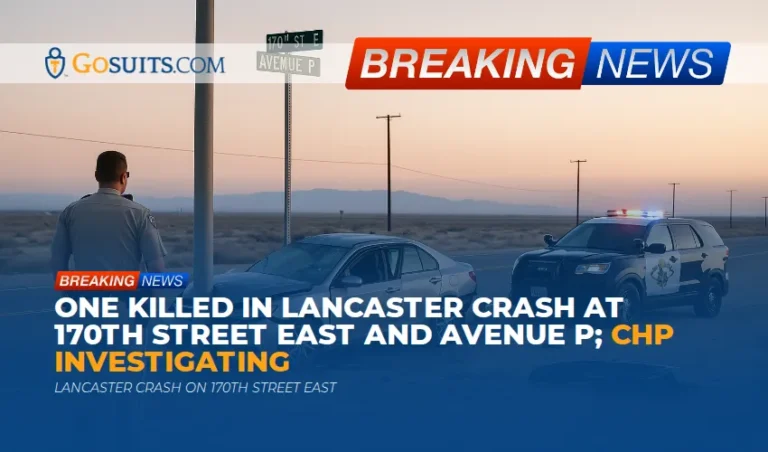
Early on New Year’s Day, a two-vehicle collision occurred near 170th Street East and Avenue P in Lancaster. According to the California Highway Patrol, the crash was reported at approximately 6:53 a.m. After the initial impact, one of the vehicles left the roadway and struck a light pole. Emergency personnel arrived quickly, but one person was pronounced deceased at the scene. Officials indicated that no other victims were transported to the hospital, and no additional injuries were reported. The identity of the deceased has not yet been released, pending notification of next of kin. The exact cause is still being determined; investigators have not yet indicated whether speed, distraction, or impairment contributed.
This area, on the eastern side of the Antelope Valley near the Lake Los Angeles community, is characterized by long, straight rural arterials with posted limits that can vary and occasional utility poles and signage close to the roadway shoulder. Mornings in winter can bring glare and cold, dry air that may affect tire traction or driver alertness. While none of that has been tied to this crash, it reflects the conditions that drivers in the 170th Street East corridor know well.
Timeline and exact location details
Authorities noted the following timeline and location markers under review as part of the investigation:
- Approximate time: 6:53 a.m., shortly after daybreak on January 1
- Location: Near the intersection of 170th Street East and Avenue P, an east-west arterial also known as East Palmdale Boulevard farther west
- Post-impact movement: One vehicle reportedly veered off the road and struck a light pole on or near the shoulder
- First responder involvement: Emergency medical services and CHP units responded; one person was declared deceased on scene
As is standard, investigators will look at skid marks, debris fields, vehicle rest positions, and any data available from onboard vehicle systems, traffic infrastructure logs, and potential nearby cameras. Even a single security camera on a home or business along Avenue P can offer critical perspective on vehicle movement pre-impact.
CHP response and the ongoing investigation
CHP collision investigations typically include scene measurements, witness interviews, vehicle inspections, and a review of roadway conditions. If warranted, specialized units may analyze data from event data recorders and assess whether any mechanical defects or roadway hazards played a role. That process can take weeks or longer. In fatal collisions, the California Highway Patrol compiles a Traffic Collision Report that documents findings and contributing factors, if identified. Family members and lawful representatives may request a copy once the report is complete using CHP’s standardized procedures [1].
Because the identity of the deceased has not yet been made public, the Los Angeles County Department of Medical Examiner will handle identification and notification of next of kin. That agency also manages autopsies when required and issues official cause and manner of death determinations [2] [3]. This is a difficult wait for loved ones, but it is a necessary part of ensuring the information released is accurate and respectful.
Immediate practical steps families can take
In the days immediately after a fatal crash, the number of tasks can feel overwhelming. With sensitivity to that reality, here are measured steps that help protect rights and preserve facts without speculation:
- Confirm which agency is investigating. In the Antelope Valley, the CHP Antelope Valley Area typically handles crashes on rural arterials like 170th Street East. Ask for the incident or report number and the officer’s name and badge number for your records [1].
- Identify the coroner’s case. The Los Angeles County Department of Medical Examiner can confirm case status and next-of-kin procedures. Families may later request records, depending on eligibility and the agency’s policies [2] [3].
- Preserve documents and digital evidence. Save texts, call logs, dashcam files, vehicle service records, and any photos of the scene. If nearby residents or businesses may have cameras, politely ask them to retain footage. Time matters, as many systems auto-delete within days.
- Document expenses. Funeral planning costs, travel, and memorial expenses should be kept in an organized folder. If a civil claim is later pursued, accurate records will be important.
- Defer detailed insurance conversations. Before giving any recorded statements to insurance adjusters, speak with a qualified attorney. Insurers can and do use early statements to limit payouts later, even in clear-loss situations [11].
How to obtain official records in Los Angeles County
Official records provide the verified facts people need for estate, insurance, and potential civil claims. Here are the primary sources and what they generally offer:
- CHP Traffic Collision Report. Use the CHP 190 process to request a report. Eligible parties typically include involved drivers, registered owners, parents or guardians of minors, and legal representatives. Processing can take time, particularly for fatal collisions that require supplemental narratives or reconstructions [1].
- Los Angeles County Department of Medical Examiner. The department maintains death investigation records. It typically releases certain records upon request depending on eligibility and the status of any ongoing investigation. Identity releases occur after next-of-kin notification per department policy [2] [3].
- Death certificate. Certified copies are issued by the Los Angeles County Registrar-Recorder/County Clerk and are often needed for estate and insurance purposes [10].
- Public records from transportation agencies. If roadway design, lighting, signage, or maintenance is relevant, requests under the California Public Records Act may be made to Los Angeles County Public Works or other agencies responsible for that segment. Such requests can cover signal timing logs, work orders, pole installation records, or maintenance history [13].
Potential civil liability considerations
While the investigation is ongoing, families often ask what potential civil liability might look like in a fatal two-vehicle crash. California wrongful death law allows certain family members, including a spouse, domestic partner, or children, to bring a civil claim for losses caused by another’s negligence or wrongful act [4]. The statute of limitations for most wrongful death claims in California is generally two years from the date of death [5].
Potentially responsible parties can include a negligent driver, an employer if the driver was operating a vehicle in the course of employment, an owner who negligently entrusted a vehicle, or an entity responsible for a dangerous condition of public property. If a public entity is involved, California’s Government Claims Act requires a written claim to be filed within six months for personal injury and wrongful death claims before filing a lawsuit in court [6] [7].
For a helpful primer that many find useful when looking ahead to civil options and family rights, see what happens if someone is killed in a car accident. It outlines common steps and explains the kinds of documents and evidence that often matter in these cases.

Insurance issues after a fatal two-vehicle collision
Insurance questions surface quickly after a fatal collision. It is common for multiple policies to be in play:
- Liability insurance. Each vehicle’s liability coverage may respond to claims if a driver is found negligent. If duty, breach, causation, and damages are shown, the insurer may owe compensatory damages up to the policy limit.
- Uninsured/Underinsured Motorist coverage. If the at-fault driver lacks sufficient insurance, a UM or UIM claim may be available through the decedent’s policy or a household policy, depending on coverage terms.
- Medical payments or funeral benefit coverage. Some auto policies include no-fault benefits that may help with immediate expenses. Review the declarations page carefully.
Insurers often seek early recorded statements and signed authorizations. Before engaging in those conversations, it is prudent to speak with seasoned counsel. Statements given to an adjuster can shape claim valuation and may be used to minimize liability later on [11]. In practice, families who consult first better understand what is voluntary, what is required, and how to avoid unintentionally limiting their rights. It is also appropriate to ask about policy limits and coverage stacking disclosures in California, since understanding available coverage can influence the way claims are coordinated [12].
Because this collision involved a light pole strike, claim handlers may also analyze whether any non-driver entities could share responsibility. That requires careful evidence collection and typically begins only after primary collision facts are established. Where there is a potential public entity claim, be mindful of the six-month administrative claim deadline under the Government Claims Act [6] [7].
Preserving evidence near 170th Street East and Avenue P
Out in the Antelope Valley, evidence can disappear faster than in dense city environments. Wind can scatter debris. Dust can obscure faint tire marks. Utility crews may repair a damaged pole within hours or days. Here is what helps preserve a record:
- Scene photos and measurements. Capture tire marks, gouge marks, debris fields, pole damage, and the roadway shoulder. If possible, note the sun’s angle at the time of day matching the crash for potential glare analysis.
- Vehicle inspections. Before a vehicle is repaired or salvaged, a thorough mechanical inspection can rule out or identify defects like brake failure, steering linkage issues, or tire tread separation. If a spoliation letter is appropriate, send it promptly to any custodians.
- Event data recorder downloads. Late-model vehicles often store pre-impact speed, throttle, brake application, and seatbelt status data. Accessing and preserving this information early is important for accurate reconstruction.
- Third-party video. Residences along Avenue P and small businesses or churches often have external cameras. Many overwrite within days. A polite request to preserve footage can make all the difference.
- Public infrastructure records. If signal timing, signage, or maintenance of a pole is at issue, request logs and work orders under the Public Records Act. Ask specifically for the closest pole number, maintenance vendor, and any repair tickets within the last year [13].
Local context and traffic safety in Lancaster and the Antelope Valley
Lancaster and the surrounding Antelope Valley combine wide-open rural corridors with fast-moving commuter routes toward Palmdale and the State Route 14. Long, straight roadways can foster higher speeds, and early morning travel may feature low-angle sun glare. Rural road safety is a distinct challenge nationwide, with federal transportation agencies emphasizing the outsized risk of severe outcomes on two-lane rural roads due to speed, run-off-road crashes, and roadside fixed objects like poles and trees [9].
The California Office of Traffic Safety provides city-level collision data and rankings that help communities track risk corridors and target countermeasures. Residents know the stretches east of 140th Street East toward the Lake Los Angeles area can feel isolated, with fewer signalized intersections and wider gaps between cross streets. While the current crash remains under investigation, local awareness and traffic enforcement strategies in these parts of Lancaster continue to be a community priority [8].
Community support, grief resources, and practical next steps
Tragedies like this reverberate across the Antelope Valley. In the days ahead, neighbors, faith communities, and local organizations often step in with meals, memorials, and assistance. Practical matters also arise:
- Work and leave. Employers may ask for documentation related to bereavement leave. A death certificate or an employer note acknowledging the event may be sufficient, depending on workplace policy.
- Vehicle release and personal property. If a vehicle is on an evidence hold, law enforcement can advise when items may be retrieved. Ask for the tow yard location and any release procedures.
- Financial planning. If there are dependents, consider meeting with a financial counselor who can help structure immediate needs like funeral arrangements alongside longer-term considerations.
- Legal information. Families navigating a fatal crash often find it helpful to speak with wrongful death attorneys who handle fatal collision claims. A free consultation can clarify timelines, eligibility to bring a claim, and what evidence is most important to secure early.
Call-to-action: Steps to take in the next 72 hours
This section outlines time-sensitive actions that help preserve facts, protect rights, and avoid common pitfalls. It is not directed to any specific person.
- Secure the report number. Record the CHP incident or report number, the investigating officer’s name, and the area office. Early organization prevents delays later when requesting records [1].
- Preserve video and vehicle data. Ask nearby property owners to retain footage from the morning of the crash. Confirm whether the vehicles have event data recorders, and ensure the vehicles are not destroyed or altered until inspections are complete.
- Gather policy documents. Locate the auto insurance declarations pages for all vehicles in the household. Policies can open avenues like UM or UIM coverage that may apply even if another driver is primarily at fault.
- Hold off on recorded statements. Before speaking to any insurer, contact an attorney for a free consultation. Statements can be used to reduce claim value later, and policy language can be nuanced [11].
- Mark administrative deadlines. Note the two-year statute for most wrongful death claims [5]. If a public entity could be involved, calendar the six-month Government Claims Act deadline for an administrative claim [6] [7].
- Request official records in sequence. Initiate requests for the CHP collision report and the Medical Examiner’s records as soon as they are available. These documents often drive insurance negotiations and any civil filing [1] [2].
These steps help reduce the risk of evidence loss and administrative missteps that can’t be undone later. Coordinating them with guidance from wrongful death attorneys can further streamline the process and reduce stress in a difficult moment.

References
- How to Obtain a Collision Report – California Highway Patrol
- Request Records – Los Angeles County Department of Medical Examiner
- Media and Public Information Policy – Los Angeles County Department of Medical Examiner
- Code of Civil Procedure § 377.60 – California Legislative Information
- Code of Civil Procedure § 335.1 – California Legislative Information
- Government Code § 911.2 – California Legislative Information
- File a Claim for Damages – County of Los Angeles
- City and County Rankings – California Office of Traffic Safety
- Rural Road Safety – Federal Highway Administration
- Death Records – Los Angeles County Registrar-Recorder/County Clerk
- Automobile Insurance Claims Guide – California Department of Insurance
- California Department of Insurance – Consumer Information
- Public Records Act Requests – County of Los Angeles
Commentary from Gosuits Lancaster, CA Personal Injury Attorney
Our hearts go out to those affected by the fatal collision near 170th Street East and Avenue P. Losing someone on a quiet, familiar stretch of road in the Antelope Valley is devastating. This article is meant to share general information and education about the process that follows a serious crash, not to provide advice for any particular situation.
From a civil perspective, the known facts point to a high-energy impact followed by a run-off-road strike with a light pole. In our experience, collisions on rural arterials demand careful reconstruction. Investigators will look closely at pre-impact paths, sight lines at daybreak, vehicle speeds, and whether any mechanical issues or roadway factors contributed. Until the CHP report and Medical Examiner’s determinations are complete, assigning fault would be premature, but the available details show why early evidence preservation matters.
Insurance companies and large corporations count on the pressure and confusion that follow a tragedy. Adjusters move quickly to record statements, get signatures, and shape the narrative. Many families do not realize how a few words in a recorded call or a broad medical authorization can be used to downplay losses or argue against responsibility. Policies are complex, and disclosures about coverage are not always volunteered without the right questions.
Speaking with wrongful death attorneys before engaging with insurers can level the playing field. A free consultation helps people understand timing, evidence priorities, and how to avoid missteps that can’t be undone later. Even one conversation can clarify which records to request, how to protect vehicle data, and what to expect from the claims process while the investigation unfolds.