- Potential Civil Liability Issues Raised by Head-on Collisions
- Insurance Landscape in California After Serious Crashes
- Steps to Preserve Evidence and Protect a Civil Claim
- How Wrongful Death Claims Work in California
- Community Safety Notes for the Mountain and Desert Backcountry
- Data Snapshot: Impaired Driving and Child Injuries
- How to Find Support Services in San Diego County
- Commentary from Gosuits Julian, California Personal Injury Attorney
- Why Prompt Action Matters Now
What We Know About the Julian, California Highway S-2 Collision
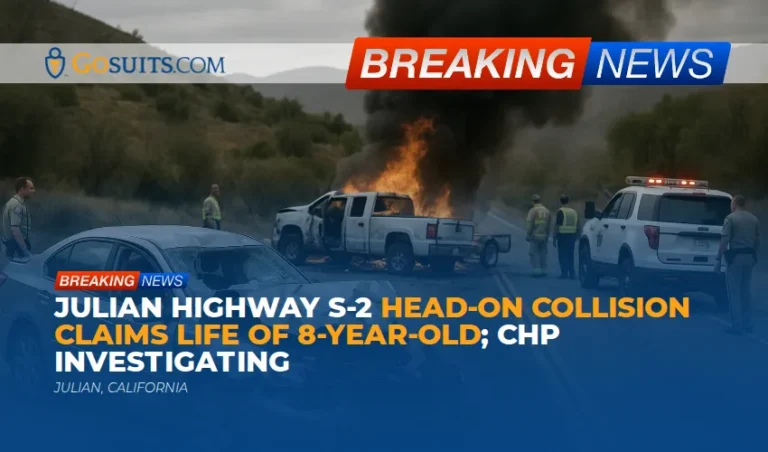
On a Sunday afternoon in the backcountry east of Ramona and Santa Ysabel, a deadly multi-vehicle crash on county Highway S-2 near Julian took the life of an 8-year-old girl and injured several others. According to initial public reporting citing the California Highway Patrol and Cal Fire, a northbound pickup truck crossed the solid double-yellow line on a two-lane stretch and collided head-on with a southbound sedan. The pickup then struck a northbound truck towing a utility trailer. The pickup overturned and caught fire. Multiple air ambulances responded, and at least five patients were airlifted while others were transported by ground. Three children riding in the sedan were taken to a children’s hospital for treatment. Two boys, 4 and 5, survived; the girl in the back seat died from her injuries.
Authorities indicated the suspected driver of the pickup is a 25-year-old man. Federal officials stated he had prior DUI arrests and a standing deportation order. While any criminal process will proceed on its own track, families often have immediate questions about civil accountability, insurance, official records, and what steps to take next. That’s where this guide focuses, with local context and verified public resources.
Timeline, Location, and Emergency Response
The collision occurred shortly after 3 p.m. on Highway S-2, a rural route that winds between the Cleveland National Forest and the vast Anza-Borrego Desert State Park. Locals know this corridor for its narrow shoulders, blind curves, and active weekend traffic when day-trippers head for Julian’s downtown along Main Street, the apple orchards, and popular hiking trailheads near Cuyamaca Rancho State Park.
In the immediate aftermath:
- First responders reportedly extricated at least one victim from a vehicle and extinguished the resulting vehicle fire. Helicopters landed near the scene to transport critically injured patients to regional trauma centers and a children’s hospital in San Diego.
- Traffic closures on S-2 lasted for hours while fire crews, paramedics, and collision investigators worked. In remote parts of East County, closures can significantly delay investigations and clean-up due to limited detour routes.
- Investigative jurisdiction rests with the California Highway Patrol for state and county highways. CHP typically documents physical evidence, gathers witness statements, and reconstructs collisions to determine factors like speed, lane position, impairment, and seat belt or child restraint usage.
For nearby communities like Shelter Valley, Scissors Crossing, and Warner Springs, this tragedy hits close to home. These are roads many residents take every day to get groceries in Ramona, attend school events, or visit family in the city. It’s hard not to picture your own kids in those back seats.
Agencies Involved and How to Obtain Official Records
In serious or fatal crashes, official records matter for insurance, probate, and potential civil claims. Here’s where they come from and how to request them.
Collision report and scene documentation
The California Highway Patrol (CHP) prepares the primary collision report, diagrams, and sometimes supplemental photographs and statements. Families, injured parties, and legal representatives can request the report using the CHP 190 form, typically submitted to the specific CHP Area Office that investigated the crash. Process details are provided by CHP. You’ll need key details like date, time, location, and involved parties.
Medical Examiner records
In fatal incidents within San Diego County, the Medical Examiner investigates and issues the cause and manner of death. Next of kin can request autopsy and investigation reports through the San Diego County Medical Examiner’s Records Unit. Procedures and request forms are outlined. Note that toxicology and full autopsy packages can take weeks to months, depending on lab times.

Emergency services records
Fire incident reports and paramedic run sheets may be available from Cal Fire San Diego or local agencies that responded. These can corroborate timelines, injury mechanism, and pre-hospital care. Availability and processes vary by agency, but the collision report will usually identify each responding unit.
DMV accident reporting
California requires an SR-1 accident report to the DMV within 10 days for any crash involving injury, death, or property damage above a reporting threshold. The SR-1 form and filing instructions are here: California DMV SR-1 accident report form. Failure to file can impact driving privileges and insurance matters.
Rights of Injured Victims and Bereaved Families in California
It’s natural to feel overwhelmed and unsure where to begin. In California, civil law recognizes paths to hold at-fault parties financially responsible for harms caused by negligent driving.
- Injury claims are generally available to those hurt by another driver’s negligence, including passengers and drivers not at fault.
- Wrongful death claims may be brought by certain family members when a death results from another’s wrongful act or neglect. The statute of limitations is generally two years from the date of death under California Code of Civil Procedure section 335.1, accessible here: California Code of Civil Procedure section 335.1.
- Survival claims can address certain damages the decedent sustained between injury and death and are typically brought by the estate.
No one is required to navigate this alone. Understanding timelines, insurance layers, and the documentation needed early on can prevent costly mistakes later. This is general information, not a substitute for guidance tailored to a specific situation.
Potential Civil Liability Issues Raised by Head-on Collisions
Head-on collisions on two-lane rural highways often signal lane encroachment, loss of control, or impairment. In the Julian crash, public reporting indicates a pickup crossed solid double-yellow centerlines before impact. California’s Vehicle Code restricts crossing double lines except in limited circumstances, and driving under the influence is prohibited statewide. Relevant statutes can be found via the state code portal: California state code portal.
From a civil perspective, investigators and insurers will look at:
- Centerline violation: Crossing into oncoming lanes is often strong evidence of negligence, subject to limited exceptions.
- Impairment: If chemical tests or observations suggest alcohol or drugs contributed, that can support a negligence per se theory in civil court.
- Speed, visibility, and roadway conditions: Rural backcountry roads can have limited sight distance, uneven pavement, and unexpected elevation changes.
- Child restraints: Properly used child safety seats and boosters reduce injury risk; investigators document whether restraints were in use without assigning blame to families in crisis.
The civil standard is preponderance of the evidence. Physical evidence like yaw marks, crush profiles, onboard vehicle data, and post-crash mechanical inspections often carry the day alongside eyewitness accounts.
Insurance Landscape in California After Serious Crashes
After a catastrophic collision, most cases revolve around insurance coverage. California law requires every driver to maintain financial responsibility, and minimum liability limits increased effective January 1, 2025. The California Department of Insurance explains the new minimums (30/60/15) here: California auto insurance minimum coverage requirements.
Layers that may be in play include:
- At-fault driver liability coverage: Bodily injury and property damage coverage on the driver who crossed the centerline, if applicable.
- Owner’s insurance: If the at-fault driver was not the vehicle owner, the owner’s policy may also respond.
- Underinsured motorist (UIM) coverage: If the at-fault policy limits are inadequate, injured parties may turn to their own UIM coverage.
- Medical payments (MedPay): Optional, can help with immediate medical bills regardless of fault.
It’s common for insurers to call early, sometimes while families are still at the hospital. Statements given to insurance adjusters can be used later to narrow or deny claims. Before contacting any insurance company, it’s wise to consult a qualified attorney to understand rights and obligations. Nothing prevents an insurer from recording and keeping every word. A short pause to get guidance can prevent unintentional harm to a claim.

Steps to Preserve Evidence and Protect a Civil Claim
Evidence fades quickly on rural highways. Tire marks wear off, debris is cleared, and vehicles move to storage lots. Even a few days can make a difference. Consider the following steps:
- Secure the CHP report number: If you don’t have it, one practical starting point is contacting the CHP Area Office that handled the scene and requesting instructions on submitting a CHP 190. See CHP’s guidance here: CHP guidance on filing a CHP 190 collision report.
- Preserve vehicles: Totaled vehicles often hold key data. Modern cars may record pre-impact speed, braking, and seat belt status. Promptly requesting a hold on disposal can be critical.
- Collect medical records: Hospital discharge summaries, imaging, and physician notes provide objective documentation of injuries and causation.
- Document the scene: If safe and lawful, photos of roadway features, signage, and any lingering debris can help reconstruction.
- Keep all bills and receipts: Out-of-pocket costs, travel to medical appointments, and therapy expenses matter for damage calculations.
If a public entity’s design, signage, or maintenance contributed to a dangerous condition, claims against public entities have strict, short timelines and unique procedures. General information about California government claims is available from the state’s Office of Risk and Insurance Management: California government claims filing information. Whether that applies depends on the facts of the roadway and crash.
How Wrongful Death Claims Work in California
When a child is killed in a collision, the civil claim is about accountability and the measurable harms California law recognizes. While no measure captures a family’s loss, the law allows recovery for, among other things, the loss of love, companionship, comfort, care, assistance, protection, affection, society, and moral support. Economic components can include funeral and burial expenses and, in some instances, the loss of financial support the decedent would have provided.
Key points:
- Eligible claimants typically include the decedent’s spouse, domestic partner, children, or other heirs as defined by statute.
- Timing: Most wrongful death actions must be filed within two years of the date of death under Code of Civil Procedure section 335.1. See the California code portal: California Code of Civil Procedure section 335.1.
- Proof: Liability is established by showing the defendant’s negligence caused the death. Often, the collision report, autopsy findings, and expert reconstruction are central.
- Parallel proceedings: Any criminal investigation is separate. Civil claims don’t depend on a criminal conviction, and civil standards of proof are different.
It’s common for families to be unsure whether to speak to insurers, sign medical authorizations, or accept early settlement offers. Those are consequential choices. Consulting with counsel before taking those steps helps ensure decisions align with long-term needs.
Community Safety Notes for the Mountain and Desert Backcountry
Residents in Julian, Santa Ysabel, Shelter Valley, and ranchlands near Scissors Crossing know how quickly conditions can change on S-2 and SR-78. A few local reminders:
- Watch the centerline on curves: Limited sight lines and decreasing-radius turns make encroachments more likely. Giving extra space can create escape room if someone drifts over.
- Sun glare and wind: Afternoon glare on east-west connectors and strong crosswinds near open desert stretches can surprise even seasoned drivers.
- Wildlife and livestock: Deer and free-range cattle sometimes enter the roadway at dusk and dawn; sudden swerves can cause lane departures.
- Cell coverage: Some segments have poor service. Let someone know your route when you head to Julian’s town center for pie or to trailheads near Lake Cuyamaca.
Community members often become first witnesses after rural crashes. If it’s safe, noting a plate, vehicle description, and position of debris before responders arrive can be helpful to investigators and, later, to families seeking answers.
Data Snapshot: Impaired Driving and Child Injuries
Public health data underscores how devastating impaired driving is for children and families.
- Nationally, impaired driving remains a leading cause of fatal crashes. NHTSA’s overview of alcohol-impaired driving risk is here: NHTSA alcohol-impaired driving overview.
- CDC highlights that alcohol and drug impairment slows reaction time, reduces vehicle control, and increases fatal crash risk. See: CDC impaired driving overview.
- California trends are monitored by state agencies; collision and injury mapping resources used by traffic safety researchers in California are accessible through UC Berkeley SafeTREC’s Transportation Injury Mapping System: UC Berkeley SafeTREC Transportation Injury Mapping System (TIMS).
Behind every data point is a family. In East County communities, that reality is felt acutely when a crash happens on the very roads we share to get to school, work, or the weekend farmer’s market.
How to Find Support Services in San Diego County
In the wake of a severe collision, practical and emotional support both matter. These local and state resources can help:
- San Diego County Medical Examiner: For autopsy and investigative records, certified death certificates, and questions about timelines: San Diego County Medical Examiner records and services.
- California Highway Patrol collision report: Instructions and form to request the CHP report: California Highway Patrol collision report request.
- California DMV SR-1: Mandatory accident reporting for injury or death: California DMV SR-1 accident report.
- California Victim Compensation Board (CalVCB): May assist eligible victims and families with certain crime-related expenses like funeral costs and counseling: California Victim Compensation Board (CalVCB).
Hospitals in the region have social workers who can connect families with grief counseling, victim advocates, and logistical support. In San Diego County, Rady Children’s Hospital often serves pediatric trauma patients, and its team routinely helps families navigate next steps. It’s okay to ask for help more than once.
Commentary from Gosuits Julian, California Personal Injury Attorney
Our hearts are with everyone affected by the Highway S-2 tragedy. To the family mourning a young child and to those still healing, we’re deeply sorry. This commentary is for general information and education; it isn’t a substitute for advice tied to anyone’s specific facts.
From a civil law perspective, reports that a vehicle crossed the double-yellow into oncoming traffic are significant. On two-lane backcountry roads, staying in lane is the basic safeguard that protects every family coming the other way. If impairment is confirmed by investigators, that will shape how insurers evaluate fault and damages. Independent reconstruction, vehicle data downloads, and complete Medical Examiner records often become the backbone of proof in cases like this.
Insurance carriers and corporate defendants sometimes move quickly after a catastrophic loss. They may request broad medical authorizations, take recorded statements, or offer early settlements before the full extent of injuries and grief are understood. That timing advantage can work against regular people who are still in shock. Knowing that what’s said to an adjuster is recorded and can be used to narrow a claim later, many choose to consult counsel first, even for a brief free conversation about rights and options.
Early guidance matters. A short call can mean the difference between preserving critical evidence and losing it to a salvage auction. It can also prevent accidental waiver of claims or acceptance of inadequate policy limits without exploring other coverage paths.
Why Prompt Action Matters Now
What to do next
- Obtain and safeguard official documents: Request the CHP collision report and, where applicable, Medical Examiner records. These documents anchor future insurance and civil proceedings.
- Consult an attorney before speaking to insurers: Insurance adjusters may ask for recorded statements. What’s said can be used later, so it’s prudent to get a free consultation first to understand rights and obligations.
- Preserve vehicles and physical evidence: Ask storage yards not to destroy or release vehicles without notice. Crash data modules and physical inspections can be critical.
- Document medical care: Keep all diagnoses, imaging, treatment plans, and receipts. Maintain a simple journal of symptoms, missed work, and daily impacts.
- Follow required filings: Submit the DMV SR-1 when injury or death is involved. See the DMV’s form and instructions at California DMV SR-1 form and instructions.

Why it’s urgent
- Deadlines run quickly: Most wrongful death and injury claims in California must be filed within two years of the incident or death, per Code of Civil Procedure section 335.1 (see the state code portal: California Code of Civil Procedure section 335.1). Claims involving public entities can have much shorter notice requirements.
- Evidence disappears: Rural crashes are cleaned up and vehicles are salvaged fast. Once a vehicle is crushed, key electronic data and mechanical evidence are gone.
- Insurance positioning starts immediately: Carriers build files from day one. Uninformed statements or broad authorizations can narrow recovery options later.
- Coverage needs clarity: Identifying all applicable insurance layers early helps ensure medical decisions aren’t driven by uncertainty about who will pay.
Context that matters
- Local terrain and road design: East County highways like S-2 have unique risks. Understanding the specific curve geometry, signage, and sight distance can affect liability analysis.
- Children’s injuries: Pediatric trauma can evolve; what seems minor can become more serious over time. Thorough follow-up care and documentation protect health and any future claim.
- Financial responsibility framework: California’s increased minimum liability limits apply to policies issued or renewed on or after January 1, 2025. Knowing which policy version applies can change the practical path forward. See the Department of Insurance explanation here: California minimum auto liability limits effective January 1, 2025.
Taking these steps promptly helps protect the truth of what happened on Highway S-2 and supports informed decisions about health, accountability, and long-term healing.