- What we know about the crash near Telalim
- Community context in Los Angeles and Israel
- Where families can get official information and records
- Hospital and medical updates: Soroka Medical Center
- Understanding fatal collisions involving trucks: risks and realities
- Potential civil liability and how investigations typically proceed
- Insurance issues after a truck collision with serious injuries or death
- Preserving evidence on both continents
- Grief, trauma, and practical support
- What to do next: a practical checklist
- Why timely action matters now
- Commentary from Gosuits Beersheba, Israel Personal Injury Attorney
- References
What we know about the crash near Telalim
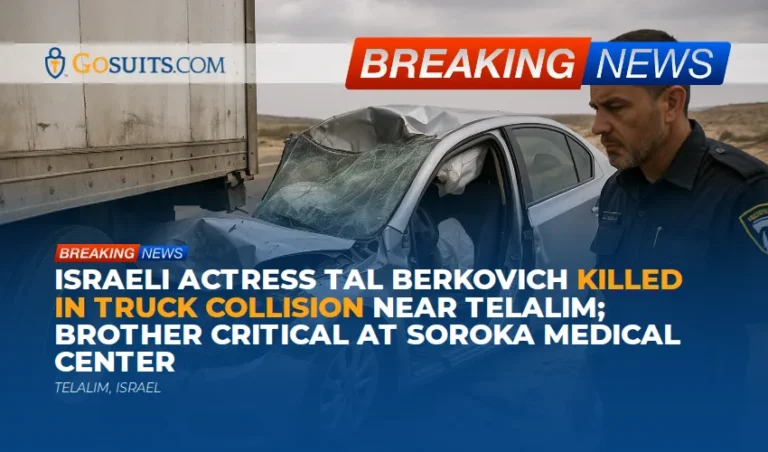
Israeli actress and model Tal Berkovich, 41, was killed in a car accident on a Thursday outside of Telalim, a small community in the Negev, according to Israeli media reports. Her brother, 40, was in the vehicle with her as they traveled to their mother’s birthday. He remains in critical condition at Soroka Medical Center in Beersheba. The truck driver involved reportedly suffered light injuries. Details released so far indicate a collision with a truck, but full investigative findings have not been made public at the time of writing.
Berkovich was born in Kiryat Tivon and performed in the Israeli ballet and with the Bat Dor Dance Company before moving abroad for acting studies. She later worked across Israeli and American productions, including time spent in Los Angeles. Many in Southern California’s Israeli community remember her appearances at local cultural events and industry gatherings in Beverly Hills and Hollywood.
This article is intended to help community members understand what information becomes available after a serious crash, how cross-border issues can affect families, and what steps commonly follow a collision with a heavy vehicle. It is written with care and respect for those affected.
Community context in Los Angeles and Israel
On both sides of the ocean, people are grieving. In Los Angeles, communities around Pico Robertson, Fairfax, and West Hollywood often come together quickly when tragedy strikes someone with ties to film, dance, and television. Neighbors share meals, synagogues and community centers provide space to gather, and friends organize support. In Israel, the Negev region is tight-knit, and when a crash occurs on a rural road, it is common to see rapid response by Magen David Adom and regional first responders. Families and friends often make their way to Beersheba for updates at Soroka Medical Center, the major trauma hub for the south.
The timing of this crash on a weekday commute window adds a layer of difficulty for investigators, especially where truck traffic is common. Globally, collisions involving heavy trucks carry elevated risks due to weight and stopping distances, and investigators will typically evaluate road geometry, lighting, visibility, speed, and any available event data recorders in vehicles, where applicable [1] [2] [3].
Where families can get official information and records
Police traffic collision report
In Israel, police typically generate a formal traffic collision report when a crash results in serious injury or fatality. Families usually coordinate with the investigating station or district traffic division where the crash occurred. While the process is not identical to U.S. procedures, the principle is the same: an official report will identify the vehicles involved, note preliminary observations, list witnesses when available, and include diagrams or photos taken by responding officers. If a party is hospitalized, a next of kin or designated representative can inquire about the status of the report and what steps are required to receive a copy once it is releasable.

Autopsy or forensic examination records
When a death occurs from trauma, a medicolegal investigation may involve the national forensic institute. In Israel, that is commonly associated with the Forensic Institute in Tel Aviv. In general, families or their legal representatives can request available findings once the investigation permits disclosure. Medical examiner or coroner reports often contain cause and manner of death, along with contributing factors. In any jurisdiction, medicolegal records may take time to finalize, and interim updates are common while toxicological or mechanical analyses are pending [4].
Medical records and privacy rules
Hospitals maintain clinical records for patients treated after a crash. For someone critically injured, immediate family members often receive status updates, though written authorizations are typically needed for detailed records. In the United States, health privacy is governed by HIPAA; in Israel, medical privacy is likewise protected by law, and written consent or legal authority is needed before substantive medical records are released. For families coordinating across borders, it helps to designate one point person to maintain the paperwork, request records, and track hospital contacts [5].
Accident scene photographs and roadway data
Photographs from the scene, skid marks, vehicle rest positions, and debris fields help reconstruction experts understand what happened. Investigators sometimes gather measurements and capture data from event data recorders, when present in passenger vehicles. EDR access and retention practices are governed by law and vary by country. In the U.S., technical standards and federal regulations define certain EDR requirements for vehicles equipped with the technology [6]. In any serious crash, preserving vehicles and their components can be vital to understanding whether vehicle systems, tires, or other components contributed.
Hospital and medical updates: Soroka Medical Center
Soroka Medical Center in Beersheba is a major trauma center serving the Negev. When a patient is in critical condition, the clinical team typically limits detailed updates to immediate family or a designated representative. Families often coordinate through the hospital’s patient services to arrange visits, obtain status updates, and eventually request medical records for care coordination or potential injury claims. If the crash involves nonresident nationals or families who live abroad, hospitals may also interface with consular services to help with communication and logistics.
From a practical standpoint, maintaining a record of treating providers, dates of care, imaging performed, and medications administered will help later on. This documentation can be crucial if a civil claim is pursued, as it connects the collision to the medical treatment and provides a timeline of injuries and recovery [5].
Understanding fatal collisions involving trucks: risks and realities
Heavy trucks present unique hazards on any roadway. Because of their mass, they need more distance to stop, and their crash energy is vastly higher than that of smaller passenger vehicles. In global and U.S. datasets, collisions involving large trucks are more likely to result in severe injury or fatality for occupants of the smaller vehicle. National analyses emphasize speed, following distance, driver attention, and load dynamics as recurring themes in serious truck crashes [1] [2].
Why does this matter for families? It frames the type of investigation that follows. Investigators and, in civil cases, retained experts look at:
- Vehicle condition including brakes, tires, steering, and lighting.
- Driver factors such as fatigue, distraction, or impairment, assessed through records and, where available, electronic logging in commercial operations.
- Roadway environment including curvature, signage, visibility, and any temporary hazards.
- Speed and time-distance analysis derived from physical evidence and available data recorders.
- Cargo and load securement which can alter vehicle handling and stopping distance in unexpected ways [3].
Public safety agencies also emphasize speed management and rural road safety challenges, which can include limited lighting and long stretches between settlements, conditions common in desert regions like the Negev [7] [8]. Those factors do not assign blame by themselves, but they help explain why certain crash types can be so devastating.

Potential civil liability and how investigations typically proceed
Every serious crash demands careful fact gathering before anyone can responsibly discuss who is liable. With a collision involving a passenger vehicle and a truck, civil liability may involve multiple parties:
- Passenger vehicle driver or owner, depending on the circumstances.
- Truck driver if negligent operation is established.
- Trucking company or contractor for negligent hiring, training, supervision, or maintenance, where applicable.
- Vehicle or component manufacturer in rare cases where a defect or malfunction contributed.
- Road authority or contractor if an unsafe roadway condition or inadequate warning contributed to the crash.
In a cross-border context, jurisdiction and the applicable law can become complex. Where a crash occurs often controls key legal questions, but evidence and witnesses may be located in different countries. That is one reason families often engage counsel early, so preservation letters can go out promptly to hold vehicles, request data, and keep critical time sensitive information from being overwritten or destroyed. If insurance carriers are involved, they frequently deploy adjusters and investigators quickly.
It is common for families to speak with their own insurance first. Even then, it is prudent to consult an attorney before providing detailed recorded statements to any insurer. What is said early can be used against a claimant later, even when the speaker believes they are simply being helpful. This general caution exists across jurisdictions and is echoed by public health and safety agencies that recognize how stress affects memory and communication after trauma [4] [5].
Insurance issues after a truck collision with serious injuries or death
Insurance coverage in truck collisions can involve multiple layers, which might include a commercial auto policy for the truck, personal auto coverage for the passenger vehicle, employer policies if the driver was on duty, and supplemental coverages. When cross-border families are affected, they may also need to navigate travel policies, life insurance, or accidental death and dismemberment benefits. The claim sequence and which insurer pays first depend on the policy language and the facts of the crash [9].
Before engaging with any insurer in depth, it is wise to speak with counsel. Seasoned truck accident lawyers routinely coordinate preservation of evidence and help set the record straight when adjusters request broad authorizations or recorded statements. Written requests for policy disclosures, vehicle inspections, and scene data are more effective when made early and in the correct format.
For community members in Southern California who have faced a similar tragedy and need guidance close to home, Los Angeles truck accident lawyers can help families understand how to gather records in California while coordinating with authorities abroad. Many find it helpful to assign one family representative to interact with insurers so the rest can focus on care, travel, and mourning.
Preserving evidence on both continents
Preserving evidence is about timing. Physical evidence at a crash scene can be disturbed by weather and traffic. Vehicles can be removed, stored in tow yards, and in some systems quickly released or even salvaged if no preservation request is made. In collisions involving a truck, important evidence can include driver logs, telematics, dispatch records, and maintenance files. These materials may be subject to retention policies that allow for routine deletion after short intervals unless someone demands preservation.
In the United States, families or their representatives often send a preservation letter immediately. In Israel, similar principles apply even if the forms and procedures differ. Consider these steps:
- Identify the investigating police unit and request the case number.
- Ask towing or storage operators to hold vehicles until a technical inspection can occur.
- Preserve personal devices like phones and cameras that may contain photos, dashcam footage, or messages that time stamp movements.
- Request copies of emergency response times and treatment summaries when available.
- Document weather and visibility around the time of the crash using official historical weather archives or traffic bulletins where possible.
Some passenger vehicles and heavy trucks store event data from a collision. In the U.S., technical standards and federal rules describe the type of data that may be stored when a vehicle is equipped with an EDR, and specialized retrieval tools are used to capture it [6]. Even where different national regulations apply, preserving the hardware and making timely requests can be crucial.
Grief, trauma, and practical support
Trauma after a sudden loss resonates in waves. People grieve differently and on different timelines. Public health agencies share guidance on coping with grief, connecting to support networks, and watching for signs that professional help might be needed [10] [11]. In Los Angeles, community organizations often coordinate counseling resources and meal trains. In Israel, friends and neighbors may organize shiva arrangements and help with hospital and funeral logistics.
Common practical supports include:
- Travel coordination for relatives flying between LAX and Ben Gurion, including documentation for compassionate fare requests.
- Financial logistics such as accessing temporary support funds or managing work leave and benefits.
- Child or elder care arrangements for dependents affected by the loss or hospitalization.
- Mental health services through trusted local providers or helplines, including U.S. nationwide resources for guidance [12].
What to do next: a practical checklist
The list below is not exhaustive, but it can help families and close friends organize immediate tasks. When possible, designate one point person to manage documents and contacts so the rest of the family can focus on health and mourning.
- Identify the police case number and the investigating unit. Ask about the expected timeline for a releasable report and what is needed to receive it.
- Coordinate with Soroka Medical Center for updates, appointment times, and procedures to authorize release of records when appropriate.
- Document communications by saving texts, emails, call logs, and notes of conversations with officials, insurers, and medical providers.
- Preserve vehicles by asking tow yards or storage facilities to hold them until a qualified inspection can be done.
- Collect scene and vehicle photos from witnesses or responding family members, and store originals in a secure location.
- Track expenses for travel, lodging, medical bills, and memorial costs related to the crash. Keep receipts.
- Consult an attorney before giving recorded statements to any insurer. What is said early can be used to limit later claims.
- Start a simple paperwork file for certificates, authorizations, and application forms, and keep a timeline of major events.
For families in Los Angeles balancing grief with paperwork, this resource can help organize immediate documentation: Los Angeles wrongful death checklist.
Why timely action matters now
What should people do in the near term, and why does timing matter? Evidence can fade quickly. Skid marks wear away, vehicles are released, and electronic data can be overwritten. Insurance carriers typically get a head start by deploying adjusters early. Acting promptly helps balance the information flow.
Benefits of taking action now include better preservation of records, fewer surprises in later proceedings, and a more accurate understanding of what happened while memories are fresh. If an insurance claim may be necessary, it is wise to speak with an attorney first, before calling any insurer, so that a family’s rights are protected and to prevent inadvertent statements that might be used against them later. Early consultations are commonly free, and they can provide clarity on immediate steps without obligating anyone to take further action.
In short, time can work for or against a thorough, fair accounting of events. A measured approach that starts with safety, medical care, and evidence preservation puts families in the best position to make informed choices as information becomes available.
Additional context: how investigations connect to civil claims
When a fatal crash involves a truck, several technical and legal threads must be woven together. Police reports, forensic examinations, hospital records, and witness statements each provide a piece of the picture. In many jurisdictions, an independent reconstruction may be requested to estimate speeds, reaction times, and impact dynamics. Public datasets show that heavy vehicle physics, road design, and human factors interact in complex ways in serious crashes [1] [2] [7].
As civil claims are evaluated, attention turns to policy limits, coverage exclusions, and the sequence in which insurance applies. In multi policy scenarios, understanding which insurance pays first after a crash can reduce delays and prevent gaps in coverage [9]. Families benefit when evidence is preserved early and communication with insurers is organized and intentional.
Los Angeles community footing while the investigation unfolds
For those in Los Angeles who knew Berkovich from creative circles, the weeks after a tragedy can be both public and deeply private. People may gather near familiar spaces like the Saban Theatre in Beverly Hills, small studios in Hollywood, or community hubs along Pico Boulevard. It is okay to take time, to be quiet, to lean on friends. Practical help can be as simple as rides to LAX for relatives flying to Ben Gurion, coordination of childcare, or sharing updated information with care and caution.
If questions arise about how to navigate truck collision claims, local community groups often recommend speaking with counsel who regularly handle heavy vehicle cases. In Los Angeles, families sometimes look to Los Angeles truck accident lawyers who understand both the local processes and how to coordinate with foreign authorities when needed. The goal is not aggressive posturing; it is calm, informed planning while facts are gathered and loved ones are cared for.

Commentary from Gosuits Beersheba, Israel Personal Injury Attorney
Our hearts are with the family, friends, and communities in Israel and Los Angeles who are grieving this loss and praying for healing. This article is meant for educational purposes and general information to help community members understand common steps after a serious collision.
Based on what has been publicly reported, this was a devastating crash involving a passenger vehicle and a truck on a roadway outside Telalim. In any case like this, careful investigation matters. Vehicle preservation, roadway measurements, and medical documentation will be central to understanding what happened. It is important that no one rushes to judgment, and that all facts are collected with care and respect.
Insurance companies and large corporations often move fast. They gather statements early, request broad authorizations, and sometimes frame the narrative before families have a chance to absorb what happened. Without guidance, people can unknowingly limit their options or agree to steps that make it harder to get a full accounting later. An early, no cost consultation can help families understand their rights, the documents to preserve, and how to communicate with insurers without jeopardizing their interests.
When questions arise about next steps, a conversation with a seasoned attorney can clarify immediate priorities. It is especially important to speak with counsel before giving any recorded statement to an insurer. What someone says under stress can be used against them later, even when they are trying to be truthful and cooperative. A free consultation is a chance to understand the process and to plan thoughtfully while focusing on care and mourning.
References
- Traffic Safety Facts: Large Trucks, 2021 – NHTSA
- Pocket Guide to Large Truck and Bus Statistics – FMCSA
- Large Truck Crash Causation Study – FMCSA
- Death Investigation: A Guide for the Scene Investigator – NIJ
- Your Rights to Medical Records – HHS
- Event Data Recorder Information – NHTSA
- Speed Management Program – FHWA
- Rural Road Safety – FHWA
- Insurance Requirements for Commercial Motor Vehicles – FMCSA
- Coping with Grief – CDC
- Grief – MedlinePlus
- National Helpline – SAMHSA