- What we know about the North Texas icy-road crashes
- Where and when the incidents happened
- What local agencies are saying and doing
- Why black ice and bridge icing cause sudden crashes in North Texas
- Safety and legal duties on icy roads for passenger vehicles and 18-wheelers
- Potential liability in multi-vehicle chain reactions involving heavy trucks
- What to do after an ice-related crash in Grapevine, Irving, or anywhere in DFW
- Where to get key records: police crash reports, roadway data, and medical documents
- Insurance and claims in Texas after weather-related collisions
- Evidence to preserve now if a crash involved an 18-wheeler
- Community resources and who to call
- Why timely action matters
- Commentary from Gosuits Grapevine, Texas Personal Injury Attorney
- References
What we know about the North Texas icy-road crashes
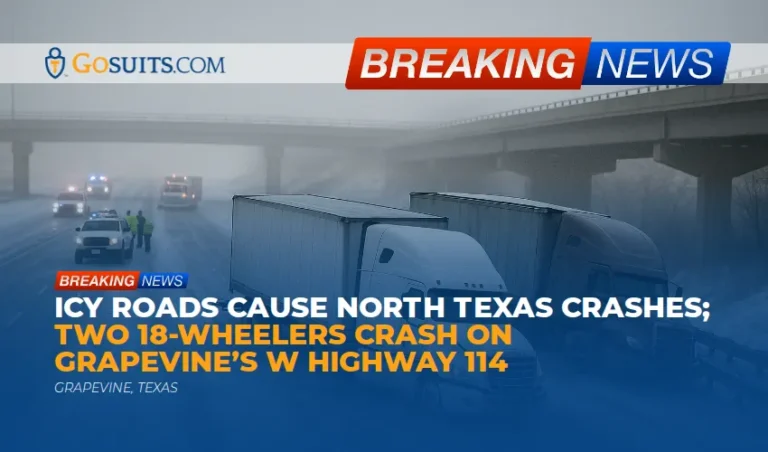
Early Wednesday morning, as refreeze lingered from the weekend winter storm, emergency crews responded to multiple crashes across North Texas. The conditions were especially slick on elevated bridges and overpasses around the Dallas Fort Worth metroplex. In Grapevine, around 3:40 a.m., crews responded to a multiple-vehicle crash in the eastbound lanes of W Highway 114 that involved two 18-wheelers. Police indicated one big rig crashed due to icy conditions, and a second tractor-trailer crashed in the same area shortly afterward. The eastbound highway was shut down while crews worked to clear the scene. Authorities reported no injuries in the Grapevine incident.
Elsewhere, Irving police asked drivers to slow down and take extra caution after officers handled numerous crashes and hazards related to icy pavement, with SH 183 highlighted as a problem corridor. As morning temperatures hovered near freezing, patchy ice on shaded stretches, flyovers, and bridge decks remained a risk. Local forecasts suggested a warm-up into the mid 40s by afternoon, with further improvement through Thursday as temperatures climb into the 50s.
Where and when the incidents happened
According to local reports, the busiest overnight and early-morning periods were before sunrise on Wednesday, when pavement temperatures were lowest and moisture refroze. The most notable crash reported publicly was on W Highway 114 in Grapevine near major connectors that funnel traffic toward DFW Airport, Southlake, and the North Freeway. Irving police flagged SH 183 as a hotspot for crashes and hazards during the morning commute. These corridors are familiar to North Texans who drive between Las Colinas, Downtown Dallas, and the mid-cities, and they include numerous bridges that ice more quickly than surface streets.
Law enforcement emphasized that conditions could improve later in the day as solar radiation and rising air temperatures help melt residual ice. However, shaded areas and flyovers that do not receive much sun can stay slick longer, particularly near interchanges.
What local agencies are saying and doing
Grapevine police closed the affected eastbound lanes of W Highway 114 after the two-truck collision to allow heavy-wrecker operations, sanding or de-icing efforts, and scene safety while responders worked. Irving police reminded drivers to reduce speed, leave extra following distance, and consider postponing nonessential travel until conditions improve. Their message reflects a consistent theme in winter events across DFW: transportation crews and police can mitigate hazards, but driver behavior and patience play a major role in preventing secondary crashes.
TxDOT typically monitors bridge icing and deploys treatment crews to priority corridors, with a focus on high-speed interstates and major state highways. State agencies also share road condition updates and recommend motorists consult official channels before heading out [1].

Why black ice and bridge icing cause sudden crashes in North Texas
North Texas often faces short-lived but impactful winter events. The physics are straightforward: bridges and elevated roadways cool faster than ground-level roads because they are exposed to air on all sides. That extra exposure allows moisture to freeze more quickly, particularly in the pre-dawn hours. When drivers who are used to dry pavement encounter slick patches at highway speeds, it takes only a split second to lose traction. Even with anti-lock brakes and electronic stability controls, stopping distance skyrockets on ice.
Black ice is especially dangerous because it looks like wet asphalt, not the opaque white ice residents may imagine. It can form from refreeze after a daytime melt, from freezing fog, or from light precipitation during sub-freezing temperatures. On a corridor like SH 183 or Highway 114, one driver’s minor loss of control can cascade into multi-vehicle collisions when others cannot stop in time.
Federal and state safety agencies stress the basics when conditions deteriorate: slow down, increase following distance, give trucks more room to maneuver, and avoid sudden steering or braking inputs [2]. When in doubt, postponing travel until crews have treated bridges and the sun has warmed the pavement remains the safest choice [1].
Safety and legal duties on icy roads for passenger vehicles and 18-wheelers
Texas law requires all drivers to operate at a speed that is reasonable and prudent under existing conditions. That duty includes adjusting speed for weather and roadway hazards, even when posted limits are higher [3]. In a civil injury case after a winter crash, investigators and insurers look closely at whether a driver slowed down appropriately, maintained lane control, and kept sufficient distance to stop given the conditions.
Commercial motor vehicle drivers have additional regulatory duties. Federal rules require CMV operators to use extreme caution in hazardous conditions like snow and ice, which may include reducing speed or even discontinuing operation if conditions become sufficiently dangerous [4]. Hours-of-service rules also include an adverse driving conditions exception, but exercising that exception does not lessen the overarching duty to operate safely [5].
Put simply, when icy conditions are present, the standard of reasonable care shifts with the weather. That applies to everyday commuters on SH 183, delivery vans around Las Colinas, and 18-wheelers heading through Grapevine and towards the North Tarrant Express.
Potential liability in multi-vehicle chain reactions involving heavy trucks
Chain-reaction crashes on icy highways can be complicated. Fault is rarely black and white. Investigators may allocate percentages of responsibility among several drivers based on:
- Speed relative to conditions Did drivers reduce speed below the posted limit to account for ice and visibility?
- Following distance Did drivers maintain extra spacing that would allow a stop on low-traction surfaces?
- Lane control Did any vehicle make abrupt lane changes or brake sharply without signaling?
- Commercial vehicle duties Did truck drivers operate with the level of caution required by federal regulations [4]?
- Vehicle condition Were tires, brakes, and lights in serviceable condition for winter hazards?
- Roadway treatment and warnings Were there timely treatments or advisories from transportation authorities [1]?
Texas’ modified comparative responsibility framework allows an injured person to recover damages if they are not more than 50 percent responsible. Any recovery can be reduced by the person’s percentage of responsibility [6]. Every case depends on its facts. Evidence such as dashcam video, truck electronic control module (ECM) data, roadway cameras, and witness statements can make a real difference in understanding what happened.
What to do after an ice-related crash in Grapevine, Irving, or anywhere in DFW
After a collision on roads like W Highway 114 or SH 183, the immediate steps are about safety and documentation. If conditions are still icy, secondary collisions are a risk. Use hazard lights and, if safe, move vehicles out of live traffic lanes. Call 911 to report the crash and request assistance. When EMS and police arrive, follow their instructions. If you are able, carefully photograph vehicle positions, tire tracks on ice, skid marks, and any visible ice on the roadway surface or bridge deck.
- Prioritize safety On bridges and interchanges, move to a safe spot if possible. Do not stand between vehicles on an icy shoulder.
- Call 911 Early reporting helps police and TxDOT identify and treat hot spots.
- Document the scene Capture photos of the roadway surface, signage, damaged guardrails, and the horizon to show ambient light and visibility.
- Exchange information Obtain contact and insurance details from all involved drivers and any independent witnesses.
- Seek medical evaluation Even if you feel okay, soft tissue injuries and concussions can surface hours later.
- Avoid detailed statements to insurers before you understand your rights Initial statements can be used later to challenge a claim.
- Consult a qualified attorney before opening a claim Understanding the process early can prevent missteps.
If a crash involved an 18-wheeler, act quickly to preserve evidence. Trucking companies may have dash cameras, telematics, and ECM data that can be overwritten if not preserved. A lawyer can send a spoliation letter requesting that evidence be retained.

Where to get key records: police crash reports, roadway data, and medical documents
In Texas, official crash reports are centralized through TxDOT’s Crash Records program. After a police-investigated crash, a CR 3 report is typically available for purchase after processing. You can check availability and request reports through TxDOT’s official channels [7]. If a crash happened inside Grapevine, you can also contact the Grapevine Police Department for general guidance on obtaining reports and supplemental materials [8]. For Irving incidents, TxDOT remains the hub for statewide crash report access [7].
Other helpful records can include 911 audio, computer-aided dispatch (CAD) logs, and body-worn camera footage. These are public records that may be available through the Texas Public Information Act, with certain privacy restrictions. The Texas Attorney General provides guidance on how to make a public information request and what to expect in terms of timelines and responses [9].
If a crash results in a fatality, the county medical examiner is responsible for postmortem examinations. For incidents occurring in Grapevine, the Tarrant County Medical Examiner’s Office provides information about reports and release procedures [10]. For deaths in Dallas County, families generally work through the county’s medical examiner office. Death certificates are issued through the Texas Department of State Health Services Vital Statistics unit, which provides procedures for obtaining certified copies [11].
For roadway conditions and treatment activity, TxDOT maintains official road condition resources where you can review statewide updates during winter weather events [1]. Additionally, the National Weather Service Fort Worth office offers winter weather briefings that can corroborate temperature trends and icing risk timelines [12].
Insurance and claims in Texas after weather-related collisions
Ice does not absolve drivers or motor carriers of responsibility. Insurers assess whether each person acted reasonably for conditions when deciding liability. Texas follows a comparative responsibility standard, which may reduce recovery based on one’s share of fault [6]. Before reporting a claim or giving a recorded statement, it is wise to consult with an attorney to understand how fault is evaluated and how your words might be interpreted later. What you say to an insurance adjuster can be used to limit or deny parts of a claim.
Texas law also sets important timelines. Generally, a civil injury claim must be filed within two years, though specific facts can affect how this period applies [13]. Insurers must follow fair-claims handling rules, and the Texas Department of Insurance provides consumer guidance on navigating auto claims and understanding rights during the process [14].
If you carry optional coverages like Personal Injury Protection or Medical Payments, they may provide benefits regardless of fault, depending on your policy language. Discuss these benefits with counsel before opening claims so you can coordinate benefits and avoid missteps. Some motor carriers will dispatch corporate risk managers and adjusters to scenes quickly. That imbalance can be intimidating in multi-vehicle incidents involving commercial trucks. Speaking with truck accident lawyers can level the information playing field and help protect important evidence early.
In larger DFW collisions, especially those involving 18-wheelers, many people search for Dallas truck accident lawyers who understand the dynamics of ice-related chain reactions and the federal safety rules that apply to commercial drivers. Quality guidance early can help ensure insurer communications and evidence requests are handled correctly.
Evidence to preserve now if a crash involved an 18-wheeler
In trucking collisions, timely evidence preservation is crucial. Some data is perishable. ECM logs, dashcam files, lane-departure alerts, and third-party telematics often overwrite on rolling intervals. If not secured within days or weeks, key data can disappear.
- Truck data ECM speed and braking data, dashcam video, telematics, GPS, and driver-facing camera files.
- Driver records Hours-of-service logs, pre-trip inspections, and dispatch notes, including adverse weather communications [5].
- Maintenance files Brake, tire, and lighting records, plus any winter equipment policies.
- Scene evidence Photos of ice patches, bridge decks, fresh sanding, and vehicle rest positions.
- Public records 911 audio, CAD logs, and weather bulletins for the time window of the crash [9], [12].
For a practical, step-by-step overview tailored to our region, this guide can help you organize your collection plan: Dallas Truck Crash Evidence Checklist for Victims.
Community resources and who to call
North Texas has a robust network of public agencies and health systems that respond during winter events. If you are navigating the aftermath of a crash, these resources can help:
- Road conditions Check TxDOT’s official road conditions resources before driving into known icy corridors like SH 183 and Highway 114 [1].
- Weather updates The National Weather Service Fort Worth office posts winter weather briefings that track freezing lines and refreeze risk [12].
- Crash reports Request CR 3 crash reports through TxDOT’s Crash Records portal [7].
- Grapevine Police Department For guidance on local reporting and community safety updates, visit the city’s official page [8].
- Public information requests Use the Texas Attorney General guidance to submit PIA requests for 911 or body-worn camera materials [9].
- Medical examiner information For fatalities in Grapevine-area incidents, consult Tarrant County Medical Examiner’s Office procedures [10].
- Vital records The Texas Department of State Health Services provides instructions for obtaining death certificates statewide [11].
Why timely action matters
When winter weather triggers pileups and corridor closures, the critical window for building a clear record opens immediately. Acting sooner provides several benefits.
- Preserve fragile evidence Dashcam and ECM data can auto-delete on rolling intervals. Sand or de-icing can alter the scene within hours.
- Lock in witness memory People forget details fast, especially in a chaotic, multi-vehicle event.
- Avoid claim pitfalls Insurers often seek early recorded statements. Without guidance, statements can be taken out of context.
- Coordinate medical care Timely evaluation connects symptoms to the event and sets a baseline for recovery and documentation.
- Plan around legal timelines Texas limitations deadlines and insurer reporting requirements continue to run [13], [14].
What should be done now? Gather photos and videos, identify and secure potential dashcam and telematics footage, and note specific locations like the exact bridge deck or interchange ramp. Consider a consultation with counsel before opening insurance claims. That step helps ensure requests for roadway data, public records, and weather confirmations are targeted and effective. Above all, anyone involved in a crash should avoid giving detailed statements to insurers until they understand their rights. What is said today can be used to challenge responsibility later.

Commentary from Gosuits Grapevine, Texas Personal Injury Attorney
Our thoughts are with everyone impacted by this morning’s icy-road crashes across North Texas. When winter weather hits the Metroplex, it often arrives quickly and catches even seasoned drivers off guard. This article is offered for general educational purposes to help our neighbors understand safety expectations, evidence needs, and where to find official information.
From a civil perspective, ice does not eliminate responsibility. Texas law requires all drivers to adjust for conditions, and federal rules require professional drivers to use extreme caution in hazardous weather. The Grapevine incident involving two 18-wheelers on W Highway 114 underscores how a single loss of traction can trigger a secondary crash. Even when no injuries are reported, these events highlight the importance of reduced speeds, increased following distance, and choosing to pause travel when bridges glaze over.
In the aftermath of a multi-vehicle collision, insurance carriers and large transportation companies move fast. They often collect vehicle data, secure driver statements, and frame the narrative early. People involved in crashes may not realize how quickly key evidence can be lost or how recorded statements can be used to limit claims later. That imbalance of information is why many folks choose to consult with counsel before providing detailed statements. A brief, no-cost consultation can clarify rights, guide evidence preservation, and outline the next steps without committing to any particular course.
References
- Road Conditions and Travel Information – Texas Department of Transportation
- Winter Driving Safety – National Highway Traffic Safety Administration
- Texas Transportation Code Sec. 545.351 Speed Requirements – Texas Legislature Online
- 49 CFR 392.14 Hazardous Conditions; Extreme Caution – eCFR
- 49 CFR 395.1 Hours of Service; Adverse Driving Conditions – eCFR
- Texas Civil Practice and Remedies Code Sec. 33.001 Comparative Responsibility – Texas Legislature Online
- Crash Records and Reports – Texas Department of Transportation
- Grapevine Police Department – City of Grapevine
- Public Information Requests in Texas – Office of the Attorney General
- Tarrant County Medical Examiner – Official Site
- Vital Statistics – Texas Department of State Health Services
- Winter Weather Resources – National Weather Service Fort Worth
- Texas Civil Practice and Remedies Code Sec. 16.003 Limitations – Texas Legislature Online
- Auto Insurance Claims Help – Texas Department of Insurance