- What We Know From The Provided Materials
- Why Timing Matters in North Texas: Big Weekends and Clock Changes
- If a Serious Collision or Fatality Occurs in Frisco: How to Get Official Records
- Understanding Civil Rights After a Catastrophic Crash in Texas
- Insurance Realities and Early Evidence
- Local Risk Patterns Around Frisco and North Dallas
- A Practical First-Week Roadmap for Families After a Devastating Crash
- How Daylight Saving Time and Fatigue Impact Safety
- Making a Claim in Texas: Deadlines and Pitfalls to Avoid
- Community Resources You Can Use
- Call-to-Action: What To Do Next and Why It Matters
- Commentary from Gosuits Frisco, Texas Personal Injury Attorney
- References and Resources
What We Know From The Provided Materials
The materials referenced above discuss three unrelated community topics: a pro-sports weekend recap, a reminder about the upcoming daylight saving time change, and a report on civic debate at the George A. Purefoy Municipal Center in Frisco. None of the linked items contain verified details of a specific traffic collision, personal injury, or wrongful death event. With no crash report, victim identity, date, location, or agency findings provided, we won’t speculate about any one incident. Instead, drawing on the timing cues in these materials and on questions we regularly hear in Collin and Denton Counties, this article offers a detailed, practical guide for families in Frisco and greater North Dallas on what to do if a serious crash or fatality occurs during busy event weekends or around the daylight saving time shift. Where appropriate, we cite authoritative government and academic sources about public records, safety, and Texas civil law.
Why Timing Matters in North Texas: Big Weekends and Clock Changes
If you live or drive in Frisco, you know how traffic ebbs and flows with local events. When there’s a marquee matchup at Toyota Stadium, a concert at The Star, a youth tournament at the Fieldhouse, or shopping draws at Stonebriar Centre, traffic stacks up fast along the Dallas North Tollway, SH 121, Preston Road, and Main Street through Frisco Square. Add visitors unfamiliar with the area and you get sudden slowdowns, weaving, last-second exits, and fender benders that can quickly become serious multi-vehicle crashes. Law enforcement often reminds drivers to plan ahead on event days and to leave extra time. That commonsense buffer helps you make calmer choices behind the wheel.
Seasonal shifts matter too. In early spring, when we push clocks forward an hour, people lose sleep and early morning light patterns change. Fatigue is a known risk factor for crashes, and researchers have documented a measurable bump in serious collisions after the spring time change. A University of Colorado Boulder team found a statistically significant increase in fatal crashes following the spring shift to daylight saving time, consistent with reduced sleep and circadian disruption [8]. Nationwide safety agencies echo the concern: drowsiness slows reaction time and reduces attention, raising crash risk [7]. This is particularly relevant on North Texas arterials and tollways where speeds are high and traffic densities surge during commute and event peaks.
If a Serious Collision or Fatality Occurs in Frisco: How to Get Official Records
Official records help families understand what happened. In Texas, several agencies and laws control access to crash, inquest, and vital records. Here’s where to start.
Police crash reports
Most reportable Texas crashes are filed into the statewide CRIS Crash Reports system. After a report is approved, eligible parties can purchase a copy through the Texas Department of Transportation’s online portal [1]. If Frisco Police Department responded, the report should appear there once finalized. For certain supplemental materials like incident logs or photos in the city’s possession, submit a Public Information Request to the City of Frisco under the Texas Public Information Act [2] [3].

Autopsy and inquest records
In Texas, sudden, unexpected, or violent deaths trigger an inquest by a medical examiner or a justice of the peace, depending on the county’s structure. The investigative authority and procedures are set out in the Code of Criminal Procedure Chapter 49 [4]. If a loved one’s passing is tied to a collision, the applicable county’s medical examiner or justice court can advise on how to request available inquest or autopsy documents. Which specific office holds jurisdiction depends on where the death occurred, not necessarily where the collision happened.
Death certificates
Certified death records are issued through the Texas Department of State Health Services Vital Statistics. Eligible family members can request official copies through the state’s process and accepted application methods [5]. Funeral homes often assist with initial filings, but families can obtain additional copies directly from the state as needed.
911 audio, dash or body camera, and traffic camera footage
Some materials may be obtainable through a public information request, subject to statutory exceptions for sensitive content, ongoing investigations, and privacy limits [3]. If the collision occurred on state-maintained roads, additional agencies may hold roadway or signal timing data. Time-sensitive footage from private businesses near the crash scene can disappear quickly due to automatic overwrite policies, so swift requests are crucial.
Understanding Civil Rights After a Catastrophic Crash in Texas
Texas law recognizes civil remedies when a person or company’s negligent acts cause injury or death. While we won’t evaluate any one set of facts here, it’s helpful to know the broad categories. Texas Civil Practice and Remedies Code Chapter 71 outlines claims related to wrongful death and survival actions, including who may bring a claim and the general nature of recoverable damages [6]. These civil claims are separate from any citation or criminal matter. Families often tell us that understanding this separation helps them focus on preserving evidence and securing needed records even while law enforcement continues its own work.
If a crash involves out-of-town drivers, rideshare vehicles, company trucks, or road construction, multiple insurance policies and corporate entities may be involved. That can complicate responsibility and coverage analysis. Clear, early documentation of facts and injuries is critical no matter who was at fault.
Insurance Realities and Early Evidence
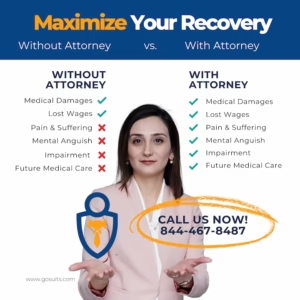
Insurance companies move quickly after serious collisions. Adjusters may request recorded statements or ask you to sign medical or records releases. What you say can be used to limit or dispute a future claim, so it’s wise to speak with a qualified attorney before engaging in detailed discussions with insurers. Seasoned accident lawyers recognize how early narratives are framed and why it matters later in the process.
Collecting and preserving evidence early helps protect your options. That can include photos or video of the scene and vehicles, names and contact details for witnesses, and documentation of medical care. For larger losses, families sometimes coordinate vehicle inspections before a total loss is processed, so black box or event data recorder information is not lost. In collisions on SH 121 or the Dallas North Tollway, scene conditions change fast as responders clear lanes, so snapshots of skid marks, debris fields, and lane closures can prove significant.
Local Risk Patterns Around Frisco and North Dallas
Patterns on the ground tell a story. Around Frisco Square and the George A. Purefoy Municipal Center, traffic rotates through busy civic schedules, school events, and weekend visitors. Farther south, the DNT and SH 121 interchange brings together high speeds and intense weaving as drivers make last-second decisions about collectors and exits. East of the Tollway, Preston Road draws steady suburban traffic, with frequent left turns and signalized intersections that often see side-impact collisions when drivers misjudge gaps.
Near The Star, Toyota Stadium, and large shopping complexes, pedestrian and scooter traffic rises during events. National data show that pedestrians are vulnerable in mixed-use corridors and at night or during low-light transitions [9]. Around the daylight saving time change, those dusk and dawn transitions arrive at different times than our bodies expect, compounding the risk when people are also short on sleep [7] [8]. A small change in routine can cascade into a critical split-second on the roadway.
A Practical First-Week Roadmap for Families After a Devastating Crash
When tragedy strikes, clear steps can bring order to the chaos. Here is a practical path families in Frisco and nearby communities often follow during the first week after a catastrophic collision.
- Stabilize health and gather care records. Prioritize immediate and follow-up medical care. Keep discharge paperwork, imaging discs, and prescriptions in a single folder. Note every provider and date of service. These details will matter later in any insurance review.
- Preserve vehicles and scene evidence. If possible, hold off on authorizing disposal or salvage of vehicles involved until you understand whether an inspection or black box download is needed. Time and storage policies can erase crucial data.
- List every potential witness. Even a first name and phone number can be enough to track someone down. Witnesses disappear quickly once normal life resumes.
- Request the official crash report. Use the TxDOT CRIS portal when it becomes available, and track your request numbers and dates in writing [1].
- Submit targeted public information requests. Ask the City of Frisco for specific items like incident reports, CAD logs, or certain photos. The Texas Public Information Act guides how and when agencies respond [2] [3].
- Coordinate with the inquest authority, if a loved one was lost. Ask the appropriate medical examiner or justice court about next steps, available documents, and timelines for release of records [4].
- Track time away from work and out-of-pocket costs. Save receipts for travel to appointments, medical equipment, and vehicle-related expenses. These small amounts add up and create a fuller picture of loss.
- Avoid expansive statements to insurers. Consider consulting counsel before giving recorded statements or signing blanket authorizations. It’s normal to want to cooperate, but early statements can be used to minimize a claim later.
For those weighing whether to retain local counsel in the area, this overview pairs well with key things to know about dallas personal injury lawyers, which outlines practical criteria communities in and around Frisco often consider.
How Daylight Saving Time and Fatigue Impact Safety
Sleep disruption is a quiet hazard on fast, multi-lane corridors like the DNT and SH 121. Public health and transportation research consistently link drowsiness to slower reaction times, reduced vigilance, and impaired decision-making. The Centers for Disease Control and Prevention highlights the risk of driving while sleepy or fatigued, noting that it can mirror some impairments seen with alcohol with respect to reaction time and attention [7]. University research connecting the spring time change with increased fatal crashes strengthens the message that even modest sleep loss can have real roadway consequences [8].
Practical ways to reduce risk during the spring shift include going to bed earlier for a few nights ahead of the change, allowing extra commute time, and increasing following distance for the first week after the switch. If you’re a pedestrian or bicyclist around Frisco Square, The Star, or along Preston Road, assume drivers may be slower to perceive you during changed light conditions. National Highway Traffic Safety Administration guidance reminds all road users of the basics: cross at crosswalks, make eye contact, maximize visibility with reflective gear at night, and avoid distractions [9]. If you drive, put your phone away and always wear your seat belt. NHTSA data show seat belts dramatically reduce the risk of fatal injury in a crash [10].
Making a Claim in Texas: Deadlines and Pitfalls to Avoid
Texas law sets deadlines that can affect your options if you choose to bring a civil claim. While this article isn’t tailored to any one situation, families often want to know that Texas has statutes defining who can bring a wrongful death or survival action and the categories of damages that may be considered, as described in the Civil Practice and Remedies Code Chapter 71 [6]. Other statutes establish general limitation periods for injury claims. Because deadlines and exceptions depend on facts, it’s important to verify which timelines apply before making decisions that cannot be undone.
Insurance companies may contact you quickly requesting statements. Before returning those calls, many people find it helpful to speak with counsel so they understand how seemingly harmless comments can later be taken out of context. When claims involve multiple policies, rideshare platforms, or commercial vehicles, the interplay between coverages can be confusing. Experienced guidance helps you frame requests, preserve needed documents, and resist pressure to make commitments before you have the full picture. If you are exploring guidance in the area, many look for accident lawyers in Dallas who regularly navigate multi-insurer claims, evidence preservation, and the Texas Public Information Act processes.
Community Resources You Can Use
Knowing who to call reduces uncertainty during a crisis. Here are credible places and processes that help families in Frisco and across North Texas get answers.
- TxDOT CRIS Crash Reports: The statewide portal for approved crash reports and diagrams [1].
- City of Frisco Public Information Requests: To request certain police or city-held records tied to an incident number [2].
- Texas Public Information Act overview: State guidance on timelines, exemptions, and how to frame your request [3].
- Inquest and autopsy authority: Procedures are governed by Texas Code of Criminal Procedure Chapter 49. Contact the appropriate county’s medical examiner or justice court where the death occurred for status and release practices [4].
- Death certificates: Order certified copies through the Texas Department of State Health Services Vital Statistics [5].
- Drowsy driving and pedestrian safety guidance: CDC and NHTSA resources you can share with family drivers and teens to reduce risks during light transitions and busy weekends [7] [9].
- Seat belt and occupant protection: A refresher on why proper restraint remains the single most effective protective measure in a crash [10].
If you’ve never navigated a serious injury claim, you’re not alone. Many people consult accident lawyers once they realize how quickly insurers move, how fast video can be overwritten, and how specific a public records request must be to reach the right files. Careful planning in the first days preserves flexibility later.
Call-to-Action: What To Do Next and Why It Matters
When a catastrophic collision disrupts a family, the most effective next step is to organize and preserve the details that define what happened. Create a single folder for medical records, crash report numbers, insurance policy information, and any photos or videos. Make a written timeline starting with the day of the collision and update it daily. File targeted public information requests promptly so you do not lose time-sensitive records. Before engaging in lengthy insurer calls or signing releases, schedule a free consultation with a qualified attorney who handles serious crash cases in your area. The benefit of acting now is clarity: you’ll understand which evidence is at risk, what deadlines apply, and how to avoid common traps that can weaken a future claim. Time matters because traffic camera video may be purged within days, vehicles might be salvaged before inspection, and witnesses become harder to locate with every passing week. Acting in the first seven to ten days maximizes your ability to obtain the documents and data that tell the full story.

Commentary from Gosuits Frisco, Texas Personal Injury Attorney
Our hearts are with anyone in our community coping with a serious injury or the loss of a loved one. The discussion above is offered for educational purposes and general information, especially relevant during busy local weekends and the daylight saving time shift. While there’s no single incident detailed in the materials provided, the realities Frisco families face on high-speed corridors like the Dallas North Tollway and SH 121 are very real.
From our vantage point, the riskiest moments often involve routine choices under pressure: merging near major interchanges, glancing at a phone when traffic suddenly compresses, or misjudging a left turn at a crowded intersection near Frisco Square. Add fatigue around the time change or the influx of visitors for events at The Star or Toyota Stadium, and split-second errors can become life-altering.
Insurance companies and large corporate entities know most people don’t handle major claims every day. They’re aware that early statements might be made before families see the full medical picture or understand the importance of vehicle data and camera footage. Adjusters may push blanket medical authorizations or quick resolutions that don’t account for long-term needs. That’s why understanding your rights, documenting carefully, and getting a free consultation early can make a meaningful difference. It helps you avoid missteps, frame requests for the right records, and keep control of the timeline rather than reacting to it.
Free consultations exist for a reason: to give people space to ask questions and learn how the process works before they make consequential decisions. Whether you ultimately pursue a claim or not, that initial conversation can help you protect crucial evidence, understand your options under Texas law, and keep the focus on healing and accountability.
References and Resources
- CRIS Crash Reports – Texas Department of Transportation
- Public Information Requests – City of Frisco
- Open Government – Office of the Texas Attorney General
- Code of Criminal Procedure Chapter 49 Inquests – Texas Statutes
- Death Records – Texas Department of State Health Services
- Civil Practice and Remedies Code Chapter 71 Wrongful Death – Texas Statutes
- Drowsy Driving: Asleep at the Wheel – Centers for Disease Control and Prevention
- Daylight saving time increases fatal crashes 6 percent, study finds – University of Colorado Boulder
- Pedestrian Safety – National Highway Traffic Safety Administration
- Seat Belts – National Highway Traffic Safety Administration