- What we know about the Highway 99 fog pileup in Fresno
- Fog and chain-reaction crashes in the San Joaquin Valley
- First responders’ tactics and why they mattered
- Key safety and legal duties in dense fog on California highways
- Possible civil liability paths families explore
- What injured people and families can do now in Fresno
- Insurance considerations after a 17-vehicle pileup
- How evidence is preserved in large pileups
- Grief and community support in Fresno
- Timing and deadlines that can affect claims
- Next steps to protect your rights and why timing matters
- Commentary from Gosuits Fresno, California Personal Injury Attorney
What we know about the Highway 99 fog pileup in Fresno
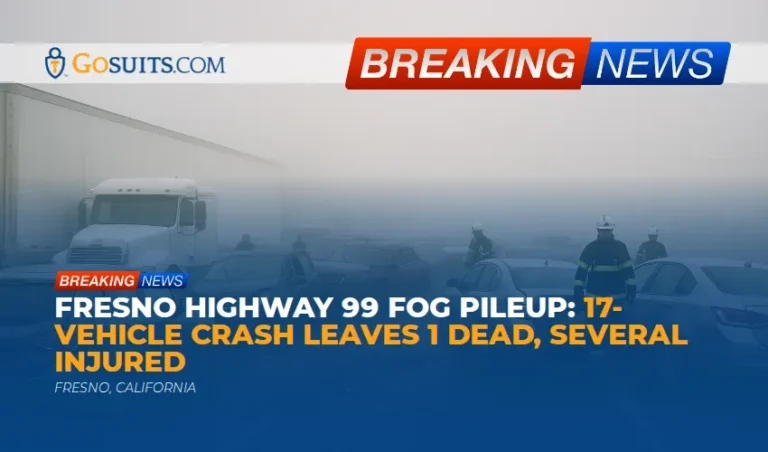
Early Sunday morning in Fresno, dense fog on Highway 99 contributed to a massive chain-reaction crash involving 17 vehicles. Visibility dropped to about 10 to 15 feet, according to initial reports. A 61-year-old man tragically lost his life, and multiple people, including very young children, sustained injuries ranging from minor to major. A big rig was among the vehicles involved.
Preliminary information suggests two vehicles slowed down in the near-zero visibility, while several vehicles behind them were traveling faster, creating a domino effect. First responders from the California Highway Patrol’s Fresno Area, Fresno Fire Department, and medical teams coordinated a large-scale rescue. Crews used quick marking systems on vehicles to track which cars had been searched, allowing them to move systematically across a long stretch of damaged vehicles.
This stretch of Highway 99, cutting through the heart of Fresno and the broader Central Valley, is familiar to locals commuting between neighborhoods like Sunnyside, Calwa, and downtown, and to drivers passing the industrial corridors near Jensen and North Avenue. In winter, residents know how quickly Tule Fog can blanket the corridor and turn a routine drive into a high-risk situation.
Fog and chain-reaction crashes in the San Joaquin Valley
Fresno-area drivers have seen it before: Tule Fog can form rapidly after clear nights and calm winds, often lingering along the Highway 99 and 41 corridors. The National Weather Service describes Tule Fog as a dense, ground-hugging fog common to the San Joaquin Valley during the cool season. It can reduce visibility to a few feet, particularly around dawn, and can last for hours if winds stay light [2].
National data shows adverse weather, including fog, contributes to reduced visibility, slower traffic flow, and higher crash risk. The Federal Highway Administration notes that weather can significantly impact safety by limiting driver visibility and reducing pavement friction, which together increase the likelihood of multi-vehicle collisions when speed and following distance are not adjusted appropriately [1].
Locally, the Valley’s flat terrain and agricultural landscape can intensify fog formation. On mornings like this one, drivers traveling Highway 99 north and south between Selma, Fowler, and central Fresno may move from clear air into a wall of fog within seconds. Without advance warning and rapid speed adjustments, pileups can start with only a couple of vehicles and escalate quickly.
First responders’ tactics and why they mattered
Responders faced an extended chain of damaged vehicles with extremely limited visibility. Using visual markings like X’s and O’s on car exteriors is a recognized triage and search strategy that helps teams avoid duplicative efforts and conserve precious minutes during secondary searches. In a fog-related pileup, where vehicles may be scattered across lanes and shoulders, having a clear system to identify completed searches can be the difference between chaos and coordinated rescue.
The Fresno Fire Department, CHP, and medical teams had to work shoulder-to-shoulder in those conditions. Triage, safe extrication, and transport decisions moved quickly. It is not unusual in these mass-casualty events for responders to consolidate transport and logistics, sometimes using buses to move non-critical survivors to regrouping points for medical evaluation and reunification.
Key safety and legal duties in dense fog on California highways
California’s basic speed law still applies in fog
California’s basic speed law requires drivers to never drive faster than is safe for current conditions. That means speed should be reduced when visibility is poor, even if you are traveling below the posted limit [3]. In fog thick enough that you can barely see the lane markers, the law expects slow, cautious driving that fits the available stopping distance.

Following distance and stopping in limited visibility
Drivers must not follow more closely than is reasonable and prudent given the speed of traffic and roadway conditions [4]. In dense fog, safe following distances can be much longer than usual because reaction times are cut down to the distance visible through the haze. The California Driver Handbook also instructs drivers to reduce speed and increase space when visibility is limited [5].
Headlights and how to be seen
The DMV urges drivers to use low-beam headlights in fog. High beams reflect off the water droplets in fog and can make it harder to see. California law also requires headlights during periods of insufficient visibility so that other drivers can spot your vehicle sooner [5] [6].
Commercial trucks have heightened safety responsibilities
Commercial motor vehicle operators must use extreme caution in hazardous conditions that affect visibility or traction. Federal regulations require truck drivers to reduce speed and, if conditions become dangerous enough, discontinue driving until it is safe to proceed [7]. On Highway 99, where big rigs and passenger vehicles share lanes at high volumes, a truck’s reduced stopping distance and greater mass make conservative speed and spacing decisions essential in fog.
Comparative negligence in California
In California, fault in multi-vehicle crashes can be shared. Under the state’s comparative fault framework, a jury can assign percentages of responsibility among multiple drivers, and each party’s recovery may be reduced by their own share of fault. This principle is reflected in the Judicial Council’s jury instructions on comparative negligence [8]. In a pileup, that means investigators and insurers will look closely at conduct vehicle by vehicle: speed, headlights, following distance, and whether drivers reacted reasonably once the danger became apparent.
Possible civil liability paths families explore
While this investigation is ongoing and no final conclusions are available, families often consider the following civil liability pathways in similar fog pileups:
- Drivers who failed to adjust speed or spacing: If a driver continued at unsafe speed for the conditions or followed too closely, civil liability may be considered based on California’s basic speed law and following-distance rules [3] [4].
- Commercial trucking companies and drivers: Trucking operations are expected to implement and enforce cautious driving policies in hazards like dense fog. Investigations may examine telematics, event data recorders, driver logs, and compliance with the federal duty to use extreme caution [7].
- Vehicle maintenance or equipment issues: Faulty lights or brakes can exacerbate fog risks. If defects contributed, claims may involve maintenance vendors or, in rare cases, product liability theories.
- Government entity liability is uncommon but possible in limited scenarios: If a dangerous condition of public property played a role, special government claim procedures apply. California law typically requires a government claim within six months for injury or wrongful death claims involving public entities [9]. These are fact-intensive matters that depend on evidence of a dangerous condition and notice.
California’s two-year statute generally applies to wrongful death and most personal injury claims, subject to exceptions and special rules [10].
What injured people and families can do now in Fresno
After a mass-collision event like this, taking calm, organized steps can protect safety and legal rights. In Fresno, that often means working with local agencies and medical providers who understand Valley conditions and the Highway 99 corridor.
Before speaking to insurance companies
- Consult an attorney first: It is common for adjusters to call quickly. What someone says on a recorded call could be used against them later. An early consultation helps set a clear plan for communications and evidence preservation.
- Mind medical follow-up: Follow through with all evaluations and treatments. Gaps in care can complicate both recovery and documentation.
- Preserve evidence: Keep photos, dashcam files, clothing, and damaged items. Save tow receipts and ambulance paperwork. Avoid repairing or disposing of a vehicle until a qualified professional advises it is okay; the vehicle can be a key piece of evidence.
- Identify witnesses: Collect names, phone numbers, and any statements or photos they may have taken at the scene.
- Consider pediatric follow-up: Very young children involved in a crash should be assessed for subtle injuries that may not be obvious right away.
Who to call for official records in Fresno-area incidents
- California Highway Patrol Fresno Area Office: Request the Traffic Collision Report through CHP. The agency outlines how to request reports and what documentation is required [11]. The report will identify involved parties, vehicle positions, and may include diagrams and narrative details.
- Fresno County Sheriff-Coroner’s Office: In fatal incidents, the Coroner’s Office conducts investigations and may issue an autopsy report and death certificate to authorized individuals. California law explains the coroner’s investigative duties in deaths arising from collisions [12].
- Fire and EMS records: Incident reports, patient care records, and 911 data may exist. These can often be requested under the California Public Records Act, though medical records are protected and released only to authorized individuals. The state describes the public’s right to government records and how to make requests [13].
- Caltrans District 6 traffic operations information: Caltrans may hold data on road conditions, lane closures, changeable message sign activations, and camera footage. Requests typically go through Caltrans’ Traffic Operations program and may require a Public Records Act request [14] [13].
- Hospital records: Injured patients or their authorized representatives can request medical records under federal HIPAA access rules [15].
If someone needs higher-level trauma information, Community Regional Medical Center in downtown Fresno serves as the Valley’s primary Level I trauma center, a designation coordinated under California’s statewide trauma system oversight [16].
Insurance considerations after a 17-vehicle pileup
Multi-vehicle crashes create complex insurance scenarios. Several liability policies can be in play at once, and commercial carriers may be involved if a big rig was part of the chain reaction. Injury claims may implicate the at-fault driver’s liability policy, underinsured motorist coverage, medical payments coverage, or other sources. In events like this, recorded statements taken too early can be tricky because claimants may not yet understand the full picture.
In pileups, questions arise about who pays first, whether multiple policies can apply, and how fault allocation impacts medical and property claims. A practical primer that many find helpful is this resource on Which Insurance Pays First After a Multi-Car Crash. It outlines the priority of coverages and coordination issues that often arise in chain-reaction collisions.
Commercial carriers may deploy rapid response teams after crashes involving big rigs. Their goal is to limit exposure and shape the narrative early. That is why it is sensible to seek guidance before discussing injuries or causation with any insurer, including your own. Experienced adjusters know how to elicit statements that narrow claims.
If a commercial motor vehicle is involved, federal regulations emphasizing caution in hazardous conditions can become relevant during liability analysis [7]. When families or injured drivers look for legal representation, many ask about big rig accident lawyers because commercial-vehicle cases often require specialized evidence workups, including ECM data, driver logs, and fleet safety policies.
How evidence is preserved in large pileups
Evidence collection in a fog pileup is a race against time. Much of the best evidence is perishable or subject to normal destruction policies unless action is taken to preserve it.
- Event data recorders and telematics: Many passenger vehicles store short windows of speed, braking, and seatbelt data. Commercial vehicles may store extensive engine control module and telematics data as well as GPS breadcrumbs. Quick preservation letters are often important.
- Dashcams and third-party cameras: Personal and fleet dashcams can be crucial. Caltrans cameras and traffic management systems sometimes capture relevant snippets, although many cameras are not archived for long and are not designed for evidence retention without a timely request [14].
- 911 audio, dispatch CAD logs, and incident reports: Dispatch timelines can show when fog advisories were issued and how fast resources were deployed. These may be obtainable through public records processes, with redactions as required by law [13].
- CHP advanced crash investigations: CHP’s Multidisciplinary Accident Investigation Teams may be activated in severe crashes to reconstruct events and analyze dynamics using advanced methods [17].
- Scene mapping and debris field analysis: Skid marks, rest positions, and debris patterns can help reconstruct the sequence of impacts in a chain reaction, especially when drivers cannot recall exact details due to fog confusion and stress.
Grief and community support in Fresno
A sudden loss in a crash reverberates through families and neighborhoods. Fresno has strong community networks and faith communities that step up in moments like this. Families dealing with funeral costs, counseling needs, or income disruption may also look to California’s victim compensation resources for certain expenses, subject to eligibility and documentation [18].
When children are involved, support systems at local schools and pediatric care teams can help families navigate both the physical recovery and the emotional aftermath. Keeping communication open with primary care providers and school counselors can make a noticeable difference in the weeks that follow.
Timing and deadlines that can affect claims
California sets strict timelines that can impact both injury and wrongful death cases. In general, the statute of limitations for personal injury and wrongful death is two years from the date of the incident, though there are exceptions depending on circumstances [10]. Claims involving public entities often require a government claim within six months, a shorter timeline than many expect [9]. Missing a deadline can severely limit options, so careful calendaring matters from the start.
Next steps to protect your rights and why timing matters
Here is what should happen promptly after a Highway 99 fog pileup, and why:
- Get an attorney consultation first, before any insurer calls: Understanding rights early prevents missteps. Recorded statements can be used later to limit or deny claims. A consultation helps plan what to say, what not to say, and when to say it.
- Preserve vehicles and digital data immediately: Tow yards may charge storage and eventually release or dispose of vehicles. Event data recorders and dashcams can be overwritten. Preservation letters and early inspection requests safeguard critical evidence.
- Request official records in the right order: CHP collision reports, Coroner records in fatal cases, and relevant dispatch and traffic operations data can take time to obtain. Submitting requests early keeps the process moving.
- Document medical care from day one: Capture all visits, symptoms, and work limitations. In multi-impact events, injuries can evolve over days. Accurate records support both health and any future claim.
- Track all expenses and losses: Ambulance bills, hospital invoices, vehicle damage estimates, and time missed from work should be saved. Keeping a simple log helps ensure nothing is overlooked later.
- Identify all potential insurance coverages: Multiple policies may apply in a 17-vehicle crash. Coordinating benefits is complicated, which is why many look to counsel familiar with multi-car and commercial vehicle claims to avoid coverage gaps.
The benefit of acting now is simple: evidence is preserved, timelines are met, and the story of what happened is built with accuracy rather than assumption. That foundation can influence every decision that follows.
Commentary from Gosuits Fresno, California Personal Injury Attorney
Our hearts go out to everyone touched by this Highway 99 disaster. A loss in dense fog is especially painful because conditions change so fast and leave so little room for error. This article is intended to share educational information and general guidance for our community during a difficult time.
Based on what is publicly known, the combination of near-zero visibility, mixed traffic with a big rig in the flow, and differing speeds created a perfect storm. In California, drivers are expected to slow down to a safe speed for the conditions and increase following distance in fog. Commercial operators have additional duties to use extreme caution and reduce speed, even stopping when necessary. In a chain-reaction crash, investigators will examine how each driver responded to the hazard, second by second, to understand causation and fault allocation.
Insurance companies and large corporations often mobilize quickly after events like this, gathering statements and records before families have the full picture. They may seem helpful at first, but their incentives are to minimize payouts. Early recorded statements can be taken out of context, medical gaps can be highlighted unfairly, and technical defenses can be raised that everyday people are not expected to anticipate. Having a knowledgeable advocate helps level that playing field.
A free consultation can be valuable because it clarifies the steps ahead, identifies immediate preservation needs, and explains how communications with insurers should be handled. It also helps families understand how comparative fault, multiple insurance layers, and commercial vehicle regulations may interact in a complex, fog-related pileup. No one can undo what happened on Highway 99, but informed choices can protect rights in the days and weeks that follow.
References
- Weather Impacts on Roadway Operations, Safety, and Mobility – Federal Highway Administration
- Tule Fog in the San Joaquin Valley – National Weather Service Hanford
- California Vehicle Code 22350 Basic Speed Law – California Legislative Information
- California Vehicle Code 21703 Following Too Closely – California Legislative Information
- California Driver Handbook: Special Driving Situations, Fog and Low Visibility – California DMV
- California Vehicle Code 24400 Headlamps on Motor Vehicles – California Legislative Information
- 49 CFR 392.14 Hazardous Conditions; Extreme Caution – eCFR
- CACI No. 405 Comparative Fault of Plaintiff – Judicial Council of California Civil Jury Instructions
- California Government Code 911.2 Claim Presentation Requirements – California Legislative Information
- California Code of Civil Procedure 335.1 Two-year Limitation – California Legislative Information
- How to Obtain a Traffic Collision Report – California Highway Patrol
- California Government Code 27491 Coroner’s Duties – California Legislative Information
- Your Right to Government Records – California Office of the Attorney General
- Traffic Operations Program – California Department of Transportation
- Individuals’ Right Under HIPAA to Access Health Information – U.S. Department of Health and Human Services
- California Trauma Systems and Centers – Emergency Medical Services Authority
- Multidisciplinary Accident Investigation Teams MAIT – California Highway Patrol
- Victim Compensation Eligibility – California Victim Compensation Board