- What We Know About the Malibu Pacific Coast Highway Tragedy
- Local Context: Pepperdine, Pacific Coast Highway, and the Malibu Corridor
- Why Speeding Turns Deadly: What Federal Research Shows
- Civil Liability After a Fatal Roadway Crash in California
- Evidence That Matters in High-Speed Collision Cases
- How Families Can Obtain Official Records in Los Angeles County
- Insurance Issues After a High-Speed Crash on PCH
- Timelines, Deadlines, and California Filing Requirements
- Practical Steps to Protect Your Rights After a Catastrophic Crash
- Criminal Proceedings and Their Relationship to Civil Wrongful Death Claims
- Community Safety and Ongoing Policy Efforts for PCH
- Commentary from Gosuits Malibu, California Personal Injury Attorney
- Action Steps You Can Take Now
What We Know About the Malibu Pacific Coast Highway Tragedy
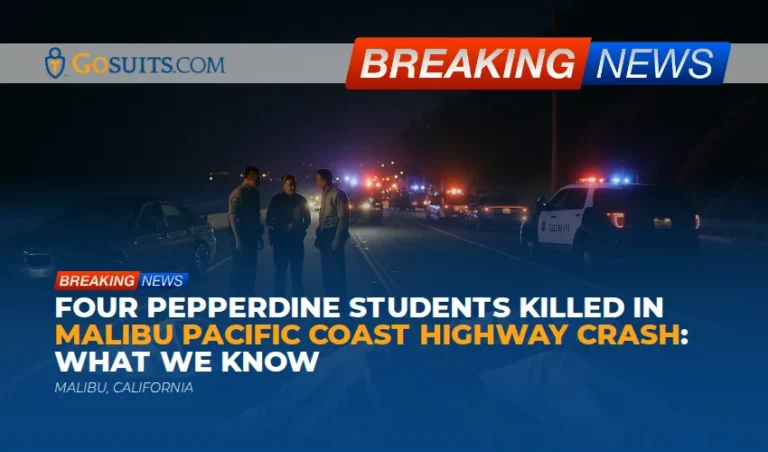
On the evening of October 17, 2023, along Pacific Coast Highway in Malibu, approximately four miles east of Pepperdine University’s main campus, four undergraduate students from Pepperdine lost their lives after a speeding vehicle struck them. Prosecutors have publicly alleged the driver was traveling at more than 100 mph. The driver was reportedly uninjured. A criminal case is pending, and on November 10, 2025, a judge in Van Nuys declined a defense request to dismiss certain charges. Those criminal proceedings will run separately from any potential civil wrongful death claims.
For neighbors across Malibu and the Pepperdine community, this crash is not an abstraction. It happened on the very stretch of State Route 1 where students and locals head to classes, work, and familiar landmarks like Malibu Pier, Malibu Lagoon State Beach, and the stretches near Malibu Canyon Road and Carbon Beach. When a tragedy hits this close to home, the legal and practical questions arrive quickly. What can families do to obtain official records? How does a civil case work when criminal charges exist? What timelines matter? This article walks through those issues with care for our local context and with respect for the lives lost.
Local Context: Pepperdine, Pacific Coast Highway, and the Malibu Corridor
Pacific Coast Highway is Malibu’s lifeline and, at times, its most dangerous corridor. It carries students traveling between Pepperdine’s campus and off-campus housing, beachgoers, service workers, and residents moving between neighborhoods like Serra Retreat, Point Dume, and Trancas. The route is scenic but unforgiving: limited shoulders in places, driveways and cross-streets that feed directly into fast-moving traffic, and conditions that change with sun glare, fog, or canyon winds. At night, reduced visibility compounds those risks.
Community conversations about PCH safety often surface after serious crashes, and residents know the problem is not new. Seasonal traffic spikes during summer and early fall, returning students in August and September, and weekend surges all increase exposure. Law enforcement agencies that patrol this corridor conduct operations to address dangerous driving, but a single reckless moment on this road can have a lifetime of consequences.
Why Speeding Turns Deadly: What Federal Research Shows
The dangers of excessive speed are well documented by federal safety agencies. The National Highway Traffic Safety Administration reports that speeding increases both the likelihood of a crash and the severity of injuries in a crash because it reduces a driver’s ability to react and increases stopping distances, while also multiplying crash energy on impact. You can review federal guidance on speeding risks from the National Highway Traffic Safety Administration here: NHTSA Speeding.
The Centers for Disease Control and Prevention have also emphasized that motor vehicle crashes are a leading cause of unintentional injury-related death in the United States, and that community-level changes, enforcement, and safer behaviors collectively reduce harm. See the CDC’s motor vehicle safety overview here: CDC Motor Vehicle Safety.
In short, speed is not just a traffic-ticket issue. It is a physics problem and a public health problem. On a corridor like PCH, where pedestrians stand near the edge of travel lanes and vehicles enter from hillside driveways or beach parking, the margin for error is small even at lawful speeds. At triple-digit speeds, that margin disappears.
Civil Liability After a Fatal Roadway Crash in California
After a fatal collision, there are two main civil pathways that may apply in California. Understanding these categories helps families know what questions to ask and what documents to preserve.
Wrongful Death Claims
California’s wrongful death statute allows certain surviving family members to seek civil damages for their losses against legally responsible parties. Eligible claimants and the basic framework are set out in the California Code of Civil Procedure section 377.60, available here: CCP 377.60. Wrongful death damages can encompass the loss of financial support, loss of household services, and the loss of the loved one’s companionship and guidance, among other categories.

Survival Actions
Separately, a survival action may be brought by the decedent’s estate for losses the person suffered before death, such as medical expenses or property damage. That cause of action is governed by California Code of Civil Procedure section 377.30: CCP 377.30. A survival action is distinct from wrongful death and may proceed in parallel when facts support it.
Potentially Responsible Parties
Depending on evidence, responsible parties in a high-speed roadway crash can include:
- A negligent driver who caused the impact or set off a chain of events that led to the fatalities.
- The vehicle’s owner if different from the driver, under theories like permissive use liability.
- An employer if the driver was acting within the course and scope of employment.
- Other motorists involved in a sequence of maneuvers or impacts. Investigations sometimes identify additional contributing factors.
- Entities responsible for roadway maintenance or design in very specific circumstances. Claims against public entities are tightly regulated and require prompt notice, discussed below.
Punitive Damages Considerations
In rare cases involving clear and convincing evidence of oppression, fraud, or malice, punitive damages may be available under California Civil Code section 3294 to punish and deter extreme misconduct. The statute is here: Civil Code 3294. Whether punitive damages are appropriate is highly fact-specific and separate from any criminal case.
Evidence That Matters in High-Speed Collision Cases
Evidence is the backbone of any civil claim. Preserving it early often makes the difference between unanswered questions and a clear record. Key categories include:
- Traffic collision reports. The investigating agency’s report identifies parties, diagrams, statements, and sometimes contributing factors. It is not the final word, but it sets the initial evidentiary roadmap.
- 911 calls, dispatch logs, body-worn camera footage, and dash cam video. These can corroborate timing, conditions, and statements made closest in time to the event.
- Vehicle event data recorders. Many modern vehicles log pre-crash speed, braking, throttle, and seatbelt usage. NHTSA provides background on event data recorders here: NHTSA EDR Overview. Preserving the vehicles before they are altered or salvaged is critical to protect this data.
- Scene documentation. Skid marks, debris fields, point of rest, lighting, and sight lines can all be measured. On PCH, the presence of sand, roadway edge conditions, and driveway sight distance can matter.
- Medical and coroner documentation. These records help establish the mechanisms of injury and timeline between injury and death, which can affect survival claims.
- Witness statements. Students, neighbors, motorists, and first responders often add details about speed, lane changes, or any precipitating events.
- Prior incidents and roadway conditions. In limited cases, public records about prior crashes or maintenance may be relevant. Requests must be targeted and within legal limits.
How Families Can Obtain Official Records in Los Angeles County
There are several agencies that typically hold key records for a collision on Pacific Coast Highway in Malibu. The exact investigative agency can vary with location and circumstances, but the following guidance applies to most incidents in this corridor.
Traffic Collision Report
Crashes on state highways in Los Angeles County are often investigated by either the local sheriff’s station for the city or the California Highway Patrol, depending on jurisdictional assignments and the location of the incident. For Malibu’s stretch of Pacific Coast Highway, families typically start by confirming the primary investigating agency listed on the incident information card or by contacting the Malibu area law enforcement dispatch to ask which agency took the report.
- California Highway Patrol. If CHP handled the investigation, requests for collision reports can be made through CHP using the procedures described here: CHP Requests for Collision Data. CHP requires sufficient identifying information and may verify requester eligibility under California law.
- Local Sheriff’s Station. If the Los Angeles County Sheriff’s Department Malibu/Lost Hills Station was the primary agency, families can request the traffic collision report through the station’s records unit. Requesters should have the report number, date, location, and involved party names. If you are unsure which agency handled the report, you can ask either CHP or the Malibu/Lost Hills Station to confirm before submitting a request.
When seeking the traffic collision report, consider also requesting photographs, diagrams, and supplemental narratives, if available. Some materials may be released later in the investigation; public release follows state law and agency policy.

Coroner and Autopsy Records
For deaths in Los Angeles County, official coroner records are maintained by the Los Angeles County Department of Medical Examiner. The Medical Examiner provides information on how to request records here: Los Angeles County Medical Examiner. Their published guidance includes procedures for obtaining autopsy reports, examination findings, and toxicology when available and releasable.
Death Certificates
Certified copies of death certificates in Los Angeles County are available through the Registrar-Recorder/County Clerk. Instructions and eligibility are provided here: LA County Death Records. Families often need multiple certified copies for insurance, probate, and other administrative tasks.
Public Records Related to Roadway Conditions
Where appropriate, some families or their counsel request roadway maintenance logs, design plans, or traffic studies through public records laws. For state highways like PCH, Caltrans is the custodian for many such records. Caltrans describes its Public Records Act request process here: Caltrans PRA Requests. These requests work best when narrow and specific.
Insurance Issues After a High-Speed Crash on PCH
California uses a fault-based system for traffic collisions, which means the party found legally responsible typically pays for damages through their liability insurance, subject to policy limits and defenses. The Department of Motor Vehicles outlines minimum insurance requirements here: California DMV Insurance Requirements. In catastrophic loss cases, minimum limits are rarely adequate. Families may need to explore multiple layers of coverage:
- At-fault driver’s liability coverage and any personal umbrella policy.
- Vehicle owner’s coverage, if different from the driver.
- Employer coverage if the driver was acting within the course and scope of employment.
- Uninsured or underinsured motorist benefits available under the decedent’s or certain family policies, depending on household and policy language.
Insurance companies often move quickly to collect statements. Before making any recorded statement or signing medical or release authorizations, it is prudent to consult with a qualified attorney. What someone says to an insurer can be used against them later. An early, no-cost consultation helps clarify rights and obligations before insurers set the narrative.
Timelines, Deadlines, and California Filing Requirements
California imposes strict deadlines on civil claims. Missing one can limit options. Key timelines include:
- Wrongful death statute of limitations. In most cases, two years from the date of death. See California Code of Civil Procedure section 335.1: CCP 335.1.
- Survival actions. Survival claims follow different timing rules that can depend on the date of injury and the date of death. See California Code of Civil Procedure sections 377.30 and related provisions: CCP 377.30.
- Claims against public entities. If a public entity is potentially involved, California’s Government Claims Act generally requires a written claim within six months for causes of action relating to personal injury or wrongful death. See Government Code section 911.2: Gov. Code 911.2.
Because estates must act through properly authorized representatives, probate filings may also be necessary to appoint a personal representative before certain claims can proceed. Coordination between probate and civil timelines is important.
Practical Steps to Protect Your Rights After a Catastrophic Crash
After a tragedy, administrative tasks can feel overwhelming. The following steps are commonly useful in protecting civil claims:
- Confirm the investigating agency. Identify whether CHP or the Malibu/Lost Hills Sheriff’s Station handled the report, then request the traffic collision report once eligible.
- Preserve vehicle evidence. If the decedent’s vehicle is available, place a hold to avoid disposal or alteration. Consult an attorney about inspecting and downloading event data.
- Secure digital records. Save relevant texts, photos, social media posts, and location history tied to the day and time of the crash.
- Request coroner and death records. Follow the Medical Examiner and Registrar-Recorder procedures for autopsy reports and certified death certificates.
- Gather insurance documents. Locate all auto policies in the household, plus any umbrella coverage and employee benefit policies that could carry accidental death benefits.
- Avoid early recorded statements to insurers. Before speaking to any insurer, consult an attorney for a free consultation to understand rights. Insurers analyze statements closely and may cite them later to reduce payouts.
- Track expenses and services. Keep receipts for funeral costs and a list of household services the decedent handled. These become important in calculating damages.
- Identify witnesses. List names and contact information for anyone who saw the crash or its aftermath near Malibu Canyon Road, Carbon Beach, or other nearby landmarks.
- Note community context. If lighting, signage, or unusual traffic patterns were present due to local events near Pepperdine or Malibu Pier, document those facts while memories are fresh.
Criminal Proceedings and Their Relationship to Civil Wrongful Death Claims
A criminal case and a civil wrongful death case are separate. The criminal court will address alleged violations of criminal statutes and possible penalties. Civil court focuses on compensable losses caused by negligent or wrongful acts under a preponderance of the evidence standard.
In practical terms:
- Evidence flow. Police reports, forensic analyses, and some transcripts may become available during or after the criminal process and can aid the civil case.
- Timing. Civil cases sometimes pause while criminal proceedings unfold, particularly if a defendant invokes constitutional protections. The decision about timing depends on the facts and strategic considerations.
- Restitution vs civil damages. Criminal restitution aims to make victims whole for certain direct losses but does not replace the broader remedies available in civil court.
Families should know they do not have to wait indefinitely to explore civil options. A free consultation can help map the best path that respects both courts’ timelines.
Community Safety and Ongoing Policy Efforts for PCH
Reducing serious crashes on PCH requires a multi-layered approach: driver behavior, enforcement, engineering, and community education. Federal agencies emphasize proven strategies like speed management, high-visibility enforcement, and roadway design choices that reduce severe outcomes. The Federal Highway Administration’s speed management resources summarize many of these countermeasures: FHWA Speed Management.
On Malibu’s stretch, residents regularly push for improvements such as enhanced lighting near pedestrian areas, better speed feedback signage, median treatments in selected segments, and stricter enforcement during late-night hours when speeding tends to spike. Caltrans, as the steward of State Route 1, maintains design and safety programs and accepts public records requests for relevant studies, as noted here: Caltrans PRA Requests.
Data-driven safety work is a long road, but every successful intervention matters. When the community honors the memories of those lost by advocating for safer conditions, that testimony can influence priorities and resource allocation.

Commentary from Gosuits Malibu, California Personal Injury Attorney
Our hearts go out to the families, classmates, and friends grieving the loss of four Pepperdine students in this horrific crash on Pacific Coast Highway. The pain reaches beyond campus into every corner of Malibu. Please know that the discussion here is for general information and education, and it is not a substitute for guidance tailored to any specific situation.
From a civil perspective, the allegations of extreme speed highlight a truth this community knows too well: on PCH, a single reckless moment can take multiple lives. Evidence preservation becomes paramount in these cases. That means securing the traffic collision report, protecting vehicles for event data downloads, and obtaining Medical Examiner documentation to clarify timelines and mechanisms of injury. The existence of a criminal case does not preclude civil action, but it may shape timing, strategy, and the flow of information.
We also see, time and again, how insurance companies and large corporate stakeholders use early, seemingly routine steps to their advantage. Adjusters may ask for recorded statements or broad medical authorizations right away, framing questions in ways that narrow liability or shift blame. Families dealing with shock and grief can unintentionally provide statements that later get used to minimize claims. Understanding your rights before those conversations start is vital.
That is why obtaining a free consultation matters. It gives people a chance to understand the landscape, protect their words, and make informed choices about evidence and insurance communications. Even if no lawsuit is ever filed, early clarity helps preserve options.
Action Steps You Can Take Now
When a catastrophic crash occurs on a corridor like PCH, the timeline for key actions is short and the consequences of delays can be significant. The following steps help safeguard information and preserve rights:
- Identify the investigating agency and request the report. Determine whether CHP or the local sheriff’s station handled the scene. File a timely request for the collision report and any supplements as they become available.
- Preserve vehicles and digital data. Place holds on vehicles to prevent disposal, and secure phones, photos, and location data from the day of the incident.
- Obtain official records. Follow the Medical Examiner’s process for coroner records and the Registrar-Recorder for certified death certificates needed for insurance, probate, and claims.
- Consult an attorney before speaking with insurers. A free consultation can prevent missteps. Statements given to insurance carriers can be used later to restrict or deny claims.
- Calendar deadlines. Note the two-year wrongful death statute in most situations and the six-month claim window if a public entity may be involved. Early review avoids last-minute pressure.
- Document losses. Keep a simple log of expenses, services the loved one provided, and impacts on dependents. Accurate records strengthen claims and shorten negotiations.
Request Official Reports Preserve Vehicle and Phone Data Understand Insurance Rights Schedule a Free Case Review
Key Government and Academic Resources Cited
- NHTSA: Speeding
- CDC: Motor Vehicle Safety
- NHTSA: Event Data Recorders
- CHP: Requests for Collision Data
- Los Angeles County Department of Medical Examiner
- LA County Registrar-Recorder/County Clerk: Death Records
- Caltrans: Public Records Act Requests
- California DMV: Insurance Requirements
- CCP 377.60 Wrongful Death
- CCP 377.30 Survival Action
- CCP 335.1 Statute of Limitations
- Civil Code 3294 Punitive Damages
- Gov. Code 911.2 Public Entity Claims
- FHWA: Speed Management