- What We Know About the Weekend Motorcycle Crash in Fort Worth
- Where and When It Happened
- Law Enforcement Statements and Ongoing Investigation
- Understanding Potential Civil Liability After a Fatal Motorcycle Crash in Texas
- Essential Steps Families Can Take Now
- Insurance and Financial Considerations
- Community and Roadway Context in Fort Worth
- Safety Notes for Riders and Drivers Around Fort Worth
- Key Timeline in Texas After a Fatal Crash
- Next Steps: Why Timely Action Matters
- Commentary from Gosuits Fort Worth, Texas Personal Injury Attorney
- References
What We Know About the Weekend Motorcycle Crash in Fort Worth
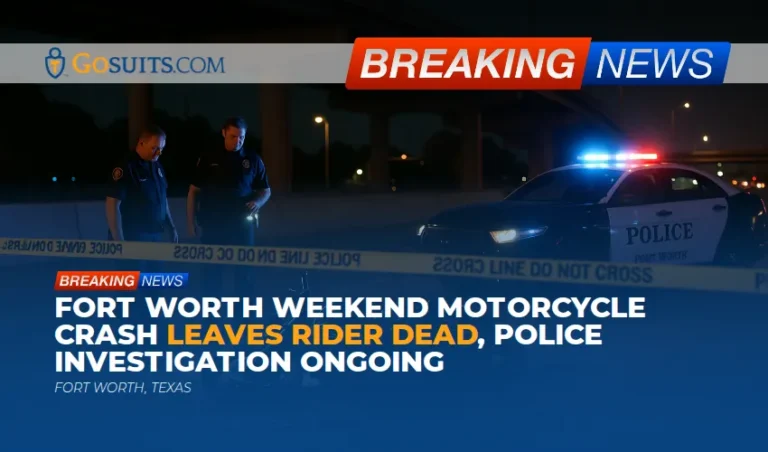
Fort Worth police reported that a motorcyclist died after a weekend crash in the city. At the time of this writing, authorities have not released full details about the precise location, the sequence of events, or the identity of the rider. News of a fatal crash like this hits our community hard, especially with so many families out on errands or enjoying time around the Trinity River, the Stockyards, or West 7th on weekends. When information is limited, it can feel frustrating and confusing. What comes next, and who can provide answers? This guide brings together reliable public resources and explains the civil law issues that often arise after a deadly motorcycle collision in North Texas.
Losses like this underscore how exposed riders are even at city speeds. State and federal data consistently show motorcyclists face a higher risk of severe injury compared to occupants in enclosed vehicles [1] [2]. While we await more from Fort Worth police investigators, families and neighbors naturally want to understand both the factual and legal picture that may develop over the next days and weeks.
Where and When It Happened
Police have only confirmed that the crash occurred over the weekend in Fort Worth. Without a publicly available crash report, it would be improper to guess the roadway or intersection. In Fort Worth, serious weekend crashes often occur along high-traffic corridors and transitions like I 35W near Downtown, I 30 through the West 7th and Cultural District areas, the Chisholm Trail Parkway feeders, and major arterials such as Camp Bowie Boulevard or East Lancaster. Traffic volumes can spike near entertainment districts during evenings, and visibility challenges or left-turn conflicts can be factors in motorcycle collisions. Again, those are general patterns in the city, not specifics about this incident.
If and when officials release a case number or location, that information typically appears in the police crash report. In Texas, crash reports are regulated by statute and released to certain parties and requestors who meet legal criteria [4].
Law Enforcement Statements and Ongoing Investigation
Fort Worth police have acknowledged the fatality and are investigating. In a fatal collision, the responding agency generally documents scene evidence, roadway conditions, vehicle damage, and witness statements. Depending on circumstances, investigators may analyze vehicle event data, look for nearby city traffic cameras, or request third party footage from businesses or residences along the corridor. If impairment, speed, or failure to yield is suspected, additional documentation and reconstruction can follow. Crash reports and supplemental narratives are key records that help families and insurers understand what happened [4].
In Tarrant County, the Medical Examiner typically conducts a postmortem in fatal incidents to confirm cause and manner of death, which may be important in civil claims and for family closure. The Medical Examiner’s office has procedures for release of reports and certain photographs to next of kin or authorized requestors [7].
Understanding Potential Civil Liability After a Fatal Motorcycle Crash in Texas
Every crash is different. Without the report, we cannot assign fault in this tragedy. That said, families often have questions about how civil liability works in Texas when a motorcyclist is killed in a collision.
Potentially liable parties
Depending on the facts, potential civil responsibility can involve:
- Another driver who failed to yield, made an unsafe left turn, changed lanes into the rider’s path, or followed too closely.
- A commercial entity if the crash involved a delivery van, work truck, or rideshare driver on the job, which can raise employer or carrier insurance issues.
- A vehicle owner if there were negligent entrustment concerns or if a permissive driver was operating with the owner’s knowledge of unsafe tendencies.
- A roadway maintainer in rare cases where a defect or hazard played a role. Claims against government entities follow special notice and deadline rules.
Comparative responsibility in Texas
Texas uses proportionate responsibility. If a case goes to court, a fact finder can assign percentages of fault among the parties. A claimant who is found more than 50 percent responsible cannot recover damages under Texas law, and any award is reduced by the claimant’s percentage of fault if 50 percent or less. This comparative framework often drives detailed analysis of timing, sightlines, lane positioning, and the movements of each road user.
Wrongful death and survival claims
Texas law recognizes two distinct civil claims after a fatal crash. A wrongful death claim compensates certain family members for their personal losses resulting from the death. A survival claim belongs to the decedent’s estate for damages the person could have pursued if they had lived, such as pain between injury and death or certain medical expenses. Both claim types are codified in the Civil Practice and Remedies Code [8]. Filing deadlines are strict, and different family members have different rights depending on their relationship to the decedent [9].
Essential Steps Families Can Take Now
In the immediate aftermath, families need clear, practical steps. Here are actions that commonly help, without assuming any particular fault scenario.
Obtain the police crash report
- Fort Worth Police Department Records: You can request the crash report once it is processed. The city’s police department provides contact information and procedures for records requests on its official site [6]. Ask for the CR 3 (Texas Peace Officer’s Crash Report) connected to the incident and any supplemental narratives if available.
- TxDOT CRIS portal: Texas also allows eligible requestors to purchase crash reports through the Crash Records Information System. You can search by name, date, and location once the report is uploaded by the investigating agency [5]. The state controls who can obtain a report and how it may be used by statute [4].
Request Medical Examiner records
- Tarrant County Medical Examiner: For autopsy reports and certain documentation, the Medical Examiner’s office has a defined request process. Next of kin and authorized parties can inquire about availability and any requirements or restrictions under Texas law [7].
Preserve evidence early
- Collect and secure the motorcycle and gear. Helmet, jacket, and other protective gear can show impact points and energy transfer. Vehicle inspections and downloads are often crucial in disputed liability cases.
- Identify potential video from nearby businesses, residences, or transportation cameras. Many systems overwrite footage within days. A prompt request can make the difference.
- Save phone records and location data that may corroborate timelines. Witness contact information should be stored in multiple places.
Be careful with insurance communications
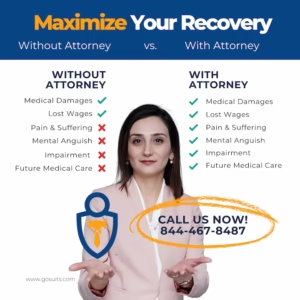
Insurance adjusters often reach out quickly. Consider speaking with a qualified attorney before any detailed statements. Comments made to insurers can be recorded and later used to dispute fault or damages. Texas families are frequently surprised at how soon insurers request authorizations or seek broad access to records. A consultation helps you understand what you must provide and what you can decline without jeopardizing legitimate claims.
Insurance and Financial Considerations
Texas auto policies commonly include several coverages that matter in motorcycle collisions. The Texas Department of Insurance publishes consumer guidance about liability coverage, personal injury protection, medical payments, and uninsured or underinsured motorist coverage [10]. The at fault driver’s liability coverage, if applicable, is often the first layer. If the other driver lacked adequate insurance, a UM or UIM claim under the decedent’s or household policy might be possible. Policies can be complex about who qualifies as an insured and when coverage stacks, so policy review is essential.
Families sometimes assume insurers will volunteer what applies and how to access it. In reality, navigating the mix of liability, UM or UIM, PIP or MedPay, and potential commercial coverages can be challenging. This is one reason many people turn to Dallas motorcycle accident lawyers to organize coverages, protect deadlines, and communicate on their behalf.
Community and Roadway Context in Fort Worth
Riding in Fort Worth means sharing roads that vary from tight urban grids around Near Southside to faster feeder roads near the Cultural District, and from river-crossing bridges to wide arterials on the city’s west side. Even good weather weekends can bring sudden slowdowns near the Stockyards or around TCU home events. Typical crash factors for motorcycles include left-turn conflicts at intersections, drivers changing lanes without checking blind spots, and nighttime visibility differences along corridors like East Lancaster or North Main. City data and state crash patterns echo national findings that riders are vulnerable to error by others because a motorcycle’s narrow profile makes it easier for a driver to misjudge speed or distance [1] [2].
On the safety front, helmet use remains one of the most effective ways to reduce severe head injuries, and public health resources continue to emphasize that fact in outreach to riders and families [3]. Texas law addresses helmet requirements while allowing certain adult exemptions under specified conditions [11]. Whether a helmet was used in this incident is not publicly confirmed, and families should avoid speculation until the Medical Examiner’s and police reports are complete.
Safety Notes for Riders and Drivers Around Fort Worth
Safety messaging only goes so far after a loss, but discussing it can help the community. On West 7th, Magnolia, and other busy corridors, drivers can commit to extra caution at dusk when headlight glare and shadowed cross-streets make motorcycles harder to detect. Riders can position themselves to maximize conspicuity and avoid lingering in the blind spots of taller vehicles. For a broader perspective on risk frequency and patterns, this resource may help: how often do motorcycle accidents happen. Public agencies also track statewide crash data to inform local engineering and enforcement strategies [2].
Fort Worth continues investing in safer street designs, but it takes all of us to share the road responsibly. If you commute along I 30 or weave through Downtown to the Near Southside, consider the extra stopping distance motorcycles need and the short time window for a rider to react to a sudden lane change.
Key Timeline in Texas After a Fatal Crash
Texas has specific limitation periods that generally require filing civil cases within two years for personal injury and wrongful death, with exceptions in limited circumstances [9]. Government related claims may have much shorter notice requirements. Insurance policy notice provisions may also require prompt reporting. The earlier documents are gathered and evidence is secured, the better the chances of answering key questions and protecting rights. Many families consult with motorcycle accident lawyers before engaging directly with insurance carriers to avoid unintentional missteps.
Pursuing a claim involves several stages. Early steps often include identifying all potential insurers, obtaining the CR 3 and Medical Examiner findings, documenting funeral and related expenses, and assessing any available UM or UIM coverage. If a commercial vehicle is involved, preservation letters may be needed to protect telematics, driver logs, and dashcam data. That kind of preservation is time sensitive.
Next Steps: Why Timely Action Matters
- Pin down the facts. Official records like the police crash report and Medical Examiner findings provide the factual backbone for any insurance claim. They are also essential for family understanding and closure [4] [7].
- Secure and review insurance policies. Policies in the household may include UM or UIM, PIP, or MedPay that can assist with eligible expenses. The Texas Department of Insurance outlines how these coverages operate and common issues that arise [10].
- Preserve electronic and video evidence. Many systems overwrite within days or weeks. Acting promptly can prevent the loss of critical footage.
- Consider a legal consultation before insurer discussions. Statements to insurers can be used later to limit or deny claims. A consultation helps clarify what must be provided and when it is prudent to wait.
- Calendar key deadlines. Limitation periods and any government notice requirements should be tracked carefully to avoid forfeiting claims [9].
Why act now rather than later? Because the window for evidence preservation, witness memory, and video retention is short. Insurance carriers also begin evaluating claims almost immediately, and early positioning can influence the entire process. The practical payoff for timely action is clearer fact development, better protection of rights, and fewer surprises down the line.
Commentary from Gosuits Fort Worth, Texas Personal Injury Attorney
Our hearts are with everyone affected by this fatal motorcycle crash in Fort Worth. This note is offered for educational purposes and general information, not as a substitute for guidance on any one situation. When a rider is lost, it shakes families and neighborhoods from Downtown to the Cultural District and beyond.
Based on what is publicly known, investigators will focus on reconstructing the sequence of events, identifying any failure to yield, visibility issues, or lane position conflicts, and verifying contributing factors. In many urban motorcycle collisions, timing and sightlines at intersections matter. The official crash report and Medical Examiner records should shed light on what happened here [4] [7].
From our perspective representing crash victims, insurers and large corporations often move quickly to protect their financial exposure. That can include narrow interpretations of policy language, early recorded statements that later get used to challenge fault, and requests for broad medical or employment authorizations. People who do not live in the insurance world every day can be at a disadvantage simply because they do not know what is required and what is optional. Leveling that playing field helps ensure the discussion stays anchored to the facts and the law rather than claim strategy.
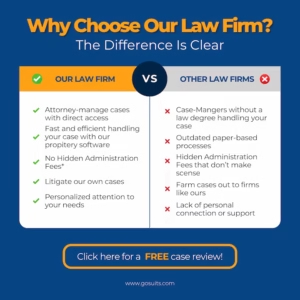
Finally, a free consultation can be an important first step. It allows families to ask questions, understand policy layers like liability and UM or UIM, and review the timeline for wrongful death and survival claims under Texas law. Even if no formal representation follows, it is beneficial to learn how statements, documents, and deadlines affect the path forward.
References
- Traffic Safety Facts 2022 Data: Motorcycles – NHTSA
- Motorcycle Safety in Texas – Texas Department of Transportation
- Motorcycle Safety and Helmet Use – CDC
- Texas Transportation Code Sec. 550.065, Release of Accident Report – Texas Statutes
- Crash Records Information System (CRIS) Purchase a Crash Report – TxDOT
- Fort Worth Police Department Official Site – City of Fort Worth
- Medical Examiner’s Office – Tarrant County
- Wrongful Death and Survival – Texas Civil Practice and Remedies Code Chapter 71
- Two Year Limitations for Personal Injury and Wrongful Death – Texas Civil Practice and Remedies Code Sec. 16.003
- Auto Insurance Consumer Guide – Texas Department of Insurance
- Motorcycle and Protective Headgear – Texas Transportation Code Chapter 661