- What We Know So Far About the South Bay Freeway Crash in Bonita
- Locally Grounded Context on SR-54, SR-125, and Weekend Traffic
- Why Collisions With Stopped Tow Trucks Occur
- Immediate Steps After a Fiery Freeway Collision
- How Families Can Obtain Official Records and Information
- Understanding Potential Civil Liability in a Crash Like This
- Insurance Considerations After a Fatal Highway Wreck
- Who to Call Locally for Support and Information
- Safety Notes for Drivers on the South Bay Freeway
- Call-to-Action: Timely Steps the Public Should Take Now
- Commentary from Gosuits Bonita, California Personal Injury Attorney
- References
What We Know So Far About the South Bay Freeway Crash in Bonita
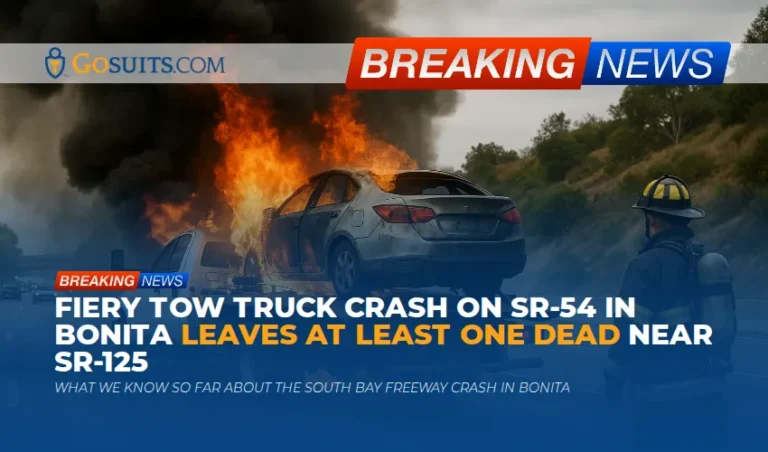
On Saturday afternoon, a devastating crash occurred on the eastbound South Bay Freeway, State Route 54, in Bonita just east of National City. According to information relayed by the California Highway Patrol at the scene, the wreck was reported at approximately 3:34 p.m. on eastbound SR-54, west of the SR-125 Expressway. Witnesses indicated a tow truck was picking up a vehicle on the right-hand shoulder when a car collided into the rear of the truck. The car caught fire, and the vehicle on the tow truck also became engulfed. Two eastbound lanes, lanes 2 and 3, were blocked while emergency crews responded, and a SigAlert was issued. The San Diego County Medical Examiner’s Office was requested at about 4:43 p.m. At least one person lost their life. Authorities have not yet publicly released the identity of the deceased.
First responders and Caltrans crews worked rapidly to manage traffic, extinguish the fire, and document the scene. Given the intensity of the fire, several agencies likely assisted with traffic control and cleanup until the freeway could be safely reopened.
Locally Grounded Context on SR-54, SR-125, and Weekend Traffic
People in the South Bay know that SR-54 can feel like it changes character fast. As you leave National City and head toward Bonita, eastbound traffic moves from dense urban interchanges into stretches where speeds are higher and shoulders can be narrow. With the SR-125 connector in the mix, traffic tends to bunch up as drivers make last-second lane decisions. On Saturdays, day trips to Rohr Park, Sweetwater Summit Recreation Area, or shopping in Eastlake can push midafternoon volumes higher than you might expect. Add in a disabled vehicle on the shoulder and an active tow, and the risk of a secondary collision rises quickly if approaching drivers fail to move over or slow down.
Local residents also recognize how quickly a SigAlert can ripple through Bonita and neighboring communities. A closure on SR-54 can send cut-through traffic onto Bonita Road, Otay Lakes Road, and neighborhood streets, compounding stress for families just trying to get home from youth sports or errands.
Why Collisions With Stopped Tow Trucks Occur
Tow truck operators often work feet from fast-moving traffic. In California, the Move Over law requires drivers approaching stationary emergency vehicles, Caltrans vehicles, and tow trucks displaying flashing lights to move to a non-adjacent lane if safe to do so, or slow to a safe speed when a lane change is unsafe. The goal is simple, protect people working roadside by giving them space and time to react [1]. When drivers are distracted, fatigued, or traveling too fast for conditions, they may fail to see the hazard in time. At highway speeds, even a brief lapse can be catastrophic.
Other risk factors can compound the danger. Glare during late afternoon, curves that limit sight distance, or congestion near an interchange can reduce an approaching driver’s buffer. If a disabled vehicle or tow truck partially encroaches on a lane, or if traffic abruptly slows near a merge, a trailing driver who is following too closely has little margin for error. Fires can ignite after high-energy impacts, especially when fuel lines or battery systems are compromised, making life-saving rescue more difficult.
Immediate Steps After a Fiery Freeway Collision
Every crash is different, but in a highway fire scenario like this, protecting life comes first. If you witnessed this crash or find yourself at a similar scene in the future, consider these general steps.
- Call 911 immediately. Report the location as precisely as possible, for example, “eastbound SR-54, west of SR-125, right shoulder,” and note whether there is fire or medical distress.
- Stay clear of burning vehicles. Keep a safe distance. Do not reenter a vehicle that is smoking or on fire.
- Warn other drivers if safe. Hazard lights and, if you carry them, reflective triangles can help. Do not stand in live lanes.
- Document only if safe. Photos or short videos from a safe location can help later, but personal safety must be the top priority.
- Note key details. Vehicle positions, tow equipment in use, skid or gouge marks, and the presence of emergency lights can all matter later.
- Ask for the incident or report number. If you are involved or a close family member, asking the officer for the collision report number can make it easier to obtain records later [2].
- Be thoughtful about statements. What is said at the scene or to insurers can be misunderstood. It is wise to consult with an attorney before giving recorded statements, since statements can be used to challenge claims.
When dealing with an insurer after any serious crash, consider speaking with a lawyer first. Insurers may request recorded statements very early, which can affect how liability and damages are evaluated later on.
How Families Can Obtain Official Records and Information
1. California Highway Patrol Traffic Collision Report
CHP prepares the primary traffic collision report for incidents on state highways. Involved parties and next of kin can request a copy of the report by following CHP’s procedures, typically by submitting a CHP 190 form and providing valid identification. The report number and the date and location of the crash will help locate the file. Guidance on obtaining traffic collision reports is provided by CHP [2].
2. San Diego County Medical Examiner’s Office
When a fatality occurs, the San Diego County Medical Examiner manages the forensic investigation and, when appropriate, autopsy. Families can find information about the process and how to request records through the Medical Examiner’s official website [3]. The office also provides instructions for requesting certified copies of reports for legal and personal purposes [4]. The office staff can explain expected timelines and what documents next of kin may need to provide.
3. Death Certificates
Death certificates in San Diego County are issued through the County Assessor/Recorder/County Clerk. Families seeking certified copies can review eligibility and request options, including in-person, mail, or authorized online vendors, via the County’s official site [5].
4. Other Potential Records
- 911 audio and dispatch logs. In some cases, families or their authorized representatives request dispatch audio or logs. Procedures and availability vary. If needed for a civil claim, an attorney can help submit and track timely requests.
- Vehicle data and dash cameras. Many modern vehicles store event data, and tow or roadside service trucks may have dash cameras. Time is critical, since normal business practices can overwrite video.
- Hospital records. If emergency transport or treatment occurred, the receiving facility’s medical records department can explain release procedures to next of kin or a legal representative. San Diego trauma care frequently involves UC San Diego Health hospitals for major injuries [6].
Understanding Potential Civil Liability in a Crash Like This
Every collision has its own facts, and it is important not to jump to conclusions. That said, several legal questions tend to arise when a moving car strikes a tow truck and a vehicle being recovered on the shoulder.
- Approaching driver care and prudence. California’s rules of the road and the Move Over law require reasonable care when approaching a stationary tow displaying flashing lights. Juries often consider whether the driver slowed, changed lanes when safe, and kept a proper lookout [1].
- Following distance and speed. If traffic slowed near the SR-125 approach or if visibility was limited, an investigation may evaluate whether the striking driver followed too closely or traveled too fast for conditions.
- Tow truck operations and placement. Investigators may review whether the tow truck was positioned fully on the shoulder, whether cones or flares were deployed, and whether equipment lighting was operational and visible.
- Comparative fault. California follows comparative negligence principles, which means liability can be shared among multiple parties depending on the evidence.
- Employer responsibility. If a tow operator or a motorist was working at the time, employer liability and commercial policy coverage can be involved.
- Fire and product issues. Post-impact fires can raise questions about design or maintenance, but those issues are complex and depend on detailed expert review of the vehicles involved.
Rear-end impacts are common sources of litigation, and the facts matter. For a plain-language refresher on how California views responsibility in a rear-end scenario, this overview may help: rear end collision fault california. While the circumstances here involve a stopped tow truck and a vehicle on the shoulder, some of the general principles discussed there can still be informative.
Insurance Considerations After a Fatal Highway Wreck
Insurance can be confusing even on a good day, and it becomes more so when multiple vehicles, a commercial tow truck, and a fatality are involved. Here are key issues that often come up.
- Liability coverage. The insurer for the driver who struck the tow may handle claims for injuries, wrongful death, and property damage, subject to policy limits and defenses.
- Commercial policies. Tow companies carry commercial policies that can involve higher limits, multiple coverages, and careful claim handling processes.
- Uninsured and underinsured motorist coverage. If the at-fault driver has low limits, families sometimes look to UM or UIM coverage on the decedent’s own policy to address uncompensated losses, depending on the policy terms.
- MedPay and funeral benefits. Some auto policies offer limited no-fault medical payments or funeral expense benefits that can be accessed without proving fault.
- Evidence preservation. Early letters requesting preservation of dash-cam footage, vehicle data, and tow logs can be critical, since recordings are routinely overwritten.
- Recorded statements and releases. Claims representatives often ask for statements quickly. Consider consulting counsel before speaking with any insurer, because what is said can be used to construe fault or limit damages later on.
Families navigating these issues often find it helpful to speak with seasoned car accident lawyers who regularly handle highway cases and complex insurance questions. Insurance policies, exclusions, endorsements, and competing carriers create a web of details that can be hard to untangle alone.
Because Bonita is closest to Orange County among the firm’s listed offices, some readers look to connect with car accident lawyers in Irvine for guidance on claims process steps, policy-limit questions, and how to request critical records without delay.
Who to Call Locally for Support and Information
When tragedy strikes on a regional freeway, families often need a short list of practical contacts. The following agencies and offices commonly play a role after a fatal crash on SR-54 in Bonita.
- California Highway Patrol, San Diego Area. For the traffic collision report, status updates, or the report number, contact CHP. The statewide non-emergency line 1-800-TELL-CHP routes to the nearest center. CHP’s guidance for obtaining collision reports explains who can request and how [2].
- San Diego County Medical Examiner’s Office. For information about next-of-kin notifications, autopsy status, and how to request records, see the Medical Examiner’s official site [3] and records guidance [4].
- San Diego County Assessor/Recorder/County Clerk. For certified death certificates and record copies, the County provides instructions and eligibility rules [5].
- Caltrans District 11 Public Information. For regional traffic and lane-closure updates related to incident cleanup and repair, District 11 manages information for San Diego and Imperial counties [7]. For real-time traffic conditions, Caltrans QuickMap can help travelers plan alternate routes [8].
- Nearby hospitals and trauma care. Depending on where a patient is transported, UC San Diego Health trauma resources may be involved for major injuries [6].
It is common for multiple agencies to have limited information immediately after a major incident. Be patient, note the names of staff you speak with, and write down any case or report numbers they provide.
Safety Notes for Drivers on the South Bay Freeway
Local drivers know SR-54 does not give much margin when things go wrong. If you are commuting along this corridor, a few habits can help reduce risk.
- Honor the Move Over rule, every time. If you see flashing amber lights ahead and it is safe, move one lane left. If a lane change is unsafe, slow well below the posted limit before passing the scene [1].
- Expect the unexpected at the SR-125 connector. Plan your lane choice well ahead of the interchange. Sudden last-second merges are a common cause of hard braking and chain-reaction crashes.
- Manage late afternoon glare. Keep a clean windshield and good sunglasses in the car. Glare can hide hazards until you are too close.
- Build in buffer space. On highways with limited shoulders, more following distance gives you time to react if traffic suddenly slows.
- Stay off the phone. Even a few seconds looking at a screen can erase your reaction time at 65 mph.
Call-to-Action: Timely Steps the Public Should Take Now
After a serious crash on a regional freeway, there are time-sensitive steps that protect safety, rights, and access to information. Here is a focused plan of action and why timing matters.
- Document promptly. Photographs of vehicle damage, visible injuries, and the accident location can fade with time as repairs remove key evidence. Acting early helps preserve details insurers will scrutinize.
- Request official records. Collision reports, Medical Examiner documents, and certified death certificates often take time to process. Starting those requests sooner reduces delays for benefits, estate matters, and potential claims [2][4][5].
- Preserve electronic evidence. Dash-cam video, tow yard footage, and vehicle event data can be overwritten in days or weeks. A written preservation request to the appropriate company is far more effective early on.
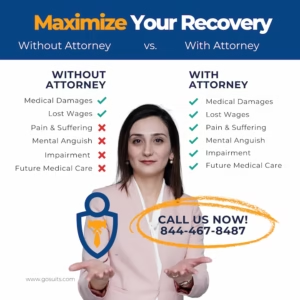
- Be cautious with insurers. Early calls from insurers often seek recorded statements and broad medical authorizations. Those can limit recovery if not handled carefully. Contact an attorney for a free consultation before engaging, because statements can be used to challenge liability or diminish damages later.
- Care for emotional health. Grief and trauma have their own timelines. Connecting with counselors and community support can help families navigate the days and weeks following a loss.
Commentary from Gosuits Bonita, California Personal Injury Attorney
Our hearts are with everyone affected by this tragic crash on SR-54. A sudden loss like this shakes families, friends, and co-workers across the South Bay. What follows is offered for general information and community awareness.
Based on publicly shared details, a car struck the back of a tow truck operating on the right shoulder, and a fire ensued. Investigations in shoulder collisions focus closely on whether approaching drivers honored the Move Over rule, kept a proper lookout, and adjusted speed to conditions. At the same time, thorough reviews also look at tow operations, lighting, vehicle placement, and whether traffic patterns near the SR-125 merge created additional hazard. It takes careful scene work, vehicle inspections, and, when available, camera footage to fairly assess responsibility.
Insurance companies and large corporate policyholders often move fast when a fatal crash occurs. They know early statements can shape a case. Adjusters may frame questions in ways that sound routine but actually narrow fault or minimize losses. Without context, families can feel pressured to accept quick answers, provide broad authorizations, or assume that whatever the first insurer says must be final. That is not how the civil process works. Evidence must be preserved, policies must be read as written, and multiple coverages can apply, especially when commercial trucks or roadside service vehicles are involved.
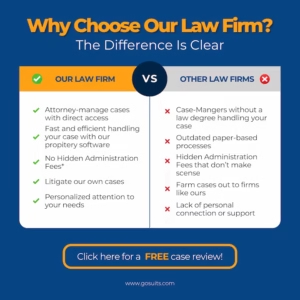
A free consultation matters for several reasons. It offers a confidential space to ask hard questions, understand timelines for requesting CHP and Medical Examiner records, and plan preservation requests for dash-cam or tow-yard footage. It also helps people understand the difference between liability coverage, UM or UIM, and any MedPay or funeral benefits that might be available. No one should have to navigate those issues alone while grieving.
References
- Move Over Law, California Highway Patrol
- How to Obtain Traffic Collision Reports – California Highway Patrol
- San Diego County Medical Examiner’s Office – County of San Diego
- Information for Families – San Diego County Medical Examiner
- Death Certificates – Assessor/Recorder/County Clerk, County of San Diego
- Trauma Care – UC San Diego Health
- Caltrans District 11 – California Department of Transportation
- Caltrans QuickMap – California Department of Transportation