- What we know so far from CHP
- Where this happened and how closures affected Sunday travel
- Why multi-vehicle freeway crashes can turn fiery
- What investigators typically look for after a freeway fatality
- How to obtain official records in San Diego County
- Insurance and legal context Californians ask about after a three-vehicle crash
- Wrongful death considerations for California families
- Local safety notes about this stretch of I-805
- Practical safety reminders for San Diego freeway drivers
- What to do next and why timing matters
- References and resources
- Commentary from Gosuits San Diego, California Personal Injury Attorney
What we know so far from CHP
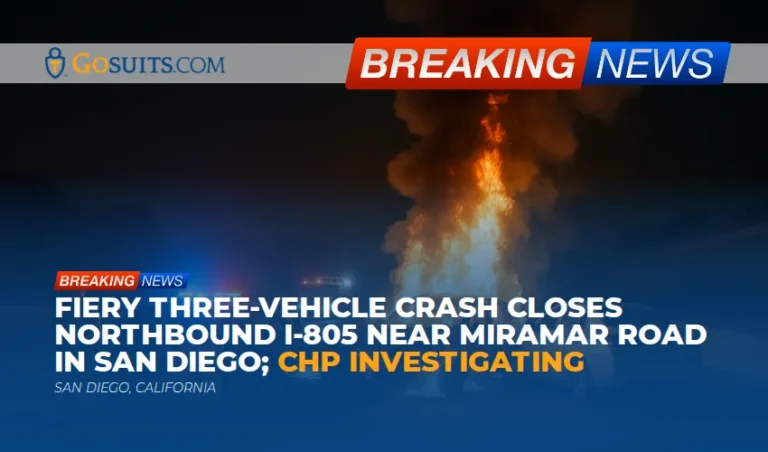
In the early hours of Sunday morning, a fiery three-vehicle collision occurred on the northbound Jacob Dekema 805 Freeway in San Diego, just south of Miramar Road. According to the California Highway Patrol, the crash was reported at approximately 4:22 a.m. At least one vehicle struck the center divider and caught fire. By 6:01 a.m., lanes one through five of the northbound side were closed for an undetermined period as responders secured the scene and investigators began their work. As of the initial report, no additional public details were available about the vehicles involved or the people affected.
When serious freeway crashes happen before dawn, the response can involve multiple agencies at once. On this corridor, that typically includes California Highway Patrol for investigation and traffic control, Caltrans District 11 for closures and cleanup support, and San Diego Fire-Rescue for fire suppression and medical aid.
Where this happened and how closures affected Sunday travel
The Jacob Dekema segment of I-805 runs through the central and northern parts of San Diego. The crash location described as northbound I-805 south of Miramar Road places it near the Sorrento Valley and Mira Mesa gateways, not far from MCAS Miramar and the interchanges that feed traffic toward University City and UTC. Even on a Sunday, pre-dawn lane closures on I-805 can ripple through nearby connectors, especially for early shift workers heading to business parks in Sorrento Mesa and medical or lab facilities along the Mira Mesa corridor. Caltrans typically manages hard closures and rolling traffic breaks while investigators map scenes and tow operators clear debris. Public-facing traffic updates for significant freeway incidents are usually reflected on Caltrans QuickMap and agency alerts once information is available [3].
It is natural for nearby communities to feel the impact when a major corridor like I-805 shuts down. That can mean diverted traffic on surface streets like Miramar Road and Camino Santa Fe or longer queueing before the La Jolla Village Drive split.
Why multi-vehicle freeway crashes can turn fiery
Freeway collisions involving multiple vehicles can lead to post-impact fires when fuel systems rupture or when high-energy crashes generate sparks or expose hot engine components. The U.S. Fire Administration tracks highway vehicle fires and notes that mechanical failures, electrical issues, and collisions are among common catalysts for vehicle fire incidents on roadways [10]. The risk of fire can be amplified by secondary impacts, particularly if a vehicle is pushed into a concrete median or pinned between vehicles, damaging lines, tanks, or electrical systems.
Pre-dawn conditions also change the risk environment. Reduced visibility, limited sight distance to debris or disabled vehicles, and driver fatigue are known contributors to severe outcomes on high-speed corridors. Broad national research underscores that speeding and impairment remain significant factors in fatal crashes generally, both on and off freeways [4] [5]. While the cause of this I-805 crash has not been publicly reported, investigators will routinely consider these risk factors among others.
What investigators typically look for after a freeway fatality
When a fatal crash occurs on a state freeway in California, CHP investigators work to reconstruct the sequence of events. This often includes:
- Scene mapping and physical evidence such as skid marks, yaw marks, debris fields, final rest positions, and median damage.
- Vehicle examinations for crush patterns, restraint use indicators, airbag modules, and in some cases electronic data from event data recorders.
- Driver- and witness-based information including interviews, statements, and any available 911 recordings or dispatch logs.
- Environmental factors including lighting, roadway geometry, traffic density, and weather.
- Impairment and distraction assessments that may be supported by toxicology for involved drivers when appropriate [5].
Coroners or medical examiners manage determinations of cause and manner of death. In San Diego County, the Medical Examiner’s Office provides official records such as autopsy reports and death certificates after completing their examinations. Families typically receive guidance from that office about when records will be available.

How to obtain official records in San Diego County
Several agencies may hold records relevant to a freeway fatality near Miramar Road. Each serves a different role and maintains different documents.
CHP collision report
California Highway Patrol collision reports are generally requested using the CHP 190 process. These reports usually become available after the initial investigation and may include diagrams, narratives, and in some cases supplemental reports. Requestors typically need to show a qualifying interest, such as being a party to the crash or a legal representative. Information on how to request a CHP collision report is published by the agency [1].
San Diego County Medical Examiner records
The San Diego County Medical Examiner’s Office provides records related to decedents under its jurisdiction. Families can request autopsy reports, investigative reports, and certified death certificates. The county outlines its request procedures and eligibility criteria on its official website [2].
Caltrans traffic and incident information
Caltrans QuickMap is the statewide platform for real-time traffic conditions, closures, and some incident alerts. While QuickMap is not a repository for investigative documents, it is often used by the public to understand lane closures or traffic management during and after serious crashes [3].
911 audio and dispatch logs
Depending on the agency involved, recordings and logs may be available through a California Public Records Act request, subject to exemptions. For freeway incidents, CHP and regional dispatch centers may hold certain records. The California Department of Justice provides public guidance on the Public Records Act framework, timelines, and exemptions [9].
Tow and vehicle inspection information
After a freeway crash, vehicles are often removed by rotation tow providers under CHP oversight. Tow yard records, release forms, and photographs taken by the tow operator can become important. If litigation is contemplated, it is vital to preserve vehicles and critical components for inspection before repair or disposal. An attorney can issue preservation notices to tow yards and insurers to prevent spoliation of evidence.
Insurance and legal context Californians ask about after a three-vehicle crash
Crashes with three or more vehicles raise immediate questions about liability, insurance sequencing, and how multiple policies might apply. California uses a fault-based system for motor vehicle collisions. Responsibility can be shared among drivers when evidence shows more than one person contributed to the harm. California’s basic speed law and general negligence principles guide how fault may be evaluated in high-speed corridor collisions [6].
In multi-vehicle events, more than one bodily injury liability policy can be in play. Sequencing coverage, confirming available limits, and identifying any underinsured motorist claims are common steps. A practical primer on this topic is here: Which insurance pays first after a multi car crash.
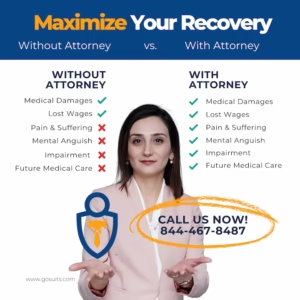
Talking to insurers too early can have unintended consequences. Adjusters may record calls, push for broad medical authorizations, or suggest quick resolutions before the full scope of injuries or losses is known. That is one reason many people consult with San Diego car accident lawyers before giving any formal statements or signing documents. Counsel can coordinate preservation letters, manage communications, and evaluate whether additional policies such as umbrella coverage may apply.
It is also common for questions to arise about diminished value, rental reimbursement, and total loss valuations. Where there is a fatality, wrongful death and survival claims add another layer of complexity. Skilled guidance from car accident lawyers can help ensure deadlines are not missed and that evidence is secured promptly.
As a general safeguard, consider these points before any insurance outreach:
- Consult an attorney first so that communications are routed professionally and your statements are accurate and limited to what is necessary at that stage.
- Do not sign blanket medical authorizations without counsel reviewing them.
- Request policy limits disclosures where appropriate under California law to understand the coverage landscape.
Wrongful death considerations for California families
California’s wrongful death statute authorizes certain surviving family members to bring a civil claim when a death is caused by the wrongful act or neglect of another. Eligible claimants and the general contours of these claims are set out in the California Code of Civil Procedure [7]. A related survival action belongs to the decedent’s estate for losses the person suffered before death, such as medical bills incurred between the crash and the time of passing, as outlined in a separate code section [8].
In broad terms, wrongful death damages can include loss of financial support, loss of household services, and loss of love, companionship, and guidance. Survival actions focus on the decedent’s own losses before death. Each case is fact specific. When public entities are potentially involved, special notice rules may apply, including shorter deadlines for presenting a claim under the Government Claims Act [11].
Families often ask about timing, who is authorized to sign on behalf of the estate, and how to coordinate with the Medical Examiner’s Office. A free consultation is a common starting point to get clarity on roles, timelines, and the steps that preserve the right to pursue civil remedies.
Local safety notes about this stretch of I-805
I-805 is one of the most heavily traveled corridors in central San Diego. Near Miramar Road, traffic streams converge from industrial parks in Sorrento Mesa and residential communities in Mira Mesa and University City. Speed differentials between early-morning commuters and commercial vehicles can become pronounced before sunrise. City policy makers have highlighted citywide safety objectives through San Diego’s Vision Zero program, which focuses on eliminating traffic deaths and serious injuries, including on high-injury networks that feed to or from freeways [12].
Regionally, California safety offices continue to track contributing factors such as speed, impairment, and seat belt use in serious crashes. The Office of Traffic Safety maintains county-level and city-level collision data to help communities understand where and when risks are most acute [13]. Community feedback, roadway engineering, and targeted enforcement are ongoing components of the safety approach across San Diego.
Practical safety reminders for San Diego freeway drivers
Every crash is different, but certain safety practices are consistently recommended on fast-moving corridors like I-805.
- Reduce speed and increase following distance before dawn. Darkness and early-morning fatigue can quietly shrink reaction time. Slowing slightly and leaving more room gives you options if traffic suddenly stops.
- Scan ahead for hazard cues. Smoke, flashing lights, brake lights cresting a hill, or people on the shoulder are signs that you should ease off the accelerator and prepare to move over.
- Move disabled vehicles out of travel lanes when safe. If a crash is minor and your car is drivable, carefully steer to the shoulder or a safe turnout before exchanging information. Use hazards and set out triangles or flares only if it can be done without risking additional harm.
- Call 911 for injury, fire, or hazards. On freeways in San Diego County, CHP and fire agencies coordinate response. Clear, calm information speeds help to the right place.
- Do not stand in traffic lanes. If you must exit, do so on the side away from traffic and move behind a barrier if one is close and accessible.
- Document the scene if safe. Photos of vehicle positions, visible damage, roadway debris, and the surrounding environment can help later. Prioritize safety over documentation.
- Seek medical evaluation promptly. Some injuries surface hours later. Early care creates a health record that can matter if claims arise.
What to do next and why timing matters
Serious crashes introduce many moving parts at once. Here is a practical, time-sensitive roadmap that aligns with how these cases unfold in San Diego.
- Engage counsel early. The very first step should be to consult an attorney before speaking with any insurance company. Statements to adjusters can be recorded and may be used to challenge later claims. Early representation helps with evidence preservation, communication control, and avoiding missteps.
- Preserve key evidence. Vehicle inspections, dashcam files, event data recorder downloads, and nearby business or traffic camera footage can disappear quickly. Some systems overwrite within days. Acting now increases the odds that critical recordings still exist.
- Start official record requests. Initiate the CHP collision report request and, when appropriate, Medical Examiner records. Agencies have set timelines and eligibility rules. Getting in queue helps.
- Coordinate medical and mental health care. Follow-up appointments, counseling, and treatment plans demonstrate continuity of care and support overall recovery.
- Organize documents. Keep all repair estimates, tow receipts, wage records, and out-of-pocket expenses. A clean paper trail shortens claim processing time.
- Be mindful of legal deadlines. California civil claims have statutes of limitations. Claims potentially involving public entities can have shorter notice requirements. Missing a deadline can close the door on recovery.
- Understand insurance layering. In multi-vehicle crashes, coverage sequencing matters. Bodily injury liability, UM or UIM, medical payments, and umbrella policies may apply in different orders. Independent guidance helps ensure opportunities are not overlooked.
Why act now? Because evidence degrades, memories fade, vehicles are repaired or salvaged, and some video systems purge within days. Meanwhile, towing and storage fees can grow. Getting organized promptly protects options for the weeks and months ahead.
References and resources
- Collision Report Request CHP 190 – California Highway Patrol
- Request Records – San Diego County Medical Examiner
- QuickMap – Caltrans
- Speeding – National Highway Traffic Safety Administration
- Impaired Driving – National Highway Traffic Safety Administration
- California Vehicle Code 22350 Basic Speed Law – California Legislature
- CCP 377.60 Wrongful Death – California Legislature
- CCP 377.30 Survival Action – California Legislature
- Public Records Act Guidance – California Department of Justice
- Highway Vehicle Fires – U.S. Fire Administration
- Government Code 911.2 Claim Presentation Deadline – California Legislature
- Vision Zero San Diego – City of San Diego
- Collision Rankings – California Office of Traffic Safety
Commentary from Gosuits San Diego, California Personal Injury Attorney
Our hearts go out to everyone affected by this tragic I-805 crash. Incidents like this touch neighbors across Mira Mesa, Sorrento Valley, and beyond. The information shared here is for education and general awareness. Every situation is unique and deserves careful, individualized attention.
From a civil-injury perspective, a pre-dawn, multi-vehicle collision that includes a center-divider impact and a vehicle fire raises immediate questions about speed differentials, lane changes, following distance, visibility, and whether any mechanical or roadway conditions played a role. Investigators will look closely at the physical evidence and available recordings to understand the sequence.
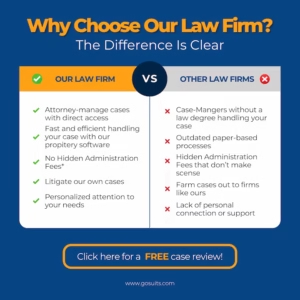
In our experience, insurance carriers and corporate risk teams often move quickly to contain their exposure. They may seek recorded statements right away, press for broad medical authorizations, or frame early narratives that minimize responsibility. That dynamic can disadvantage people who do not have complete information yet. Having a seasoned advocate step in early helps level that playing field, preserves sensitive evidence, and keeps the focus on facts.
A free consultation is a meaningful first step to understand rights, timelines, and the practical steps to protect a potential claim. It costs nothing to get oriented, and it can prevent costly mistakes that are difficult to unwind later.