- What we know from San Diego officials
- Where it happened and why the location matters locally
- Immediate steps families often take after a fatal vehicle-into-home crash
- How to request official reports in San Diego
- Understanding potential civil claims in California wrongful death cases
- Insurance coverage questions families ask
- Preserving evidence and documenting losses
- Timelines and California filing deadlines
- Community and mental health resources
- How reports and evidence fit together in a claim
- Commentary from Gosuits San Diego, California Personal Injury Attorney
- Action steps and timing
- References
What we know from San Diego officials
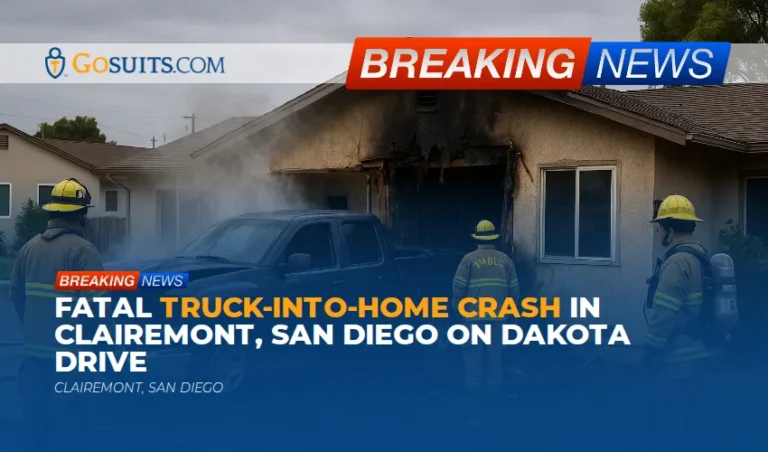
San Diego authorities reported a fatal vehicle-into-home crash in Clairemont on Monday morning. According to initial statements, the collision occurred around 7:38 a.m. in the 4300 block of Dakota Drive. Police said a man allegedly drove a truck into the residence he shared with his wife. The impact led to a fire that San Diego Fire-Rescue extinguished shortly after arriving. The woman was found deceased. Investigators are working to determine whether her death resulted from the collision, the fire, or a combination of both. The male driver, identified as her husband, was detained by police and hospitalized with significant injuries. Officials also noted that a temporary restraining order was in place. No other injuries have been reported at this time.
As with any active investigation, details can evolve as forensic specialists, fire investigators, and detectives piece together the sequence of events. The City’s official records, including the police collision report and the fire incident report, will eventually provide technical details such as vehicle direction of travel, point of impact, damage patterns, and fire origin indicators. These documents can be crucial for families who later need to understand what happened and why. City of San Diego agencies maintain those records and provide a process to request copies once they are available [1] [2].
Where it happened and why the location matters locally
Clairemont is a longstanding community in central-northern San Diego, bordered by Tecolote Canyon, Mission Bay, Interstate 5, and State Route 52. Dakota Drive runs through a residential pocket where morning routines, school drop-offs, and commuter traffic often converge. In neighborhoods like North Clairemont and Bay Ho, homes sit close to residential streets with limited setbacks in some blocks. That proximity means a vehicle that leaves the roadway can reach a living space quickly. Residents in this area know the rhythm of the mornings well: joggers around Tecolote Canyon trailheads, parents heading toward Clairemont Town Square, and neighbors checking in after a long holiday weekend. A crash into a home shakes that sense of daily normalcy and raises understandable questions about safety and prevention.
In vehicle-into-structure incidents, responders from San Diego Fire-Rescue typically prioritize life safety, fire suppression, and structural stability. If a load-bearing wall is compromised, a building official may perform or request an assessment to determine if the structure is safe for occupancy. The City’s Development Services Department coordinates inspections and permits that may be needed for emergency shoring and longer term repairs [3].
Immediate steps families often take after a fatal vehicle-into-home crash
When tragedy strikes inside the home, the path forward can feel overwhelming. The steps below reflect common tasks families in San Diego undertake to secure information, protect their rights, and begin navigating the civil side of a fatal incident. If you are unsure where to begin, consider starting with documentation and public records requests.
- Document the scene if safe to do so. After officials clear the area, take photographs or videos of the exterior damage, interior impact points, fire damage, and debris fields. Capture wide shots and close-ups, including any skid marks, tire tracks, or broken fencing. If the City has posted any safety notices or tags, photograph those as well.
- Collect names of responders and any reference numbers. If you have the SDPD case number or fire incident number, keep it accessible. These identifiers help when requesting official reports later [1] [2].
- Secure property and personal items. If a wall breach or window break left the home exposed, coordinate temporary board-up or tarping. Ask the City about any structural cautions before reentering. Keep receipts for emergency repairs and short term lodging.
- Request official reports and records. Police collision reports, fire incident reports, and Medical Examiner records will become central pieces of the factual timeline [1] [2] [4].
- Obtain several certified copies of the death certificate. These are typically needed for insurance notifications and estate matters. San Diego County provides guidance on vital records [10].
- Speak with seasoned and skilled counsel before calling insurance. What is said to any insurance adjuster can be recorded and potentially used to minimize or deny parts of a claim later. Many families choose to consult wrongful death lawyers first to understand their options and the best order of steps.
How to request official reports in San Diego

San Diego Police Department reports
SDPD provides a process to obtain incident and collision reports through its Records Division. Requests can be made by mail or online, and availability depends on the status of the investigation. If the case remains active, the report may be partially redacted or temporarily withheld until certain milestones are met. The City’s public records portal is also available for broader records requests [1] [5].
San Diego Fire-Rescue incident reports
Families can request fire incident reports from San Diego Fire-Rescue. These reports often include response times, unit actions, suppression activities, and fire origin observations. They may reference building conditions and any hazards found by firefighters. The City’s portal also handles requests for fire records [2] [5].
San Diego County Medical Examiner records
The Medical Examiner investigates sudden, unexpected, and violent deaths in the county. The office can provide autopsy and investigative reports once they are finalized. These records may include cause and manner of death, timelines, and toxicology results if applicable. The Medical Examiner’s website outlines who can request records and how to submit a request [4].
Understanding potential civil claims in California wrongful death cases
In California, when a death results from the wrongful act or neglect of another, certain family members have the right to bring a wrongful death claim. Eligible claimants can include a spouse, domestic partner, children, and in some circumstances other dependents or heirs as defined by statute. The California Code of Civil Procedure section 377.60 explains who may file and under what circumstances [6].
Families often ask whether an alleged intentional act changes the civil analysis. There are two separate questions: liability and collectability. Liability focuses on whether the person who caused harm can be held civilly responsible. Collectability considers the sources of payment for damages, such as insurance. California Insurance Code section 533 generally states that an insurer is not liable for a loss caused by the willful act of the insured, which can affect whether certain policies will pay for intentional conduct [8]. That does not remove the civil claim, but it can change which sources of recovery are available. These are complex issues that wrongful death lawyers frequently evaluate closely with families.
There is also a related legal tool known as a survival action. This is distinct from a wrongful death claim and allows the decedent’s estate to recover certain losses the person sustained before death. California Code of Civil Procedure sections 377.30 and 377.34 govern survival actions and allowable damages. Recent statutory updates have affected recoverable categories in certain time frames, so it is important to review the current text at the time of filing [7].
Common categories of damages in California wrongful death cases can include the financial support the decedent would have provided, value of services to the household, and loss of love, companionship, comfort, care, assistance, protection, affection, society, and moral support. Each case is highly fact specific, and documentation is essential. Families often consult wrongful death lawyers to understand who may file, what damages might apply, and how to gather evidence that reflects the full measure of their loss.
Insurance coverage questions families ask
Insurance issues can get complicated in a vehicle-into-home scenario, especially when there are allegations of intentional conduct.
- Auto liability insurance. Auto liability coverage typically applies to negligent driving and bodily injury or property damage to others. If conduct is found to be intentional, California Insurance Code section 533 may prevent an insurer from paying for the willful act of its insured. There can be disputes over intent, and carriers may provide a defense under a reservation of rights while investigating coverage [8].
- Homeowners insurance. The homeowner’s policy on the damaged property may cover structural repairs and personal property losses, often subject to deductibles and policy limits. However, homeowners liability coverage typically excludes injuries caused by intentional acts of an insured person. The property portion may still respond to fire and impact damage depending on policy terms.
- Uninsured or underinsured motorist coverage. Some policies can protect an insured person who is injured as a pedestrian struck by a motor vehicle. Whether that applies to someone inside a home struck by a vehicle depends on policy language and facts. This is a nuanced question that calls for careful policy review.
- Victim compensation. California’s Victim Compensation Board may help eligible victims and families with certain crime-related expenses, separate from insurance. Eligibility and covered expenses are defined by statute and program rules [9].
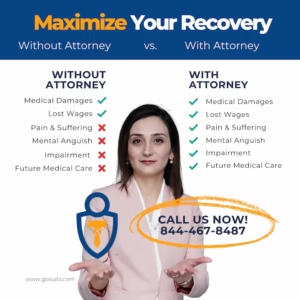
Before contacting any insurance company, it is prudent to get a free consultation with a qualified attorney. Early recorded statements can affect later claims decisions, and adjusters are trained to minimize exposure. Families who confer with wrongful death lawyers first are better prepared to navigate coverage questions and avoid common pitfalls.
Preserving evidence and documenting losses
Successfully proving a civil claim often comes down to timely evidence collection and careful documentation. In a vehicle-into-home fatality, relevant evidence can include:
- Scene evidence. Photographs, video, debris patterns, damaged furnishings, and any surveillance footage from neighbors or doorbell cameras. Make note of whether rain, darkness, or holiday decorations affected visibility. Clairemont blocks can have a mix of lighting conditions and landscaping that may matter.
- Official reports. SDPD collision report, fire incident report, Medical Examiner records, and any building department assessments or red tags. Keep copies of correspondence and case numbers [1] [2] [4] [3].
- Property records. Repair estimates, invoices, hotel receipts, and itemized lists of personal property losses with replacement values.
- Family and household impact. Calendars, journals, and statements that reflect the decedent’s role in childcare, elder care, household management, and the emotional fabric of the family. These are often vital in illustrating non-economic harms in California wrongful death cases.
It is also helpful to identify any prior protections, such as a temporary restraining order, and obtain certified copies if relevant. California courts maintain resources about protective orders that can help families understand the process and available documents [11].
Timelines and California filing deadlines
California sets deadlines for civil claims. For most wrongful death actions, the filing deadline is two years from the date of death under Code of Civil Procedure section 335.1. There are exceptions and special rules in certain circumstances, including claims involving government entities or cases where the applicable time is tolled. Survival actions have their own timing rules under sections 377.30 and 377.34. Because missing a deadline can end a claim, families often seek early guidance and calendar critical dates carefully [12] [7].
Community and mental health resources
Incidents like this reverberate across the block and the broader Clairemont community. Grief, shock, and trauma responses are normal. San Diego families can access crisis support and mental health resources any time, day or night.
- 988 Suicide and Crisis Lifeline. Dial or text 988 for immediate support for emotional distress or suicidal thoughts. The federal resource hub provides information and connection to local services [13].
- Fire recovery guidance. The U.S. Fire Administration offers practical steps for recovering after a home fire, including safety, cleanup, and documentation tips [14].
- Violence prevention and safety planning information. The Centers for Disease Control and Prevention hosts information about intimate partner violence, warning signs, and prevention strategies. Education can help communities identify risk and connect neighbors to help sooner [15].
Neighbors often rally in Clairemont, from block captains to faith communities near Clairemont Town Square and along Balboa Avenue. Checking on one another, sharing accurate information, and directing families to City and County resources can make a meaningful difference.
How reports and evidence fit together in a claim
Think of the major records as pieces of a mosaic. The SDPD collision report documents the roadway approach, the vehicle’s path into the structure, and witness accounts. The Fire-Rescue incident report shows fire origin, suppression details, and observed hazards. The Medical Examiner record explains medical cause and manner of death. Building inspections can describe whether the home was compromised and why. Together, these records help answer key questions a civil court or insurance carrier will ask: What happened, what caused the death, who is legally responsible, and what are the losses?
Families who confer early with wrongful death lawyers tend to sequence these steps efficiently. Counsel can coordinate preservation letters to keep critical evidence safe, request certified records when available, and assemble a clear damages picture supported by both official findings and family documentation.
Commentary from Gosuits San Diego, California Personal Injury Attorney
Our hearts are with everyone affected in Clairemont. Losing a loved one at home, a place that should be the center of safety, weighs heavily on a family and a neighborhood. This article is intended for general information so the community understands the civil process that often follows a tragedy like this.
Based on what authorities have shared so far, investigators are working through two intertwined questions: the mechanics of the crash and fire, and the medical cause of death. That distinction matters in the civil context, because it shapes liability analysis and the types of experts who may be needed. The presence of a temporary restraining order, as reported, adds context to the relationship background but does not by itself answer the key causation questions investigators must resolve.
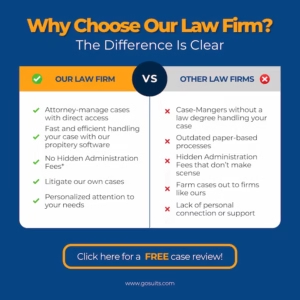
Insurance carriers and corporate entities that handle claims know the rules and timelines well. They also know that families are grieving and may not realize how a single recorded statement can affect the outcome. Adjusters may seek early interviews, request broad authorizations, or suggest quick resolutions before the full picture is clear. Without complete records and a careful reading of policy language, families risk underestimating future needs or overlooking important sources of recovery. Speaking with a seasoned and skilled attorney first can help level that playing field, clarify which statements are necessary, and ensure evidence is preserved correctly.
A free consultation is a practical way to understand rights, deadlines, and documentation before engaging with any insurer. It does not commit anyone to a course of action. It simply equips families with a plan, so choices are made with the best available information at the right time.
Action steps and timing
What to do
- Secure documentation. Photograph damage and collect case numbers for SDPD and Fire-Rescue. Request copies of the police report, fire report, and Medical Examiner records when they are available [1] [2] [4].
- Preserve physical evidence. Save debris that shows the vehicle’s path or impact force if feasible, and keep damaged items until advised otherwise.
- Organize financial records. Track emergency housing, repairs, funeral costs, and lost income related to the loss.
- Review insurance policies. Locate auto, homeowners, and any umbrella policies. Identify policy numbers and coverage limits. Do not provide recorded statements until you have spoken with an attorney.
- Consult counsel first, then notify insurance. An initial legal consultation helps map out which carriers to notify, what to say, and what to avoid. Anything stated to an insurer can be used later in claim decisions.
Why act now
- Evidence is perishable. Skid marks fade, debris gets discarded, and digital video overwrites quickly. Early preservation can make or break causation proof.
- Records have queues. Police and fire reports are released on a timeline. Submitting requests early shortens the wait once reports are finalized [1] [2].
- Deadlines apply. California wrongful death claims are generally subject to a two year statute of limitations, with special rules that may apply in certain situations. Early guidance keeps the calendar on track [12].
- Insurance positions harden. Carriers often decide early whether to accept or dispute coverage. An informed approach to initial communications prevents unintentional limitations on recovery.
Acting deliberately and in the right order helps families protect their interests without sacrificing accuracy or safety. Getting a clear plan in place brings some structure to an otherwise chaotic time.
References
- Requesting Reports – San Diego Police Department
- San Diego Fire-Rescue Department – City of San Diego
- Development Services Department – City of San Diego
- San Diego County Medical Examiner – County of San Diego
- Public Records Requests – City of San Diego
- Code of Civil Procedure 377.60 – California Legislative Information
- Code of Civil Procedure 377.34 – California Legislative Information
- Insurance Code 533 – California Legislative Information
- California Victim Compensation Board – State of California
- Assessor/Recorder/County Clerk – County of San Diego
- Domestic Violence Restraining Orders – Judicial Council of California
- Code of Civil Procedure 335.1 – California Legislative Information
- 988 Suicide and Crisis Lifeline – SAMHSA
- U.S. Fire Administration – FEMA
- Intimate Partner Violence – Centers for Disease Control and Prevention
- National Highway Traffic Safety Administration – U.S. Department of Transportation
- California Department of Insurance