- What Happened on State Route 152 West of Lower Cottonwood Road
- Local Context: The Pacheco Pass Corridor and Merced County Roads
- Initial Law Enforcement Statements and Why They Matter
- Civil Liability After a Motorcycle and SUV Collision
- Evidence to Preserve Right Away
- How to Obtain Official Records and Who to Call
- Insurance Considerations After a Fatal Motorcycle Crash
- Wrongful Death and Survival Claims in California
- Guardrails and Roadway Conditions: When Third-Party Liability May Exist
- Safety and Seasonal Considerations on SR-152
- What the Data Shows About Motorcycle Risk
- Practical Next Steps for Community Members
- Commentary from Gosuits Merced County, California Personal Injury Attorney
- Why Taking Action Matters Now
What Happened on State Route 152 West of Lower Cottonwood Road
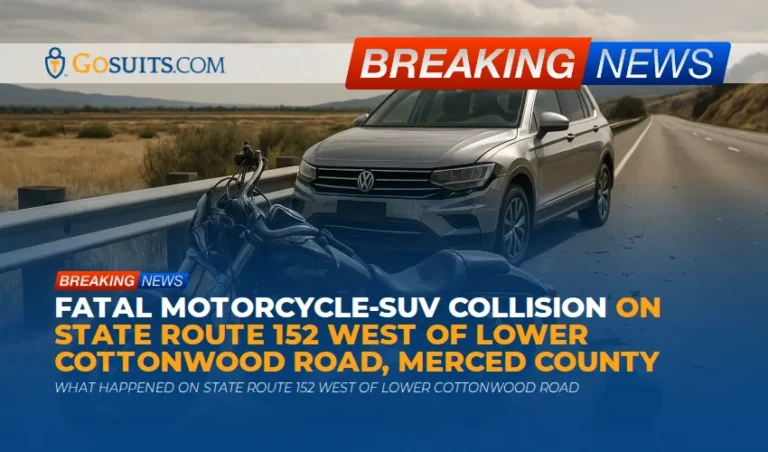
According to the California Highway Patrol, a motorcyclist riding a 2023 Harley-Davidson was involved in a collision with a silver 2024 Volkswagen Tiguan on State Route 152 in Merced County. The crash occurred in the number two westbound lane at approximately 1:35 p.m. on a Sunday, just west of Lower Cottonwood Road. The impact caused the motorcycle to strike a guardrail, ejecting the rider. The rider was pronounced deceased at the scene. The Volkswagen driver was not reported injured. Investigators stated that alcohol and drugs do not appear to be factors at this time.
These early facts frame the civil questions that often follow a fatal crash: how vehicles moved within their lanes, what visibility and traffic conditions were like, whether speed or following distance played a role, and how secondary impacts like a guardrail strike contributed to the severity of the outcome.
Local Context: The Pacheco Pass Corridor and Merced County Roads
State Route 152 is a major east-west corridor linking the Central Valley to the South Bay. West of Lower Cottonwood Road, drivers transition toward the Pacheco Pass area, with familiar landmarks like Santa Nella to the east and the San Luis Reservoir and Dinosaur Point to the west. Traffic often mixes long-haul freight, commuters between Los Banos and Gilroy, and recreational travelers heading toward the coast. Afternoon sun glare can be intense on westbound lanes. In the colder months, Tule fog and rapidly changing visibility can complicate an otherwise familiar drive. Locals know this stretch can feel very different depending on time of day, wind around the reservoir, and seasonal weather.
This local context matters because conditions on SR-152 can change quickly. Westbound vehicles often navigate lane changes, passing maneuvers, and speed differentials between trucks and passenger cars. For motorcyclists, those variables leave little margin for error when another driver doesn’t see them or misjudges distance.
Initial Law Enforcement Statements and Why They Matter
CHP’s early note that alcohol and drugs do not appear to be factors helps narrow the focus of a civil investigation. When impairment is ruled out, attention turns to roadway dynamics such as lane positioning, speed, visibility, compliance with traffic laws, and the potential role of roadway hardware like guardrails.
Families sometimes wonder whether a statement about impairment means fault has been determined. It doesn’t. Early updates from CHP are preliminary and typically focus on immediate safety and factual observations. The full traffic collision report, diagrams, and any supplemental statements are key documents for understanding how and why the crash happened.
Civil Liability After a Motorcycle and SUV Collision
In a motorcycle-SUV collision, several avenues of potential civil liability may be examined:
- Driver negligence: Was there an unsafe lane change, failure to yield, following too closely, or inattention? California’s vehicle code and the rules of the road set baseline duties for every driver.
- Visibility and lookout: Motorcycles are smaller and easier to miss in mirrors or blind spots. Failure to keep a proper lookout is a common civil negligence theory in multi-vehicle crashes.
- Speed and distance: Whether either vehicle was traveling too fast for conditions or too close for a safe stop factor into the analysis, even if posted speed limits were observed.
- Secondary impacts: The motorcycle’s post-impact trajectory into a guardrail can have legal importance. The law considers whether a subsequent impact worsened injuries and whether any party bears responsibility for that chain of events.
- Roadway conditions or hardware: If evidence suggests a dangerous condition of public property contributed, claims may extend to the responsible public entity. Those claims carry unique deadlines and requirements.
It’s important not to assume fault based on vehicle type. Motorcyclists have the same rights to the roadway as any other motorist. A thorough review of the CHP report, scene photographs, witness statements, and vehicle data can clarify liability questions.

Evidence to Preserve Right Away
Time is critical. Important evidence can be lost, overwritten, or altered within days or weeks. Community members supporting a grieving family can help by noting the following:
- Motorcycle and gear: Preserve the motorcycle, helmet, jacket, gloves, and boots in their post-crash condition. Do not repair, clean, or dispose of them. Physical damage patterns and residue can be meaningful in reconstructing events.
- Vehicle data from the SUV: Many modern vehicles, including popular SUVs, store crash-related information in an Event Data Recorder. Access typically requires specialized tools and cooperation from the vehicle owner or insurer. Federal rules describe common data points recorded by EDRs. See 49 CFR Part 563.
- Scene documentation: Photos or video from within hours of the crash can capture skid marks, debris fields, guardrail contact points, and lighting conditions. If safe and permitted, nearby businesses or residents may have exterior cameras that recorded the collision or moments leading up to it.
- Phone records and 911 audio: Dispatch logs and recordings sometimes provide real-time observations. Requests for such records may be available through public-records processes under California law, subject to exemptions.
- Medical and coroner documentation: Medical examiner and death investigation materials, along with the death certificate, help clarify cause and manner of death in a civil context.
Preserving evidence early ensures investigators and legal representatives can reconstruct what happened and evaluate every viable civil claim.
How to Obtain Official Records and Who to Call
CHP Traffic Collision Report
The primary investigative document is the CHP traffic collision report. Requesting it typically involves submitting an application with identifying details such as date, location, and involved parties. The CHP provides guidance and the form used to request reports. Visit the CHP page on obtaining traffic collision reports and follow the instructions, including any required proof of involvement or interest: How to Obtain a Traffic Collision Report.
Families can also locate the correct CHP Area office for the investigation by using the statewide office resources and searching for the Merced-area office serving SR-152: CHP Office Locations.
Death Certificates
Certified copies of death certificates in California are obtained through the California Department of Public Health or through local county vital records offices. The state’s vital records page explains eligibility and ordering procedures: California Department of Public Health Vital Records.
Coroner or Medical Examiner Reports
In Merced County, the Sheriff-Coroner conducts death investigations for sudden, unexpected, or traumatic deaths. Families generally can request autopsy or coroner investigative reports after the case is closed. Procedures and timelines vary. Since county websites may change, calling the Merced County Sheriff-Coroner to confirm request steps and any fees is recommended. If unsure where to start, CDPH’s vital records page above includes links and directions for local contacts within California.
911 Audio, Dispatch Logs, and Public Records
Some records related to emergency response may be requested under California’s Public Records Act, subject to exemptions. The California Attorney General provides a general overview of public records rights and procedures here: California Public Records Act Overview.
When asking for records, include specific details like the exact time window, location reference points such as “west of Lower Cottonwood Road,” and the agency that handled dispatching for that stretch of SR-152.
Insurance Considerations After a Fatal Motorcycle Crash
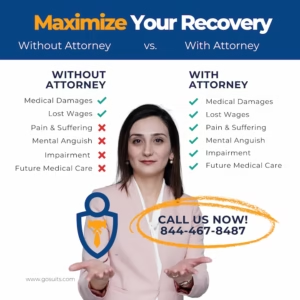
Insurance companies act quickly after serious crashes. That speed can feel helpful, but it often serves the insurer’s interests. Before any conversation with an insurance adjuster, it’s wise to speak with an attorney for a free consultation. Insurance representatives may ask for recorded statements that can be used to minimize or deny claims later. Even casual comments about speed, visibility, or lane positioning can be taken out of context.
Common insurance issues in a case like this include:
- Liability coverage: The at-fault driver’s policy typically covers bodily injury and wrongful death damages up to policy limits.
- Underinsured motorist coverage: If the at-fault driver’s limits are insufficient, the decedent’s household policy may provide underinsured motorist benefits.
- Property damage and evidence: Totaled motorcycles sometimes get moved quickly to salvage auctions. If civil counsel hasn’t inspected the bike, critical evidence may be lost. Request that insurers hold the vehicle until an inspection is complete.
- Medical payments coverage: Some policies include limited medical payments coverage that can help with immediate expenses, subject to policy terms and coordination with other benefits.
Statements made to any insurer, including your own, can be used in claim evaluations. Speak to counsel first so your rights are clear and your words are not misunderstood.
Wrongful Death and Survival Claims in California
California law allows certain family members to bring a wrongful death claim for losses suffered due to the death of a loved one. Eligible claimants and the scope of recoverable damages are set out in statute. See California Code of Civil Procedure section 377.60 for who may bring a wrongful death action: CCP 377.60.
Additionally, a separate claim, known as a survival action, can be brought on behalf of the decedent’s estate to recover damages the decedent could have claimed had they survived, such as medical expenses or certain economic losses up to the time of death. This is addressed in California Code of Civil Procedure section 377.30: CCP 377.30.
Deadlines are strict. In most wrongful death cases in California, the statute of limitations is two years from the date of death. See California Code of Civil Procedure section 335.1: CCP 335.1. If a claim involves a public entity, shorter administrative deadlines can apply, sometimes as short as six months to present a government claim. See Government Code section 911.2: Gov. Code 911.2.
These rules are general. The right path depends on the facts, the parties involved, and the insurance coverage available. Timely legal guidance helps families understand which laws apply and which claims must be filed, and when.
Guardrails and Roadway Conditions: When Third-Party Liability May Exist
The rider’s post-impact contact with a guardrail is an important detail in civil analysis. In some cases, a roadside barrier mitigates injury. In rare cases, hardware placement, condition, or design can exacerbate outcomes. Whether any such condition contributed is intensely fact-specific and typically requires engineering review.
California’s transportation design standards and roadside safety guidance are governed by the state’s transportation department. For context on roadside safety systems used on California highways, see Caltrans’ engineering resources: Caltrans Safety Program. While those materials are technical and not specific to this crash, they show how roadway hardware is evaluated from a safety perspective.
If evidence suggests a dangerous condition of public property contributed, claims procedures are different from claims against private drivers. As noted above, special government claim deadlines often apply before a lawsuit can be filed.
Safety and Seasonal Considerations on SR-152
Locals who drive and ride SR-152 regularly know how conditions vary:
- Afternoon glare westbound: In winter, a low sun angle can impair visibility during mid-afternoon hours for those heading toward Santa Clara County.
- Winds near the reservoir: Gusts around the San Luis Reservoir can push motorcycles and high-profile vehicles unexpectedly, especially as you crest or descend near Pacheco Pass.
- Tule fog: In colder months, patchy dense fog can create sudden low-visibility pockets east of the pass as you approach the valley floor.
- Mixed traffic: A blend of heavy trucks, RVs, commuters, and motorcyclists makes lane choice, speed management, and signaling critical.
None of these conditions assign fault on their own, but they can shape the duties each road user must meet to operate safely.
What the Data Shows About Motorcycle Risk
Motorcyclists face higher injury risks than occupants of enclosed vehicles. Nationally, riders continue to be overrepresented in traffic fatalities compared with their share of vehicle miles traveled. NHTSA’s Traffic Safety Facts series discusses this disparity in detail and offers national trend data: NHTSA Motorcycles.
Statewide, California’s safety agencies track collision trends and emphasize protective gear and rider visibility. The California Office of Traffic Safety provides statewide program information and safety resources: California OTS Motorcycle Safety. While statistics can never capture the human cost to a single family, they help communities understand why small moments of inattention on a highway like SR-152 can lead to life-altering outcomes.
California law requires motorcycle helmets meeting federal standards. See California Vehicle Code section 27803 for the helmet requirement as a baseline for rider safety: Veh. Code 27803. In civil cases, however, each crash must be evaluated on its own facts, and safety equipment is only one factor among many.
Practical Next Steps for Community Members
In the days and weeks after a fatal crash, it helps to proceed methodically. Here is a general, community-focused checklist without assuming fault or outcomes:
- Request the CHP report: Track the report number through the CHP Merced-area office and use the state’s instructions to submit a report request. If you don’t have the report number, provide the date, time, and location west of Lower Cottonwood Road. Reference: CHP collision report process.
- Obtain vital records: Start the process for death certificates through the state. Reference: CDPH Vital Records.
- Contact the Sheriff-Coroner: Ask about procedures for autopsy or investigative reports once available, expected timelines, and fees.
- Preserve vehicles and gear: Instruct tow yards and insurers in writing not to dispose of the motorcycle until a private inspection is completed. Retain the helmet and clothing.
- Identify witnesses and cameras: Note any passing drivers who stopped, roadside businesses near Lower Cottonwood Road, or traffic cameras that may have recorded relevant footage.
- Avoid recorded statements: Before speaking with any insurance adjuster, consult with counsel so you understand your rights and any potential pitfalls. Statements can be used later when liability and damages are disputed.
- Document losses: Keep a journal of events and collect expense records. In a civil case, contemporaneous documentation can make a difference.
Commentary from Gosuits Merced County, California Personal Injury Attorney
Our hearts are with the family and friends affected by this loss on SR-152. This article is for general information and education about civil issues that often arise after a serious crash in our community. It’s not a substitute for specific guidance about any individual case.
From the details available, this collision happened in the westbound number two lane, with a secondary impact into a guardrail after contact with an SUV. In our civil practice, that combination raises immediate questions about lane changes, lookout, and the timing and spacing of vehicles in mixed traffic near Pacheco Pass. The absence of suspected impairment means investigators will focus more on roadway dynamics and compliance with California traffic rules. A thorough reconstruction often requires the CHP report, vehicle data, and scene analysis.
Insurance companies and corporate defendants commonly move quickly to shape the narrative. Adjusters may ask for recorded statements or present early settlement offers before all facts are known. That timing works to their advantage. Many people don’t realize how a single phrase about speed, lane position, or visibility can be used against them later. Delay in securing vehicle inspections also benefits insurers if evidence gets lost or destroyed.
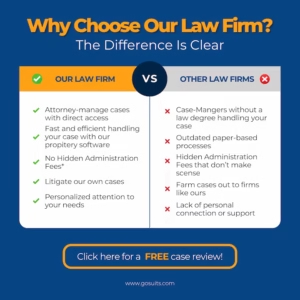
Free consultations exist for a reason. They help community members understand rights, deadlines, and the evidence needed for a fair evaluation. Speaking with a seasoned attorney early can level the playing field, especially when multiple insurers are involved or when there are potential claims related to roadway conditions or hardware.
Why Taking Action Matters Now
What to do: Individuals should promptly request the official CHP traffic collision report, secure vital records, and preserve all physical evidence including the motorcycle and safety gear. Before communicating with any insurer, obtain a free consultation with a qualified attorney to understand rights and obligations. Submit written preservation requests to tow yards and insurers to prevent disposal of key evidence.
Why act now: Important vehicle and scene data can disappear quickly. Tow yards may auction or scrap vehicles within days. Electronic data in an SUV’s Event Data Recorder can be overwritten if the vehicle is repaired or driven. Witness recollections fade. Early preservation letters and requests help maintain the integrity of the case.
What’s at stake: Timely action protects access to critical information that clarifies fault, causation, and damages. It also helps ensure compliance with strict legal deadlines, including California’s statute of limitations for wrongful death and any shorter deadlines that may apply if a public entity is implicated. Early legal consultation helps prevent missteps when dealing with insurers, where statements can be used later to minimize or deny claims.
When timing matters: The first two to four weeks after a serious crash are especially important for obtaining reports, locking down evidence, and identifying witnesses and recordings. Acting during this window can make the difference between a complete investigation and one where key facts are missing.