- What We Know About the Head-on Collision Near Oxnard
- Where This Happened and Why That Matters for Safety
- Investigation Status and How Witnesses Can Help
- How to Obtain Official Reports and Records
- Civil Law Context and Potential Liability
- Insurance Considerations and Common Pitfalls
- Data and Safety Insights About Head-on Collisions
- Roadway Engineering Measures That Reduce Head-on Crashes
- Time Limits That May Apply in California
- Preserving Evidence After a Serious Collision
- Community and Emotional Support
- Why Timely Action Matters After a Fatal Collision
- Commentary from Gosuits Oxnard, California Personal Injury Attorney
What We Know About the Head-on Collision Near Oxnard
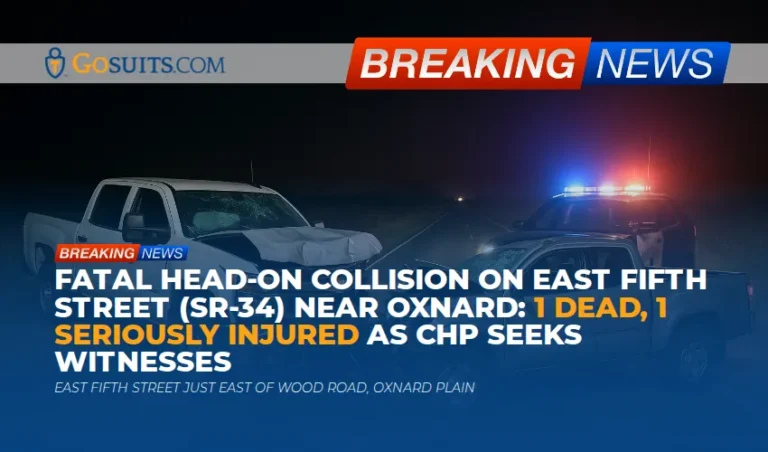
According to information released by authorities, a two-vehicle crash occurred on the evening of December 3 along East Fifth Street just east of Wood Road, in the agricultural expanse commonly called the Oxnard Plain. The location is a stretch of State Route 34, a corridor that runs past row crops and farm stands between Oxnard, El Rio, and Camarillo. The crash involved a white Chevrolet Silverado 2500 traveling westbound and a silver Toyota Tacoma headed eastbound. The initial investigation indicates the eastbound Tacoma crossed into the westbound lane and collided head-on with the Silverado. Both vehicles came to rest in the westbound lane.
California Highway Patrol officers from the Ventura Area responded around 9:47 p.m. Emergency personnel transported both drivers to Ventura County Medical Center. The 23-year-old Tacoma driver was pronounced deceased at the hospital. The 47-year-old Silverado driver sustained major injuries. Officials have not yet released the identity of the deceased pending notification to next of kin.
Authorities closed State Route 34 between Wood Road and Las Posas Road during the on-scene investigation. At this time, investigators have not determined the speeds involved. It remains unknown whether drugs or alcohol were factors. CHP has asked anyone with information or dashboard camera footage from the time and area of the crash to contact the Ventura Area office at 805-662-2640.
Where This Happened and Why That Matters for Safety
East Fifth Street is a familiar cross-county route for Ventura County residents. At night, the combination of limited lighting, minimal shoulder space, and the rhythm of farm traffic can make visibility and reaction time challenging. The stretch between Wood Road and Las Posas Road is relatively straight, with frequent access points for agricultural vehicles and side roads. Many locals use the term “Fifth” when navigating between Oxnard, El Rio, and Camarillo, and drivers often encounter a mix of personal pickups, farm trucks, and commuters who prefer it to Highway 101.
State Route 34 is maintained by Caltrans. While specific post-collision assessments are still pending, it is broadly true that two-lane rural highways can present increased risks for lane departure and head-on crashes compared to divided highways. Caltrans publishes state highway information and route data that can help the public understand traffic volumes and road context statewide. For statewide route resources, see Caltrans.
Investigation Status and How Witnesses Can Help
The crash remains under investigation by the California Highway Patrol’s Ventura Area office. When CHP requests public assistance, witness statements and dashcam footage often make a measurable difference in understanding sequence of events, points of impact, lighting, and traffic conditions. Even a brief clip from before the collision can help investigators confirm lane positions or rule out contributing hazards.
Anyone who saw the vehicles on East Fifth Street near Wood Road around 9:30 to 9:50 p.m., or who has dashcam recordings from the area, can contact CHP Ventura Area at 805-662-2640. For general information about CHP collision reports and requests, consult the official CHP page on accessing collision reports: California Highway Patrol Collision Report Information.
How to Obtain Official Reports and Records
CHP Traffic Collision Report
The CHP collision report typically includes diagrams, narratives, vehicle damage assessments, and any preliminary determinations about factors under review. To request a copy, authorized parties usually submit a written request using the CHP 190 form, along with proper identification and fees if required. The CHP provides information about eligibility, what to include in requests, and where to submit them here: CHP Collision Report Information.
It can take days to weeks for the report to be approved for release, depending on investigative status. If a supplemental report is issued later, it can also be requested.

Autopsy and Coroner Records
In Ventura County, the Medical Examiner-Coroner handles autopsies and cause of death determinations for qualifying deaths. Next of kin can typically request the autopsy report and related records once they are finalized. Turnaround time can vary. If toxicology is performed, that analysis can take longer than the autopsy itself. While county-specific procedures vary, families can expect to provide proof of relationship and a government-issued ID. If you are unsure how to start, consider calling the county coroner’s office directly during business hours to ask about forms, fees, and timelines.
Death Certificates
Certified copies of death certificates in California are issued by county vital records offices and the California Department of Public Health. General guidance on how to obtain California vital records is available here: California Department of Public Health, Vital Records.
Medical Records from Ventura County Medical Center
Hospitals maintain medical records for the care provided. Next of kin or a personal representative may request records for a deceased patient. Federal law provides a right of access to medical records, with some specific procedures for deceased individuals. The U.S. Department of Health and Human Services offers guidance on access to health information: HHS Guidance on Accessing Medical Records.
Vehicle Release, Towing, and Evidence Preservation
When law enforcement finishes the on-scene investigation, vehicles are often towed to secure yards. Families may want to preserve the vehicles in their post-crash condition for potential inspections by experts. Before authorizing repairs, dismantling, or disposal, consider whether a legal team should document the condition with high-resolution photography, download event data recorder information if available, and evaluate whether any mechanical issues could be relevant. Chain of custody matters for evidentiary reliability.
Civil Law Context and Potential Liability
Head-on collisions are among the most severe types of roadway crashes. Liability in a civil case is fact specific and depends on the totality of evidence, from scene measurements to electronic data, witness statements, and any available video. When a vehicle crosses into an opposing lane without legal justification, that can raise questions under California’s traffic statutes and the standard of reasonable care. As a general point of law, California requires drivers to travel on the right half of the roadway, with certain exceptions. See California Vehicle Code section 21650 published by the California Legislature: California Vehicle Code, Legislature.
Other statutes sometimes referenced in lane-departure or passing scenarios include sections governing overtaking and passing, and California’s basic speed law which requires driving at a speed that is reasonable and prudent under current conditions. The statutes are accessible through the Legislature’s official site: California Vehicle Code.
In a wrongful death context, surviving relatives can pursue civil claims that seek accountability for negligent driving. The measure of damages and who may bring a claim are controlled by California law. Some collisions involve additional responsible parties, such as employers if a driver was working within the course and scope of employment, or entities responsible for roadway design or maintenance. Claims against public entities have additional procedural requirements and shorter notice deadlines, which are addressed below.
Insurance Considerations and Common Pitfalls
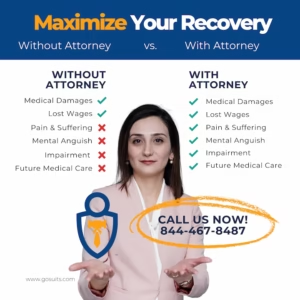
After a serious collision, insurers often reach out quickly. Adjusters may seek recorded statements, authorizations for broad medical records, or early settlement of property damage and injury claims. What someone says to an insurance company can be used against them later. It is strongly recommended to speak with a qualified attorney before contacting any insurance carrier or providing any statement, so that rights are protected and the facts are presented accurately.
California’s Department of Insurance publishes consumer information about claim handling and unfair practices regulations. These resources can help the public understand timelines and expectations in the claim process. For general guidance, see the Department’s consumer pages here: California Department of Insurance, Consumer Services.
- Recorded statements: An adjuster may seem friendly, but recorded interviews can include leading questions or ask for speculation. Declining until after a legal consultation can prevent misunderstandings.
- Total loss valuations: Property damage valuations sometimes undervalue vehicles or ignore upgrade packages. Keep maintenance records, photographs, and comparable listings.
- Medical authorizations: Broad authorizations can open unrelated medical history. Consider limiting scope and time frames, and do not sign until a legal professional reviews.
- Multiple insurers: If employment or commercial use is involved, there may be multiple policies, such as employer liability, commercial auto, and underinsured motorist coverage. Identifying all potentially applicable policies matters for full evaluation.
- Statements about fault: Avoid admitting or assigning fault in casual conversation. Fault determinations should rest on evidence, not assumptions made under stress.
If anyone suspects unfair treatment by an insurer, the Department of Insurance offers complaint procedures and educational materials about claim rights: California Department of Insurance, Consumer Complaints.
Data and Safety Insights About Head-on Collisions
National traffic safety resources consistently show that head-on collisions, though less common than rear-end or angle crashes, have disproportionately high fatality rates because of the combined speeds involved. The National Highway Traffic Safety Administration publishes research on crash types, occupant protection, and risk factors. For national traffic safety information, visit NHTSA.
Night driving presents unique risks. Visual cues are reduced, glare can be problematic, and determining closure speeds is harder in the dark. NHTSA’s materials on safe driving at night and lane departure countermeasures can be informative for community awareness. While this specific collision is still under investigation, broadly known risk factors for severe outcomes include lane departure, speed incongruent with conditions, and lack of separation between opposing traffic on undivided highways.
Roadway Engineering Measures That Reduce Head-on Crashes
Engineering plays a significant role in preventing head-on and lane-departure crashes. The Federal Highway Administration identifies proven safety countermeasures for rural two-lane roads. These include centerline rumble strips, shoulder rumble strips, high-visibility pavement markings, and high-friction surface treatments on curves. For more detail, see FHWA’s safety pages: Federal Highway Administration, Safety.
Local agencies and Caltrans review crash patterns and may recommend treatments such as:
- Centerline rumble strips, which alert drivers who drift across the centerline.
- Enhanced delineation at curves and intersections, including retroreflective markers and improved signage.
- Improved nighttime visibility through resurfacing, restriping, and upgraded reflectivity that helps drivers distinguish lane edges in low-light or fog conditions.
- Access management near agricultural driveways to reduce unexpected conflicts where feasible.
These measures are not a substitute for safe driving, but they can reduce the likelihood or severity of lane-departure crashes on corridors like State Route 34.
Time Limits That May Apply in California
California civil claims are subject to statutes of limitation. Time limits affect when a claim must be filed and can vary depending on the type of claim and parties involved. The California Courts’ Self-Help resources provide general guidance on statutes of limitations: California Courts, Time Limits.
- General personal injury and wrongful death: Often two years from the date of injury or death under California law. There are exceptions and tolling rules that may apply depending on circumstances.
- Claims involving a public entity: Usually require a government claim to be filed within six months of the incident before a lawsuit can proceed, under the California Government Claims Act. See general court information on claims against a government entity: California Courts, Claims Against Government Entities.
Because deadlines can be unforgiving, getting case-specific guidance early is important.
Preserving Evidence After a Serious Collision
Evidence can disappear quickly after a crash on a busy corridor like East Fifth Street. Weather, towing, repairs, and ordinary phone data overwriting can all reduce what is available later. The following steps are commonly helpful for preserving facts that often matter in a civil investigation.
- Secure vehicle access: Keep vehicles in their post-crash condition until they can be photographed and inspected. If possible, avoid scrapping or salvaging parts prematurely.
- Photographs and video: Save all photos, dashcam footage, and surveillance video from nearby homes or businesses. Even footage before the crash can help confirm traffic patterns and lighting.
- Witness contacts: Promptly record names, phone numbers, and addresses of anyone who saw the crash or the vehicles just before impact.
- Electronic data: Preserve phone data and vehicle event data recorder information where applicable. Some systems overwrite rapidly, so time is critical.
- Medical and employment records: Keep discharge summaries, billing, and any records that reflect the impact on work and daily life.
- Spoliation letters: Consider having a legal representative send preservation notices to relevant parties, such as tow yards or businesses that may have video footage.
Community and Emotional Support
Grief after a sudden loss can feel overwhelming. People in Ventura County often lean on close-knit circles in Oxnard, El Rio, Saticoy, and Camarillo, as well as faith communities and school or workplace networks. Professional support can also help. The Substance Abuse and Mental Health Services Administration maintains resources for crisis support, including information about the 988 Lifeline. Learn more here: SAMHSA 988 Resources.
Religious leaders, counselors, and local community groups can assist with immediate needs such as memorial planning, coordinating meals, and childcare. Schools and employers often have programs that can help with time off, counseling referrals, and short-term accommodations.
Why Timely Action Matters After a Fatal Collision
There are several time-sensitive steps that can materially affect the outcome of a civil case and the clarity of the factual record. The following actions help ensure critical information is not lost and procedural rights remain intact.
- Request official records early: Collision reports, autopsy findings, and death certificates each have their own timelines. Early requests help families understand what is known and what remains under review.
- Preserve vehicles and data now: Tow yards may begin storage charges, and some will move vehicles or allow parts to be removed. Data from event recorders or security cameras can be overwritten quickly. Acting promptly can prevent permanent loss.
- Consult a qualified attorney before insurance calls: What is said to an insurance company can be used later, and early settlement offers may not reflect long-term losses. An initial legal consultation helps people understand options before engaging with insurers.
- Calendar deadlines: California’s statutes of limitation and government claim requirements are strict. Identifying applicable deadlines early reduces the risk of missing a filing date.
- Coordinate with investigators: If there is dashcam footage or other evidence, providing it to CHP can improve the accuracy of the official record, which benefits everyone who needs the truth about what happened.
Acting within days and weeks, rather than months, often preserves key facts and reduces avoidable complications later.
Commentary from Gosuits Oxnard, California Personal Injury Attorney
Our hearts are with everyone affected by the head-on collision on East Fifth Street. Losing a young life on a familiar road is devastating, and we acknowledge the pain felt across Oxnard and the wider Ventura County community. This article is meant for general information and education, to help neighbors understand the process and the options that may be available during a difficult time.
Based on the information released so far, investigators reported that the eastbound vehicle crossed into the westbound lane, leading to a head-on impact in the westbound lane. Head-on collisions are among the most severe events we see on undivided highways in our region, particularly at night. That said, the complete picture depends on evidence that is still being gathered, including vehicle data, scene measurements, visibility, and any additional witness statements or video. It is appropriate to allow CHP’s investigation to proceed and to revisit conclusions as more verified facts come in.
Insurance companies and large corporate defendants often move quickly after a major crash. They generally understand how statements made early on, when people are grieving and overwhelmed, can shape a claim later. Recorded calls that seem routine can include questions that invite speculation. Valuation methods can minimize losses that are difficult to measure, such as future support to a family. Without someone seasoned in these cases standing between the family and the insurer, it is easy for critical rights to be narrowed without realizing it.
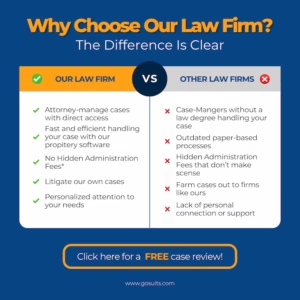
That is why an initial consultation can be so important. It helps people understand the process, likely timelines, the kinds of documentation that matter, and the implications of communicating with insurance carriers. It can also clarify whether additional parties, such as an employer or public entity, need to be notified promptly. A free consultation gives space to ask questions and receive guidance before making decisions that can be hard to undo.
Helpful Government Resources
- California Highway Patrol, Collision Report Information
- California Department of Public Health, Vital Records
- U.S. HHS, Access to Medical Records
- California Department of Insurance, Consumers
- California Courts, Time Limits
- FHWA, Safety
- NHTSA
- SAMHSA, 988 Resources
Local Contacts Mentioned
- CHP Ventura Area Witness Line: 805-662-2640
- Ventura County Medical Center: Hospital where both drivers were transported following the crash
- Ventura County Medical Examiner-Coroner: For autopsy status and release procedures to next of kin