- What we know about the Downtown Los Angeles Metro station fatality
- Time, place, and immediate service impacts in Downtown LA
- Rail platform safety context and why falls between train cars are so dangerous
- Legal overview: duties of transit operators and general pathways to civil recovery
- Paperwork and records families can request
- Evidence that may matter and how it is preserved
- Insurance and claims: public entity rules and common pitfalls
- Local perspective: navigating 7th Street/Metro Center safely
- Next steps and why timely action matters
- Commentary from Gosuits Los Angeles, California Personal Injury Attorney
- References
What we know about the Downtown Los Angeles Metro station fatality
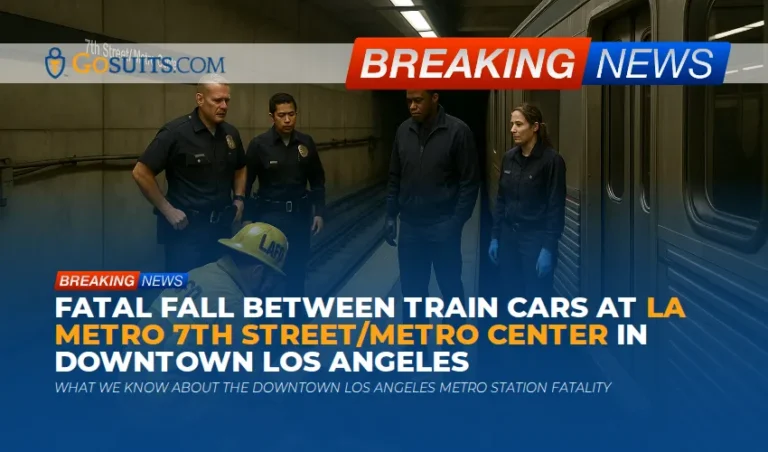
A 50-year-old man died after a fall at the 7th Street/Metro Center station in Downtown Los Angeles. According to official statements provided to local media, the passenger had just exited an E Line train and lost his balance while walking on the platform, falling between the couplers of two rail cars. The incident occurred during the early evening commute window, with first reports around 5:44 p.m. to 6 p.m. Fire crews extricated the individual from the tracks and transported him to a nearby hospital in serious condition. Despite medical efforts, he later succumbed to his injuries.
Service advisories indicated moderate to significant delays following the emergency response. Riders in Downtown LA were directed to use the J Line busway as an alternative during the disruption.
7th Street/Metro Center is a major transfer hub beneath The Bloc and near FIGat7th. It connects the A, B, D, and E Lines, funnels heavy foot traffic from commuters, and is one of the busiest stations in the region throughout weekdays.
Time, place, and immediate service impacts in Downtown LA
Location matters in understanding both risk and response. The incident took place at 7th Street/Metro Center, a multilevel station linking light rail and subway platforms in the heart of Downtown Los Angeles. It serves the A Line that runs north-south through Downtown and to Long Beach, the E Line that connects Santa Monica and East LA through the core, and the B and D Lines that move underneath along the heavy-rail subway.
Official advisories noted that riders could continue trips using the J Line through the Downtown corridor while rail service was adjusted. Messaging also indicated that trains would continue to arrive on the Long Beach and Santa Monica sides of the platform between 7th St/Metro Center and Historic Broadway, a stretch of the newer Regional Connector corridor that has reshaped how people transfer in and out of DTLA. These reroutes are typical after significant station incidents as agencies restore safe operations in phases.
Rail platform safety context and why falls between train cars are so dangerous
Falls at rail platforms are rare but can be catastrophic. The space between coupled train cars is not intended for foot traffic. Modern rail vehicles have protective devices and signage, but the coupler area still includes mechanical linkages and a substantial void that can trap a person. An individual who stumbles between cars can face multiple hazards, including crushing forces, lack of handholds, and immediate proximity to high-voltage train systems and moving equipment.
California’s rail transit systems are regulated at the state level by the California Public Utilities Commission’s Rail Transit Safety Branch, which oversees system safety plans, incident reporting, and corrective actions for state-regulated rail transit like LA Metro. The CPUC’s framework emphasizes hazard identification, operating rules, platform safety, and emergency response coordination with local fire and medical agencies [1].
Nationally, rail transit safety data are tracked by the Federal Transit Administration through the National Transit Database Safety and Security module, which compiles reportable events and injuries to help agencies and the public understand risk patterns and inform prevention strategies [2]. The National Transportation Safety Board also investigates significant rail and rail transit events and has highlighted the seriousness of platform falls and boarding and alighting hazards in past safety work [3].
In busy transfer hubs like 7th Street/Metro Center, the risks increase during peak hours when platforms are crowded and riders are navigating announcements, signage, and fast-moving trains. Practical tips include staying behind tactile warning strips until the train stops, keeping hands free when stepping off, watching for the car-to-car junction area, and avoiding distractions while moving along the platform edge.

Legal overview: duties of transit operators and general pathways to civil recovery
In California, carriers that transport people for hire owe a very high duty of care. California Civil Code section 2100 states that carriers of persons for reward must use the utmost care and diligence for safe carriage, and must provide everything necessary for that purpose while exercising reasonable skill [4]. Courts and statutes have long recognized that when passengers are boarding, alighting, or walking along platforms under a carrier’s control, the carrier’s duty to minimize risks is at its peak.
When a serious injury or death occurs in a passenger rail environment, potential civil claims can involve questions such as:
- Whether the station environment or operating practices posed a foreseeable hazard. Examples can include inadequate warnings about the gap between cars, insufficient lighting, or crowd control challenges during peak operations.
- Whether train operations and platform procedures followed safety plans and rules. Agencies are expected to maintain and follow system safety programs consistent with state oversight standards [1].
- Whether emergency response and incident management were prompt and consistent with protocols. While first responders like the Los Angeles Fire Department manage rescue and treatment, transit agencies must coordinate effectively for safe access.
Families commonly ask what kinds of civil actions are available after a fatality. In California, a wrongful death claim is brought by statutorily authorized heirs for their own losses caused by a death [5]. Separately, a survival action permits the decedent’s estate to pursue claims the person could have brought if they had lived, such as pre-death pain and suffering where authorized by law [6]. Statutes of limitation apply, and different deadlines govern claims against public entities.
Because transit agencies like LA Metro are public entities, claims are typically subject to California’s Government Claims Act procedural rules before a lawsuit can be filed. These rules can be unforgiving, which is one reason families often consult seasoned wrongful death attorneys early to understand the calendar and preserve rights.
Paperwork and records families can request
After a station fatality, families and representatives usually need multiple records from different public offices. While each case is unique, the following records are commonly relevant:
1. Los Angeles County Medical Examiner-Coroner records
The LA County Department of Medical Examiner manages next-of-kin notifications, autopsy examinations when required by law, and release of postmortem records upon request by authorized individuals. Families can obtain information on how to request autopsy, examination, and toxicology records directly from the department [7]. Certified death certificates are issued by the County Registrar-Recorder/County Clerk [8].
2. Police incident documentation
Transit station incidents in Downtown Los Angeles typically involve local law enforcement for scene control and reporting. Requests for incident records are generally processed under the California Public Records Act, subject to exemptions for active investigations and privacy. The California Attorney General’s office publishes a public guide explaining the Public Records Act and how to make a proper request [9].
3. Fire department incident reports
Where extrication or medical treatment occurred on scene, families can request incident records through the city’s public records process. The same California Public Records Act framework applies to municipal response reports [9].
4. Transit agency materials
Relevant transit agency records can include station incident logs, operating bulletins, hazard assessments, and platform safety policies. Because LA Metro is a public agency, such requests are also governed by California’s Public Records Act. Note that certain safety-sensitive materials or footage may be restricted or partially redacted for security and privacy.
For an organized overview of what families often compile, see our los angeles wrongful death checklist. It is a practical starting point for paperwork and task tracking during a very difficult time.
Evidence that may matter and how it is preserved
Preserving evidence quickly is critical. Rail stations and trains are covered by multiple cameras, and trains may store diagnostic data related to doors, speed, and stopping. However, video retention periods can be short depending on storage capacity and policy. Some key evidence categories in station incidents include:
- Station and train video. Multiple angles may exist, including platform cameras, train interior cameras near doors, and exterior cameras along the car sides. Prompt written requests help reduce the risk of routine overwrite.
- Incident reports and radio logs. Dispatch communications, station control logs, and operator reports can clarify timing, response steps, and conditions.
- Maintenance and safety records. Documents about coupler covers, gap warnings, platform markings, signage, lighting, and any prior hazard reviews can be relevant to risk assessment and foreseeability.
- Witness information. Contact details for riders who saw the fall or the immediate aftermath are important.
- Medical records. Hospital records and coroner findings establish injury and causation.
Agencies that receive federal funds must report specified safety events to the FTA’s National Transit Database [2]. While NTD public data are general and not a substitute for case-specific evidence, they help contextualize system-wide safety patterns.
Insurance and claims: public entity rules and common pitfalls
Public transit injury claims move on a different track than ordinary private insurance cases. California’s Government Claims Act generally requires a written claim against a public entity within six months of the incident or death for personal injury or wrongful death matters [10]. If a claim is not properly presented within this window, filing a lawsuit is usually barred, subject to narrow relief provisions.
Even when a claim is timely, a lawsuit cannot begin until the public entity has acted on the claim or the statutory response period expires. Government Code section 945.4 explains this presentment requirement [11], and Government Code section 945.6 sets the deadlines that follow a written rejection, typically six months to file suit from the date of the rejection notice [12].
Separately, the general statute of limitations for wrongful death in California is two years from the date of death, codified in Code of Civil Procedure section 335.1 [13]. Wrongful death standing and eligible heirs are governed by Code of Civil Procedure section 377.60 [5], and survival actions by section 377.30 [6]. These timelines interlock with the Government Claims Act rules, which can shorten the effective window for action when a public entity is involved.
Insurance adjusters or public entity claims representatives sometimes contact families early to obtain statements. It is usually best to consult with a qualified lawyer before any recorded interviews. What is said in those conversations can be used to narrow or dispute claims later. For that reason, many people consider speaking with wrongful death attorneys about strategy, evidence preservation letters, and claim timing before engaging with any risk management office or insurer.
In complex public transit matters, localized knowledge of Downtown LA rail operations and protocols can alter how evidence is requested and how responsibility is assessed. Where appropriate, families often seek guidance from Los Angeles wrongful death attorneys who are familiar with California’s public entity procedures and the practical realities of investigating rail platform incidents.
Local perspective: navigating 7th Street/Metro Center safely
Residents know 7th Street/Metro Center as a fast-moving node beneath some of DTLA’s busiest blocks. It is common to see riders shifting between the Long Beach and Santa Monica directions on the A and E platforms, and then flowing down to the B and D subway platforms. During the evening rush, trains arrive in quick succession. When doors open, large groups step off and new riders step in.
If you frequent the station, a few situational reminders help reduce risk:
- Pause before you step. When doors open, scan the platform surface, watch your footing, and avoid walking near the junction between cars. That area exists to connect rail equipment, not to be stepped on.
- Keep hands free. If you are juggling bags, consider setting them down until the crowd thins. Free hands help you balance.
- Use the tactile strip as a guide. The bumpy yellow line is a tactile warning for the edge. Stay behind it until the train stops, and keep a cushion of space.
- Let the flow clear. If the platform is congested, let the first wave pass. Resist the urge to dart between cars or around other riders near the edge.
- Report hazards. If you see a spill, missing signage, or a lighting issue, alert station staff or use formal reporting channels. At the state level, CPUC receives and reviews rail transit safety matters [1].
These are not guarantees, and no one can prevent every accident. They are practical habits that can help in busy places like DTLA, especially when you are changing lines or moving quickly to catch a transfer.
Next steps and why timely action matters
Here is a practical, time-sensitive roadmap many people follow after a serious station incident or fatality in Los Angeles:
- Secure essential records. Request the coroner’s records from the Los Angeles County Department of Medical Examiner as authorized kin [7], and order certified death certificates from the Registrar-Recorder/County Clerk [8].
- Preserve station and train footage. Ask the transit agency in writing to preserve all video and operational data for the incident window. Video can recycle quickly.
- Collect witness information. If anyone reached out after the incident, document their names, phone numbers, and what they observed.
- Request public records. Use the California Public Records Act to request non-exempt incident materials from law enforcement, fire, and the transit agency [9].
- Track your deadlines. If a public entity is involved, calendar the six-month Government Claims Act deadline for wrongful death or personal injury claims [10]. Also note the general two-year wrongful death statute of limitations [13].
- Consult before you speak with claims staff. Public entity risk managers may seek statements early. Consider obtaining a free consultation with a qualified lawyer before any recorded interviews.
What is the exact action to take now? Document the timeline, send preservation requests, and get a consultation with a qualified attorney before making statements to any claims office. The benefit is clarity on rights and deadlines, better control over evidence, and a lower risk of unintentional statements shaping your case in ways you did not intend. The urgency stems from the six-month Government Claims Act clock and short video retention cycles. Acting early is often the difference between having critical footage and losing it to routine overwrite.
Commentary from Gosuits Los Angeles, California Personal Injury Attorney
Our hearts go out to everyone affected by this fatal incident at 7th Street/Metro Center. These details are hard to absorb, especially for those who regularly pass through the station. What follows is general educational information, not a substitute for advice about any one person’s situation.
From what has been publicly described, a rider lost balance after stepping off an E Line train and fell between two cars. That coupler area is a high-hazard zone. In stations as busy as this one, visibility, warnings, platform markings, and crowd management matter. The law places a heightened duty on passenger carriers to protect people during boarding and alighting, and a meaningful investigation should explore station design, warnings, lighting, operations, and whether any reasonable measures could have reduced the risk of a fall in that location.
In our experience, insurance companies and public entity claims departments often move quickly to contain exposure. They may request early statements, ask for broad medical authorizations, or frame the narrative in ways that undercut responsibility. People do not always realize that what they say to a claims representative can return later as a reason to deny or limit recovery. Understanding the Government Claims Act timelines, requesting preservation of video, and carefully managing communications are key steps that help level the playing field.
A free consultation can make a real difference in these early days. It offers a no-pressure chance to understand potential claims, deadlines, and evidence strategies before talking to any claims office. Even a brief conversation can help clarify which requests to send first and how to avoid common missteps that can affect a family’s options later on.
References
- Rail Transit Safety Branch – California Public Utilities Commission
- National Transit Database Safety and Security – Federal Transit Administration
- Railroad and Rail Transit Investigations – National Transportation Safety Board
- California Civil Code § 2100 – California Legislative Information
- California Code of Civil Procedure § 377.60 (Wrongful Death) – California Legislative Information
- California Code of Civil Procedure § 377.30 (Survival Actions) – California Legislative Information
- Families and Records Requests – Los Angeles County Department of Medical Examiner
- Death Certificates – Los Angeles County Registrar-Recorder/County Clerk
- California Public Records Act Guide – Office of the Attorney General
- California Government Code § 911.2 (Claims Presentation) – California Legislative Information
- California Government Code § 945.4 (Claim Prerequisite) – California Legislative Information
- California Government Code § 945.6 (Statute of Limitations After Rejection) – California Legislative Information
- California Code of Civil Procedure § 335.1 (Two-Year Limitation) – California Legislative Information