- What we know about the fatal train-vehicle incident near Lemont
- Agencies likely involved and how investigations typically unfold
- How families can obtain key records in Illinois
- Illinois civil law snapshot for rail-related deaths
- Evidence that often decides train-vehicle cases
- How insurers and corporations respond after rail crashes
- Practical steps community members can take now
- Local context: Lemont and Chicago Southland rail corridors
- Possible civil liability questions in a train-vehicle fatality
- Timelines and expectations families ask about
- Why timely action matters
- Commentary from Gosuits Lemont, Illinois Personal Injury Attorney
- References and resources
What we know about the fatal train-vehicle incident near Lemont
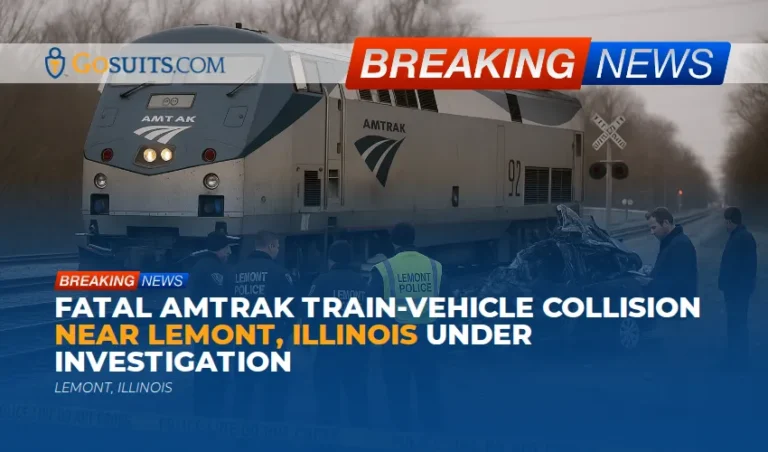
Local reporting indicates a vehicle was struck by an Amtrak train near Lemont on Wednesday afternoon, resulting in one fatality. Lemont sits along active freight and passenger rail lines used by commuter and interstate rail traffic. While early accounts provide only limited detail, one life was lost and an investigation is now underway to determine exactly how and why this happened.
At this stage, public information is often tightly controlled so that first responders and investigators can do their work. That can leave neighbors with more questions than answers. What crossing or segment was involved? Were warning devices present and functioning? Where was traffic being detoured? Those specifics usually come later through official reports, railroad filings, and, in some cases, federal safety databases.
Agencies likely involved and how investigations typically unfold
Serious rail incidents in the Southland can involve several layers of response, sometimes across county lines.
- Local law enforcement. Lemont Police Department and nearby agencies commonly secure the scene, collect witness statements, and manage traffic around popular corridors such as Archer Avenue and 127th Street while rail service is halted or slowed. If a crash occurs outside village limits, a county sheriff may lead the initial response.
- Railroad police and operators. Amtrak Police and the freight or track-owning railroad typically assist with scene documentation, crew alcohol and drug testing as required by federal regulations, and preservation of on-board data.
- Medical Examiner or Coroner. In Cook County, the Medical Examiner determines cause and manner of death and manages autopsy and identification procedures. If a fatality occurs in Will County, the coroner there would handle those responsibilities.
- State agencies. Depending on the location and complexity, state crash reporting protocol may route through Illinois State Police systems, especially if the incident affects state routes or requires specialized reconstruction resources.
- Federal oversight. The Federal Railroad Administration (FRA) sets national safety standards and maintains accident and crossing databases. In select cases, the National Transportation Safety Board (NTSB) may open an inquiry when broader safety questions are implicated.
Rail incidents often take weeks or months to fully reconstruct. A key reason is the multi-source evidence: signal logs, locomotive event recorder data, any available camera footage facing the track and cab, physical marks at the scene, and eyewitness accounts that must be reconciled with hard data. The outcome of those analyses shapes both safety action and any civil claims pursued by those affected.
How families can obtain key records in Illinois
When a loved one dies in a rail collision, locating and preserving official records makes a difference. Here is a practical map of where essential documents usually come from and who to call first.
- Police crash report. Request the report from the responding local police department or county sheriff. If Illinois State Police responded or assisted, their crash report portal can be relevant [6]. Ask for all attachments, including diagrams and supplemental narratives. If a report is not immediately available, note the report number and the records custodian’s contact for follow up.
- Medical Examiner or Coroner records. In Cook County, families typically request the autopsy report, toxicology (if performed), and ME summary once available [5]. These records support both closure and the documentation needed for any insurance or civil action. If the incident falls within Will County, the coroner’s office manages an analogous process.
- Death certificate. Illinois Department of Public Health’s Division of Vital Records issues certified copies of death certificates, which are required for many administrative steps, including life insurance and probate filings [7].
- 911 calls, dispatch logs, and body-worn camera footage. These materials are commonly requested through an Illinois Freedom of Information Act (FOIA) request to the relevant agency. FOIA is codified at 5 ILCS 140 [8]. Ask the records unit whether a formal FOIA is required and, if so, how to phrase the request to include audio, CAD logs, and digital media preservations.
- Railroad data. Locomotive event recorder and signal system logs are typically held by the railroad and governed by federal regulations. Formal preservation letters from counsel are the most reliable way to ensure these are not overwritten in the ordinary course of business.
It is common to encounter redactions or delays. If documents are denied or heavily redacted, agencies must generally cite the legal basis under FOIA. That is often a moment where families consider speaking with wrongful death attorneys before pursuing appeals or alternative routes to evidence.
Illinois civil law snapshot for rail-related deaths
Illinois law provides a path for surviving family to bring a civil action when a death is caused by wrongful conduct. The Wrongful Death Act describes the types of losses that can be pursued on behalf of the decedent’s surviving next of kin, typically administered by the personal representative of the estate [1].
- Time limits. The general time limit for a wrongful death action in Illinois is two years from the date of death, subject to exceptions and special rules in particular circumstances [1]. When a potential claim involves a local public entity or employee, a shorter one-year statute of limitations can apply under the Tort Immunity Act [3]. Deadlines can be complicated by estate-opening requirements, so it is wise to calendar early and verify which period applies.
- Comparative negligence. Illinois uses a modified comparative fault system. If a decedent’s fault is found to be more than 50 percent, recovery is barred. If 50 percent or less, recoverable damages are reduced in proportion to the assigned percentage of fault [2].
- Types of damages. Wrongful death damages consider losses to the surviving next of kin, which can include loss of support, society, and companionship. A related Survival Act claim may pursue the decedent’s own pre-death damages such as medical bills and conscious pain and suffering prior to passing.
Because rail incidents often involve multiple actors and layers of regulation, identifying all potentially responsible parties and the correct legal deadlines is an early and critical step. It is not unusual for municipal entities to be involved in crossing design or maintenance, while private railroads manage active warning devices per federal standards [4].
Evidence that often decides train-vehicle cases
Rail collisions are heavily data-driven. Several kinds of evidence can be critical for families and their representatives to review.
- Locomotive event recorder data. Federal rules require event recorders on most locomotives, capturing speed, horn, brake applications, and other parameters [9]. This timeline helps validate or challenge witness recollections.
- Camera footage. Many locomotives are equipped with forward-facing and cab cameras. In-vehicle data recorders from the motor vehicle might also exist and are governed by federal standards for passenger vehicles [10].
- Signal system logs. Grade crossing warning systems have performance records that can show whether gates and flashing lights were active, and whether there were any malfunctions. These systems are regulated by federal standards that also require inspection and testing cycles [4].
- Physical scene evidence. Skid marks, gate arm positions, debris fields, and damage patterns tell a story when mapped carefully. If rain, snow, or early dusk conditions are involved, lighting and visibility studies may be needed.
- Public databases. The FRA maintains a national inventory of highway-rail grade crossings and an accident/incident reporting system that can reveal prior incidents and crossing characteristics [11], [12].
Early preservation letters are often essential. Railroads and agencies typically retain data per policy and regulation, but automated overwrite and retention limits can still cause loss of valuable material if no hold is in place. In serious loss cases, families sometimes speak with wrongful death attorneys to initiate formal preservation notices and targeted evidence requests before anything is lost to time.
How insurers and corporations respond after rail crashes
After a fatal rail collision, multiple insurers and corporate risk teams become involved quickly. The vehicle owner’s auto insurer may open a liability review and a separate property damage claim. A railroad’s third-party claims operation often begins interviewing witnesses and collecting scene evidence immediately. That intensity can be overwhelming for relatives who are still notifying family and making arrangements.
- Recorded statements. Insurance adjusters sometimes ask relatives or surviving occupants for recorded statements within days. What is said can be used against the family later. Before speaking to any insurer, many families choose to consult with Lemont wrongful death attorneys so they understand their rights and how to avoid unintentional misstatements.
- Quick settlements. In some cases, an early offer is presented before the full scope of evidence is available. This can occur while critical data is still being gathered from the railroad and public agencies. Accepting prematurely can limit a family’s ability to recover later if new information emerges.
- Disputes over fault. Disagreements about gate status, horn use, or vehicle movement are common in train-vehicle cases. That is why objective data like event recorder logs and signal test records are so important.
Rail cases involve specialized facts and regulations. Families who want help coordinating with multiple adjusters and corporate investigators often look for wrongful death attorneys experienced with complex, multi-entity claims processes.
Practical steps community members can take now
When tragedy strikes, a few time-sensitive actions can protect a family’s options without adding unnecessary stress.
- Document what you can. Save the incident number, names of responding agencies, and any photos or videos taken by witnesses. Ask neighbors near the tracks if their security cameras captured anything and request they preserve the footage. Do not share or post publicly until you have guidance.
- Request key records. Begin requests for the police report and, when available, Medical Examiner or Coroner documentation. If you are unsure which agency has jurisdiction, call the non-emergency line for Lemont Police or the county sheriff and ask for the records unit.
- Avoid insurer interviews before you are ready. If an insurer calls, you can politely decline a recorded statement until you have spoken to a qualified advocate. What is said to insurance can be used later in ways that are hard to unwind.
- Preserve the vehicle. If the damaged vehicle is towed, note where it is stored and ask that it not be destroyed or salvaged. The vehicle’s event data and damage pattern can be crucial in a rail collision analysis.
- Track expenses. Keep receipts and records related to medical costs, funeral and burial services, and other immediate needs. These documents help establish losses in any later claims process.
Local context: Lemont and Chicago Southland rail corridors
Folks in Lemont, Tinley Park, Palos, and neighboring suburbs know how much rail shapes daily life in the Southland. Morning and evening traffic can stack near crossings by the Des Plaines River valley and around commuter hubs where trains and vehicles intersect. The mix of freight, occasional intercity passenger movements, and commuter traffic is part of the region’s economy. It also means everyone watches out for temporary closures and sirens when incidents occur.
Federal rail safety data show that hundreds of highway-rail grade crossing fatalities occur nationwide each year, and these incidents remain a major source of rail-related deaths alongside trespasser strikes [11], [12]. Illinois agencies and municipalities have invested in grade separation projects, upgraded warning devices, and education programs, yet a single malfunction or moment of inattention can still have catastrophic consequences. Winters here add another layer, as blowing snow and early sunsets reduce visibility in February.
Possible civil liability questions in a train-vehicle fatality
Without speculating about this specific incident, civil lawyers typically analyze several recurring issues in train-vehicle cases:
- Warning devices and signals. Were gates, lights, and bells installed, and did they function correctly and on time under federal standards [4]? Maintenance records and inspections can be pivotal.
- Locomotive operations. Speed, horn usage, braking profiles, and line-of-sight conditions are reconstructed from event recorder data and video [9].
- Crossing design and sight lines. Vegetation, structures, and roadway geometry may affect a driver’s ability to perceive warnings in time. Responsibility might involve public entities in addition to the railroad.
- Driver conduct. Approach speed, stopping distance, distraction, and vehicle position relative to the stop bar and gate arm can contribute to the analysis. Illinois’ comparative negligence rules allocate fault among the parties [2].
- Prior incidents and notices. FRA databases and local records may show a pattern of close calls or prior collisions at a particular crossing [12].
A careful, data-led review helps families understand what happened and whether any civil claims are supported by the facts.
Timelines and expectations families ask about
A common question is how long a rail fatality case can take. Several factors drive the timeline: the speed of official investigations, when railroad data is released, whether liability is contested, and the number of parties involved. Negotiations sometimes begin once the essential technical evidence is exchanged, but litigation may be required when fault or damages are disputed. For a deeper dive into timing considerations that often come up in these matters, see how long does it take to settle a wrongful death lawsuit.
In our region, courts serving Cook and Will Counties have differing dockets and scheduling practices, so a case filed in one venue may move at a different pace than in another. Families dealing with funeral arrangements and estate issues often find it helpful to separate urgent tasks from those that can be addressed once key records arrive.
Why timely action matters
What to do
- Secure and preserve records early. Ask agencies how to request the police report, 911 audio, and any dash or body camera footage. Note timelines for release and any needed FOIA requests.
- Protect physical evidence. Ensure the vehicle is preserved and that no one authorizes disposal or repairs before a full evaluation. Consider a written preservation request to the railroad for locomotive, signal, and camera data.
- Open the estate. If a civil claim is contemplated, an estate representative is typically required. Check local probate court guidance on appointing an administrator, especially when next of kin spans multiple counties.
- Hold off on insurer statements. Before calling any insurer back, speak with a qualified advocate. Insurance adjusters are trained to ask questions that can narrow future claims. What someone says on a difficult day can be taken out of context later.
Why act now
- Data retention limits exist. Certain digital files are overwritten unless a timely hold is placed. That includes onboard and signal data that can answer crucial questions.
- Illinois deadlines vary. Two-year and, in some municipal contexts, one-year limitation periods can apply [1], [3]. Time spent waiting on records still counts against these clocks.
- Memories fade. Witnesses move and forget details. Early interviews and affidavits help preserve accurate recollections.
Acting with a plan reduces the risk of missing something essential. Many families find it helpful to consult first, then decide how to proceed with insurers or agency requests. Remember, statements made to an insurance company can be used against the claimant later.
Commentary from Gosuits Lemont, Illinois Personal Injury Attorney
Our hearts are with the family and friends grieving after this tragedy near Lemont. Losing someone in a sudden collision is devastating, and the process of getting clear answers can feel painstakingly slow. This article is intended for general information and community awareness.
From a civil perspective, train-vehicle collisions turn on data. Locomotive and signal logs, camera footage, and careful scene work help determine whether warnings activated properly, whether the train crew’s actions met required standards, and how roadway approach factors played into what happened. Those objective facts matter far more than early rumors.
Insurance carriers and corporate claims teams typically mobilize within hours. They gather evidence fast and may seek statements before families have any records in hand. That imbalance is real. It is also why people in the Southland often seek a sounding board early, so they do not inadvertently give up rights or accept a narrative that the data does not support.
Initial consultations are an important step because they help clarify deadlines, preservation needs, and whether additional investigation is warranted. No one should have to navigate multi-entity railroad and insurance systems while mourning, and a short conversation can prevent costly missteps.
References and resources
- Illinois Wrongful Death Act, 740 ILCS 180 – Illinois General Assembly
- Modified Comparative Fault, 735 ILCS 5/2-1116 – Illinois General Assembly
- Local Governmental and Governmental Employees Tort Immunity Act, 745 ILCS 10/8-101 – Illinois General Assembly
- 49 CFR Part 234: Grade Crossing Signal System Safety – eCFR
- Cook County Medical Examiner – Cook County Government
- Illinois State Police Crash Reports – Illinois State Police
- Vital Records: Birth, Death and Other Records – Illinois Department of Public Health
- Freedom of Information Act, 5 ILCS 140 – Illinois General Assembly
- 49 CFR 229.135: Event Recorders on Locomotives – eCFR
- 49 CFR Part 563: Event Data Recorders – eCFR
- Highway-Rail Crossing Safety – Federal Railroad Administration
- FRA Office of Safety: Highway-Rail Crossing Data – Federal Railroad Administration